00:56:45.
That’s where the NAD+ talk starts in Huberman Lab’s December 27, 2021 episode with David Sinclair, under the chapter “Resveratrol, NAD, NMN, NR; Dosage, Timing.” A few minutes earlier, at 00:44:35 and 00:50:29, the chapters are metformin and resveratrol.
Those chapters line up with what people search alongside Huberman’s name: NMN, NR, resveratrol, metformin. Here’s each one checked against the studies, plus the topics that travel with them: NAD+ drips, grape seed extract, rapamycin and exercise.
What Was Said on the Episode
Huberman asked the questions: what Sinclair takes, how much NMN, and whether the timing matters. Sinclair’s answer came with a picture. Resveratrol presses the accelerator on the sirtuins, a family of enzymes linked to aging, and NAD+ is the fuel they run on. Pressing the accelerator with an empty tank doesn’t get you far, so he takes both.
On the numbers, Sinclair said he takes a gram of NMN every day, and Huberman summed up the routine as a gram of resveratrol and a gram of NMN. Sinclair agreed, then added a caveat of his own: he isn’t the same as everyone else, he tracks dozens of his own measurements, and what he does may not work for other people.
That’s one person’s routine. The doses tested in trials are further down, and for what came out of Sinclair’s own lab, see David Sinclair’s NMN.
The Episode’s Topics Side by Side
| Topic | Studied in | Doses used | What changed in people |
|---|---|---|---|
| NMN | Cells, mice, people | 100 to 500 mg single doses; 250 to 2,000 mg a day | Blood NAD+ rose; six-minute walk and muscle insulin sensitivity improved in single trials |
| NR | Cells, mice, people | 100 to 2,000 mg a day | Blood NAD+ rose up to 142%; insulin sensitivity in obese men stayed the same |
| NAD+ by IV | People | About 0.7 g over 6 hours | Plasma NAD+ flat for the first 2 hours |
| Resveratrol | Yeast, mice, people | 150 mg a day; one high-dose trial | Calorie-restriction-like changes in one trial, no metabolic changes in the other |
| Grape seed extract | People (pooled trials) | Varied by trial | Blood pressure down 1.5 to 2.2 mm Hg; heart rate down about 1.3 to 1.4 bpm |
| Metformin | People | 1,700 mg a day in one trial | Longer survival in diabetes records (observational); smaller gains from exercise training in older adults |
| Rapamycin | Mice | In food, from 600 days old | Lifespan up 9 to 14% in mice; glucose tolerance worse |
| Exercise | People | 10 to 12 weeks of training | Muscle NAD+ up 127%; NAMPT up 12 to 30% |
What NAD+ Does and Where It Comes From
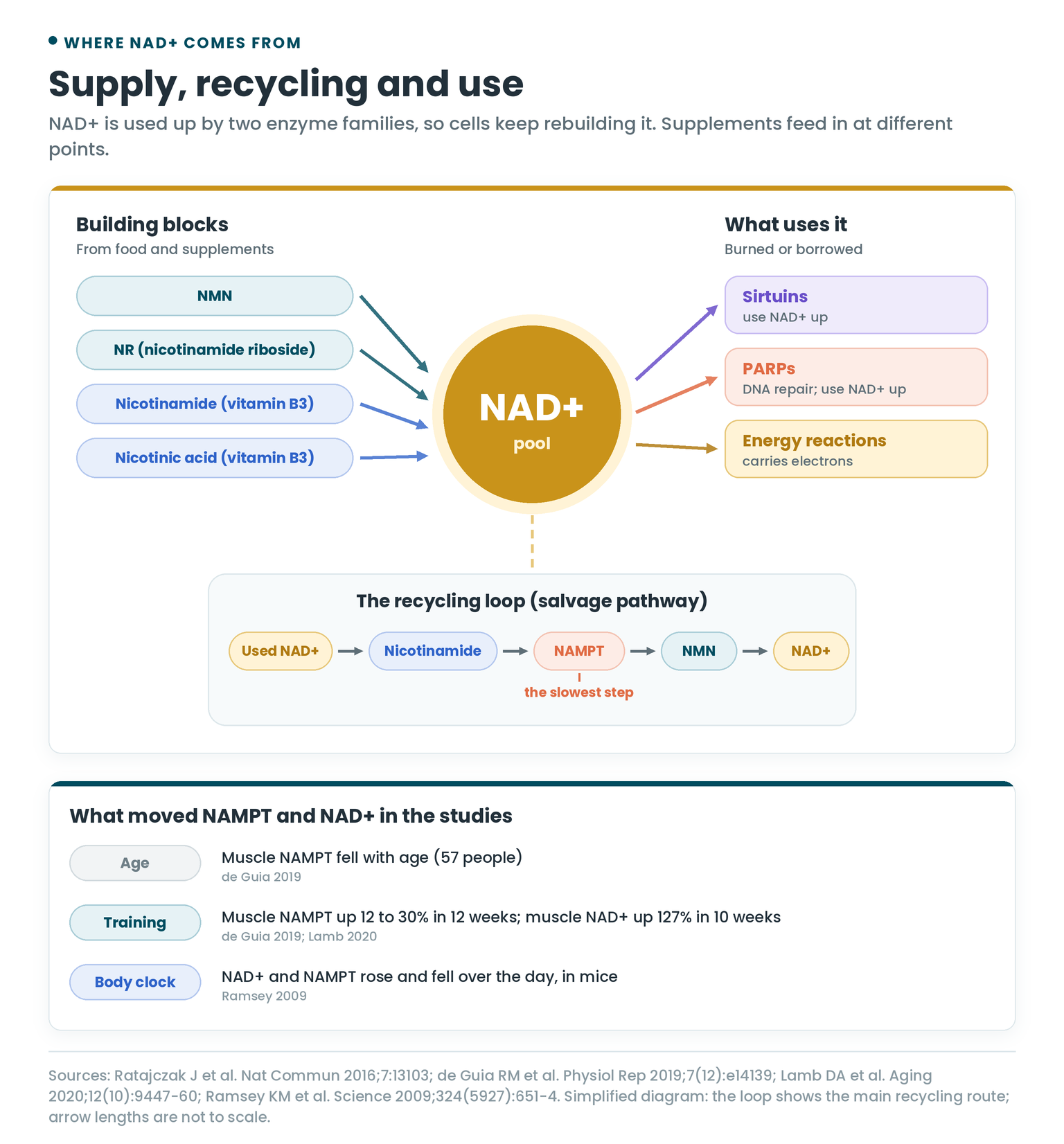
NAD+ does two jobs. It carries electrons in the reactions that turn food into usable energy, and it’s the raw material that two enzyme families burn through: sirtuins and PARPs (the DNA repair enzymes covered in DNA Damage Symptoms).
Because it gets used up, your cells keep rebuilding it. In muscle, most NAD+ comes from a recycling loop called the salvage pathway, and its slowest step is an enzyme called NAMPT. That makes NAMPT the bottleneck, and in a 2019 study of 57 people, muscle NAMPT fell with age.
Supplements feed in at different points. NMN and nicotinamide riboside (NR) are the two precursors from the podcast, and nicotinamide and nicotinic acid, both forms of vitamin B3, are the older ones.
NAD+ Runs on a Daily Rhythm
In mice, NAD+ levels and NAMPT both rise and fall over the day, set by the body clock. The loop runs both ways: a core clock protein switches on the gene for NAMPT, and NAD+ feeds back through SIRT1 to tune the clock itself.
NMN: What the Human Trials Used
NMN has gone from single doses to two-month trials in people:
- Single doses: 10 healthy men took 100, 250 and 500 mg. Heart rate, blood pressure, oxygen levels and temperature didn’t change, and NMN breakdown products rose with the dose.
- Older men: 250 mg a day for 6 or 12 weeks raised whole-blood NAD+ and its related molecules.
- Women with prediabetes: after 10 weeks, muscle insulin sensitivity rose with NMN and not with placebo.
- Middle-aged adults: 80 people took a placebo or 300, 600 or 900 mg a day for 60 days. Blood NAD+ rose in every NMN group, most at 600 and 900 mg. HOMA-IR, a blood-test estimate of insulin resistance, didn’t differ from placebo.
- Higher doses: 32 adults aged 55 to 80 took 1,000 mg once or twice a day for 14 days. Blood NAD+ rose with the dose, and very little NMN came out unchanged in urine.
Energy and Endurance Measures
“Energy” is a vague word, so here’s what the trials measured. In the 60-day trial, six-minute walk distance rose more in all three NMN groups than with placebo. In 48 amateur runners on 300, 600 or 1,200 mg a day for 6 weeks, the 600 and 1,200 mg groups improved more at their ventilatory thresholds, the points where breathing ramps up during hard work, while VO2max didn’t change. In older men on 250 mg, gait speed and grip strength improved nominally, a result the authors said needs larger studies to confirm.
For the forms side by side and the label math, see Best NAD+ Supplements.
NR: The Other Precursor
NR has its own trail of human data:
- Single doses: 100, 300 and 1,000 mg raised blood NAD+ and its related molecules in step with the dose. One of those molecules, NAAD, rose so reliably that the authors proposed it as a sensitive marker that NAD+ is being topped up.
- Eight weeks: in overweight adults, 100, 300 and 1,000 mg a day raised whole-blood NAD+ by 22%, 51% and 142% within two weeks, and the rise held for the rest of the trial. There was no flushing, and side effects matched placebo.
- Older adults: six weeks of NR in a crossover trial was well tolerated and raised NAD+ metabolism.
- Obese men: 1,000 mg twice a day for 12 weeks was safe, but insulin sensitivity, glucose handling, energy use and body composition stayed where they were.
Raising blood NAD+ and changing a health measure are separate results, and each trial reports the one it measured.
Flushing and Cholesterol
Niacin, another form of vitamin B3, is known for causing skin flushing. In the 8-week NR trial, nobody reported flushing at any of the three doses, LDL cholesterol didn’t rise, and one-carbon metabolism, the pathway that handles methyl groups, wasn’t disrupted.
NMN or NR? The Transport Debate
Sinclair described NMN as one step from NAD+. Getting it inside a cell is where the argument started.
- 2016, mammalian cells: NMN was converted to NR outside the cell, NR went in, and an enzyme called NRK1 was needed to turn it into NAD+. With NRK1 switched off, cells couldn’t use either NR or NMN to make NAD+, while nicotinamide and nicotinic acid still worked.
- 2019, mouse gut: a gene called Slc12a8 was reported to make a dedicated NMN transporter in the small intestine. It carried NMN but not NR, needed sodium to work, and was more abundant in the gut of old mice.
- The reply: a comment in the same journal, titled “Absence of evidence that Slc12a8 encodes a nicotinamide mononucleotide transporter,” challenged the finding, and the original team published a response.
In people, both precursors raised blood NAD+ in the trials above, so the debate is about the route in.
Switch Off a Step
Pick a precursor and switch steps off to see which route each study described.
Resveratrol: The Accelerator Idea
Resveratrol sits on the enzyme side of Sinclair’s picture. It was studied as a way to turn sirtuins up, while NMN and NR supply the NAD+ they use.
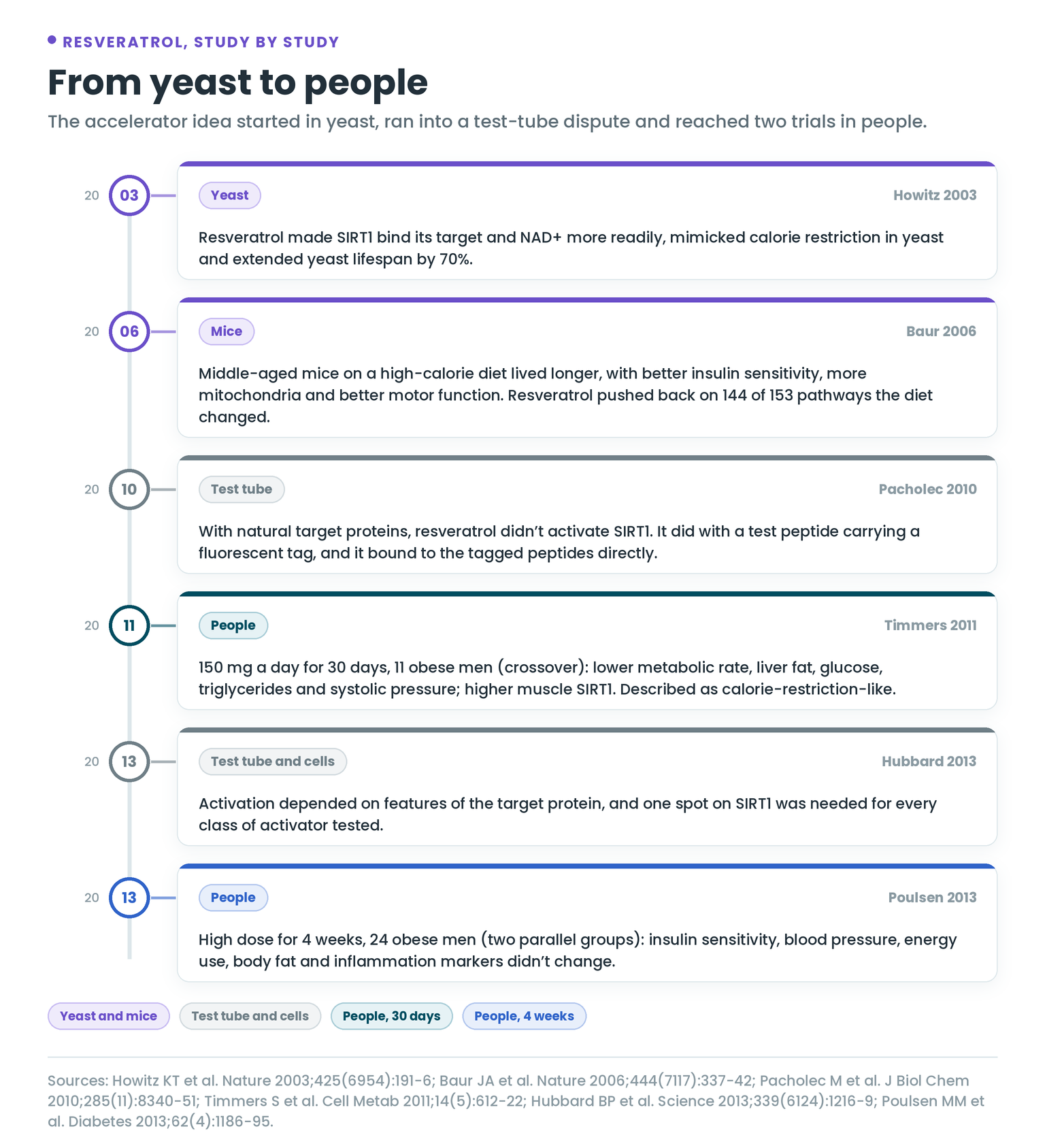
The idea goes back to a 2003 study in yeast. Resveratrol, a compound found in red wine, made the human sirtuin SIRT1 bind its target and NAD+ more readily, and in yeast it mimicked calorie restriction and extended lifespan by 70%.
In 2006, middle-aged mice on a high-calorie diet got resveratrol. Their bodies shifted toward those of mice on a standard diet: better insulin sensitivity, lower IGF-1, more mitochondria, better motor function and longer survival. Across 153 biological pathways the diet had changed, resveratrol pushed back on 144.
The Test-Tube Dispute
In 2010, a team ran the SIRT1 test with natural target proteins instead of the lab version, which carried a glowing chemical tag. Resveratrol and three related compounds activated SIRT1 only when the tag was there, and they bound directly to the tagged test peptides.
A 2013 study offered an explanation. Activation depended on features of the target itself: natural SIRT1 targets with the right shape let these compounds work, and a single spot on SIRT1 was needed for every class of activator tested. In cells with that spot changed, the compounds’ metabolic effects disappeared.
Resveratrol in People
Two trials in obese men landed differently:
- 150 mg a day for 30 days (11 men, crossover): metabolic rate dropped, muscle SIRT1 and mitochondrial activity rose, liver fat, blood glucose, triglycerides and systolic blood pressure fell, and the authors described the changes as similar to calorie restriction.
- A high dose for 4 weeks (24 men, parallel groups): insulin sensitivity, blood pressure, energy use, body fat and inflammation markers didn’t change.
The trials differed in dose, length and design: one was a crossover in 11 men, the other split 24 men into two parallel groups.
NAD+ Infusions
IV drips skip the precursors and put NAD+ straight into a vein. In a 6-hour pilot infusion at 3 micromoles a minute, about 0.7 g in total by my arithmetic, plasma NAD+ didn’t budge for the first 2 hours. The body removed it from the blood as fast as it went in, and the breakdown products showed enzymes taking it apart. By the end, urine carried more NAD+ and methylnicotinamide, one of its breakdown products.
Grape Seed Extract and Blood Pressure
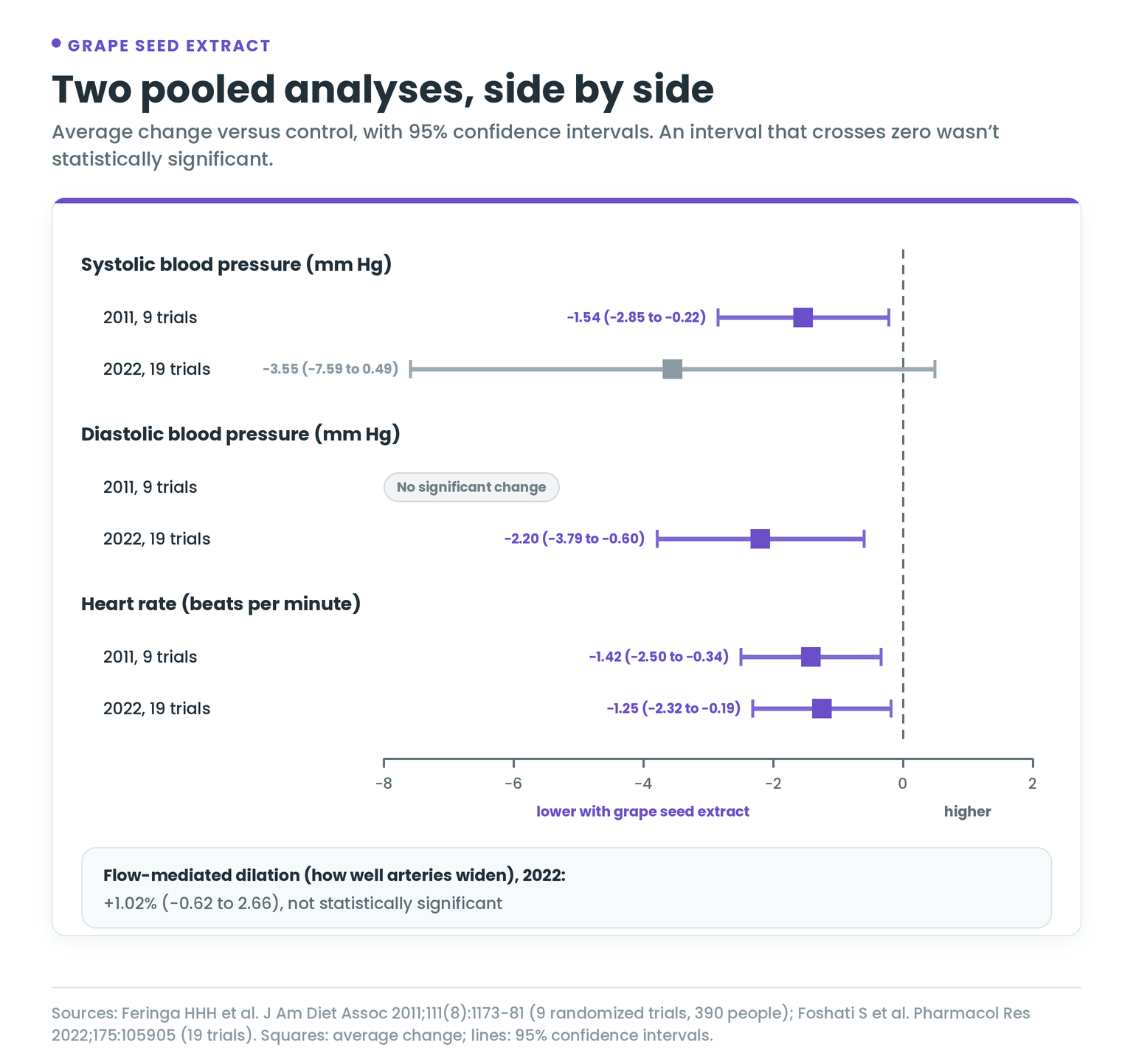
Grape seed extract comes from the same fruit as resveratrol, and its research is about blood vessels rather than NAD+. Two pooled analyses of human trials:
- 2011, 9 trials, 390 people: systolic blood pressure fell by 1.54 mm Hg and heart rate by 1.42 beats per minute. Diastolic pressure, cholesterol and CRP didn’t change.
- 2022, 19 trials: diastolic pressure fell by 2.20 mm Hg and heart rate by 1.25 beats per minute. Systolic pressure and flow-mediated dilation, a measure of how well arteries widen, didn’t change significantly. The effect on diastolic pressure varied with dose and duration.
Both analyses found heart rate a little lower, while the blood pressure number that moved swapped between them. For the peptide side of blood pressure, see Joe’s post on peptides and hypertension.
Exercise: The Basics That Move NAD+
Before any capsule, training moves the same system:
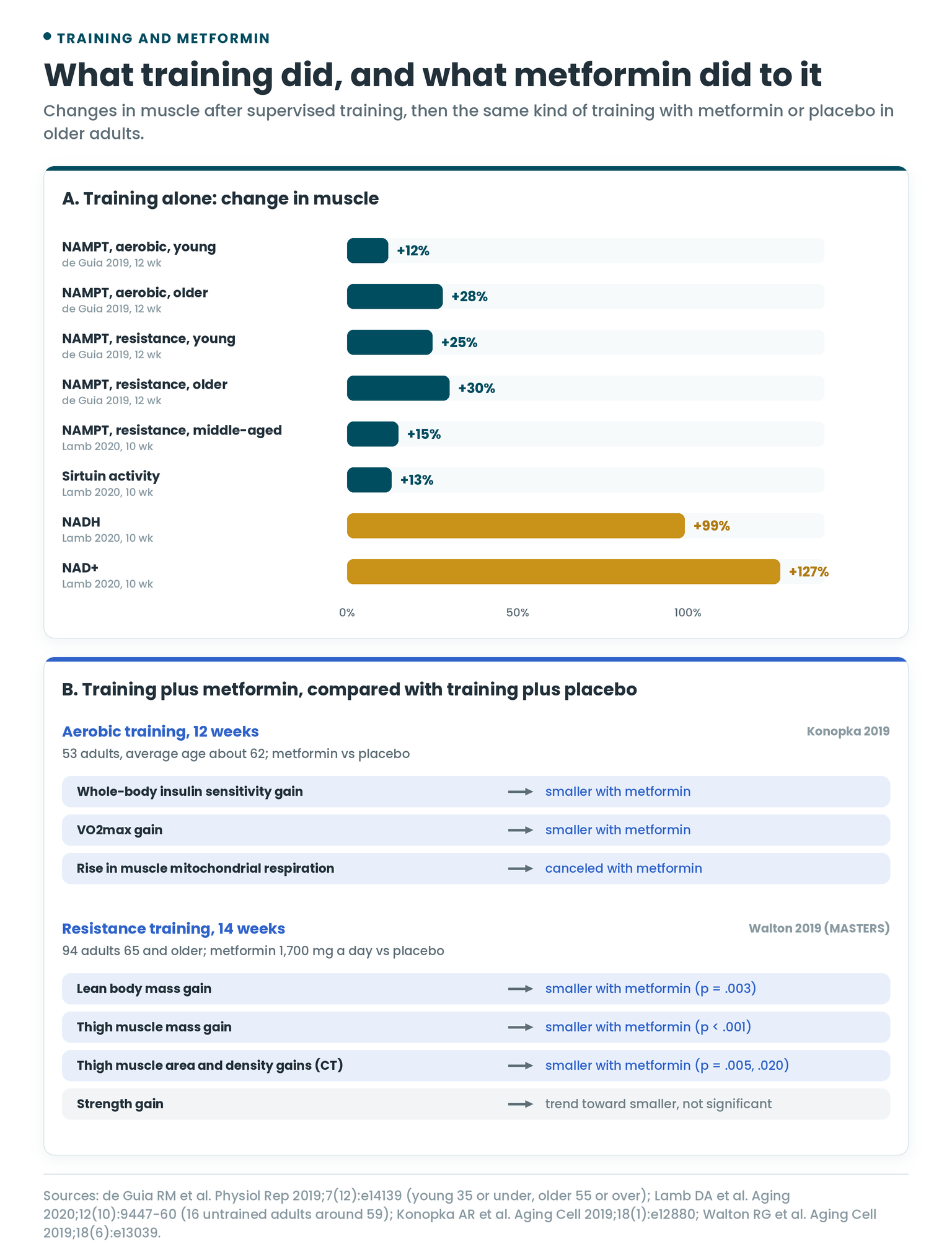
- Muscle NAMPT: 12 weeks of aerobic training raised it 12% in young people and 28% in older people; resistance training raised it 25% and 30%.
- Muscle NAD+: in 16 untrained, overweight adults around 59, 10 weeks of full-body resistance training twice a week raised muscle NAD+ by 127%, NADH by 99% and sirtuin activity by 13%.
Before training, those middle-aged muscles had less NAD+ than the muscles of trained college-aged men. After 10 weeks, the two groups were level. Mitochondrial density rose 183% over the same stretch, and the size of that rise tracked the rise in NAD+. For how NAD+ is measured in blood, see NAD Test.
Metformin
Metformin is a diabetes drug that comes up in longevity talk, and it has its own chapter in the episode. The headline number comes from UK health records: 78,241 people with type 2 diabetes who started on metformin were compared with 90,463 matched people without diabetes. After adjusting for other factors, median survival time in the non-diabetic group was 15% shorter than in the metformin group. That’s an observational study, so it shows an association, and the authors read it as a hint of benefit beyond diabetes.
Metformin and Training
Two randomized trials in older adults gave metformin alongside exercise:
- Aerobic training, 12 weeks (53 adults around 62): metformin blunted the gains in insulin sensitivity and VO2max, and it canceled the rise in muscle mitochondrial respiration that training produced.
- Resistance training, 14 weeks (94 adults 65 and older, 1,700 mg a day): the placebo group gained more lean mass and thigh muscle than the metformin group.
The researchers in the second trial expected the opposite. They thought metformin’s anti-inflammatory effect would help muscle grow.
Rapamycin
Rapamycin blocks a growth signal called mTOR. In a 2009 study run at three sites, mice that started rapamycin at 600 days old, about 20 months, lived longer. Measured by the age at which 90% had died, lifespan rose 14% in females and 9% in males, and in an interim analysis, a second group started at 270 days also survived longer.
There’s a catch in the mouse data. Calorie restriction lengthens life and improves insulin sensitivity, and it’s thought to work partly by turning mTOR down. Long-term rapamycin made glucose tolerance and insulin action worse, because it also disrupts a second complex, mTORC2, that the liver needs to respond to insulin. In genetically modified female mice with only the first complex, mTORC1, turned down, lifespan still went up and blood sugar control stayed normal.
Doses Used in the Research
- NMN, single doses: 100, 250 and 500 mg (Irie 2020).
- NMN, daily: 250 mg for 6 or 12 weeks (Igarashi 2022); 300, 600 or 900 mg for 60 days (Yi 2023); 300, 600 or 1,200 mg for 6 weeks (Liao 2021); 1,000 mg once or twice a day for 14 days (Pencina 2023).
- NR, single doses: 100, 300 and 1,000 mg (Trammell 2016).
- NR, daily: 100, 300 or 1,000 mg for 8 weeks (Conze 2019); 1,000 mg twice a day for 12 weeks (Dollerup 2018).
- NAD+ by IV: 3 micromoles a minute for 6 hours (Grant 2019).
- Resveratrol: 150 mg a day for 30 days (Timmers 2011).
- Metformin: 1,700 mg a day for 14 weeks alongside resistance training (Walton 2019).
- Resistance training: full body, twice a week for 10 weeks (Lamb 2020).
Frequently Asked Questions
What did Huberman say about NAD+?
The NAD+ talk is in his December 27, 2021 episode with David Sinclair, starting at 00:56:45. Huberman asked about NMN, NR, dose and timing, and Sinclair described his own routine of about a gram of NMN and a gram of resveratrol a day.
Is NMN or NR better for raising NAD+?
Both raised blood NAD+ in human trials. NR at 1,000 mg a day raised it 142% in 8 weeks, and NMN’s largest rises in the 60-day trial came at 600 and 900 mg a day.
Does resveratrol raise NAD+?
Resveratrol was studied as a sirtuin activator, while NMN and NR supply NAD+. In people, a 30-day trial at 150 mg a day found calorie-restriction-like changes, and a 4-week high-dose trial found no metabolic changes.
How does NMN get into cells?
In mammalian cells, NMN was converted to NR outside the cell before entering. A 2019 mouse study reported a direct NMN transporter in the gut, and that finding was challenged in the same journal.
Do NAD+ IV drips raise NAD+ in the blood?
In a 6-hour infusion study, plasma NAD+ didn’t change for the first 2 hours because the body cleared and broke it down as fast as it arrived.
Does grape seed extract lower blood pressure?
Two pooled analyses found small drops: systolic pressure by 1.54 mm Hg in one and diastolic by 2.20 mm Hg in the other. Both found heart rate down by about 1.3 to 1.4 beats per minute.
Does metformin slow aging?
In UK records, people with type 2 diabetes who started on metformin had longer median survival than matched people without diabetes. That study was observational. In healthy older adults, the randomized trials tested metformin alongside exercise training.
Does metformin interfere with exercise?
In two trials in older adults, it did. Metformin blunted the insulin sensitivity and VO2max gains from aerobic training, and at 1,700 mg a day it reduced lean mass and thigh muscle gains from resistance training.
Does rapamycin extend lifespan?
In mice, yes. Started at 600 days old, it raised lifespan 14% in females and 9% in males, and long-term use also worsened glucose tolerance.
What is NAD+?
NAD+ is a coenzyme that carries electrons in energy production and is used up by sirtuins and PARPs. Cells rebuild it mainly through a recycling loop whose slowest step is the enzyme NAMPT.
Does exercise raise NAD+?
Ten weeks of resistance training raised muscle NAD+ by 127% in middle-aged, untrained adults. Aerobic and resistance training both raised NAMPT, the bottleneck enzyme in NAD+ recycling.
Does NAD+ change during the day?
In mice, NAD+ and NAMPT rise and fall on a daily cycle set by the body clock, and NAD+ feeds back through SIRT1 to help keep that clock running.
Stay sharp,
Joe Mars
The Peptide Report
P.S. Working through NAD+, NMN or the longevity podcasts? Bring your questions to the Peptides & Biohacking Hub on Skool.
References
- Huberman Lab. Dr. David Sinclair: The Biology of Slowing & Reversing Aging. Podcast episode, December 27, 2021. hubermanlab.com
- Ratajczak J, Joffraud M, Trammell SAJ, et al. NRK1 controls nicotinamide mononucleotide and nicotinamide riboside metabolism in mammalian cells. Nat Commun. 2016;7:13103. doi:10.1038/ncomms13103
- de Guia RM, Agerholm M, Nielsen TS, et al. Aerobic and resistance exercise training reverses age-dependent decline in NAD+ salvage capacity in human skeletal muscle. Physiol Rep. 2019;7(12):e14139. doi:10.14814/phy2.14139
- Ramsey KM, Yoshino J, Brace CS, et al. Circadian clock feedback cycle through NAMPT-mediated NAD+ biosynthesis. Science. 2009;324(5927):651-654. doi:10.1126/science.1171641
- Irie J, Inagaki E, Fujita M, et al. Effect of oral administration of nicotinamide mononucleotide on clinical parameters and nicotinamide metabolite levels in healthy Japanese men. Endocr J. 2020;67(2):153-160. doi:10.1507/endocrj.EJ19-0313
- Igarashi M, Nakagawa-Nagahama Y, Miura M, et al. Chronic nicotinamide mononucleotide supplementation elevates blood nicotinamide adenine dinucleotide levels and alters muscle function in healthy older men. NPJ Aging. 2022;8(1):5. doi:10.1038/s41514-022-00084-z
- Yoshino M, Yoshino J, Kayser BD, et al. Nicotinamide mononucleotide increases muscle insulin sensitivity in prediabetic women. Science. 2021;372(6547):1224-1229. doi:10.1126/science.abe9985
- Yi L, Maier AB, Tao R, et al. The efficacy and safety of β-nicotinamide mononucleotide (NMN) supplementation in healthy middle-aged adults: a randomized, multicenter, double-blind, placebo-controlled, parallel-group, dose-dependent clinical trial. GeroScience. 2023;45(1):29-43. doi:10.1007/s11357-022-00705-1
- Pencina KM, Lavu S, Dos Santos M, et al. MIB-626, an oral formulation of a microcrystalline unique polymorph of β-nicotinamide mononucleotide, increases circulating nicotinamide adenine dinucleotide and its metabolome in middle-aged and older adults. J Gerontol A Biol Sci Med Sci. 2023;78(1):90-96. doi:10.1093/gerona/glac049
- Liao B, Zhao Y, Wang D, et al. Nicotinamide mononucleotide supplementation enhances aerobic capacity in amateur runners: a randomized, double-blind study. J Int Soc Sports Nutr. 2021;18(1):54. doi:10.1186/s12970-021-00442-4
- Trammell SAJ, Schmidt MS, Weidemann BJ, et al. Nicotinamide riboside is uniquely and orally bioavailable in mice and humans. Nat Commun. 2016;7:12948. doi:10.1038/ncomms12948
- Conze D, Brenner C, Kruger CL. Safety and metabolism of long-term administration of NIAGEN (nicotinamide riboside chloride) in a randomized, double-blind, placebo-controlled clinical trial of healthy overweight adults. Sci Rep. 2019;9(1):9772. doi:10.1038/s41598-019-46120-z
- Martens CR, Denman BA, Mazzo MR, et al. Chronic nicotinamide riboside supplementation is well-tolerated and elevates NAD+ in healthy middle-aged and older adults. Nat Commun. 2018;9(1):1286. doi:10.1038/s41467-018-03421-7
- Dollerup OL, Christensen B, Svart M, et al. A randomized placebo-controlled clinical trial of nicotinamide riboside in obese men: safety, insulin-sensitivity, and lipid-mobilizing effects. Am J Clin Nutr. 2018;108(2):343-353. doi:10.1093/ajcn/nqy132
- Grozio A, Mills KF, Yoshino J, et al. Slc12a8 is a nicotinamide mononucleotide transporter. Nat Metab. 2019;1(1):47-57. doi:10.1038/s42255-018-0009-4
- Schmidt MS, Brenner C. Absence of evidence that Slc12a8 encodes a nicotinamide mononucleotide transporter. Nat Metab. 2019;1(7):660-661. doi:10.1038/s42255-019-0085-0
- Howitz KT, Bitterman KJ, Cohen HY, et al. Small molecule activators of sirtuins extend Saccharomyces cerevisiae lifespan. Nature. 2003;425(6954):191-196. doi:10.1038/nature01960
- Baur JA, Pearson KJ, Price NL, et al. Resveratrol improves health and survival of mice on a high-calorie diet. Nature. 2006;444(7117):337-342. doi:10.1038/nature05354
- Pacholec M, Bleasdale JE, Chrunyk B, et al. SRT1720, SRT2183, SRT1460, and resveratrol are not direct activators of SIRT1. J Biol Chem. 2010;285(11):8340-8351. doi:10.1074/jbc.M109.088682
- Hubbard BP, Gomes AP, Dai H, et al. Evidence for a common mechanism of SIRT1 regulation by allosteric activators. Science. 2013;339(6124):1216-1219. doi:10.1126/science.1231097
- Timmers S, Konings E, Bilet L, et al. Calorie restriction-like effects of 30 days of resveratrol supplementation on energy metabolism and metabolic profile in obese humans. Cell Metab. 2011;14(5):612-622. doi:10.1016/j.cmet.2011.10.002
- Poulsen MM, Vestergaard PF, Clasen BF, et al. High-dose resveratrol supplementation in obese men: an investigator-initiated, randomized, placebo-controlled clinical trial of substrate metabolism, insulin sensitivity, and body composition. Diabetes. 2013;62(4):1186-1195. doi:10.2337/db12-0975
- Grant R, Berg J, Mestayer R, et al. A pilot study investigating changes in the human plasma and urine NAD+ metabolome during a 6 hour intravenous infusion of NAD+. Front Aging Neurosci. 2019;11:257. doi:10.3389/fnagi.2019.00257
- Feringa HHH, Laskey DA, Dickson JE, Coleman CI. The effect of grape seed extract on cardiovascular risk markers: a meta-analysis of randomized controlled trials. J Am Diet Assoc. 2011;111(8):1173-1181. doi:10.1016/j.jada.2011.05.015
- Foshati S, Nouripour F, Sadeghi E, Amani R. The effect of grape (Vitis vinifera) seed extract supplementation on flow-mediated dilation, blood pressure, and heart rate: a systematic review and meta-analysis of controlled trials with duration- and dose-response analysis. Pharmacol Res. 2022;175:105905. doi:10.1016/j.phrs.2021.105905
- Lamb DA, Moore JH, Mesquita PHC, et al. Resistance training increases muscle NAD+ and NADH concentrations as well as NAMPT protein levels and global sirtuin activity in middle-aged, overweight, untrained individuals. Aging (Albany NY). 2020;12(10):9447-9460. doi:10.18632/aging.103218
- Bannister CA, Holden SE, Jenkins-Jones S, et al. Can people with type 2 diabetes live longer than those without? A comparison of mortality in people initiated with metformin or sulphonylurea monotherapy and matched, non-diabetic controls. Diabetes Obes Metab. 2014;16(11):1165-1173. doi:10.1111/dom.12354
- Konopka AR, Laurin JL, Schoenberg HM, et al. Metformin inhibits mitochondrial adaptations to aerobic exercise training in older adults. Aging Cell. 2019;18(1):e12880. doi:10.1111/acel.12880
- Walton RG, Dungan CM, Long DE, et al. Metformin blunts muscle hypertrophy in response to progressive resistance exercise training in older adults: a randomized, double-blind, placebo-controlled, multicenter trial: the MASTERS trial. Aging Cell. 2019;18(6):e13039. doi:10.1111/acel.13039
- Harrison DE, Strong R, Sharp ZD, et al. Rapamycin fed late in life extends lifespan in genetically heterogeneous mice. Nature. 2009;460(7253):392-395. doi:10.1038/nature08221
- Lamming DW, Ye L, Katajisto P, et al. Rapamycin-induced insulin resistance is mediated by mTORC2 loss and uncoupled from longevity. Science. 2012;335(6076):1638-1643. doi:10.1126/science.1215135