
Research Peptide
Peptide
How it Works
Primary Research
Alternative Names
Key Studies
Potential Risks
Chemical Structure
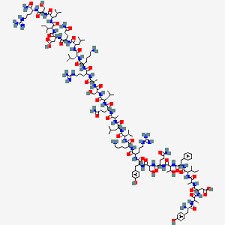
CJC-1295 is a synthetic analogue of growth hormone-releasing hormone (GHRH) and a growth hormone secretagogue (GHS). It was developed in the mid-2000s by ConjuChem Technologies and is widely recognized in research for its potential applications in growth hormone deficiency, sleep enhancement, and longevity studies.
Initially created to address obesity-related issues in HIV/AIDS patients, CJC-1295 has gained attention for its ability to stimulate growth hormone production. Its unique feature lies in the Drug Affinity Complex (DAC) technology, which significantly prolongs its half-life by enabling stronger binding to blood proteins. The standard CJC-1295 peptide, composed of 29 amino acids, has been further refined with DAC to improve its efficacy and duration.
Notably, some confusion surrounds the variations of CJC-1295 available on the market. The original peptide developed by ConjuChem contained DAC, but other manufacturers later produced versions without DAC. These are often labeled as “CJC-1295 Without DAC” or “CJC-1295 No DAC” to distinguish them.
While CJC-1295 shows promise in scientific studies, it remains an investigational compound. It is not approved by the FDA and is available only for research purposes. This article will explore its mechanisms, benefits, and potential applications, offering researchers a comprehensive look into this intriguing peptide.
CJC-1295 interacts with receptors in the pituitary gland to trigger the release of growth hormone (GH) and insulin-like growth factor 1 (IGF-1). These hormones play crucial roles in regulating various physiological processes, including growth, metabolism, and recovery.
The peptide mimics the action of natural growth hormone-releasing hormone (GHRH), leading to increased GH secretion. However, what sets CJC-1295 apart is its extended duration of action. The addition of Drug Affinity Complex (DAC) significantly extends its half-life, allowing GH levels to remain elevated for longer periods compared to alternatives like sermorelin.
Without DAC, CJC-1295 has a very short half-life of about 30 minutes. With DAC, its half-life ranges from 6 to 10 days. This extended duration provides a sustained release of GH and IGF-1, enhancing its potential for applications in research.
Animal studies have confirmed that CJC-1295 binds to receptors in the anterior pituitary gland, activating growth hormone pathways. Its prolonged action makes it a promising tool for studies on muscle growth, fat metabolism, and sleep regulation.
CJC-1295 has gained attention in scientific research for its ability to elevate growth hormone (GH) levels and improve various physiological processes. Researchers are particularly interested in its potential for muscle growth, fat metabolism, and sleep enhancement.
CJC-1295’s ability to boost growth hormone (GH) and insulin-like growth factor 1 (IGF-1) levels has made it a subject of great interest for muscle research. These hormones play a central role in protein synthesis, the process critical for building and repairing muscle tissue.
Preliminary studies suggest that CJC-1295 promotes anabolic activity, potentially increasing muscle mass and aiding recovery. This could make it beneficial in studying muscle-wasting conditions, recovery after injury, or aging-related muscle loss.
To maximize effects, researchers often pair CJC-1295 with ipamorelin. The combination enhances protein synthesis and muscle repair while potentially offering synergistic benefits.
The role of CJC-1295 in fat metabolism has been explored in various studies, with researchers focusing on its ability to regulate hormonal pathways. One of its significant effects is the normalization of prolactin, a hormone associated with fat accumulation in certain conditions.
Animal studies, including research involving GHRH knockout mice, suggest that CJC-1295 promotes effective fat metabolization. This highlights its potential as a tool for studying obesity and metabolic disorders.
Additionally, the combination of CJC-1295 with GHRP-2 has shown even greater promise. GHRP-2 activates a different receptor in the growth hormone pathway, working synergistically with CJC-1295 to enhance fat loss.
Notable benefits of this peptide combination include:
These findings underscore CJC-1295’s potential as a key peptide in fat metabolism research, although more human studies are needed to validate these effects.
CJC-1295’s role in sleep regulation has made it a compelling area of study. By mimicking natural growth hormone-releasing hormone (GHRH), it plays a potential role in improving sleep quality, which is crucial for recovery and overall health.
A study by Fehm et al. investigated the effects of intranasal GHRH on sleep in healthy male participants, divided into young and elderly groups. Participants were administered GHRH or a placebo 30 minutes before bedtime, with sleep monitored throughout the night.
The results were significant:
These findings suggest that GHRH, and by extension CJC-1295, supports dual neuronal and endocrine roles during sleep. This peptide’s potential to promote restorative sleep extends to its ability to improve non-REM sleep. Non-REM sleep, often linked to growth hormone release, aids muscle recovery and overall physical restoration.
Furthermore, GH is known to enhance sleep quality after periods of deprivation. For researchers exploring sleep regulation, CJC-1295 could serve as a valuable tool in studying disorders, recovery, and aging-related sleep challenges.
While the benefits are promising, long-term studies are needed to confirm CJC-1295’s role in improving sleep across different models.
Headaches
Hives
A potential allergic reaction in sensitive individuals.
Anxiety
Initial studies suggest that CJC-1295 exhibits a favorable safety profile for short-term use. Researchers have observed that the peptide is generally well-tolerated, with no significant adverse effects reported during early trials.
Nonetheless, concerns remain about its extended half-life, which ranges from 6 to 10 days. This prolonged activity may pose risks for long-term administration, as sustained hormone release could lead to unintended consequences.
To conclusively determine its safety, comprehensive phase 1 trials with independent validation are essential. Such studies would provide crucial data to evaluate the peptide’s safety over longer durations and in diverse research settings.
The dosage guidelines for CJC-1295 are primarily based on two key studies from 2006, led by Teichman et al. These studies focused on healthy participants aged 21 to 61, utilizing randomized, placebo-controlled, and double-blind methods.
Key findings from the studies include:
Study 1 (28 days)
Study 2 (49 days)
Subjects received either two or three doses per week, or doses biweekly.
Results demonstrated that plasma growth hormone (GH) levels increased by 2- to 10-fold for over six days, and IGF-1 concentrations rose by 1.5- to 3-fold for 9 to 11 days.
The tolerable dose range identified in these studies was between 30 and 60 μg/kg. For example, if you’re 75 kg (165 lbs), a dose within this range would be approximately 2,250 to 4,500 mcg.
Example 1
0.25 mg
Example 2
2.7 mg (2,7000 mcg) to 5.4 mg (5,400mcg)
Example 3
1,950 mcg and 3,900 mcg
While these guidelines provide a strong foundation, it’s important to note that dosages may vary based on individual responses. Further research is necessary to refine these recommendations and establish long-term tolerability.
CJC-1295 formulations vary significantly in their structure and research applications, each providing unique benefits.
CJC-1295 DAC
CJC-1295 DAC (Drug Affinity Complex) is known for its extended half-life, which allows for less frequent dosing. This makes it ideal for researchers looking for sustained effects over time without the need for daily administration. Its long-lasting impact on growth hormone (GH) and IGF-1 production offers potential benefits for muscle growth, fat loss, and overall performance.
CJC-1295 No DAC
CJC-1295 No DAC, on the other hand, has a shorter half-life and requires more frequent dosing. While it is less convenient, it offers researchers the ability to adjust dosages for more immediate effects on GH secretion, leading to faster results in clinical research and testing.
CJC-1295 No DAC + Ipamorelin
When selecting the best formulation, it’s essential to consider the specific needs of the research project. Each variety of CJC-1295 has its advantages, depending on the dosing schedule and desired outcomes.
For outstanding service and reliable product quality, one vendor stands above the rest:
Proper preparation and handling of peptides like CJC-1295 are essential for maintaining research accuracy and reliability. Top researchers understand that having the right supplies in the lab is just as important as the peptides themselves.
What tools are needed A variety of essential items, including:
Bacteriostatic Water
Sterile Empty Glass Vials
Necessary for mixing and storing peptides without contamination.
Insulin Syringes
Proper Storage Containers
No direct evidence links CJC-1295 to weight gain. On the contrary, studies indicate that it may aid in fat loss by regulating prolactin levels, potentially improving body composition.
CJC-1295, originally developed by ConjuChem Technologies, has proven to be a groundbreaking peptide with applications in growth hormone research, muscle development, fat metabolism, and sleep enhancement.
From its ability to stimulate GH and IGF-1 to its extended half-life enabled by DAC technology, CJC-1295 remains a promising focus for scientific exploration. Despite its potential, researchers must consider its investigational status, emphasizing the need for thorough safety studies and proper handling.
Alba, M., Fintini, D., Sagazio, A., Lawrence, B., Castaigne, J. P., Frohman, L. A., & Salvatori, R. (2006)
Once-daily administration of CJC-1295, a long-acting growth hormone-releasing hormone (GHRH) analog, normalizes growth in the GHRH knockout mouse. American Journal of Physiology-Endocrinology and Metabolism, 291(6), E1290-E1294.
Baker, R. C., Implementing‘Moral, R. W. B. I., Noel, P., Ass, W. N. S. D. S., Nirenberg, M., Con, C., … & Exposé, H. (2024)
Gellar, S. (2022)
Peptides: substances of tomorrow–Moving beyond the traditional framework of Performance Enhancing Drugs (PEDs). British Society of Criminology Newsletter, 27.
Ionescu, M., & Frohman, L. A. (2006)
Memdouh, S., Gavrilović, I., Ng, K., Cowan, D., & Abbate, V. (2021)
Advances in the detection of growth hormone releasing hormone synthetic analogs. Drug Testing and Analysis, 13(11-12), 1871-1887.
Next Generation Medicines from Therapeutic Peptides | ConjuChem LLC. Conjuchem.com. (2021)
Retrieved 13 March 2021, from http://www.conjuchem.com/.
Perras, B., Marshall, L., Köhler, G., Born, J., & Fehm, H. L. (1999)
Sleep and endocrine changes after intranasal administration of growth hormone-releasing hormone in young and aged humans. Psychoneuroendocrinology, 24(7), 743-757.
Sackmann-Sala, L., Ding, J., Frohman, L. A., & Kopchick, J. J. (2009)
Activation of the GH/IGF-1 axis by CJC-1295, a long-acting GHRH analog, results in serum protein profile changes in normal adult subjects. Growth Hormone & IGF Research, 19(6), 471-477.
Timms, M., Ganio, K., & Steel, R. (2019)
Van Hout, M. C., & Hearne, E. (2016)

Joe Mars
Founder, The Peptide Report
I’m Joe Mars, and I’ve dedicated the past ten years to understanding peptide therapy, longevity, and how to optimize the body through practical, real-life testing. My journey started when I was tired, inflamed, and aging faster than I should have been. Clear information on peptides was almost impossible to find, so I dug in, researched nonstop, and tested protocols on myself.
Over the years, I have learned from experts like Jay Campbell, Dr. Seeds, Jim LaValle, and Ben Greenfield, and I have completely transformed my health. Now in my fifties, I feel stronger and sharper than I did in my twenties. That experience is why I write. I want to give people simple and honest guidance so they can use peptides safely and effectively.
I believe in data, smart protocols, and taking responsibility for your own health. You are the protocol. Your habits, your consistency, and your awareness shape your results. Through The Peptide Report, I share what actually works so you can make informed decisions and build a healthier, more resilient body.
Instant e-Book Download