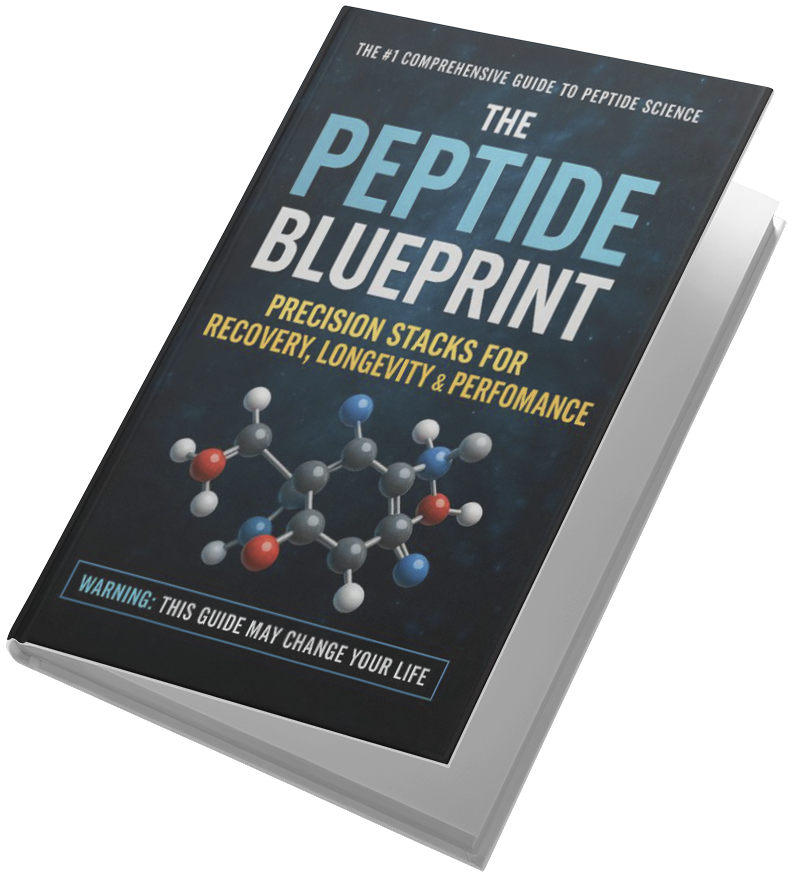
Powder vials
Store at −20 °C (−4 °F) in dry, dark conditions and keep them in the original packaging.

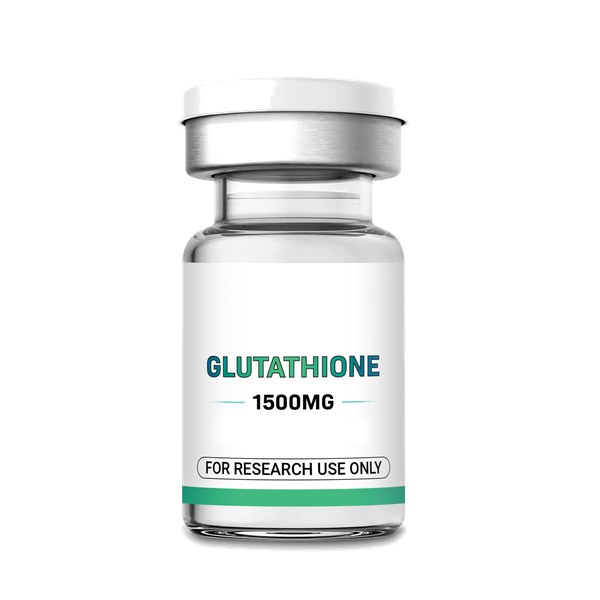
The reported schedule is 200 to 400 mg of glutathione per subcutaneous injection, 2 to 3 mornings a week. With a 1500 mg vial mixed with 5 mL of water, that makes 300 mg per mL, and 200 mg is 67 units on a U-100 syringe. That is a large draw compared with most things on this site, because the amount itself is large. Milligrams, not micrograms.
The amounts in this chart come from online communities. The vial label shows the total peptide in milligrams (mg). The Amount column shows a portion of that total in micrograms (mcg). The syringe mark shows how much liquid corresponds to that amount.
Syringe marks below are based on a 1,500 mg vial with 5 mL of water added. Change vial size or water in the calculator
| Reported | Amount | Volume | Syringe mark (U-100) | Draws per vial |
|---|
Convert your vial to mcg, because 1 mg is the same as 1,000 mcg.
Divide by your water to see how much is in 1 mL.
Find what one unit holds. A U-100 syringe has 100 units in 1 mL.
Divide your amount by what one unit holds.
Follow one step at a time. The steps use the water amount from your calculator.
Find the mg printed on your vial and enter it in the calculator. Let a frozen vial reach room temperature first.
Clean the top of the peptide vial and the water vial with an alcohol swab. Let them dry.
Draw bacteriostatic water with a sterile syringe.
Let the water run down the inside wall of the vial. This helps prevent foaming.
Roll the vial until the powder fully dissolves. Do not shake it hard.
Write today's date on the vial and refrigerate it at 2–8 °C (35.6–46.4 °F), away from light.
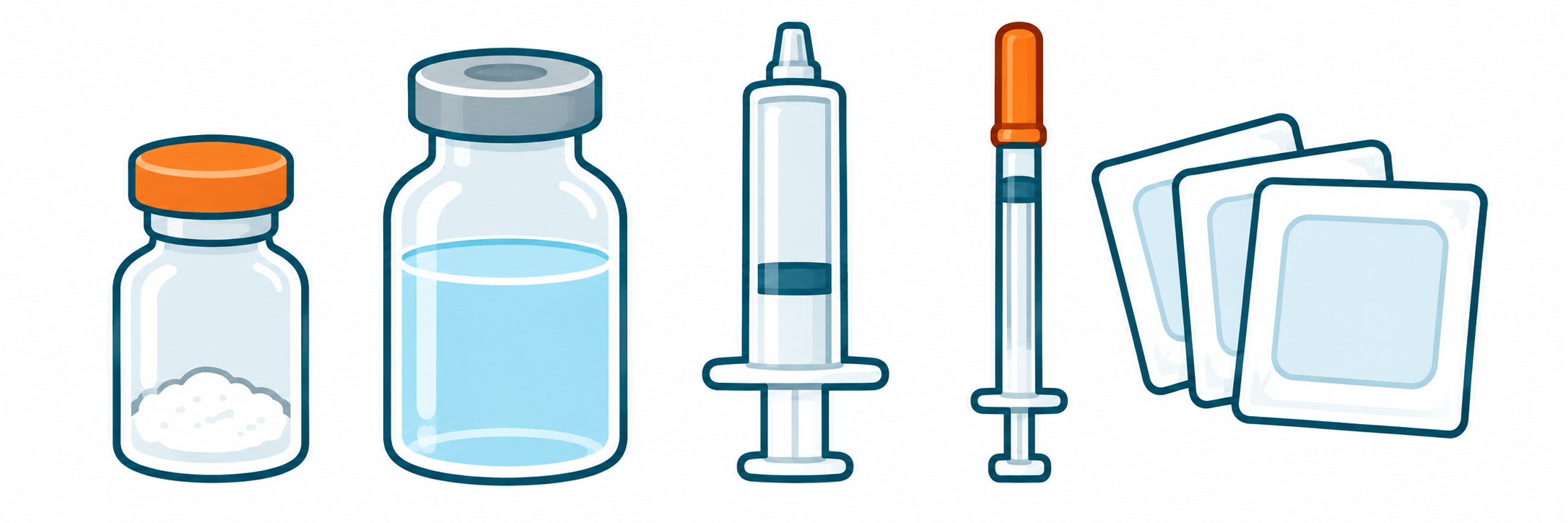
Pick how many weeks you will run it and how many shots you take each week. The list below shows everything you need.
Store at −20 °C (−4 °F) in dry, dark conditions and keep them in the original packaging.
Keep them refrigerated and away from light. How long a mixed vial lasts depends on the product, so check its stability data.
Glutathione is the body's main intracellular antioxidant, built from three amino acids. It is not a signalling peptide like most things here, it is a molecule your cells make and use constantly.
Its described roles are protective: limiting lipid peroxidation, protecting protein thiol groups, and supporting regulated cell turnover. The broader metabolic and immune claims attached to it are stated in much more general terms.
The core role, and the only one described in specific mechanistic terms.
Described in general terms such as insulin sensitivity and lymphocyte function, without specific studies attached.
Up to 500 mg daily by mouth for two months is described as typically well tolerated, with injection preferred for absorption.
The ladder is built in two week steps across 8 to 12 weeks, which is the timescale the protocol works on.
A tripeptide and the primary endogenous intracellular antioxidant. Described as the master antioxidant, which is a fair description of its role rather than marketing.
Limits lipid peroxidation, protects protein thiol groups, supports regulated cell turnover. These are established cell biology rather than contested claims.
The protocol source names no studies, years or authors, and says research has shown throughout. The biology is solid. The specific dosing claims have nothing cited behind them.
Long-term use may lower zinc, which is a practical thing to know across an 8 to 12 week course rather than an abstract risk.
Lyophilized at -20C. Once reconstituted, refrigerate at 2 to 8C and use within one to two weeks. That is a shorter window than most peptides on this site.
Quality varies a lot between sellers. I have been around research peptides for 10 years, and BioEdge is the supplier I send my readers to. Here is why.
The Peptide Report has a business relationship with BioEdge Research Labs. BioEdge sells this product for laboratory research only. BioEdge shipping policy
Pick a tool and try it. Each one uses the numbers from your calculator.
Use the same four steps. Once you can solve these, you can work out the units for any vial you ever pick up.
Your score: 0 correct.
Each line on the syringe is a unit of liquid. A unit measures volume, so the amount of peptide in it depends on your mix.
Tap the syringe or move the slider. The numbers use the vial you entered above. Read the line at the top edge of the plunger.
More water makes the mix weaker, so the same amount takes up more units. The amount of peptide in the vial stays the same.
A draw under 5 units is harder to read accurately. Tap a row to use that water amount.
200 to 400 mg per subcutaneous injection, 2 to 3 mornings a week. The published ladder runs 200 mg for weeks 1 to 2, 400 mg for weeks 3 to 4, then 600 mg from week 5.
With a 1500 mg vial and 5 mL of water you get 300 mg per mL, so 200 mg is 67 units on a U-100 syringe, 400 mg is 133 units and 600 mg is 200 units. Use the calculator if your mix is different.
Milligrams. You will see both written down, including in the same place. Milligrams is the reading under which the concentration and the unit charts agree, and micrograms would be a thousandth of the intended amount.
Because the amount is large. At 200 mg or more you are drawing most of a syringe no matter how you mix it. No water amount changes that.
8 to 12 weeks, optionally 16, then an equal-length break.
Up to 500 mg daily by mouth for two months is described as typically well tolerated, though injection is preferred for absorption.
One to two weeks refrigerated, which is shorter than most peptides.
Most charts assume one vial size and one water amount. If your mix is different, every unit number changes, so run your own numbers.