What is the typical BPC-157 dosage?
Online communities most often report 200 to 600 mcg a day, and 400 mcg comes up the most. Human research has not validated a standard dose.
How many units is 250, 400, or 500 mcg of BPC-157?
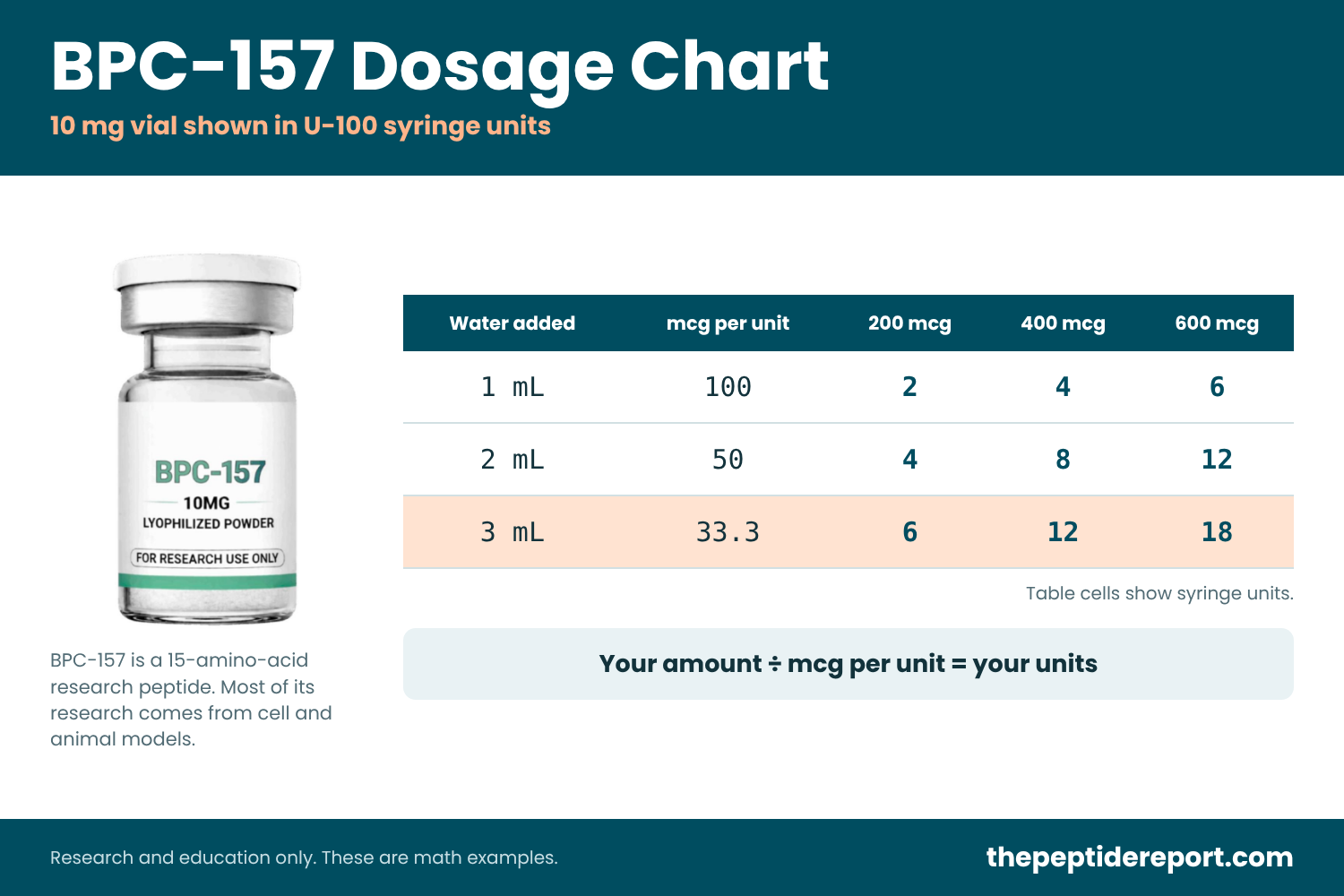
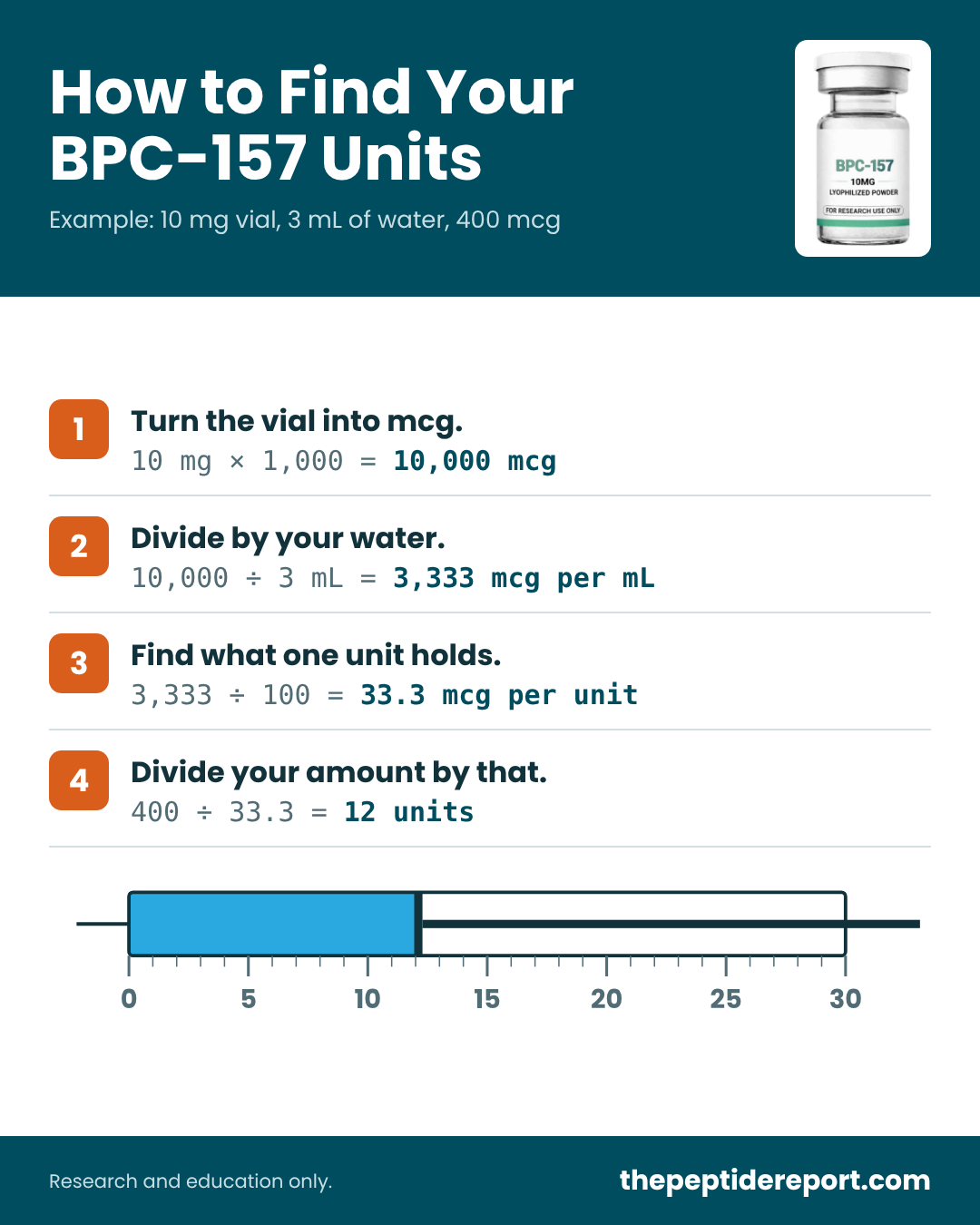
With a 10 mg vial and 3 mL of water, 250 mcg is 7.5 units, 400 mcg is 12 units, and 500 mcg is 15 units. Use the calculator if your mix is different.
How much water goes in a 10 mg vial of BPC-157?
Many people use 3 mL, which makes about 33.3 mcg per unit. Less water makes the mix stronger and uses fewer units for the same amount.
How long do people run BPC-157?
Most people report 12-week cycles, once or twice a year as needed. No study has set a standard cycle length.
Can BPC-157 be taken by mouth?
Capsules exist and people use them, often for gut goals. Oral and injected forms have not been compared in good human studies, so one amount does not convert to the other.
What is the difference between BPC-157 and TB-500?
They are separate peptides. BPC-157 has 15 amino acids and is studied mainly in local tissue and gut models. TB-500 is studied for cell movement and wider tissue repair, and many people pair the two.
Is BPC-157 FDA approved?
No. In July 2026 an FDA advisory committee voted to recommend adding BPC-157 to the list of substances compounding pharmacies can use. That vote is advisory, and it does not approve the drug.
Why don't my units match another chart?
Most charts assume one vial size and one water amount. If your mix is different, every unit number changes, so run your own numbers.
What is the difference between mg, mcg, and units?
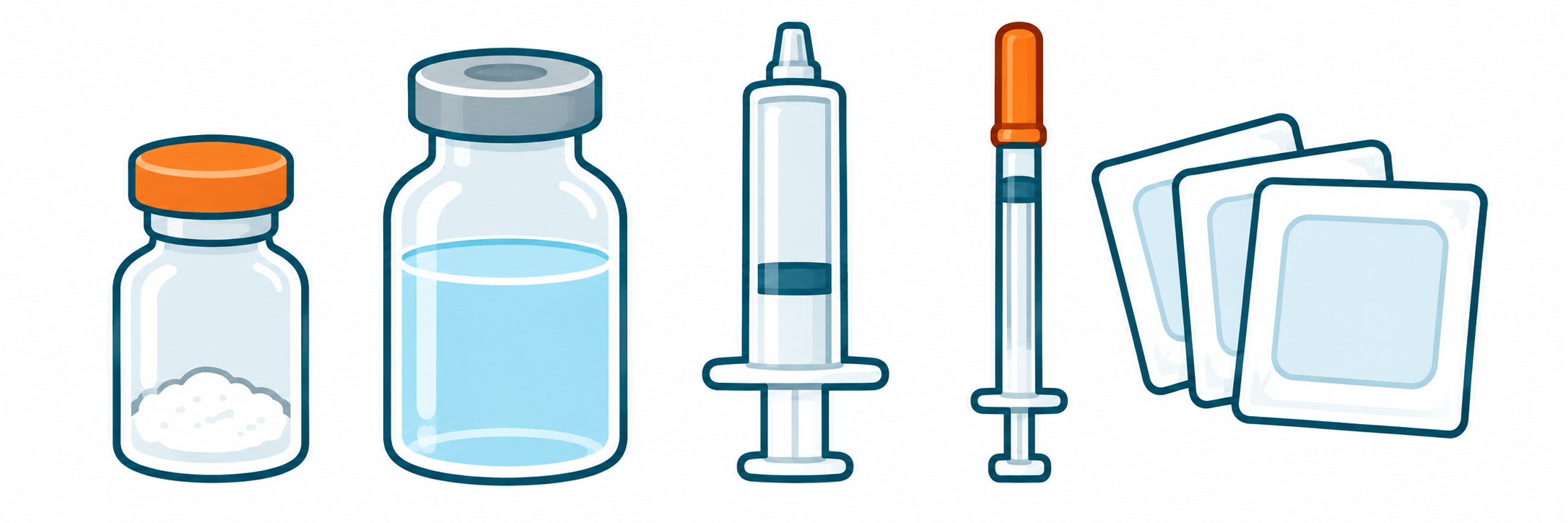
Mg and mcg measure the weight of the peptide, and 1 mg equals 1,000 mcg. Units measure liquid on the syringe, and 100 units equals 1 mL.
What if my result is over 100 units?
A 100-unit syringe holds 1 mL, so that draw is more than one syringe can hold. Check your entries first.