Powder vials
Store at −20 °C (−4 °F) in dry, dark conditions and keep them in the original packaging.

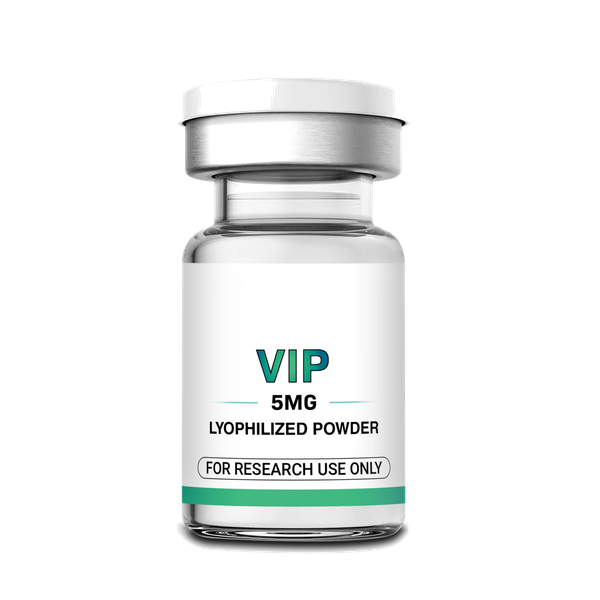
The reported amounts are 50 mcg intranasal in the published protocol and 100 to 200 mcg a day by subcutaneous injection in community reports, run 4 to 12 weeks. With a 5 mg vial mixed with 3 mL of water, 100 mcg is 6 units on a U-100 syringe. The nasal and injected routes are not interchangeable, and the evidence behind both is thinner than it looks.
The amounts in this chart come from online communities. The vial label shows the total peptide in milligrams (mg). The Amount column shows a portion of that total in micrograms (mcg). The syringe mark shows how much liquid corresponds to that amount.
Syringe marks below are based on a 5 mg vial with 3 mL of water added. Change vial size or water in the calculator
| Reported | Amount | Volume | Syringe mark (U-100) | Draws per vial |
|---|
Convert your vial to mcg, because 1 mg is the same as 1,000 mcg.
Divide by your water to see how much is in 1 mL.
Find what one unit holds. A U-100 syringe has 100 units in 1 mL.
Divide your amount by what one unit holds.
Follow one step at a time. The steps use the water amount from your calculator.
Find the mg printed on your vial and enter it in the calculator. Let a frozen vial reach room temperature first.
Clean the top of the peptide vial and the water vial with an alcohol swab. Let them dry.
Draw bacteriostatic water with a sterile syringe.
Let the water run down the inside wall of the vial. This helps prevent foaming.
Roll the vial until the powder fully dissolves. Do not shake it hard.
Write today's date on the vial and refrigerate it at 2–8 °C (35.6–46.4 °F), away from light.
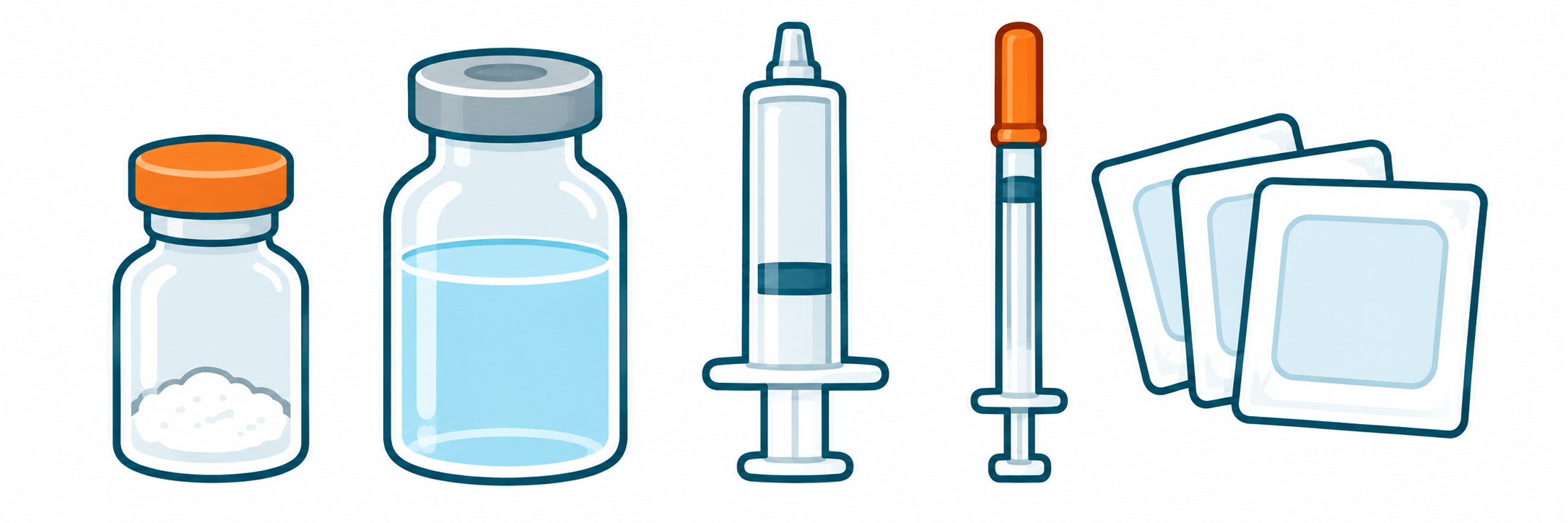
Pick how many weeks you will run it and how many shots you take each week. The list below shows everything you need.
Store at −20 °C (−4 °F) in dry, dark conditions and keep them in the original packaging.
Keep them refrigerated and away from light. How long a mixed vial lasts depends on the product, so check its stability data.
VIP stands for vasoactive intestinal peptide, and unlike most things on this site it is a hormone your own body makes. It turns up across the gut, the lungs and the nervous system, and it has a genuine peer-reviewed literature in those settings.
What it is sold for is narrower than that literature. The protocol people buy it for is a specific one aimed at chronic inflammatory response syndrome, and that part of the evidence is a much smaller and much weaker body of work than VIP research in general.
The reason most people look it up, and the thinnest part of the evidence. It is the final step in a sequential protocol, not a first move.
VIP has real published research here, separate from the protocol it gets sold for.
Peer-reviewed work exists on intestinal regeneration and mucosal immunity, mostly in animals.
The protocol it belongs to is measured in months and in markers rather than in how you feel in week one.
This matters more than any dosing detail. VIP as a molecule has a legitimate peer-reviewed literature. VIP as a CIRS treatment rests on a much smaller body of work from one group, largely self-published and not independently replicated.
Lower inflammatory markers including TGF-beta-1, C4a and MMP-9, with a 2017 paper reporting MRI grey matter volume changes. These are uncontrolled clinical observations rather than controlled trial results.
The protocol puts VIP last, after binder therapy, MARCoNS eradication and hormone correction. Taken on its own, outside that sequence, it is not what was described.
The intranasal preparation used in that protocol is not an approved product. It is compounded.
Peer-reviewed VIP research includes work on intestinal regeneration after radiation injury and on mucosal immunity in animals. None of it involves the CIRS protocol, so it is not evidence for that use.
Quality varies a lot between sellers. I have been around research peptides for 10 years, and BioEdge is the supplier I send my readers to. Here is why.
The Peptide Report has a business relationship with BioEdge Research Labs. BioEdge sells this product for laboratory research only. BioEdge shipping policy
Pick a tool and try it. Each one uses the numbers from your calculator.
Use the same four steps. Once you can solve these, you can work out the units for any vial you ever pick up.
Your score: 0 correct.
Each line on the syringe is a unit of liquid. A unit measures volume, so the amount of peptide in it depends on your mix.
Tap the syringe or move the slider. The numbers use the vial you entered above. Read the line at the top edge of the plunger.
More water makes the mix weaker, so the same amount takes up more units. The amount of peptide in the vial stays the same.
A draw under 5 units is harder to read accurately. Tap a row to use that water amount.
50 mcg is the nasal amount in the published protocol. By subcutaneous injection, community reports give 100 to 200 mcg a day over 4 to 12 weeks.
With a 5 mg vial and 3 mL of water, 100 mcg is 6 units on a U-100 syringe and 200 mcg is 12 units. Use the calculator if your mix is different.
The published protocol is nasal. The injected figure comes from community reports. They are different routes and amounts do not transfer between them.
Weak. It comes largely from one group, is largely self-published, and has not been independently replicated.
That is not what the protocol describes. VIP is its last step, after several earlier ones.
Most charts assume one vial size and one water amount. If your mix is different, every unit number changes, so run your own numbers.