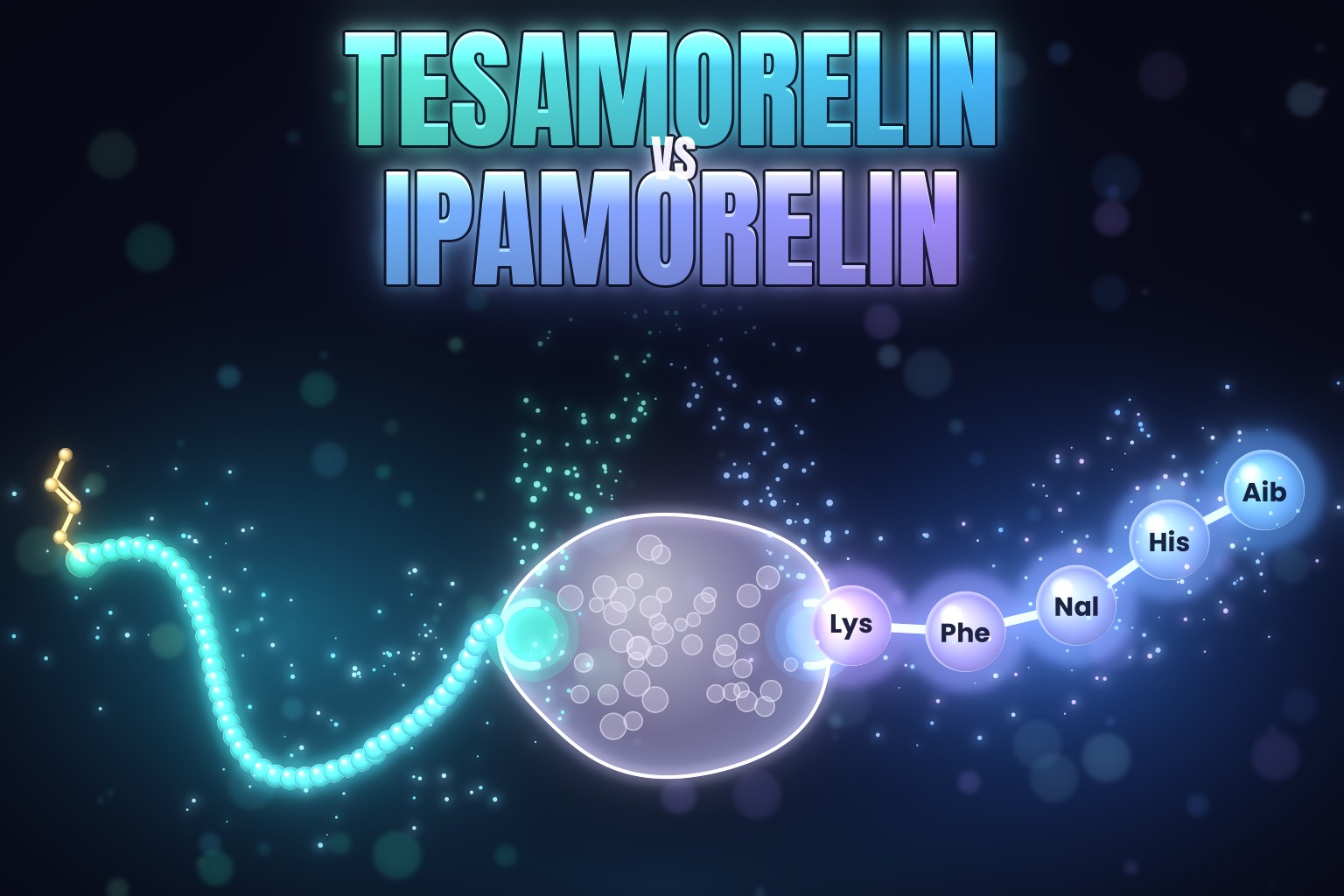
Tesamorelin and ipamorelin both make your pituitary release more of your own growth hormone. They do it through different doors, and the research behind them differs in size and in what it measured, which matters when you compare the numbers.
Tesamorelin is a copy of your body’s growth hormone releasing hormone, reinforced so it lasts longer in blood. It has been through phase 3 trials in more than 800 people, with belly fat measured on CT scans. Ipamorelin is a five-amino-acid peptide that imitates the hunger hormone ghrelin, picked for how cleanly it releases growth hormone and little else. Its human record is two studies, both short.
This article walks through the two mechanisms, the numbers each one has put up, and the reason they so often turn up in the same conversation.
What Each One Is
Tesamorelin: a Stabilized Growth Hormone Releasing Hormone
Growth hormone releasing hormone, GHRH for short, is the 44-amino-acid signal your hypothalamus sends to the pituitary. On its own it is chewed up within minutes by an enzyme called DPP-4. Tesamorelin is that same 44-amino-acid chain with a small fatty acid group, trans-3-hexenoyl, bolted onto the first amino acid. That one addition made it resistant to DPP-4 and stretched its time in circulation: in dogs the half-life ran 21 to 45 minutes.
It weighs about 5,136 daltons and is given as a daily injection under the skin. In people it raises both the baseline and the pulses of growth hormone, and IGF-1 follows.
Ipamorelin: a Five-Amino-Acid Ghrelin Mimic
Ipamorelin came out of a Novo Nordisk chemistry program in the 1990s. It is a pentapeptide, Aib-His-D-2-Nal-D-Phe-Lys-NH2, weighing about 712 daltons. The team was hunting for a growth hormone releasing peptide that would leave other hormones alone, and ipamorelin was the one that did.
In healthy volunteers given a 15-minute infusion, it produced one episode of growth hormone release that peaked around 40 minutes in and then faded, with a terminal half-life of about 2 hours. For the wider family it belongs to, see our guide to growth hormone peptides.
Mechanism of Action: Two Receptors, One Gland
Both peptides act on the same somatotroph cells in the pituitary, but through separate receptors.
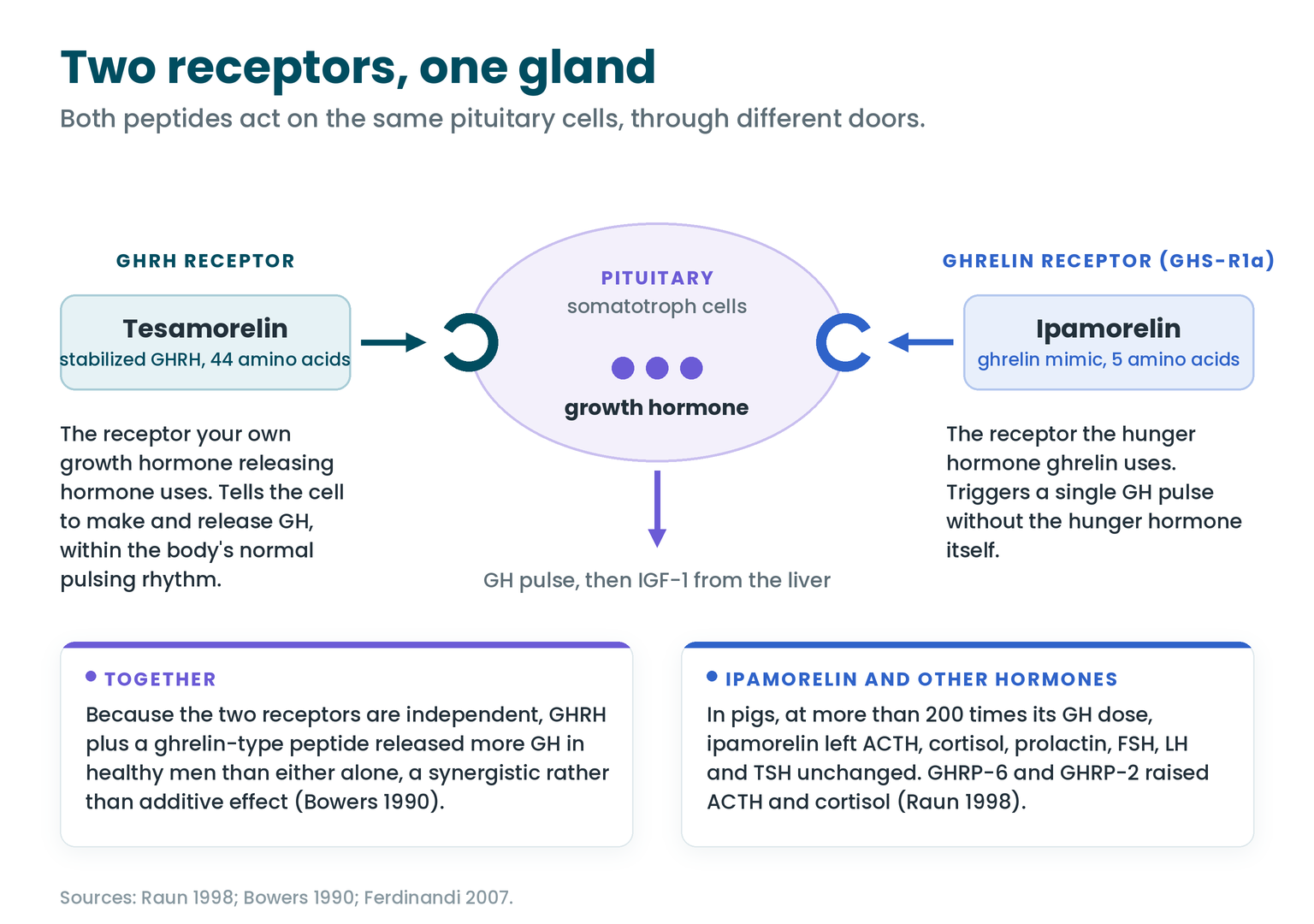
Tesamorelin binds the GHRH receptor, the one the natural hormone uses. It tells the cell to make and release growth hormone and works within the body’s normal pulsing rhythm.
Ipamorelin binds the ghrelin receptor, GHS-R1a. Ghrelin is the stomach hormone that makes you hungry, and the same receptor sits on pituitary cells, where it triggers a growth hormone pulse. Ipamorelin uses that pathway without being ghrelin.
Because the two receptors are independent, they add up. In 1990, Cyril Bowers showed that GHRH plus a sub-maximal dose of a ghrelin-type peptide released more growth hormone in healthy men than either alone, and the effect was synergistic rather than merely additive. That one finding is the reason GHRH analogs and ghrelin mimics are so often discussed as a pair.
Why the Receptor Matters for Cortisol and Prolactin
Older ghrelin mimics such as GHRP-6 and GHRP-2 came with baggage: they raised ACTH and cortisol along with growth hormone, and in Bowers’ study of 18 men the highest GHRP dose doubled prolactin and cortisol too.
Ipamorelin’s 1998 characterization paper tested this directly in pigs. At doses more than 200 times the amount needed for a half-maximal growth hormone response, ipamorelin produced no significant rise in ACTH or cortisol, and left FSH, LH, prolactin and TSH untouched. Its selectivity matched GHRH’s. That is the whole reason it was named “the first selective growth hormone secretagogue,” and it is the main reason people reach for it over GHRP-6.
Tesamorelin vs Ipamorelin for Fat Loss
Tesamorelin: the Phase 3 Numbers
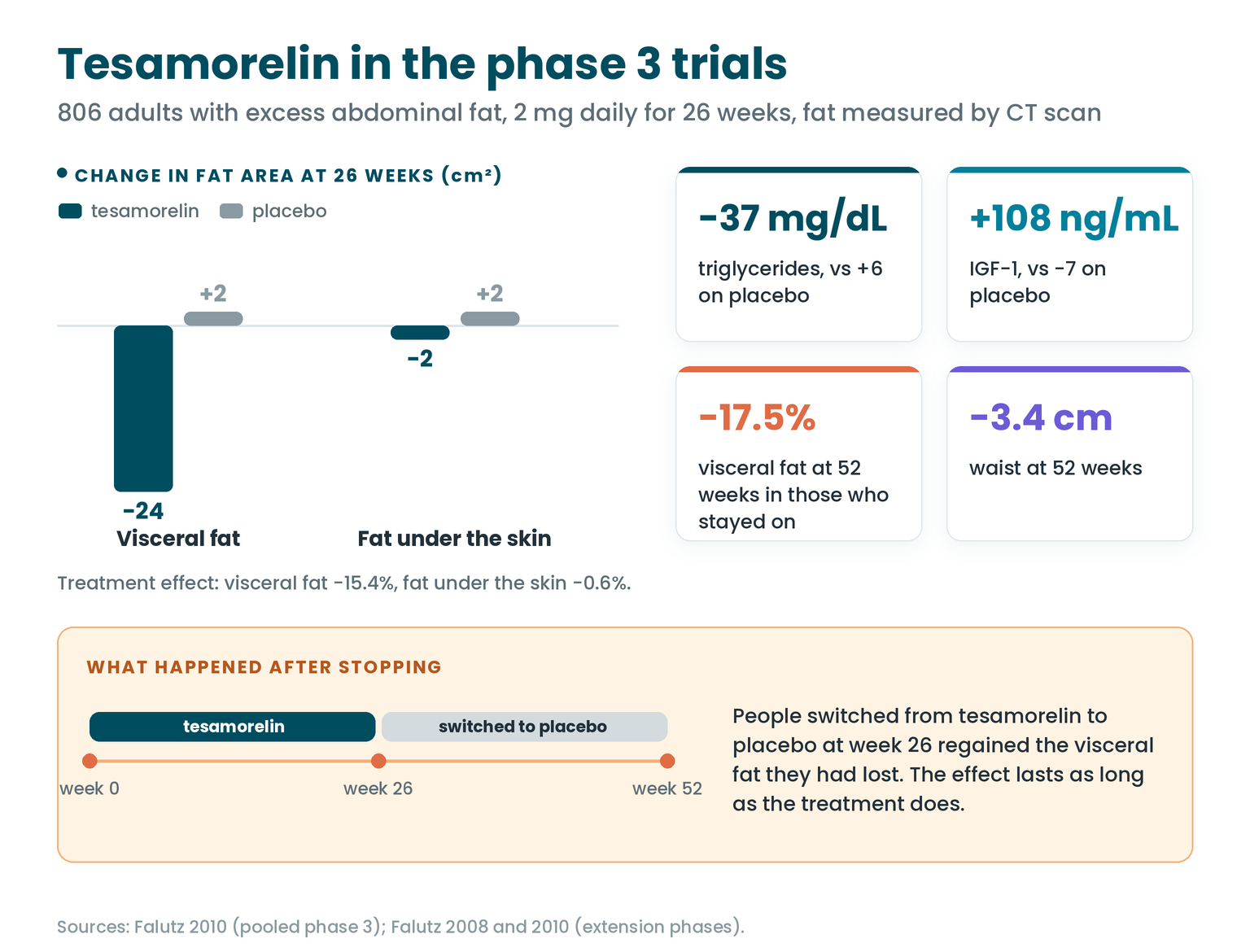
Tesamorelin’s main evidence comes from two 26-week phase 3 trials in 806 adults with HIV and excess abdominal fat, pooled in 2010. Visceral fat, the deep fat around the organs, was measured on CT scans.
At 26 weeks, visceral fat fell by 24 cm² on tesamorelin versus a 2 cm² gain on placebo, a treatment effect of 15.4%. Fat under the skin of the abdomen stayed put, which is unusual: most things that cut fat take it from everywhere. Triglycerides dropped 37 mg/dL against a 6 mg/dL rise on placebo, and IGF-1 rose by 108 ng/mL. People who stayed on the drug for a full year held a 17.5% visceral fat reduction and lost 3.4 cm off the waist.
The flip side showed up in the extension phases: when people switched from tesamorelin to placebo, the visceral fat came back.
The effect holds outside HIV too. In 60 abdominally obese adults with low growth hormone output, 12 months of tesamorelin cut visceral fat by 16 cm² while the placebo group gained 19 cm², with triglycerides, C-reactive protein and carotid artery wall thickness all improving. In a 20-week trial of 152 older adults, body fat fell 7.4%. Our deeper piece on tesamorelin and visceral fat goes through these trials one by one.
Ipamorelin: What the Studies Measured
Ipamorelin’s two human studies measured growth hormone release in healthy male volunteers and gut recovery in 117 patients after bowel surgery. In rats, 15 days of ipamorelin increased bone growth rate and produced a pronounced, dose-dependent gain in body weight, with total IGF-1 unchanged. What gets said about ipamorelin and fat loss online comes from how growth hormone behaves in general; the ipamorelin studies themselves measured other things.
Here is the matchup, point by point.
Tesamorelin vs Ipamorelin, Point by Point
Pick a topic to see both sides, with the study each answer comes from.
Your last topic is remembered in this browser.
Fat Quality and Liver Fat
The first paper on fat quality is a 2021 analysis of the phase 3 data. Researchers measured fat density on the CT scans, where denser fat means smaller, healthier fat cells. In 193 people who responded to tesamorelin, both visceral and subcutaneous fat became denser over 26 weeks (+6.2 and +4.0 Hounsfield units), against almost no change in 148 placebo patients. The change held even after accounting for how much fat they lost, so the fat that stayed was in better shape.
Liver fat moved too. A 50-person trial at Massachusetts General Hospital found tesamorelin reduced liver fat over 6 months alongside the visceral fat loss. A follow-up trial in 61 people with HIV and fatty liver disease ran for 12 months: liver fat fell by a relative 37%, and 35% of the tesamorelin group ended with a liver fat fraction under 5%, the normal range, versus 4% on placebo.
Tesamorelin vs Ipamorelin for Muscle
In the 12-week dose-ranging trial that preceded phase 3, lean body mass improved on tesamorelin versus placebo. A later look at the phase 3 CT scans measured the trunk muscles directly: in responders, four muscle groups grew denser, and the rectus and psoas muscles grew in cross-sectional area by about 0.4 to 0.5 cm² each over 26 weeks. The researchers called it increased muscle quality and quantity.
Ipamorelin’s muscle data comes from rats. In 8-month-old rats given a muscle-wasting steroid (methylprednisolone) for three months, adding ipamorelin at 100 µg/kg three times a day raised maximum calf muscle force and quadrupled the rate of new bone formation compared with the steroid alone. Twelve weeks of ipamorelin in adult female rats also increased bone mineral content, by making the bones bigger rather than denser.
Blood Sugar and Side Effects
Growth hormone pushes blood sugar up, so every tesamorelin trial tracked it. Across the phase 3 trials there were no clinically meaningful differences in glucose at 26 or 52 weeks. The liver fat trial saw fasting glucose tick up 9 mg/dL at two weeks, then settle, with no difference at 6 months. In 53 people with type 2 diabetes, 12 weeks of tesamorelin at 1 or 2 mg left insulin response, fasting glucose and HbA1c unchanged, while total and non-HDL cholesterol fell at the 2 mg dose.
The side effects that did show up were the growth hormone kind: injection-site reactions, joint pain, headache and fluid retention, with serious events in under 4% of patients over 26 weeks. In the older-adult cognition trial, 68% of the tesamorelin group reported a mild adverse event, against 36% on placebo. Which means a lot of people on placebo also had something to report.
Ipamorelin’s own glucose data is a rat pancreas study: in tissue fragments from normal and diabetic rats, it triggered insulin release through calcium channels and adrenergic receptors. Its safety data in people is thinner but clean so far. In the surgical trial, 0.03 mg/kg by IV twice a day for up to a week was well tolerated, with adverse events reported by 87.5% of the ipamorelin group and 94.8% of the placebo group, in people recovering from bowel surgery. For a closer look, see ipamorelin side effects.
The Human Trial Record
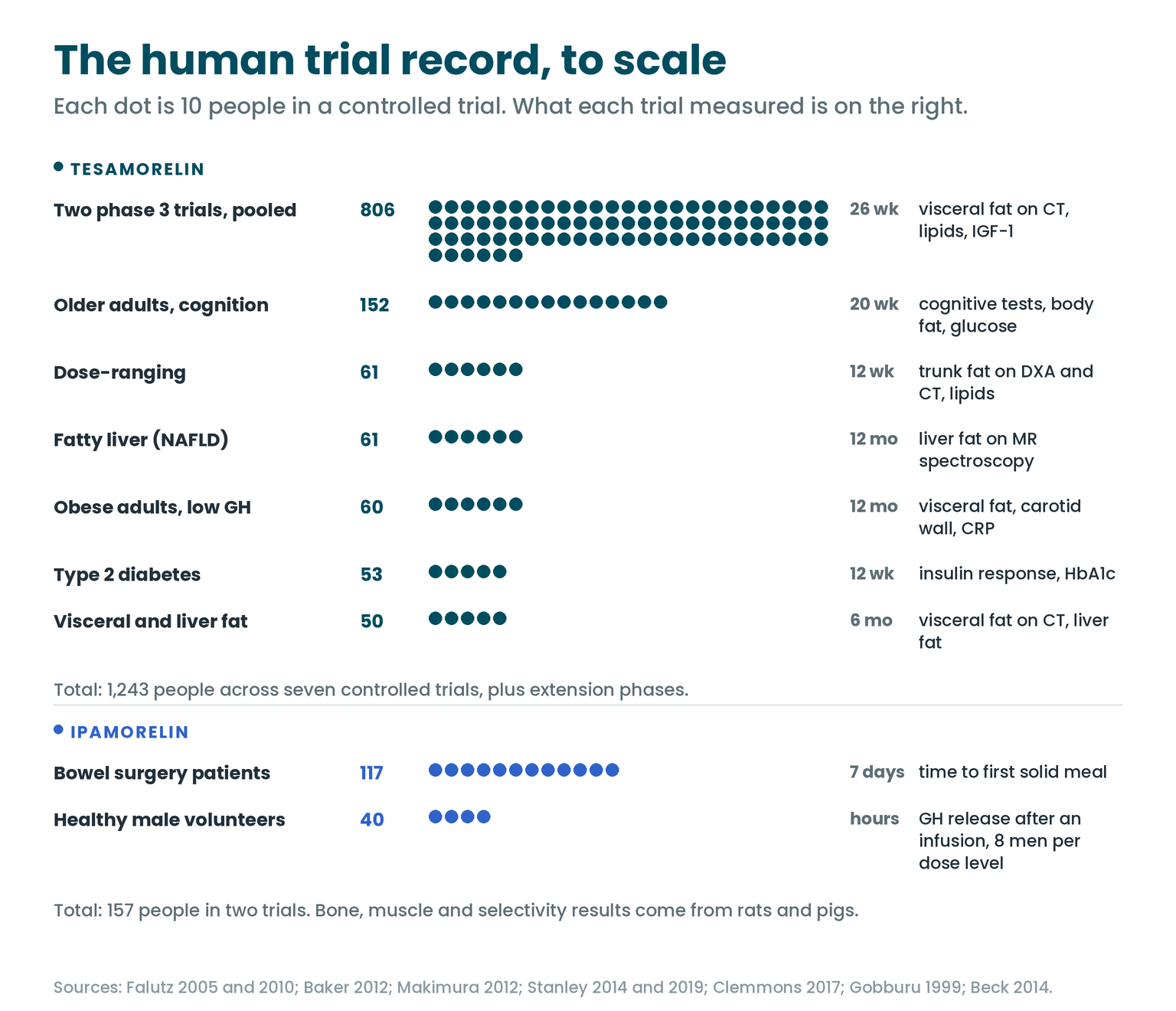
Here is the part of the comparison that gets skipped. Tesamorelin has been given to well over a thousand people across controlled trials: 806 in the phase 3 pair, 61 in dose-ranging, 60 obese adults, 152 older adults, 50 and 61 in the liver trials, 53 with diabetes. Each one measured a hard outcome on a scan or a blood panel.
Ipamorelin’s human record is a volunteer study with eight men at each of five doses, whose growth hormone was tracked for a few hours, and 117 surgical patients whose first solid meal was timed. Everything else on ipamorelin, including the bone and muscle results above, comes from animals, mostly rats and pigs.
Why They’re Often Paired
The Bowers synergy is the reason. GHRH analogs tell the pituitary how much to make; ghrelin mimics trigger the release. Hit both receptors and the gland puts out more than either signal alone can coax from it. That same logic drives the CJC-1295 and ipamorelin combination, which we cover in the synergistic effects of ipamorelin and CJC-1295.
The synergy itself has been shown in people with GHRH and GHRP-6, the older ghrelin mimic. Ipamorelin acts through the same receptor as GHRP-6, so the mechanism carries over, but the specific tesamorelin and ipamorelin pairing has never been put through a trial of its own.
Doses Used in the Research
- Tesamorelin: 2 mg once daily under the skin in every phase 3 and liver trial; 1 mg daily in the older-adult cognition trial and as the lower arm in the dose-ranging and diabetes trials. In the dose-ranging trial, IGF-1 rose 48% on 1 mg and 65% on 2 mg.
- Ipamorelin in people: 15-minute IV infusions of 4.2 to 140 nmol/kg in the volunteer study (about 3 to 100 µg/kg), and 0.03 mg/kg IV twice daily for up to 7 days in the surgical trial.
- Ipamorelin in rats: 18 to 450 µg per day split into three injections for the bone growth study; 100 µg/kg three times daily for the steroid study; 0.5 mg/kg per day by continuous pump for 12 weeks in the bone mineral study. Nasal absorption in rats was about 20%.
FAQ
Is tesamorelin stronger than ipamorelin?
They work on different receptors, so there is no single potency scale. Tesamorelin raises baseline and pulsatile growth hormone for as long as it is taken, with IGF-1 rising around 100 ng/mL in the trials. Ipamorelin triggers one growth hormone pulse per dose that peaks at about 40 minutes.
Does ipamorelin raise cortisol?
In pigs it produced no significant rise in ACTH or cortisol even at more than 200 times its growth hormone dose, which is where its reputation for selectivity comes from. The older peptides GHRP-6 and GHRP-2 do raise both.
Which one targets belly fat?
Tesamorelin is the one with the data: a 15.4% visceral fat reduction over 26 weeks in the phase 3 trials, with fat under the skin unchanged. Ipamorelin’s trials measured growth hormone and gut recovery rather than fat.
Do tesamorelin’s results last after stopping?
In the phase 3 extension, people switched from tesamorelin to placebo regained the visceral fat they had lost within 26 weeks.
Does tesamorelin affect blood sugar?
Fasting glucose rose by about 9 mg/dL in the first two weeks of one trial and then returned to baseline. Across 52 weeks of phase 3 data and a 12-week trial in people with type 2 diabetes, glucose and HbA1c showed no meaningful change.
How is ipamorelin different from sermorelin?
Sermorelin is a shortened GHRH, so it sits on tesamorelin’s side of the receptor divide. Ipamorelin works through the ghrelin receptor instead. We compare them in ipamorelin vs sermorelin, and ipamorelin against an oral ghrelin mimic in MK-677 vs ipamorelin.
References
- Ferdinandi ES, et al. Non-clinical pharmacology and safety evaluation of TH9507, a human growth hormone-releasing factor analogue. Basic Clin Pharmacol Toxicol. 2007;100(1):49-58. DOI
- González-Sales M, et al. Population pharmacokinetic analysis of tesamorelin in HIV-infected patients and healthy subjects. Clin Pharmacokinet. 2015;54(3):285-294. DOI
- Raun K, et al. Ipamorelin, the first selective growth hormone secretagogue. Eur J Endocrinol. 1998;139(5):552-561. DOI
- Gobburu JV, et al. Pharmacokinetic-pharmacodynamic modeling of ipamorelin, a growth hormone releasing peptide, in human volunteers. Pharm Res. 1999;16(9):1412-1416. DOI
- Bowers CY, et al. Growth hormone (GH)-releasing peptide stimulates GH release in normal men and acts synergistically with GH-releasing hormone. J Clin Endocrinol Metab. 1990;70(4):975-982. DOI
- Falutz J, et al. Effects of tesamorelin (TH9507), a growth hormone-releasing factor analog, in HIV-infected patients with excess abdominal fat: a pooled analysis of two multicenter, double-blind placebo-controlled phase 3 trials with safety extension data. J Clin Endocrinol Metab. 2010;95(9):4291-4304. DOI
- Falutz J, et al. Long-term safety and effects of tesamorelin, a growth hormone-releasing factor analogue, in HIV patients with abdominal fat accumulation. AIDS. 2008;22(14):1719-1728. DOI
- Falutz J, et al. Effects of tesamorelin, a growth hormone-releasing factor, in HIV-infected patients with abdominal fat accumulation: a randomized placebo-controlled trial with a safety extension. J Acquir Immune Defic Syndr. 2010;53(3):311-322. DOI
- Falutz J, et al. A placebo-controlled, dose-ranging study of a growth hormone releasing factor in HIV-infected patients with abdominal fat accumulation. AIDS. 2005;19(12):1279-1287. DOI
- Makimura H, et al. Metabolic effects of a growth hormone-releasing factor in obese subjects with reduced growth hormone secretion: a randomized controlled trial. J Clin Endocrinol Metab. 2012;97(12):4769-4779. DOI
- Baker LD, et al. Effects of growth hormone-releasing hormone on cognitive function in adults with mild cognitive impairment and healthy older adults: results of a controlled trial. Arch Neurol. 2012;69(11):1420-1429. DOI
- Johansen PB, et al. Ipamorelin, a new growth-hormone-releasing peptide, induces longitudinal bone growth in rats. Growth Horm IGF Res. 1999;9(2):106-113. DOI
- Beck DE, et al. Prospective, randomized, controlled, proof-of-concept study of the ghrelin mimetic ipamorelin for the management of postoperative ileus in bowel resection patients. Int J Colorectal Dis. 2014;29(12):1527-1534. DOI
- Lake JE, et al. Tesamorelin improves fat quality independent of changes in fat quantity. AIDS. 2021;35(9):1395-1402. DOI
- Stanley TL, et al. Effect of tesamorelin on visceral fat and liver fat in HIV-infected patients with abdominal fat accumulation: a randomized clinical trial. JAMA. 2014;312(4):380-389. DOI
- Stanley TL, et al. Effects of tesamorelin on non-alcoholic fatty liver disease in HIV: a randomised, double-blind, multicentre trial. Lancet HIV. 2019;6(12):e821-e830. DOI
- Adrian S, et al. The growth hormone releasing hormone analogue, tesamorelin, decreases muscle fat and increases muscle area in adults with HIV. J Frailty Aging. 2019;8(3):154-159. DOI
- Andersen NB, et al. The growth hormone secretagogue ipamorelin counteracts glucocorticoid-induced decrease in bone formation of adult rats. Growth Horm IGF Res. 2001;11(5):266-272. DOI
- Svensson J, et al. The GH secretagogues ipamorelin and GH-releasing peptide-6 increase bone mineral content in adult female rats. J Endocrinol. 2000;165(3):569-577. DOI
- Clemmons DR, et al. Safety and metabolic effects of tesamorelin, a growth hormone-releasing factor analogue, in patients with type 2 diabetes: a randomized, placebo-controlled trial. PLoS One. 2017;12(6):e0179538. DOI
- Dhillon S. Tesamorelin: a review of its use in the management of HIV-associated lipodystrophy. Drugs. 2011;71(8):1071-1091. DOI
- Johansen PB, et al. Pharmacokinetic evaluation of ipamorelin and other peptidyl growth hormone secretagogues with emphasis on nasal absorption. Xenobiotica. 1998;28(11):1083-1092. DOI
- Adeghate E, Ponery AS. Mechanism of ipamorelin-evoked insulin release from the pancreas of normal and diabetic rats. Neuro Endocrinol Lett. 2004;25(6):403-406. PubMed
Stay sharp,
Joe Mars
The Peptide Report
P.S. If you’re weighing these two for a specific goal, the Peptides and Biohacking Hub on Skool is where our members compare notes on what they actually measured. It’s free. Come join us.