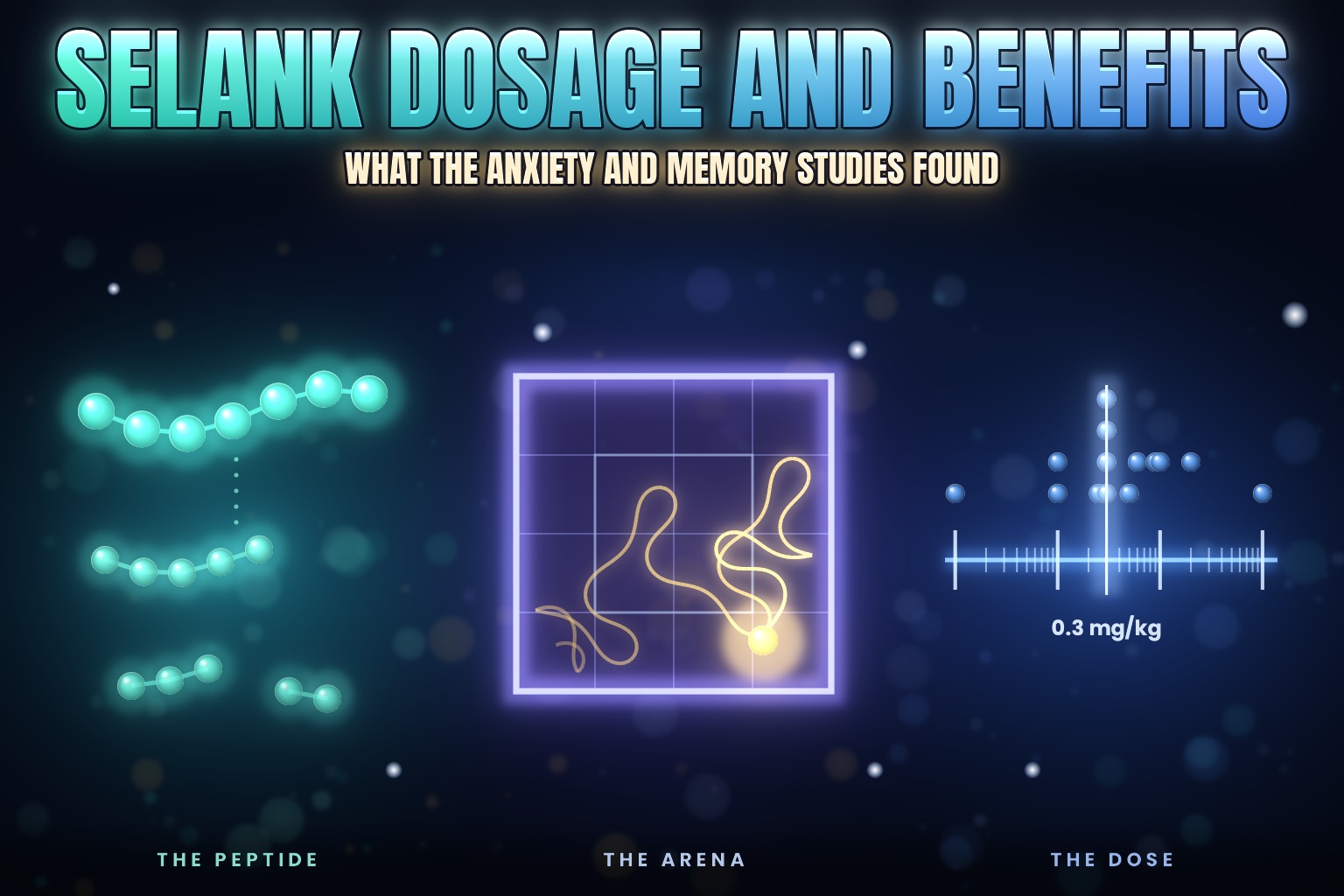
Give the same dose of selank to two strains of lab mice. In the anxious strain, it acts like a calming drug, and the mice start moving around an open arena again. In the calm strain, nothing changes.
That split shows up again and again in the selank research, and it says a lot about the peptide and about its dosing.
Here’s what the human trials and the animal studies gave, how much, by which route, and what they found.
What Selank Is, and What “Amidate” Means
Selank is a synthetic seven-unit peptide (a heptapeptide) built from tuftsin, a natural four-unit peptide. Semenova’s group describes it as stable against the tissue enzymes that break peptides down. It has been studied mainly as an anti-anxiety drug, and nearly all of its research has been published by Russian groups.
“Amidate” refers to capping a peptide’s tail end as an amide, the same kind of change our N-Acetyl Semax Amidate post walks through. Every study in this post was run on selank itself.
The Anxiety Trials in People
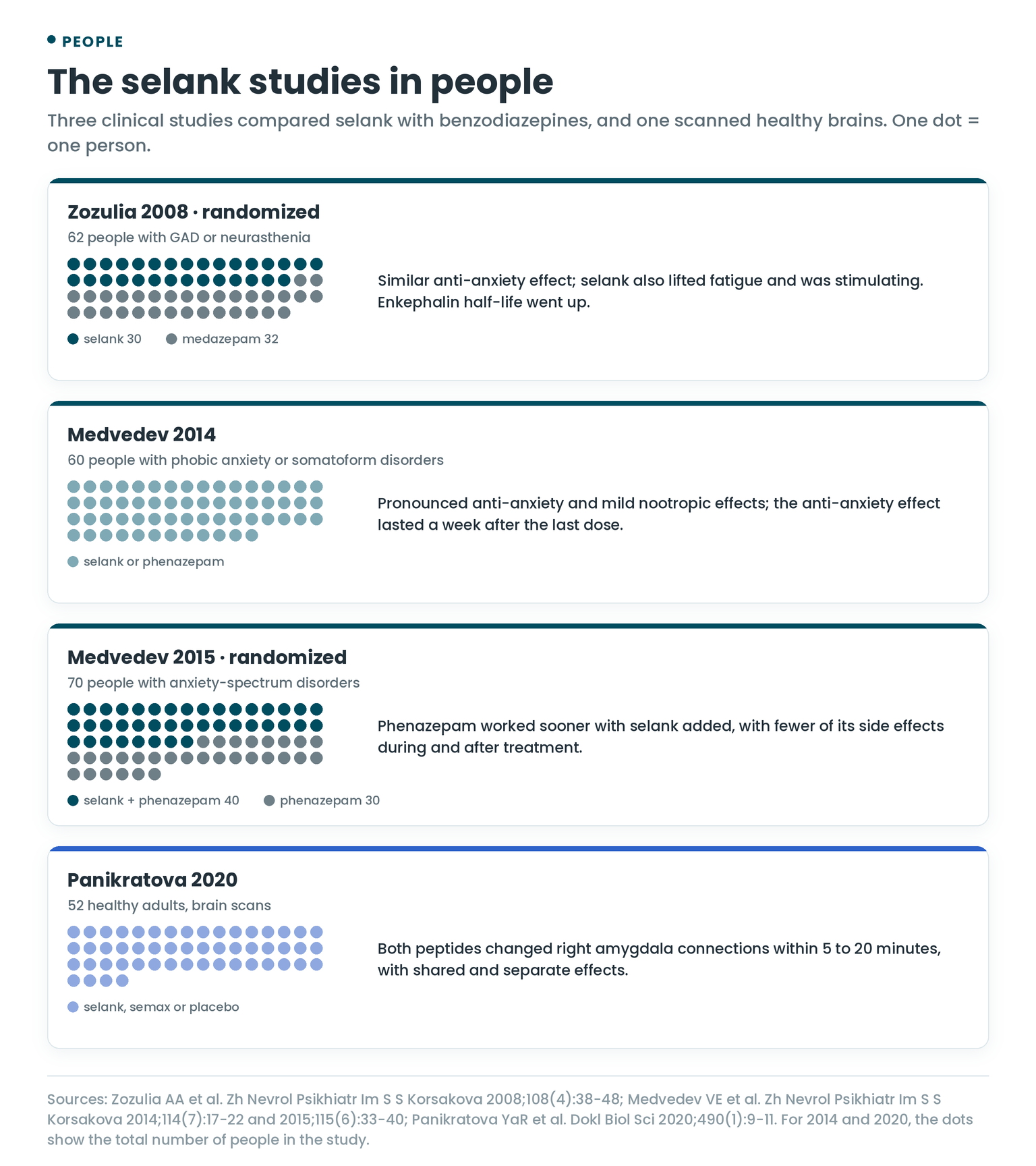
Three clinical studies have compared selank with benzodiazepines, the classic anti-anxiety drugs.
Selank vs medazepam. In Zozulia’s 2008 randomized trial, 62 people with generalized anxiety disorder (GAD) or neurasthenia, a condition of chronic fatigue and irritability, got either selank (30 people) or medazepam (32). They were scored on the Hamilton, Zung and CGI scales:
- The anti-anxiety effect of the two was similar.
- Selank also lifted fatigue and had a stimulating effect.
- Enkephalins, the body’s own calming opioid peptides, broke down unusually fast in the patients’ blood, and faster in those with longer and more severe illness. During selank treatment, the enkephalin half-life went up, mostly in the GAD patients.
Selank vs phenazepam. Medvedev’s 2014 study compared selank with phenazepam in 60 people with phobic anxiety and somatoform disorders. Selank had a pronounced anti-anxiety effect and a mild nootropic (memory and thinking) effect. The anti-anxiety effect lasted a week after the last dose, and quality of life improved.
Selank added to phenazepam. In Medvedev’s 2015 randomized trial, 70 patients with anxiety-phobic, hypochondriac and somatoform disorders were split: 30 took phenazepam alone and 40 took phenazepam plus selank. The team rated symptoms on the Hamilton and CGI scales and anxiety on the Spielberger scale, attention with the Stroop test and verbal fluency, side effects on the UKU scale, and quality of life on the SF-36:
- With selank added, phenazepam’s benefit on the Hamilton scale came sooner.
- Phenazepam’s side effects dropped, both during treatment and after it was stopped. Those included attention and memory problems, fatigue, sedation, oversleeping, sexual problems, emotional flatness and dizziness on standing.
- Quality of life on the SF-36 improved.
A brain scan study. In 2020, Panikratova’s group scanned 52 healthy people with resting-state fMRI before, and 5 and 20 minutes after, a dose of selank, semax or placebo. They looked at the amygdala, a key region for anxiety, and the dorsolateral prefrontal cortex, which handles planning and working memory. Both peptides changed the connection between the right amygdala and a stretch of the right temporal lobe that includes the fusiform and parahippocampal gyri, with effects the two shared and effects specific to each.
The four human studies at a glance:
| Study | People | Compared with | What it found |
|---|---|---|---|
| Zozulia 2008 (randomized) | 62 with GAD or neurasthenia | Medazepam | Similar anti-anxiety effect; less fatigue; enkephalin half-life up |
| Medvedev 2014 | 60 with phobic anxiety or somatoform disorders | Phenazepam | Pronounced anti-anxiety and mild nootropic effects, lasting a week after the last dose |
| Medvedev 2015 (randomized) | 70 with anxiety-spectrum disorders | Phenazepam alone | Faster benefit and fewer phenazepam side effects with selank added |
| Panikratova 2020 | 52 healthy adults | Semax and placebo | Changed right amygdala connections within 20 minutes |
For other peptides studied against stress and anxiety, see our stress post.
How Selank Seems to Work
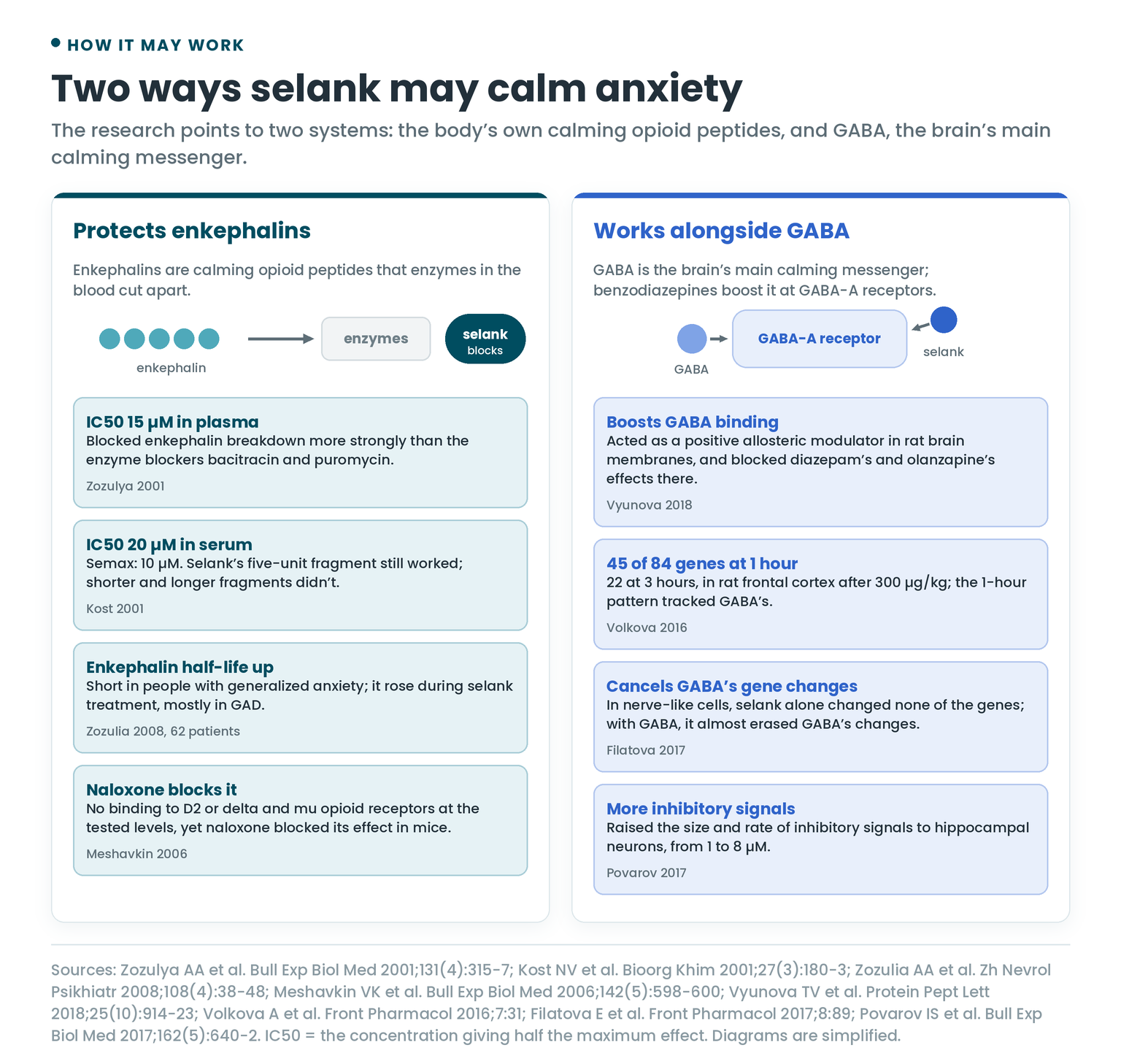
Two lines of research run through the selank literature.
It slows the breakdown of enkephalins
Zozulya’s group found in 2001 that people with generalized anxiety had a much shorter enkephalin half-life in their blood, while people with panic disorder or agoraphobia didn’t, likely because they had less of the body’s own enzyme blockers. Selank blocked the enzymes that break enkephalins down, reaching half its maximum effect at 15 µM (its IC50). It was stronger than the standard enzyme blockers bacitracin and puromycin.
Kost’s 2001 study from the same group tested human serum. Semax reached half its maximum blocking effect at 10 µM and selank at 20 µM, both far stronger than puromycin (10 mM). Selank’s five-unit breakdown fragment still worked. Its three-, four- and six-unit fragments didn’t. Those same enzymes break down other regulatory peptides too, which the authors suggest is one way both peptides act.
Two mouse studies tie that enzyme effect to behavior:
- Selank didn’t bind dopamine D2 receptors or delta and mu opioid receptors in rat brain tissue at the concentrations tested, yet naloxone, an opioid blocker, blocked its calming effect on dopamine-driven behavior in mice. That calming effect was comparable to the antipsychotic olanzapine’s at 0.1 and 1.0 mg/kg (Meshavkin 2006).
- Even untreated, the two mouse strains differed in how fast enkephalin broke down in their blood. At 100 µg/kg, selank calmed the anxious strain and lengthened enkephalin’s half-life in its blood. In the calm strain, it changed neither (Sokolov 2002).
It works alongside GABA
GABA is the brain’s main calming messenger, and benzodiazepines boost its action at GABA-A receptors. Selank does something related:
- In rat brain membranes, selank acted as a positive allosteric modulator of GABA binding, boosting it from a separate spot. Paired with some benzodiazepines, the combined effect wasn’t simply additive. Selank also blocked the binding changes caused by diazepam and olanzapine, and the authors concluded its binding site probably differs from theirs but may partly overlap (Vyunova 2018).
- In rats given 300 µg/kg, 45 of 84 neurotransmission genes in the frontal cortex changed 1 hour later and 22 after 3 hours, and the 1-hour pattern correlated with GABA’s own (Volkova 2016).
- In human nerve-like cells, selank alone changed none of those genes. Given with GABA, it almost completely erased GABA’s gene changes, and given with olanzapine it changed more genes than olanzapine alone (Filatova 2017).
- On slices of rat hippocampus, selank raised the size and rate of the inhibitory signals reaching CA1 neurons, sometimes after a brief dip, with no clear dose effect between 1 and 8 µM (Povarov 2017).
At 0.3 mg/kg, selank also shifted brain chemistry differently in each mouse strain. Norepinephrine in the hypothalamus rose in both. Dopamine breakdown products went up in the calm strain’s frontal cortex and hippocampus and down in the anxious strain’s. Serotonin fell in the anxious strain’s hippocampus only (Narkevich 2008).
The Anxious Strain Responds
BALB/c mice are an anxious strain that reacts to stress passively. C57BL/6 mice are less anxious and react actively. Across studies, selank’s calming effect showed up mostly in the first:
- 100 µg/kg: calmer behavior in an open arena for BALB/c, no change for C57BL/6 (Sokolov 2002).
- 0.25 mg/kg: more movement in the arena for BALB/c, no change for C57BL/6 (Kozlovskii 2012).
- 300 µg/kg a day for 5 days: anti-anxiety and nootropic effects in BALB/c only, whether given by injection into the belly or into the nose (Vasil’eva 2016).
The opioid system shapes that split. Naloxone pretreatment made BALB/c mice less sensitive to selank and C57BL/6 mice more sensitive (Kozlovskii 2012). Try the combinations yourself:
Memory and Learning in Animals
Selank’s memory research is all in rats, and nearly all at 300 µg/kg:
- Slow learners. Given 15 minutes before training for 4 days, selank made rats that learned poorly at the start get more answers right and fewer wrong from day 1 (p < 0.05). In normal rats, its biggest effect came on day 3. It was compared with piracetam at 400 mg/kg (Kozlovskii and Danchev 2003).
- Memory storage. Rats trained for food rewards got one injection after their 10th trial. Their memory of the task was more stable over 30 days, and serotonin activity in the hypothalamus and brain stem rose for 30 minutes to 2 hours (Semenova 2010).
- Damaged dopamine and noradrenaline systems. In adult rats given a nerve toxin in their first 3 days of life, selank restored learning, memory and attention to sensory signals (Semenova 2007).
- Blocked protein building. In a 16-door maze where rats learned to find the escape route while avoiding mild shocks, 0.5 mg/kg of selank protected learning and memory when actinomycin D, a drug that stops cells making new proteins, was given, whether the memory was being formed, refined or stored. It also sped up learning and restored re-learning when the escape routes changed (Kozlovskii 2013).
Monkeys. In a 2008 study in rhesus monkeys with stress-disturbed behavior, selank given by nose reduced fear and aggression, increased exploring, made handling and social contact easier, and brought disturbed memory back for a long time. Unlike two hormones the group had tested before, thyroliberin and an ACTH fragment, its effects didn’t depend on the type of disturbance.
In people, Medvedev’s 2014 trial reported a mild nootropic effect, and adding selank to phenazepam reduced phenazepam’s memory and attention side effects. For peptides tested on attention, see our ADHD post.
Mood, Stress and Withdrawal Models
The same labs tested selank in other stress models:
- Depression-like behavior. In a rat strain bred with inherited depression-like behavior, repeated high doses of 1000 to 2000 µg/kg reduced immobility in a forced swim test and restored the taste for sugar water. In BALB/c mice, single low doses of 100 and 300 µg/kg reduced immobility, while repeated doses and higher single doses of 600 and 900 µg/kg didn’t. Selank didn’t change movement or anxiety in the depression-model rats, and had no substantial effect in ordinary Wistar rats (Sarkisova 2008).
- Chronic stress. In rats on the elevated plus maze, a course of injections raised anxiety scores on its own, and selank alone did the most to bring that down. Under unpredictable chronic mild stress, selank plus diazepam worked best, bringing anxiety scores back to where they’d been before the stress (Kasian 2017).
- Parkinson’s-type damage. In rats with damaged dopamine neurons, selank lowered anxiety without changing movement (Slominsky 2017).
- Morphine withdrawal. One injection at 0.3 mg/kg, which the authors call the anti-anxiety dose, cut a total withdrawal score by 39.6% in morphine-dependent rats, against 49.3% for diazepam at 2 mg/kg. It significantly reduced convulsions, drooping eyelids and posture problems, and raised the threshold for touch sensitivity 9-fold over the control group, against 13-fold for diazepam (Konstantinopolsky 2022).
- Conflict stress. Selank and ten related tuftsin-family peptides had anti-stress effects in rats and mice, with differences that depended on each peptide’s structure and its breakdown fragments (Kozlovskaya 2003).
The Tests Behind the Animal Results
Most of the animal findings above come from a handful of standard behavior tests:
- Open field: an empty, brightly lit arena. Anxious rodents move less and stay near the walls, so more movement and exploring reads as calmer.
- Elevated plus maze: a raised cross with two open and two walled arms. More time on the open arms reads as less anxiety.
- Forced swim test: how long an animal floats without trying to escape, used to screen for antidepressant effects.
- Sugar water preference: a drop in an animal’s taste for sweetened water is read as anhedonia, the loss of pleasure seen in depression.
- Active avoidance: learning to move away when a signal warns of a mild shock, a measure of learning and memory.
The Doses in the Studies
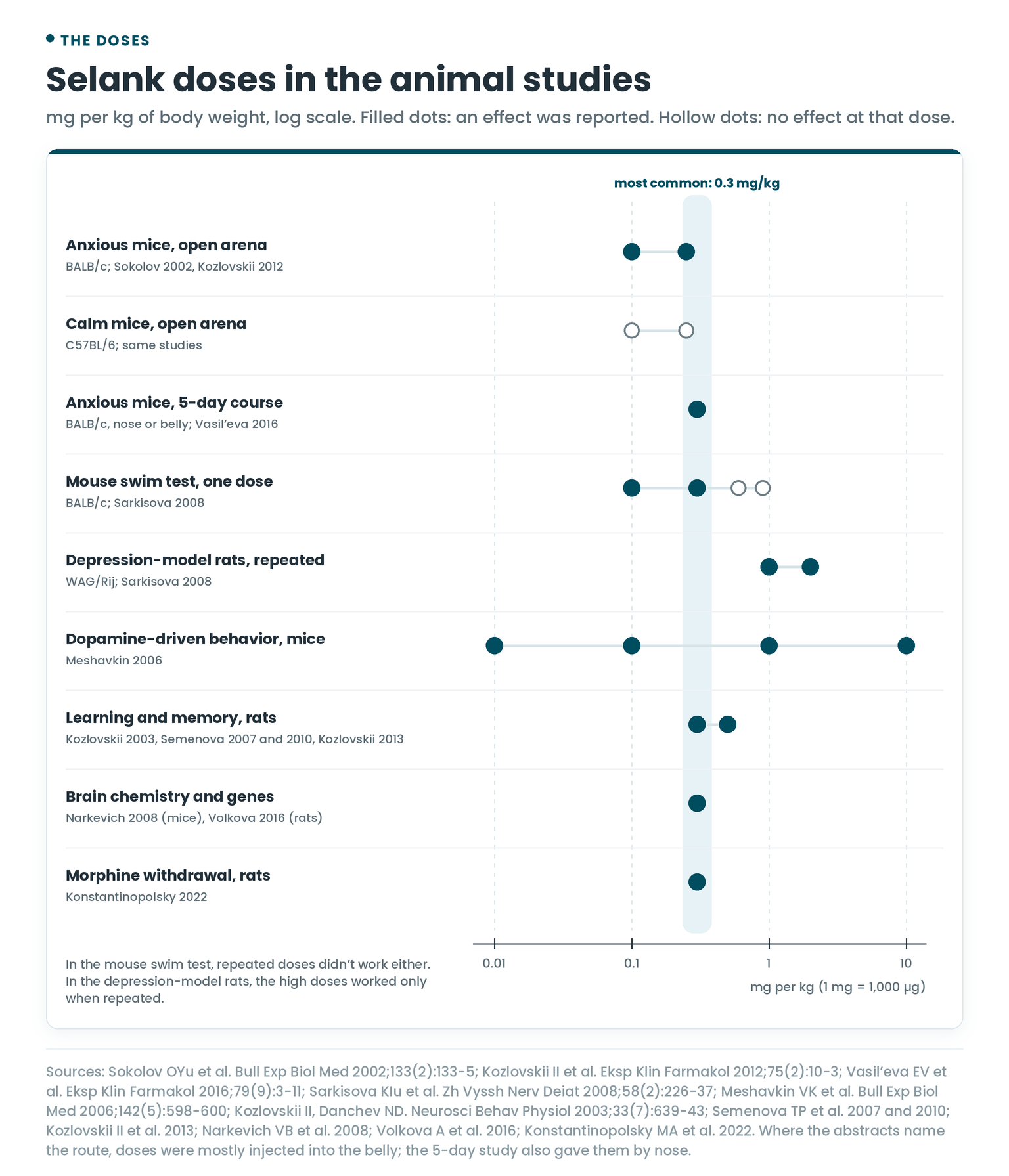
The animal doses run from 0.01 mg/kg to 10 mg/kg, and the most common was 300 µg/kg, which is 0.3 mg/kg. That’s the dose behind most of the memory work, the 5-day route comparison, the gene study and the withdrawal study, which called it “an anxiolytic dose”.
Bigger wasn’t reliably better. In the mouse swim test, 100 and 300 µg/kg worked after one dose, but 600 and 900 µg/kg didn’t. In the rat strain with inherited depression-like behavior, only the high doses of 1000 to 2000 µg/kg worked, and only after repeated dosing. In the dopamine test, every dose from 0.01 to 10 mg/kg reduced the dopamine-driven behavior (Meshavkin 2006).
In Zozulia’s trial, people took selank by nose. Turning a microgram dose into syringe or dropper amounts depends on how a vial is mixed; our reconstitution guide covers that math.
When the Dose Was Given
In several studies, timing mattered as much as the amount:
- Before learning: 15 minutes before each training session. The effect showed on day 1 in slow learners and peaked on day 3 in normal rats (Kozlovskii and Danchev 2003).
- While a memory is being stored: once, right after the 10th of 30 daily trials, during consolidation. Memory held better when tested 24 hours, 7 days and 30 days later (Semenova 2010).
- One dose vs a course: in the mouse swim test a single dose worked where repeated dosing didn’t, while in the rats with inherited depression-like behavior only repeated dosing worked (Sarkisova 2008). The route comparison used a 5-day course (Vasil’eva 2016).
- How fast: gene activity in the rat cortex had shifted 1 hour after a dose and was still shifted, in fewer genes, at 3 hours (Volkova 2016). Serotonin activity rose for 30 minutes to 2 hours (Semenova 2010). In people, brain connections changed within 5 to 20 minutes (Panikratova 2020).
- How long: in Medvedev’s 2014 trial, the anti-anxiety effect lasted a week after the last dose.
Nose vs Injection, and How It Breaks Down
Selank was often given by injection into the belly in the animal studies. Two studies compared routes in rats and mice:
- Where it goes. Using radioactively labeled selank, Ashmarin’s group compared injection into a vein or the belly, dosing into the stomach and dosing into the nose. The nose delivered the most to the brain. Selank also built up in stomach tissue by every route (Ashmarin 2008).
- What it does there. At 300 µg/kg a day for 5 days, belly injections raised GABA receptor binding sites in the frontal cortex by 38%, while nasal doses raised NMDA receptor binding sites by 23% instead. The authors put the difference down to how each route changes the way selank is absorbed and broken down (Vasil’eva 2016).
To follow every breakdown product at once, Zolotarev’s group labeled selank evenly with tritium, a radioactive form of hydrogen, and tracked it in blood and, after nasal dosing, in rat brain. In blood, selank is cut into shorter pieces: mainly a five-unit fragment, a three-unit fragment and two-unit fragments (Zolotarev 2006). Some of those pieces are active, like the five-unit fragment that still blocks enkephalin-breaking enzymes.
Selank vs Semax
The two peptides come from the same group of labs and are both seven units long, but they start from different parents: selank from tuftsin, semax from a fragment of the hormone ACTH. Where they’ve been tested side by side:
- Enkephalin enzymes: semax was stronger in human serum (IC50 10 µM vs 20 µM).
- Brain scans: both changed right amygdala connections in healthy people, with shared and separate effects.
- Parkinson’s-type rats: neither changed movement; selank lowered anxiety.
- Breakdown: with nerve cells, semax was cut mainly into a five-unit and a three-unit fragment, much like selank’s main pieces (Zolotarev 2006).
Our semax side effects post covers semax’s own research.
Side Effects
The trials judged selank’s tolerability against benzodiazepines. In 2015, adding selank to phenazepam reduced phenazepam’s side effects, including sedation, memory and attention problems, and fatigue, and those reductions held after phenazepam was stopped. Zozulya’s group described selank as calming anxiety without the side effects typical of most anti-anxiety drugs.
Doses Used in the Research
- People: given by nose for anxiety (Zozulia 2008).
- Anxiety in mice: 100 µg/kg (Sokolov 2002) and 0.25 mg/kg by injection into the belly (Kozlovskii 2012).
- Brain chemistry in mice: 0.3 mg/kg (Narkevich 2008).
- Route comparison in mice: 300 µg/kg a day for 5 days, by belly injection or nose (Vasil’eva 2016).
- Memory in rats: 300 µg/kg, 15 minutes before training for 4 days (Kozlovskii and Danchev 2003) or once after the 10th training trial (Semenova 2010); 0.5 mg/kg by belly injection (Kozlovskii 2013).
- Gene activity in rats: 300 µg/kg (Volkova 2016).
- Rhesus monkeys: given by nose (2008 monkey study).
- Rat brain slices: 1 to 8 µM (Povarov 2017).
- Depression models: 100 and 300 µg/kg once in mice; 1000 to 2000 µg/kg repeatedly in rats (Sarkisova 2008).
- Dopamine test in mice: 0.01, 0.1, 1.0 and 10.0 mg/kg by belly injection (Meshavkin 2006).
- Morphine withdrawal in rats: 0.3 mg/kg once by belly injection (Konstantinopolsky 2022).
Frequently Asked Questions
What dose of selank was used in studies?
In animals, the most common dose was 300 µg/kg (0.3 mg/kg), with a full range from 0.01 to 10 mg/kg. In Zozulia’s anxiety trial, people took selank by nose.
Does selank work for anxiety?
In a 62-patient trial its anti-anxiety effect matched medazepam’s, and in a 60-patient comparison with phenazepam it had a pronounced anti-anxiety effect that lasted a week after the last dose.
Is a higher dose of selank better?
Not reliably. In a mouse swim test, 100 and 300 µg/kg worked after one dose, but 600 and 900 µg/kg didn’t.
Is selank taken by nose or injected?
In Zozulia’s anxiety trial, people took it by nose. In rats, the nose delivered more selank to the brain than injections or dosing into the stomach.
How does selank work?
It slows the breakdown of enkephalins, the body’s calming opioid peptides, and acts as a positive allosteric modulator of GABA binding.
What’s the difference between selank and semax?
Both are seven-unit peptides from the same labs. Selank is built from tuftsin and studied mainly for anxiety; semax comes from a fragment of ACTH.
Why didn’t selank work in some mice?
Its calming effect showed up mainly in BALB/c mice, an anxious strain, and not in calmer C57BL/6 mice. Naloxone pretreatment shifted that sensitivity in opposite directions in the two strains.
Stay sharp,
Joe Mars
The Peptide Report
P.S. Got a question about selank, semax or the anxiety studies behind them? Bring it to the Peptides & Biohacking Hub on Skool.
References
- Semenova TP, Kozlovskii II, Zakharova NM, Kozlovskaia MM. [Experimental optimization of learning and memory processes by selank]. Eksp Klin Farmakol. 2010;73(8):2-5. PubMed 20919548
- Zozulia AA, Neznamov GG, Siuniakov TS, Kost NV, Gabaeva MV, Sokolov OIu, et al. [Efficacy and possible mechanisms of action of a new peptide anxiolytic selank in the therapy of generalized anxiety disorders and neurasthenia]. Zh Nevrol Psikhiatr Im S S Korsakova. 2008;108(4):38-48. PubMed 18454096
- Medvedev VE, Tereshchenko ON, Israelian AIu, Chobanu IK, Kost NV, Sokolov OIu, Miasoedov NF. [A comparison of the anxiolytic effect and tolerability of selank and phenazepam in the treatment of anxiety disorders]. Zh Nevrol Psikhiatr Im S S Korsakova. 2014;114(7):17-22. PubMed 25176261
- Medvedev VE, Tereshchenko ON, Kost NV, Ter-Israelyan AYu, Gushanskaya EV, Chobanu IK, et al. [Optimization of the treatment of anxiety disorders with selank]. Zh Nevrol Psikhiatr Im S S Korsakova. 2015;115(6):33-40. doi:10.17116/jnevro20151156133-40
- Panikratova YaR, Lebedeva IS, Sokolov OYu, Rumshiskaya AD, Kupriyanov DA, Kost NV, Myasoedov NF. Functional connectomic approach to studying Selank and Semax effects. Dokl Biol Sci. 2020;490(1):9-11. doi:10.1134/S001249662001007X
- Zozulya AA, Kost NV, Sokolov OYu, Gabaeva MV, Grivennikov IA, Andreeva LN, et al. The inhibitory effect of Selank on enkephalin-degrading enzymes as a possible mechanism of its anxiolytic activity. Bull Exp Biol Med. 2001;131(4):315-317. doi:10.1023/a:1017979514274
- Kost NV, Sokolov OIu, Gabaeva MV, Grivennikov IA, Andreeva LA, Miasoedov NF, Zozulia AA. [Semax and selank inhibit the enkephalin-degrading enzymes from human serum]. Bioorg Khim. 2001;27(3):180-183. doi:10.1023/a:1011373002885
- Meshavkin VK, Kost NV, Sokolov OYu, Zolotarev YuA, Myasoedov NF, Zozulya AA. Naloxone-blocked depriming effect of anxiolytic selank on apomorphine-induced behavioral manifestations of hyperfunction of dopamine system. Bull Exp Biol Med. 2006;142(5):598-600. doi:10.1007/s10517-006-0428-1
- Sokolov OYu, Meshavkin VK, Kost NV, Zozulya AA. Effects of Selank on behavioral reactions and activities of plasma enkephalin-degrading enzymes in mice with different phenotypes of emotional and stress reactions. Bull Exp Biol Med. 2002;133(2):133-135. doi:10.1023/a:1015582302311
- Vyunova TV, Andreeva L, Shevchenko K, Myasoedov N. Peptide-based anxiolytics: the molecular aspects of heptapeptide Selank biological activity. Protein Pept Lett. 2018;25(10):914-923. doi:10.2174/0929866525666180925144642
- Volkova A, Shadrina M, Kolomin T, Andreeva L, Limborska S, Myasoedov N, Slominsky P. Selank administration affects the expression of some genes involved in GABAergic neurotransmission. Front Pharmacol. 2016;7:31. doi:10.3389/fphar.2016.00031
- Filatova E, Kasian A, Kolomin T, Rybalkina E, Alieva A, Andreeva L, et al. GABA, Selank, and olanzapine affect the expression of genes involved in GABAergic neurotransmission in IMR-32 cells. Front Pharmacol. 2017;8:89. doi:10.3389/fphar.2017.00089
- Povarov IS, Kondratenko RV, Derevyagin VI, Myasoedov NF, Skrebitsky VG. Effect of Selank on spontaneous synaptic activity of rat hippocampal CA1 neurons. Bull Exp Biol Med. 2017;162(5):640-642. doi:10.1007/s10517-017-3676-3
- Narkevich VB, Kudrin VS, Klodt PM, Pokrovskii AA, Kozlovskaia MM, Maiskii AI, Raevskii KS. [Effects of heptapeptide selank on the content of monoamines and their metabolites in the brain of BALB/C and C57Bl/6 mice: a comparative study]. Eksp Klin Farmakol. 2008;71(5):8-12. PubMed 19093364
- Kozlovskii II, Andreeva LA, Kozlovskaia MM, Nadorova AV, Kolik LG. [The role of opioid system in peculiarities of anti-anxiety effect of peptide anxiolytic selank]. Eksp Klin Farmakol. 2012;75(2):10-13. PubMed 22550852
- Vasil’eva EV, Kondrakhin EA, Salimov RM, Kovalev GI. [Comparison of pharmacological effects of heptapeptide selank after intranasal and intraperitoneal administration to BALB/c and C57BL/6 mice]. Eksp Klin Farmakol. 2016;79(9):3-11. PubMed 29787664
- Kozlovskii II, Danchev ND. The optimizing action of the synthetic peptide Selank on a conditioned active avoidance reflex in rats. Neurosci Behav Physiol. 2003;33(7):639-643. doi:10.1023/a:1024444321191
- Semenova TP, Kozlovskaya MM, Zakharova NM, Kozlovskii II, Zuikov AV. Effect of selank on cognitive processes after damage inflicted to the cerebral catecholamine system during early ontogeny. Bull Exp Biol Med. 2007;144(5):689-691. doi:10.1007/s10517-007-0406-2
- Kozlovskii II, Belozertsev FIu, Andreeva LA, Kozlovskaia MM. [Protective effect of selank on the model of mnestic function violation induced by pharmacological blockade of protein synthesis]. Eksp Klin Farmakol. 2013;76(12):3-7. PubMed 24605419
- [Compensatory and antiamnestic effects of heptapeptide Selank in monkeys]. Zh Evol Biokhim Fiziol. 2008;44(3):284-290. PubMed 18727417
- Sarkisova KIu, Kozlovskii II, Kozlovskaia MM. [Effects of heptapeptide selank on genetically-based and situation-provoked symptoms of depression in behavior in WAG/Rij and Wistar rats, and in BALB/c mice]. Zh Vyssh Nerv Deiat Im I P Pavlova. 2008;58(2):226-237. PubMed 18661785
- Kasian A, Kolomin T, Andreeva L, Bondarenko E, Myasoedov N, Slominsky P, Shadrina M. Peptide Selank enhances the effect of diazepam in reducing anxiety in unpredictable chronic mild stress conditions in rats. Behav Neurol. 2017;2017:5091027. doi:10.1155/2017/5091027
- Slominsky PA, Shadrina MI, Kolomin TA, Stavrovskaya AV, Filatova EV, Andreeva LA, et al. Peptides semax and selank affect the behavior of rats with 6-OHDA induced PD-like parkinsonism. Dokl Biol Sci. 2017;474(1):106-109. doi:10.1134/S0012496617030048
- Konstantinopolsky MA, Chernyakova IV, Kolik LG. Selank, a peptide analog of tuftsin, attenuates aversive signs of morphine withdrawal in rats. Bull Exp Biol Med. 2022;173(6):730-733. doi:10.1007/s10517-022-05624-x
- Kozlovskaya MM, Kozlovskii II, Val’dman EA, Seredenin SB. Selank and short peptides of the tuftsin family in the regulation of adaptive behavior in stress. Neurosci Behav Physiol. 2003;33(9):853-860. doi:10.1023/a:1025988519919
- Ashmarin IP, Baglikova KE, Edeeva SE, Zolotarev IuA, Kozik VS, Dadaian AK, et al. [A comparative analysis of distribution of glyprolines administered by various routes]. Bioorg Khim. 2008;34(4):464-470. doi:10.1134/s1068162008040043
- Zolotarev IuA, Dadaian AK, Dolotov OV, Kozik VS, Kost NV, Sokolov OIu, et al. [Evenly tritium-labeled peptides and their in vivo and in vitro biodegradation]. Bioorg Khim. 2006;32(2):183-191. PubMed 16637290