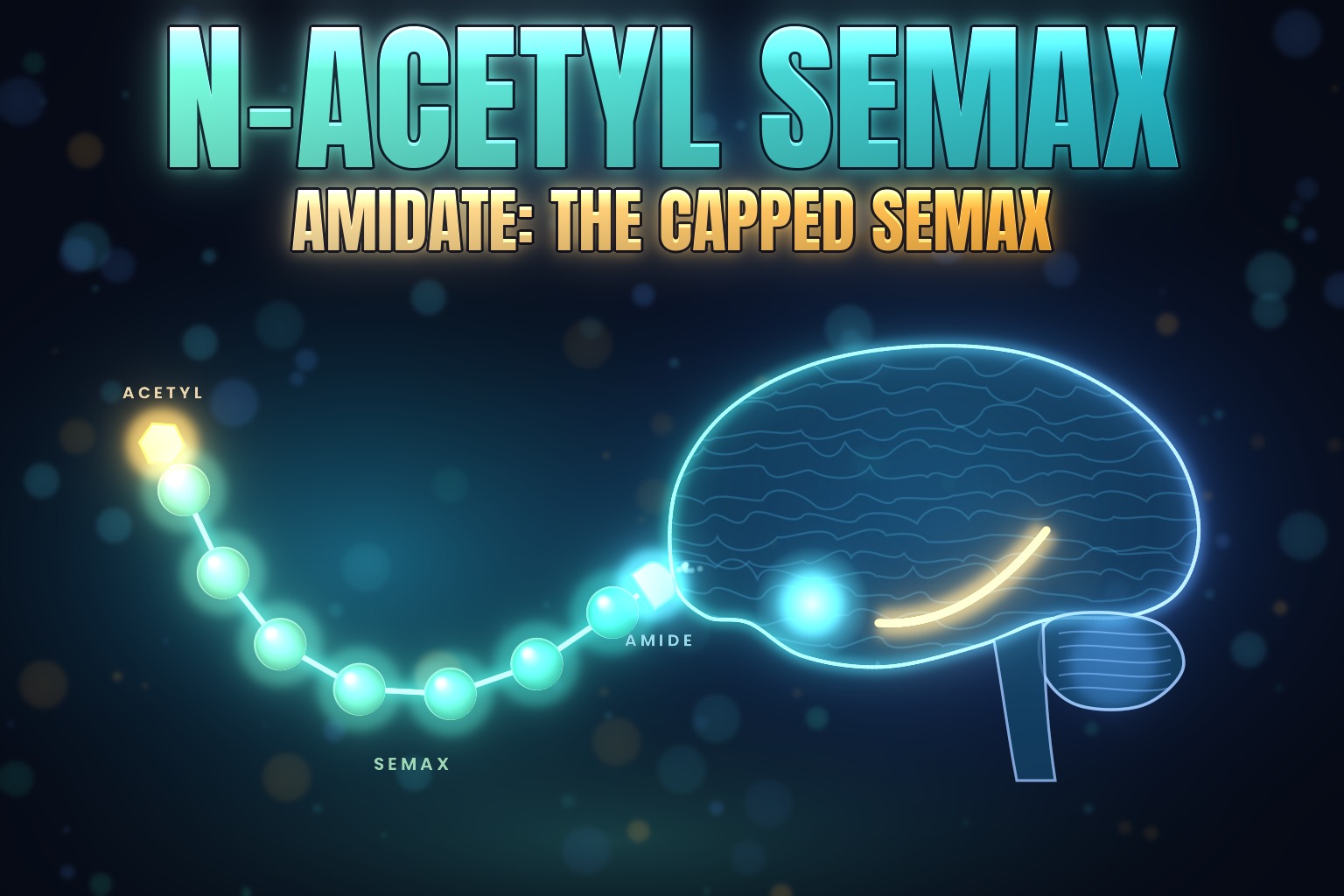
Write Semax out one amino acid at a time and you get a chain of seven. N-Acetyl Semax Amidate is the same seven with a cap on each end.
Semax: Met-Glu-His-Phe-Pro-Gly-Pro
N-Acetyl Semax Amidate: Ac-Met-Glu-His-Phe-Pro-Gly-Pro-NH2
The acetyl cap (Ac) sits on the front end and the amide (NH2) replaces the free acid on the back end. Both ends are exactly where enzymes take Semax apart. Here’s where those cuts happen, what changing the front end did in the lab, and what the Semax research behind the whole idea shows.
What Semax Is Built From
Semax was designed by a Moscow research group from a piece of adrenocorticotropic hormone (ACTH). Its first four amino acids, Met-Glu-His-Phe, are ACTH positions 4 to 7, and the last three, Pro-Gly-Pro, were added to the end. A 1986 study found it had none of the hormone’s adrenal-stimulating or skin-darkening activity.
The ACTH part does the work. In rats with reduced blood flow to the whole brain, the Pro-Gly-Pro tail given on its own didn’t change neurological deficits or deaths, and the authors credited Semax’s protection mainly to the ACTH(4-7) piece.
Where Enzymes Cut Semax
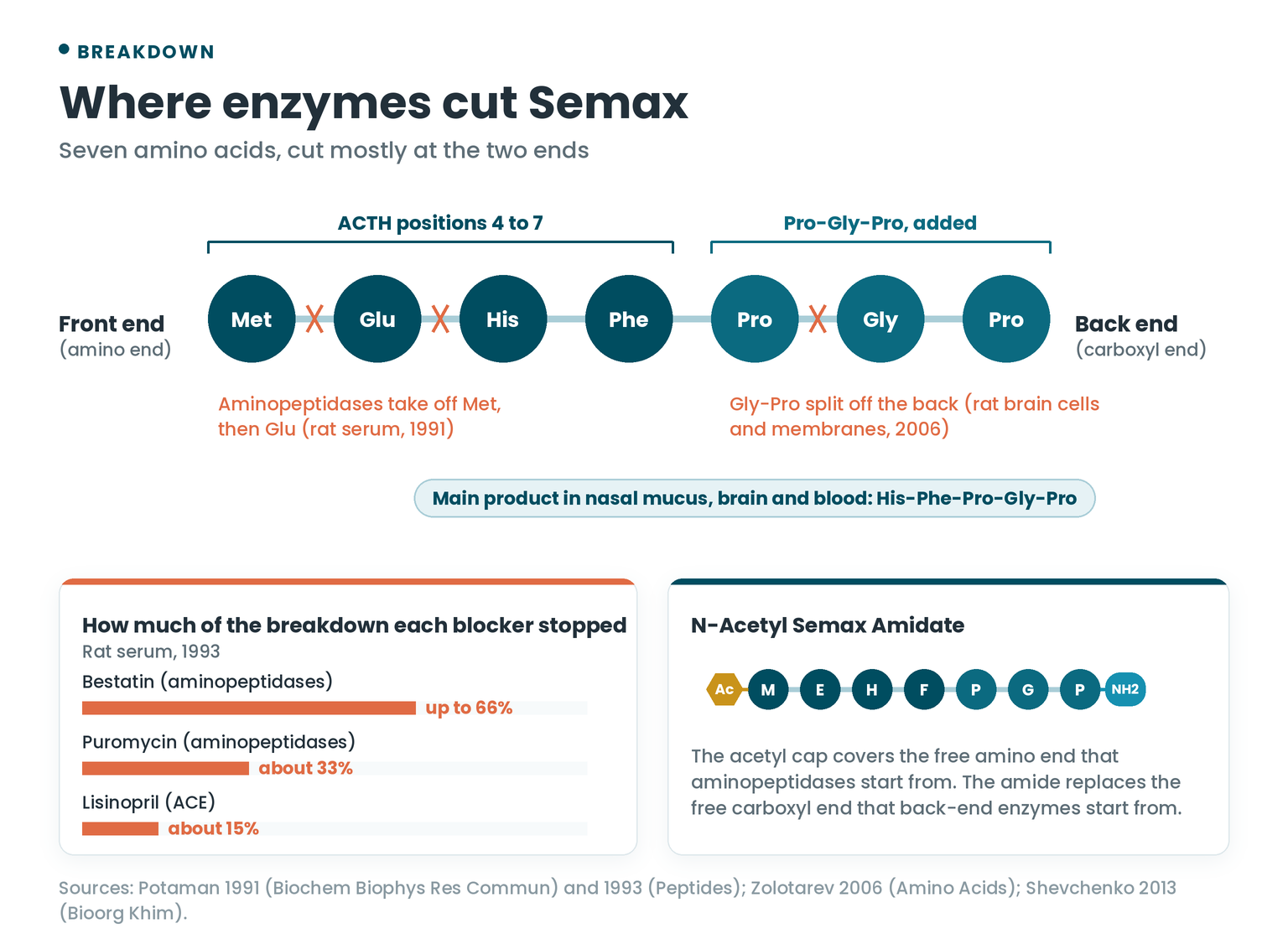
Plain Semax is broken down quickly, and most of the cutting happens at its two ends.
- The front end. In rat serum, an aminopeptidase removed the first and second amino acids, Met and then Glu, and accounted for a third to a half of the breakdown in a 1991 study. In a 1993 follow-up, blocking aminopeptidases with bestatin stopped up to 66% of it.
- The back end. Blocking ACE, the angiotensin-converting enzyme, stopped about 15% in that same 1993 work. With rat brain cells and membranes in 2006, the main events were Met-Glu leaving the front and Gly-Pro leaving the back, leaving five-amino-acid pieces.
- In the nose and brain. Enzymes from rat nasal mucus, brain microsomes and blood all turned Semax into His-Phe-Pro-Gly-Pro, minus its first two amino acids (2013).
Speed matters for a nasal peptide. Two minutes after a 50 µg/kg intranasal dose of radiolabeled Semax in rats, the brain held 0.093% of the dose per gram, and 80% of that was still intact Semax. The peptide was broken down rapidly, and across the samples the Pro-Gly-Pro tail outweighed Semax and every other piece.
What the two caps are for
Aminopeptidases start from the free amino group at the front of a chain, and an acetyl cap covers that group. Enzymes that trim from the back, ACE among them, start from a free carboxyl group, which the amide replaces. Capped ends are common in peptide design. Melanotan II carries both, and a melanoma vaccine peptide tested in human plasma in 1999 had a half-life of 22 seconds uncapped and held up far longer once an amide, an acetyl group or both were added.
Changing the Front End Changes More Than Stability
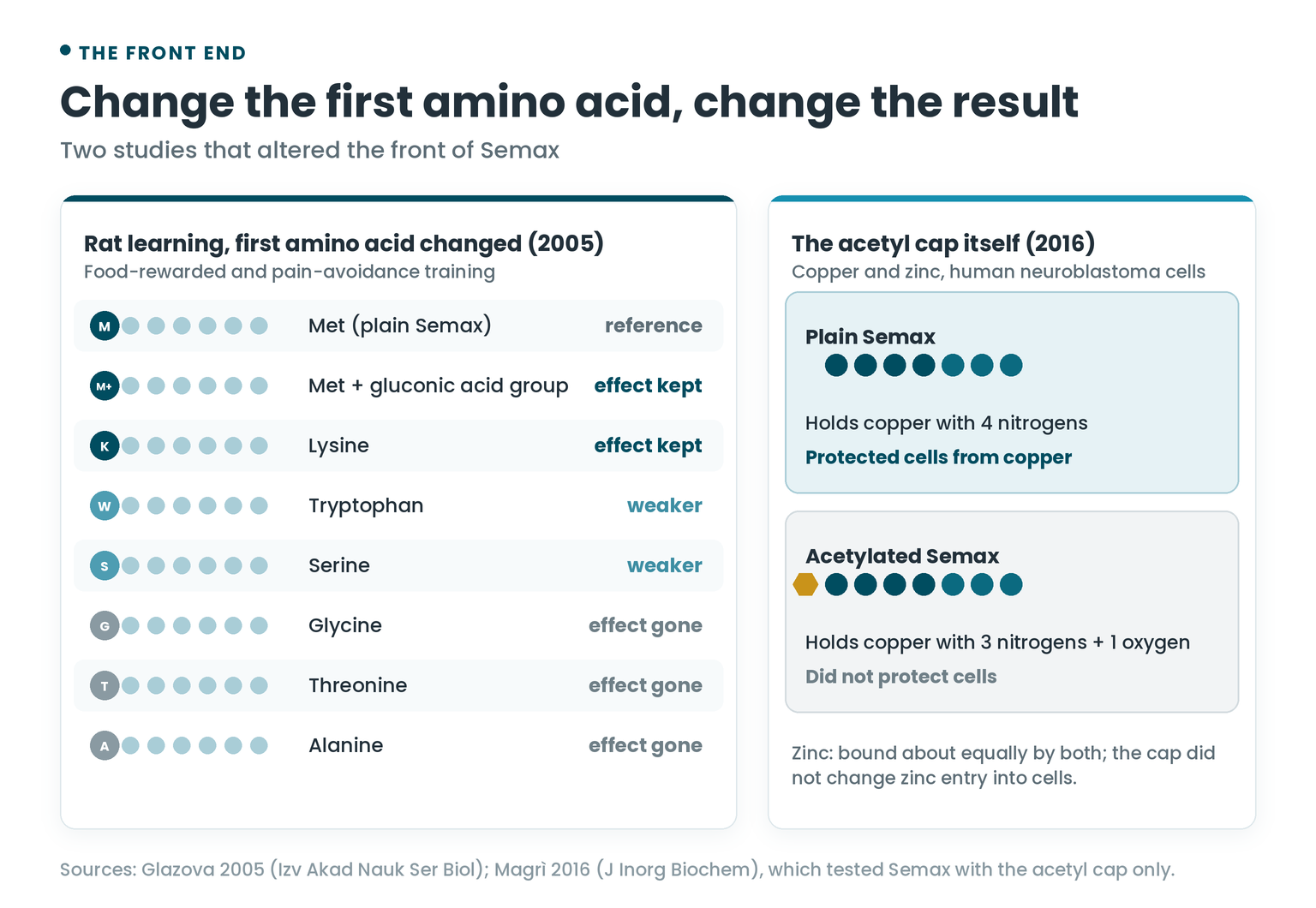
The front of Semax isn’t only where enzymes attack. It’s also part of what makes the peptide work. In a 2005 rat learning study, researchers modified or swapped the first amino acid, Met, and tested each version with food-rewarded and pain-avoidance training.
- Met with a gluconic acid group attached: learning effect kept
- Met swapped for lysine: kept
- Tryptophan or serine: weaker
- Glycine, threonine or alanine: gone
Their conclusion was that position 1 decides whether the effect survives and how strong it is.
The acetyl cap itself was tested in 2016, on Semax with only the acetyl cap added. It changed how the peptide holds copper: plain Semax grips a copper ion with four nitrogen atoms, the acetylated version with three nitrogens and an oxygen. In human neuroblastoma cells exposed to copper, plain Semax protected the cells and acetylated Semax didn’t, which the authors traced to the free amino end. Both forms bound zinc about equally strongly, and the cap didn’t change how much zinc got into the cells. Plain Semax’s protection against copper had been shown the year before in the same cell line and in an endothelial cell line.
Every behavioral, brain and human study from here on used plain Semax.
How Semax Acts in the Brain
Most of the mechanism work comes from rats, much of it with Semax given in the nose, and it keeps returning to BDNF, a growth factor that strongly shapes how synapses strengthen with learning.
- BDNF and its receptor. One intranasal dose of 50 µg/kg raised hippocampal BDNF protein 1.4-fold and activation of its receptor, TrkB, 1.6-fold, with BDNF mRNA up threefold and TrkB mRNA twofold. The treated rats also made more correct avoidance responses in training (2006).
- A binding site. Membranes from the basal forebrain bound labeled Semax specifically and reversibly, and BDNF there rose three hours after 50 or 250 µg/kg, with no rise in the cerebellum (2006).
- Fast gene changes. Within an hour of a 50 µg/kg dose, BDNF and NGF gene activity rose in the hippocampus, BDNF also rose in the brainstem and cerebellum, and NGF fell in the frontal cortex (2007). In cultured glial cells, BDNF mRNA rose eightfold and NGF fivefold at 30 minutes (2001).
- Serotonin and dopamine. After 0.15 mg/kg by injection, the serotonin breakdown product 5-HIAA climbed to 180% outside striatal cells over one to four hours. Dopamine didn’t change, but Semax given 20 minutes before amphetamine sharply amplified amphetamine’s dopamine release and the animals’ activity (2005).
- Acetylcholine neurons. In basal forebrain cultures, Semax raised the survival of cholinergic neurons 1.5- to 1.7-fold and the activity of the enzyme that makes acetylcholine (2008).
- Under stress. Daily injections of 60 nmol/kg in chronically stressed rats reversed or blunted the fall in hippocampal BDNF and the loss of interest in sugar water (2024).
Route mattered in a 2010 rat study: intranasal Semax was more potent for learning than injected Semax, while its pain-relieving effect only appeared with injections. After an experimental stroke in rats, the genes Semax shifted in the damaged cortex were mostly immune genes, along with vessel-related genes (2014) and the genes for several growth factors and their receptors (2010).
Explore the findings by brain region
Tap a numbered region to see what the studies found there. Every study here used plain Semax.
No findings of this kind for this region. Pick another filter or region.
Semax in People
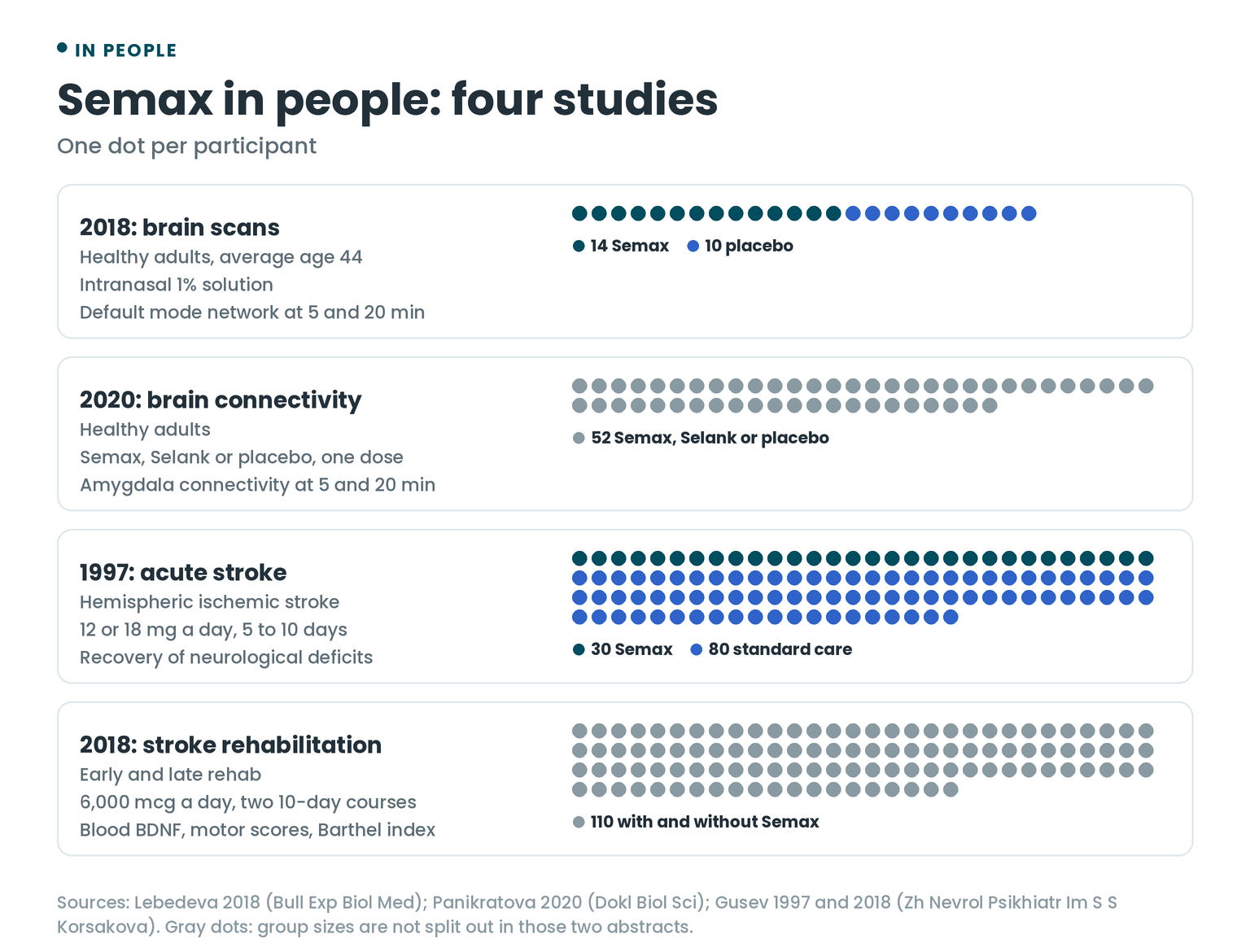
The human research is small and comes from Russian clinics and labs.
- Healthy men under pressure. A 1997 review from the developers reports better memory and attention in healthy men working under extreme conditions, with effects lasting 20 to 24 hours after an intranasal dose.
- Brain scans. In 2018, 24 healthy adults averaging 44 years old had resting-state MRI scans before and 5 and 20 minutes after intranasal 1% Semax (14 people) or placebo (10). The Semax group showed a larger front portion of the default mode network, in the medial frontal cortex. In 2020, a study of 52 healthy people given Semax, Selank or placebo found shifts in connectivity between the right amygdala and the right temporal cortex.
- Acute stroke. In 1997, 30 patients with a hemispheric ischemic stroke got Semax on top of standard care and were compared with 80 similar patients on standard care alone. General and focal deficits, motor ones especially, regressed faster.
- Stroke rehabilitation. In 2018, 110 patients in early or late rehabilitation were split into Semax and no-Semax groups. Semax raised blood BDNF, which stayed high through the study, and its patients improved faster and ended with better daily-living (Barthel) scores.
For the wider picture of peptides studied for focus and memory, see Focus, Memory and Mental Clarity: The Nootropic Peptide Literature.
Semax Doses Used in the Research
- Rats, intranasal: a single 50 µg/kg dose in the BDNF, gene and brain-uptake studies; 50 or 250 µg/kg in the basal forebrain work.
- Rats, injected: 0.15 mg/kg once in the serotonin and dopamine study; 60 nmol/kg daily in the chronic stress study.
- Cells: 100 nM in the acetylcholine-neuron cultures.
- Intranasal, per the 1997 review: 0.015 to 0.05 mg/kg, in animals and people; a 1% solution in the 2018 scan study.
- Acute stroke: 12 mg a day for moderate strokes and 18 mg a day for severe ones, in courses of 5 and 10 days (1997).
- Stroke rehabilitation: 6,000 mcg a day in two 10-day courses, 20 days apart (2018).
Safety Notes From the Semax Studies
The 1997 developer review reported no negative side effects or complications from Semax in its clinical use. A 1999 study of 73 patients recovering from brain oxygen deprivation found it helped their memory problems, but some showed episodes of paroxysmal EEG activity after an injection, and the authors advised monitoring brain activity during the first dose. The amphetamine interaction is covered above, and the fuller side-effect picture is in Dangers of Semax: Side Effects, Risks and Who Should Avoid It.
FAQ
What is N-Acetyl Semax Amidate?
It’s Semax with two end caps: an acetyl group on the front amino end and an amide in place of the acid on the back end, written Ac-Met-Glu-His-Phe-Pro-Gly-Pro-NH2.
How is N-Acetyl Semax Amidate different from Semax?
The seven amino acids are the same. The caps sit where enzymes cut Semax, and in cell work the acetyl cap changed how the peptide binds copper and removed its protection against copper toxicity.
Does the acetyl cap make Semax more effective?
The one direct comparison, a 2016 cell study of copper and zinc, found plain Semax protective and acetylated Semax not. Changing Semax’s first amino acid in rats kept, weakened or abolished its learning effect depending on the change.
How does Semax affect BDNF?
In rats, one intranasal dose raised BDNF protein and TrkB activation in the hippocampus within hours, and a 2018 stroke study found higher blood BDNF in patients given Semax.
How is Semax given in studies?
Mostly in the nose: 50 µg/kg in the rat studies and 0.015 to 0.05 mg/kg in the developers’ review. The stroke studies used daily totals of 6 to 18 mg.
References
- Ashmarin IP, et al. A nootropic adrenocorticotropin analog 4-10, Semax (15 years experience in its design and study). Zh Vyssh Nerv Deiat Im I P Pavlova. 1997;47(2):420-430. PubMed
- Ponomareva-Stepnaia MA, et al. Hormonal activity of the ACTH(4-10) analog, a prolonged-action stimulant of learning. Biull Eksp Biol Med. 1986;101(3):267-268. PubMed
- Fadyukova OE, et al. C-terminal Pro-Gly-Pro tripeptide in contrast to full-length neuropeptide semax exhibits no neuroprotective effect in experimental cerebral ischemia. Bull Exp Biol Med. 2005;139(4):421-423. DOI
- Potaman VN, et al. N-terminal degradation of ACTH(4-10) and its synthetic analog semax by the rat blood enzymes. Biochem Biophys Res Commun. 1991;176(2):741-746. DOI
- Potaman VN, et al. Degradation of ACTH/MSH(4-10) and its synthetic analog semax by rat serum enzymes: an inhibitor study. Peptides. 1993;14(3):491-495. DOI
- Zolotarev YA, et al. Degradation of the ACTH(4-10) analog Semax in the presence of rat basal forebrain cell cultures and plasma membranes. Amino Acids. 2006;30(4):403-408. DOI
- Shevchenko KV, et al. Proteolysis of simple glyprolines by leucine aminopeptidase and enzymes from nasal slime, brain membranes, and rat blood. Bioorg Khim. 2013;39(3):320-325. DOI
- Shevchenko KV, et al. Kinetics of Semax penetration into the brain and blood of rats after its intranasal administration. Bioorg Khim. 2006;32(1):64-70. DOI
- Brinckerhoff LH, et al. Terminal modifications inhibit proteolytic degradation of an immunogenic MART-1(27-35) peptide: implications for peptide vaccines. Int J Cancer. 1999;83(3):326-334. PubMed
- Inozemtseva LS, et al. Antidepressant-like and antistress effects of the ACTH(4-10) synthetic analogs Semax and Melanotan II on male rats in a model of chronic unpredictable stress. Eur J Pharmacol. 2024;984:177068. DOI
- Glazova NIu, et al. Effect of modification of the N-terminal region of molecule on the expression of nootropic effect of semax analogues. Izv Akad Nauk Ser Biol. 2005;(4):460-466. PubMed
- Magrì A, et al. Influence of the N-terminus acetylation of Semax, a synthetic analog of ACTH(4-10), on copper(II) and zinc(II) coordination and biological properties. J Inorg Biochem. 2016;164:59-69. DOI
- Tabbì G, et al. Semax, an ACTH4-10 peptide analog with high affinity for copper(II) ion and protective ability against metal induced cell toxicity. J Inorg Biochem. 2015;142:39-46. DOI
- Dolotov OV, et al. Semax, an analog of ACTH(4-10) with cognitive effects, regulates BDNF and trkB expression in the rat hippocampus. Brain Res. 2006;1117(1):54-60. DOI
- Dolotov OV, et al. Semax, an analogue of adrenocorticotropin (4-10), binds specifically and increases levels of brain-derived neurotrophic factor protein in rat basal forebrain. J Neurochem. 2006;97 Suppl 1:82-86. DOI
- Agapova TY, et al. Neurotrophin gene expression in rat brain under the action of Semax, an analogue of ACTH 4-10. Neurosci Lett. 2007;417(2):201-205. DOI
- Shadrina MI, et al. Rapid induction of neurotrophin mRNAs in rat glial cell cultures by Semax, an adrenocorticotropic hormone analog. Neurosci Lett. 2001;308(2):115-118. DOI
- Eremin KO, et al. Semax, an ACTH(4-10) analogue with nootropic properties, activates dopaminergic and serotoninergic brain systems in rodents. Neurochem Res. 2005;30(12):1493-1500. DOI
- Grivennikov IA, et al. Effects of behaviorally active ACTH (4-10) analogue – Semax on rat basal forebrain cholinergic neurons. Restor Neurol Neurosci. 2008;26(1):35-43. PubMed
- Manchenko DM, et al. Nootropic and analgesic effects of Semax following different routes of administration. Ross Fiziol Zh Im I M Sechenova. 2010;96(10):1014-1023. PubMed
- Medvedeva EV, et al. The peptide semax affects the expression of genes related to the immune and vascular systems in rat brain focal ischemia: genome-wide transcriptional analysis. BMC Genomics. 2014;15:228. DOI
- Dmitrieva VG, et al. Semax and Pro-Gly-Pro activate the transcription of neurotrophins and their receptor genes after cerebral ischemia. Cell Mol Neurobiol. 2010;30(1):71-79. DOI
- Lebedeva IS, et al. Effects of Semax on the default mode network of the brain. Bull Exp Biol Med. 2018;165(5):653-656. DOI
- Panikratova YR, et al. Functional connectomic approach to studying Selank and Semax effects. Dokl Biol Sci. 2020;490(1):9-11. DOI
- Gusev EI, et al. Effectiveness of semax in acute period of hemispheric ischemic stroke (a clinical and electrophysiological study). Zh Nevrol Psikhiatr Im S S Korsakova. 1997;97(6):26-34. PubMed
- Gusev EI, et al. The efficacy of semax in the treatment of patients at different stages of ischemic stroke. Zh Nevrol Psikhiatr Im S S Korsakova. 2018;118(3 Vyp 2):61-68. DOI
- Alekseeva GV, et al. Use of semax at a follow-up of patients with posthypoxic encephalopathy. Anesteziol Reanimatol. 1999;(1):40-43. PubMed
Stay sharp,
Joe Mars
The Peptide Report
P.S. Comparing Semax forms, or trying to read one of the Moscow papers past its abstract? Bring it to the Peptides and Biohacking Hub on Skool and we’ll go through it with you. Join the conversation.