HGH is the hormone itself. MK-677 is a pill that asks your pituitary gland to make more of it.
That one difference runs through everything the trials found: where the two land in the same place, where they split, and why the same rise in IGF-1 can come with a different set of side effects.
Here’s the side-by-side, study by study.
What MK-677 and HGH Are
HGH is human growth hormone. The trials below used lab-made (recombinant or biosynthetic) human GH, mostly injected under the skin, so the hormone goes straight into the body whatever the pituitary is doing.
MK-677, also called ibutamoren and coded MK-0677 in some papers, is a growth hormone secretagogue: a compound that makes the pituitary release more of its own GH. Its developers described it in 1995 as a potent, orally active secretagogue that raised GH in dogs after oral doses as low as 0.125 mg/kg. It isn’t a peptide. Murphy’s 1998 trial calls it an “orally active nonpeptide mimic” of growth hormone-releasing peptide.
The receptor MK-677 works through was cloned in 1996, in the pituitary and hypothalamus, and its own hormone turned up in 1999. Kojima’s team found it in rat stomach: a 28-amino-acid peptide with a fatty-acid tag that it needs to work. They named it ghrelin, from a root word meaning “grow.” So MK-677 copies ghrelin, a stomach hormone, rather than growth hormone itself.
How Each One Raises Growth Hormone
The two get GH into your blood in very different ways.
MK-677 Turns Up Your Own Pulses
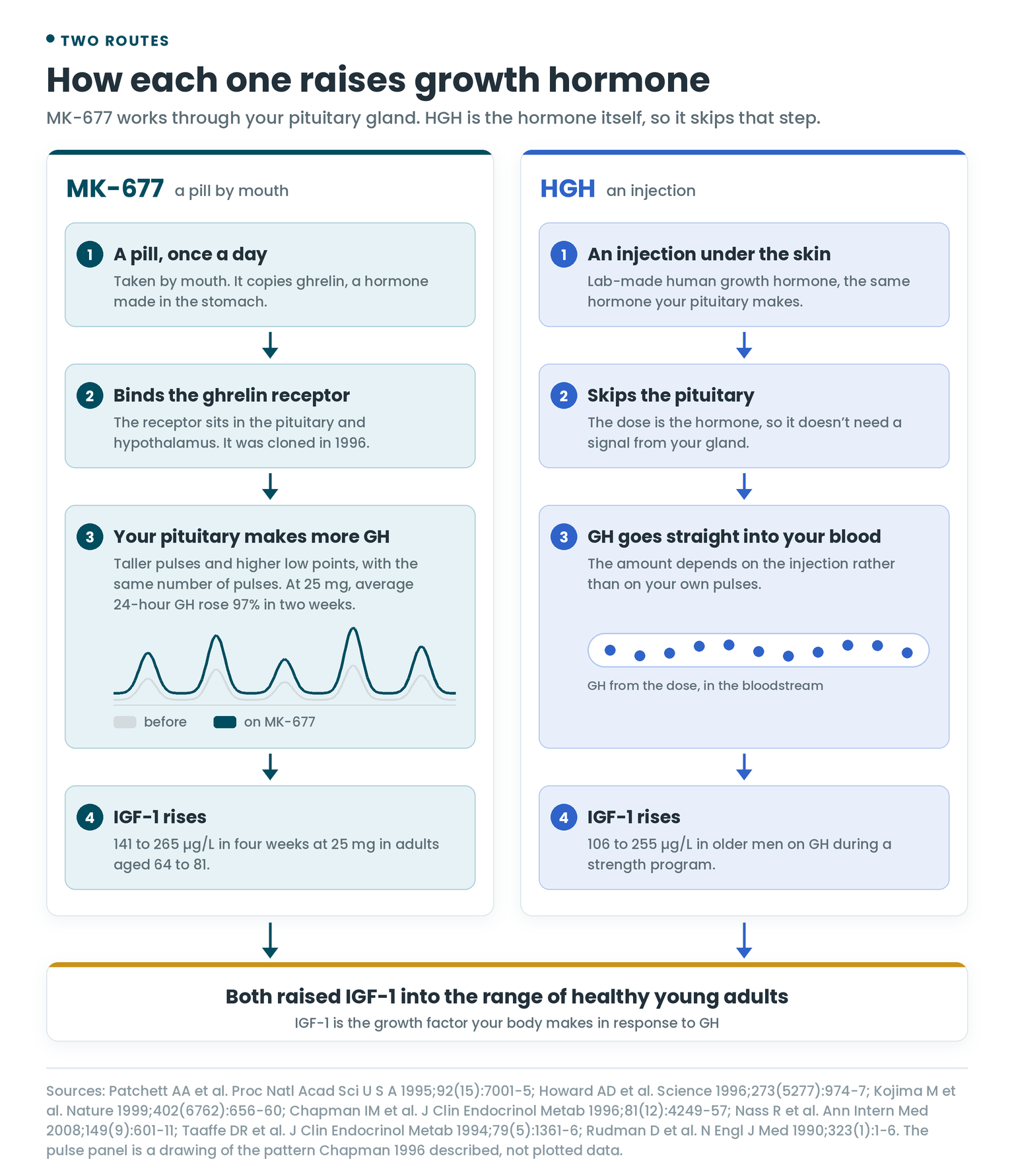
Your pituitary releases GH in bursts through the day. In Chapman’s 1996 trial, 32 healthy adults aged 64 to 81 took placebo or 2, 10 or 25 mg of MK-677 a day, with blood drawn every 20 minutes for 24 hours. GH rose with the dose. At 25 mg, average 24-hour GH nearly doubled (up 97%) after two weeks. The pulses got taller and the low points between them rose, but the number of pulses stayed the same. That fits the 1996 receptor work, which described secretagogues as amplifying pulsatile GH release.
Because MK-677 works through the pituitary, it depends on how much the pituitary can still make. Chapman’s 1997 study gave it to nine young men with severe GH deficiency since childhood. Average 24-hour GH rose 79% on 10 mg a day and 82% on 50 mg, and the GH response was biggest in the men who were least deficient to begin with.
The First Dose Hits Hardest
The GH spike was biggest on day one. In Murphy’s 1998 diet study, peak GH reached 55.9 µg/L after the first 25 mg dose and 22.6 µg/L after a week of daily dosing, against about 9 and 7 µg/L on placebo. Svensson’s obese men showed the same pattern: the GH and prolactin rises after the first dose were bigger than after repeated doses, though GH stayed raised at 2 and 8 weeks.
In dogs, the 1995 developers found MK-677 released GH without significant effects on aldosterone, LH, thyroxine or prolactin, and with only modest cortisol rises. In people it nudged some of these. Prolactin rose 23%, staying in the normal range, in the 1996 trial. In Nass’s two-year trial, cortisol rose 47 nmol/L. In Svensson’s 8-week trial of obese men, cortisol wasn’t raised at weeks 2 and 8, and the authors described the effect on cortisol as transient.
HGH Arrives Ready-Made
Injected GH doesn’t need a signal from the pituitary. The dose is the hormone, so the amount in your blood depends on the injection rather than on your own pulses.
IGF-1: Both Reach Young-Adult Levels
IGF-1 is the growth factor your body makes in response to GH, and it’s the number most trials tracked. Both approaches raised it, often into the range of healthy young adults.
MK-677:
- Older adults, 25 mg a day: IGF-1 went from 141 to 219 µg/L in two weeks and 265 µg/L in four, the range for young adults (Chapman 1996).
- Two years in older adults: GH and IGF-1 rose to young-adult levels (Nass 2008).
- Obese men, 8 weeks: about 40% higher (Svensson 1998).
- Older adults in two short studies: 55% to 94% higher (Murphy 1999).
- Hip fracture patients, 6 months: 84% higher, against 17% on placebo (Bach 2004).
- GH-deficient young men: 52% higher on 10 mg and 79% on 50 mg (Chapman 1997).
IGF-binding protein-3, the main protein that carries IGF-1 in the blood, rose along with it in the MK-677 trials (Chapman 1996 and 1997; Svensson 1998; Murphy 1998).
HGH:
- Men over 60: into the youthful range of 500 to 1,500 U/L on that lab’s scale (Rudman 1990).
- Older men in a strength program: from 106 µg/L, about half the young-adult level, to 255 µg/L (Taaffe 1994).
- Abdominally obese men, 12 months: from 168 to 292 µg/L (Karimi 2010).
Body Composition: Muscle, Fat and Belly Fat
This is where the two start to split.
Lean Mass
Both raised lean mass.
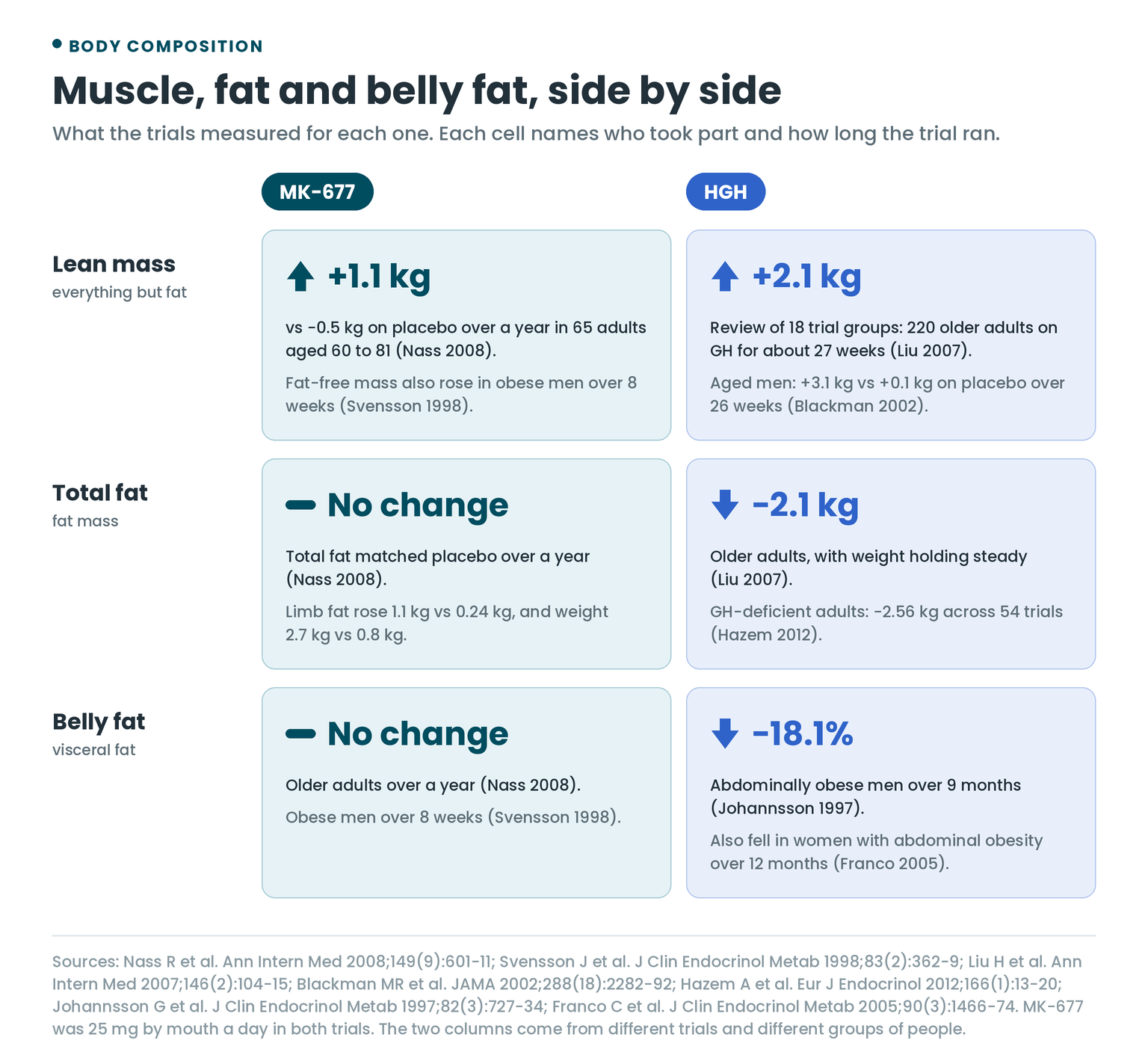
- MK-677, two years in older adults: fat-free mass rose 1.1 kg while the placebo group lost 0.5 kg. Body cell mass, measured as the water inside cells, went up too (Nass 2008).
- MK-677, obese men: fat-free mass rose over 8 weeks (Svensson 1998).
- HGH, healthy older adults: a review of 18 trial groups, with 220 people on GH at an average age of 69 for an average of 27 weeks, found lean mass up 2.1 kg (Liu 2007).
- HGH, aged women and men: lean mass rose 1.0 kg in women and 3.1 kg in men on GH, against 0.4 kg and 0.1 kg on placebo (Blackman 2002).
- HGH, adults with GH deficiency: lean mass up 1.38 kg in a pooled analysis of 54 placebo-controlled trials (Hazem 2012).
- HGH, young athletes: lean mass rose mainly through extra water outside the cells (Meinhardt 2010).
Fat Mass
HGH cut fat. In older adults, fat mass fell 2.1 kg while weight held steady (Liu 2007), and in adults with GH deficiency it fell 2.56 kg (Hazem 2012). Rudman’s men over 60 lost 14.4% of their fat mass in six months and gained 8.8% in lean mass, though that study compared them with untreated men rather than a placebo group.
In the MK-677 trials, total fat held steady. In Nass’s trial, total fat mass and belly fat didn’t differ from placebo, fat in the arms and legs rose more (1.1 kg against 0.24 kg), and body weight rose 2.7 kg against 0.8 kg. Svensson’s obese men also kept the same total and visceral fat, though their basal metabolic rate rose at 2 weeks before settling back by week 8.
Visceral (Belly) Fat
In people with abdominal obesity, HGH went after the deep belly fat around the organs:
- Abdominally obese men, 9 months: visceral fat fell 18.1% on 9.5 µg/kg a day (Johannsson 1997).
- Postmenopausal women with abdominal obesity, 12 months: visceral fat fell and thigh muscle grew on 0.67 mg a day (Franco 2005).
- Abdominally obese men with poor glucose tolerance, 12 months: visceral fat fell on GH as well (Karimi 2010).
The MK-677 belly-fat results came from older adults (Nass) and obese men (Svensson), so the two sets of trials enrolled different people. Our HGH fragment 176-191 post covers the piece of GH that was tested for fat loss on its own.
Strength and Performance
Extra lean mass didn’t add up to extra strength with either one.
- MK-677: the gain in fat-free mass didn’t change strength or function over a year in older adults (Nass 2008). In 161 older hip fracture patients recruited within days of surgery at 13 centers, six months of MK-677 showed no significant difference from placebo in functional recovery. It scored better on three of four leg measures, but those differences weren’t significant either (Bach 2004).
- HGH in older men: 18 men aged 65 to 82 did 14 weeks of weight training, then 10 more weeks on GH or placebo. Strength rose 24% to 62% in the first phase for both groups and GH added nothing, even though the GH group gained lean mass and lost fat with no change in body weight (Taaffe 1994). In the aged women and men trial, strength didn’t rise significantly except a borderline 13.5 kg gain in men on GH plus testosterone (Blackman 2002). Fitness followed the same lines: VO2max rose significantly only in men on GH plus testosterone, while changes in strength and VO2max tracked the changes in lean mass.
- HGH in young, fit adults: a review of 27 study groups found lean mass up 2.1 kg, no gain in strength or exercise capacity, and higher lactate during exercise in 2 of 3 studies that measured it (Liu 2008). In 96 recreational athletes, 2 mg a day for 8 weeks raised sprint capacity 3.9%, and the gain was gone 6 weeks after stopping (Meinhardt 2010). With testosterone added, men’s sprint capacity rose 8.3%; endurance, strength and jump height didn’t change.
- HGH in GH-deficient adults: quality of life measures improved in 11 of 16 placebo-controlled trials, though the results couldn’t be pooled (Hazem 2012).
Sleep
MK-677 was taken at bedtime in Copinschi’s 1997 sleep study. In eight young adults, 25 mg for a week lengthened the deepest stage of sleep (stage IV) by about 50% and REM sleep by more than 20% compared with placebo, and deviations from normal sleep fell from 42% to 8%. In six adults aged 65 to 71, REM sleep rose nearly 50% and it came on sooner. Our sleep post covers other peptides tested in sleep labs.
The HGH sleep result runs another way. In 40 abdominally obese men with poor glucose tolerance, 12 months of GH worsened obstructive sleep apnea: the apnea-hypopnea index (pauses and shallow-breathing spells per hour) rose from 31 to 43 as the soft tissue in the neck grew. Total sleep time and REM sleep didn’t differ from placebo (Karimi 2010).
Protein Balance and Bone
- Protein on a diet: Murphy’s 1998 crossover trial put eight healthy adults on a calorie-restricted diet. In the second week, MK-677 25 mg turned their daily nitrogen balance from losing protein to slightly gaining it (+0.31 g a day, against -1.48 g on placebo). The authors framed it against GH, which reverses diet-induced nitrogen loss.
- Bone turnover on MK-677: in 187 older adults across three trials of 2 to 9 weeks, markers of both bone breakdown and bone building rose. Over 9 weeks, osteocalcin went up 29.4% (Murphy 1999). In Nass’s two-year trial, bone density changes were consistent with more bone remodeling.
- Bone density on HGH: Rudman’s men gained 1.6% in lumbar spine density, with no change at the forearm or hip. The review of older adults found no change in bone density (Liu 2007), and neither did the pooled analysis of GH-deficient adults (Hazem 2012).
Our bone health post goes deeper on peptides and bone.
Blood Sugar
Both affected blood sugar, and this is the side effect to track with either one.
- MK-677: fasting glucose went from 5.4 to 6.8 mmol/L after four weeks in older adults (Chapman 1996). Over a year it rose 0.3 mmol/L (5 mg/dL) on average, and insulin sensitivity fell (Nass 2008). Obese men kept the same fasting glucose and insulin, but their oral glucose tolerance tests got worse (Svensson 1998). In GH-deficient young men, insulin and blood sugar after meals rose (Chapman 1997).
- HGH in older adults: people on GH were somewhat more likely to develop diabetes or impaired fasting glucose (Liu 2007). In the aged women and men trial, 18 GH-treated men developed diabetes or glucose intolerance, against 7 not on GH (Blackman 2002).
- HGH in abdominal obesity: the direction turned around. In abdominally obese men, glucose disposal dipped at 6 weeks, then improved compared with placebo by 9 months (Johannsson 1997). In postmenopausal women, insulin sensitivity was higher after 12 months, and the improvement tracked with less liver fat (Franco 2005).
Our MK-677 side effects post covers how the trials tracked blood sugar.
Cholesterol and Blood Pressure
- MK-677: LDL cholesterol fell 5.4 mg/dL from the starting point over a year, with no difference from placebo in total or HDL cholesterol (Nass 2008).
- HGH in older adults: total cholesterol fell 11.21 mg/dL, though the drop wasn’t significant once body composition changes were accounted for (Liu 2007).
- HGH in abdominal obesity: total cholesterol and triglycerides fell and diastolic blood pressure dropped, with systolic unchanged, in abdominally obese men (Johannsson 1997). Total and LDL cholesterol also fell in postmenopausal women with abdominal obesity (Franco 2005).
Side Effects Side by Side
MK-677 (Nass 2008, two years in older adults): an increase in appetite that faded after a few months, mild and short-lived swelling in the lower legs, and muscle pain. In two short trials, MK-677 was described as generally well tolerated (Chapman 1997; Murphy 1998).
HGH (older adults and GH-deficient adults):
- Soft tissue swelling, joint pain, carpal tunnel syndrome and breast tissue growth in men were all more common on GH in the review of older adults (Liu 2007).
- Swelling hit 39% of women on GH against 0% on placebo, joint pain 41% of men on GH, and carpal tunnel symptoms 32% of men on GH plus testosterone (Blackman 2002).
- In adults with GH deficiency, swelling was about 6 times as likely and joint stiffness about 4 times as likely as on placebo (Hazem 2012).
- Young adults on GH reported more fatigue (Liu 2008).
Sort the Findings
Sort each finding by which trials reported it:
MK-677 vs HGH at a Glance
| MK-677 | HGH | |
|---|---|---|
| How it’s taken | By mouth, once a day | Injected under the skin |
| How it raises GH | Taller natural pulses, through the ghrelin receptor | Supplies the hormone directly |
| IGF-1 | Up to young-adult levels | Up to young-adult levels |
| Lean mass | +1.1 kg vs -0.5 kg over a year (older adults) | +2.1 kg (review, older adults) |
| Fat mass | No change vs placebo; limb fat up | -2.1 kg (review, older adults) |
| Strength | No change | No change in most trials |
| Sleep | More deep and REM sleep | Worse sleep apnea in obese men |
| Blood sugar | Fasting glucose up, insulin sensitivity down | More diabetes and glucose intolerance in older adults; better insulin sensitivity in abdominal obesity |
| Common side effects | Appetite, mild leg swelling, muscle pain | Swelling, joint pain, carpal tunnel, breast tissue growth |
For other ways to raise your own GH, see our tesamorelin vs ipamorelin and sermorelin vs CJC-1295 comparisons.
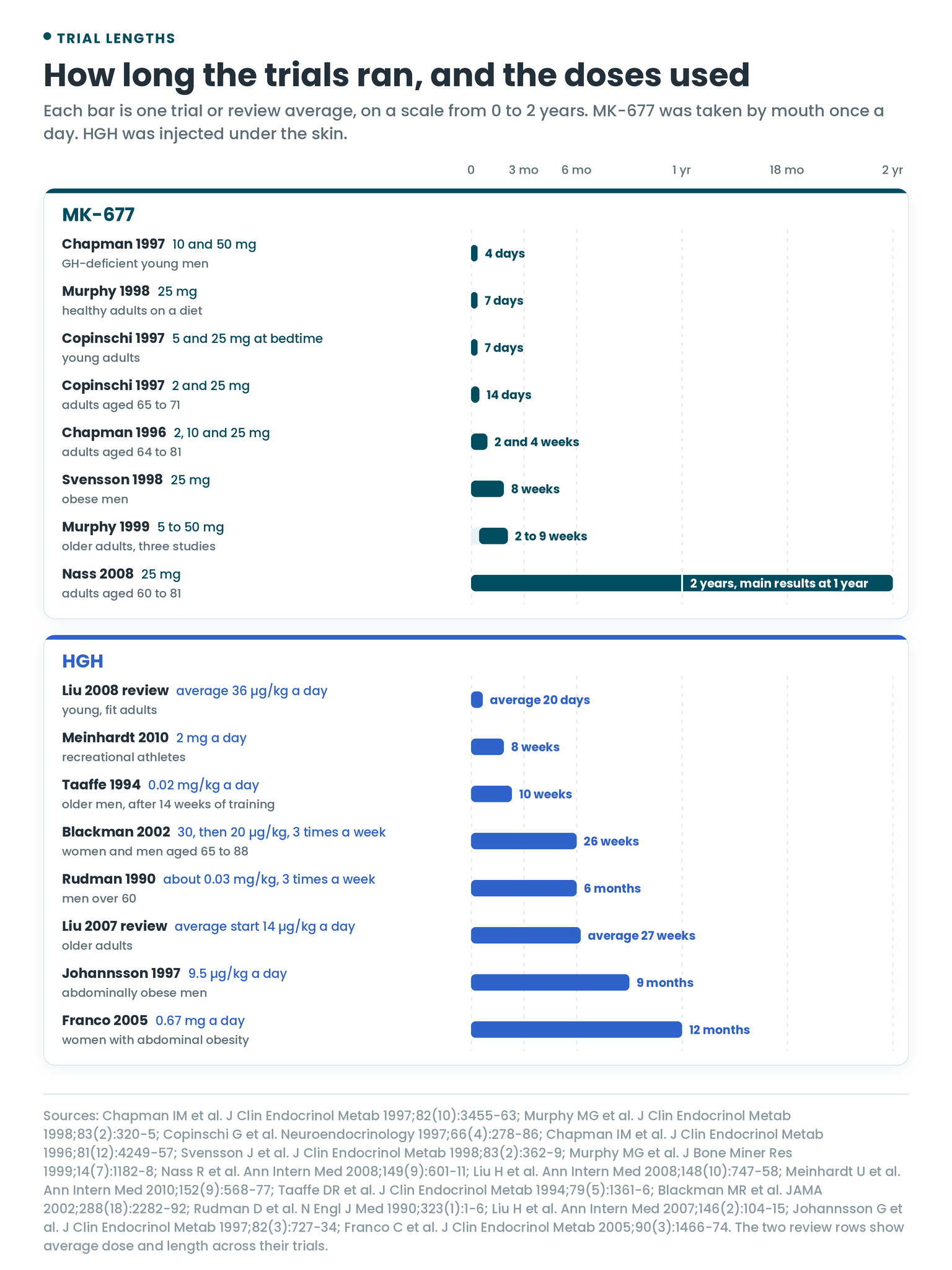
Doses Used in the Research
MK-677 (by mouth, once a day):
- 2, 10 and 25 mg for 2 and 4 weeks in older adults (Chapman 1996).
- 25 mg for two years in older adults (Nass 2008), 8 weeks in obese men (Svensson 1998) and 7 days during a diet (Murphy 1998).
- 5 and 25 mg at bedtime for 7 days in young adults; 2 and 25 mg for 14 days in older adults (Copinschi 1997).
- 10 and 50 mg for 4 days in GH-deficient young men (Chapman 1997).
- 5 to 50 mg across three studies of 2 to 9 weeks in older adults (Murphy 1999).
HGH (injected under the skin):
- About 0.03 mg/kg three times a week for six months in men over 60 (Rudman 1990).
- 30 µg/kg, reduced to 20 µg/kg, three times a week for 26 weeks in aged women and men (Blackman 2002).
- 0.02 mg/kg a day for 10 weeks in older men in a strength program (Taaffe 1994).
- 9.5 µg/kg a day for 9 months in abdominally obese men (Johannsson 1997).
- 0.67 mg a day for 12 months in postmenopausal women with abdominal obesity (Franco 2005).
- 2 mg a day for 8 weeks in recreational athletes (Meinhardt 2010).
- Averages across trials: a starting dose of 14 µg/kg a day for 27 weeks in older adults (Liu 2007), and 36 µg/kg a day for 20 days in young adults (Liu 2008).
Frequently Asked Questions
Is MK-677 the same as HGH?
No. HGH is growth hormone itself, injected. MK-677 is a pill that copies the stomach hormone ghrelin and makes the pituitary release more of its own GH.
Does MK-677 raise IGF-1 as much as HGH?
In the trials, both raised IGF-1 into the young-adult range. At 25 mg a day, MK-677 took it from 141 to 265 µg/L in four weeks in older adults.
Which builds more muscle, MK-677 or HGH?
Both raised lean mass: 1.1 kg against a 0.5 kg loss on placebo over a year on MK-677, and 2.1 kg in a review of HGH trials in older adults. Neither raised strength in most trials.
Does MK-677 burn fat like HGH?
In the trials, HGH cut fat mass and visceral fat, while MK-677 left total and visceral fat unchanged and raised limb fat and body weight.
Does MK-677 work if my pituitary doesn’t make GH?
It needs a working pituitary. In GH-deficient young men, the GH response was biggest in those who were least deficient.
Do MK-677 and HGH both affect blood sugar?
Yes. MK-677 raised fasting glucose and lowered insulin sensitivity. HGH raised the odds of diabetes or glucose intolerance in older adults, while in abdominal obesity it improved insulin sensitivity over 9 to 12 months.
Does MK-677 help sleep?
In a small sleep study, 25 mg at bedtime lengthened deep sleep by about 50% and REM sleep by more than 20% in young adults.
What doses were used in the studies?
MK-677 was mostly 25 mg by mouth once a day, with a range of 2 to 50 mg. HGH doses ranged from 9.5 µg/kg a day in abdominally obese men to 2 mg a day in young athletes.
Stay sharp,
Joe Mars
The Peptide Report
P.S. Weighing MK-677 against HGH and want other people’s take on the research? Join the conversation in the Peptides & Biohacking Hub on Skool.
References
- Patchett AA, Nargund RP, Tata JR, Chen MH, Barakat KJ, Johnston DB, et al. Design and biological activities of L-163,191 (MK-0677): a potent, orally active growth hormone secretagogue. Proc Natl Acad Sci U S A. 1995;92(15):7001-7005. doi:10.1073/pnas.92.15.7001
- Murphy MG, Plunkett LM, Gertz BJ, He W, Wittreich J, Polvino WM, Clemmons DR. MK-677, an orally active growth hormone secretagogue, reverses diet-induced catabolism. J Clin Endocrinol Metab. 1998;83(2):320-325. doi:10.1210/jcem.83.2.4551
- Howard AD, Feighner SD, Cully DF, Arena JP, Liberator PA, Rosenblum CI, et al. A receptor in pituitary and hypothalamus that functions in growth hormone release. Science. 1996;273(5277):974-977. doi:10.1126/science.273.5277.974
- Kojima M, Hosoda H, Date Y, Nakazato M, Matsuo H, Kangawa K. Ghrelin is a growth-hormone-releasing acylated peptide from stomach. Nature. 1999;402(6762):656-660. doi:10.1038/45230
- Chapman IM, Bach MA, Van Cauter E, Farmer M, Krupa D, Taylor AM, et al. Stimulation of the growth hormone (GH)-insulin-like growth factor I axis by daily oral administration of a GH secretogogue (MK-677) in healthy elderly subjects. J Clin Endocrinol Metab. 1996;81(12):4249-4257. doi:10.1210/jcem.81.12.8954023
- Chapman IM, Pescovitz OH, Murphy G, Treep T, Cerchio KA, Krupa D, et al. Oral administration of growth hormone (GH) releasing peptide-mimetic MK-677 stimulates the GH/insulin-like growth factor-I axis in selected GH-deficient adults. J Clin Endocrinol Metab. 1997;82(10):3455-3463. doi:10.1210/jcem.82.10.4297
- Nass R, Pezzoli SS, Oliveri MC, Patrie JT, Harrell FE Jr, Clasey JL, et al. Effects of an oral ghrelin mimetic on body composition and clinical outcomes in healthy older adults: a randomized trial. Ann Intern Med. 2008;149(9):601-611. doi:10.7326/0003-4819-149-9-200811040-00003
- Svensson J, Lönn L, Jansson JO, Murphy G, Wyss D, Krupa D, et al. Two-month treatment of obese subjects with the oral growth hormone (GH) secretagogue MK-677 increases GH secretion, fat-free mass, and energy expenditure. J Clin Endocrinol Metab. 1998;83(2):362-369. doi:10.1210/jcem.83.2.4539
- Murphy MG, Bach MA, Plotkin D, Bolognese J, Ng J, Krupa D, et al. Oral administration of the growth hormone secretagogue MK-677 increases markers of bone turnover in healthy and functionally impaired elderly adults. J Bone Miner Res. 1999;14(7):1182-1188. doi:10.1359/jbmr.1999.14.7.1182
- Bach MA, Rockwood K, Zetterberg C, Thamsborg G, Hébert R, Devogelaer JP, et al. The effects of MK-0677, an oral growth hormone secretagogue, in patients with hip fracture. J Am Geriatr Soc. 2004;52(4):516-523. doi:10.1111/j.1532-5415.2004.52156.x
- Rudman D, Feller AG, Nagraj HS, Gergans GA, Lalitha PY, Goldberg AF, et al. Effects of human growth hormone in men over 60 years old. N Engl J Med. 1990;323(1):1-6. doi:10.1056/NEJM199007053230101
- Taaffe DR, Pruitt L, Reim J, Hintz RL, Butterfield G, Hoffman AR, Marcus R. Effect of recombinant human growth hormone on the muscle strength response to resistance exercise in elderly men. J Clin Endocrinol Metab. 1994;79(5):1361-1366. doi:10.1210/jcem.79.5.7525633
- Karimi M, Koranyi J, Franco C, Peker Y, Eder DN, Angelhed JE, et al. Increased neck soft tissue mass and worsening of obstructive sleep apnea after growth hormone treatment in men with abdominal obesity. J Clin Sleep Med. 2010;6(3):256-263. PubMed 20572419
- Liu H, Bravata DM, Olkin I, Nayak S, Roberts B, Garber AM, Hoffman AR. Systematic review: the safety and efficacy of growth hormone in the healthy elderly. Ann Intern Med. 2007;146(2):104-115. doi:10.7326/0003-4819-146-2-200701160-00005
- Blackman MR, Sorkin JD, Münzer T, Bellantoni MF, Busby-Whitehead J, Stevens TE, et al. Growth hormone and sex steroid administration in healthy aged women and men: a randomized controlled trial. JAMA. 2002;288(18):2282-2292. doi:10.1001/jama.288.18.2282
- Hazem A, Elamin MB, Bancos I, Malaga G, Prutsky G, Domecq JP, et al. Body composition and quality of life in adults treated with GH therapy: a systematic review and meta-analysis. Eur J Endocrinol. 2012;166(1):13-20. doi:10.1530/EJE-11-0558
- Meinhardt U, Nelson AE, Hansen JL, Birzniece V, Clifford D, Leung KC, et al. The effects of growth hormone on body composition and physical performance in recreational athletes: a randomized trial. Ann Intern Med. 2010;152(9):568-577. doi:10.7326/0003-4819-152-9-201005040-00007
- Johannsson G, Mårin P, Lönn L, Ottosson M, Stenlöf K, Björntorp P, et al. Growth hormone treatment of abdominally obese men reduces abdominal fat mass, improves glucose and lipoprotein metabolism, and reduces diastolic blood pressure. J Clin Endocrinol Metab. 1997;82(3):727-734. doi:10.1210/jcem.82.3.3809
- Franco C, Brandberg J, Lönn L, Andersson B, Bengtsson BA, Johannsson G. Growth hormone treatment reduces abdominal visceral fat in postmenopausal women with abdominal obesity: a 12-month placebo-controlled trial. J Clin Endocrinol Metab. 2005;90(3):1466-1474. doi:10.1210/jc.2004-1657
- Liu H, Bravata DM, Olkin I, Friedlander A, Liu V, Roberts B, et al. Systematic review: the effects of growth hormone on athletic performance. Ann Intern Med. 2008;148(10):747-758. doi:10.7326/0003-4819-148-10-200805200-00215
- Copinschi G, Leproult R, Van Onderbergen A, Caufriez A, Cole KY, Schilling LM, et al. Prolonged oral treatment with MK-677, a novel growth hormone secretagogue, improves sleep quality in man. Neuroendocrinology. 1997;66(4):278-286. doi:10.1159/000127249