Twelve weeks, three pumps. In a 2000 study, young adult female rats carried a small pump under the skin that released growth hormone, ipamorelin or another GH-releasing peptide around the clock. All three groups finished with bigger, heavier bones.
That experiment is one of a handful that gave HGH and ipamorelin to the same animals. The rest of the picture comes from two separate bodies of research: decades of HGH trials in people, and a much shorter ipamorelin file.
Here’s how the two compare, finding by finding.
What HGH and Ipamorelin Are
HGH is growth hormone itself, the hormone your pituitary gland makes and releases in bursts. The HGH used in studies is recombinant human growth hormone, made by engineered cells. One 1992 study tested a version made by mammalian cells and gave it three ways: into a vein, into a muscle and under the skin.
Ipamorelin is a lab-made chain of five amino acids. Its developers described it in 1998 as “the first selective growth hormone secretagogue,” meaning a compound that makes the pituitary release more of its own growth hormone. It works through a receptor in the pituitary and hypothalamus that was cloned in 1996. The body’s own key for that receptor, the stomach hormone ghrelin, was found in 1999.
So the basic difference is simple. HGH is the hormone. Ipamorelin is a signal that asks your pituitary to release the hormone. Our ipamorelin injection post covers every ipamorelin dose that was tested, in its original units.
Two Routes to More Growth Hormone
HGH Arrives Ready-Made
An HGH injection puts growth hormone straight into the body, so the pituitary doesn’t have to make or release anything. That’s why so many HGH trials were run in adults with GH deficiency, whose pituitary makes too little of the hormone.
Ipamorelin Needs a Working Pituitary and Hypothalamus
Ipamorelin’s effect depends on the glands it signals. The 1996 receptor paper described this family of compounds as acting on the pituitary and hypothalamus to stimulate and amplify pulsatile GH release.
A 1995 study of GHRP-6, which uses the same receptor as ipamorelin, shows how much the hypothalamus matters. It compared 12 patients whose hypothalamus was cut off from the pituitary with 11 matched healthy people. In the healthy group, GH release (measured as the area under the curve over two hours) was 483.7 after GHRH, the brain’s own GH-releasing hormone, and 1434.8 after GHRP-6. Given together, the two produced 3771.5, more than the sum of each alone. In the patients, GHRH still worked (423.4), but GHRP-6 was almost completely blocked (97.3). The authors concluded that GHRP-6’s main action is at the level of the hypothalamus.
The Shape of the GH Signal
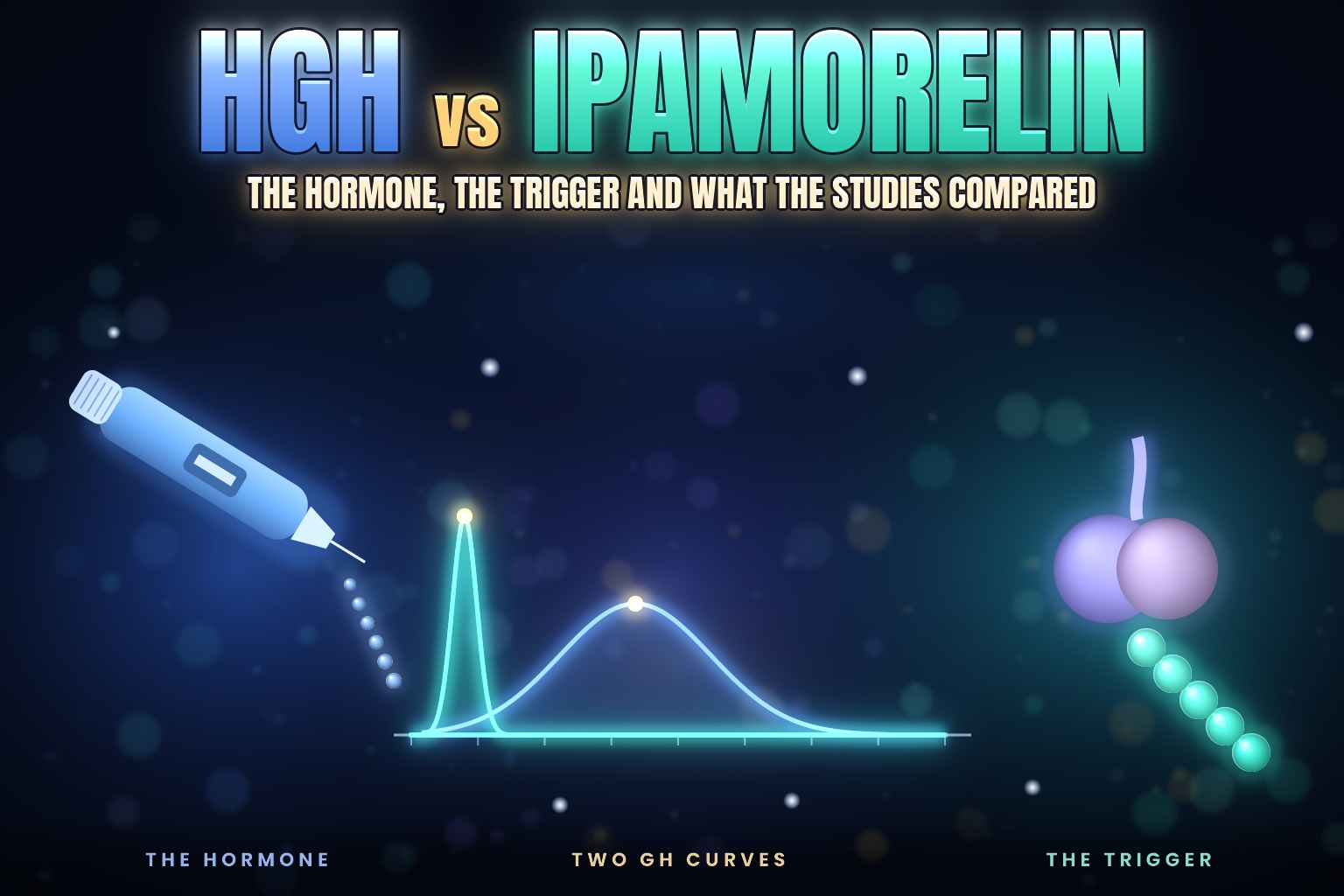
The two also produce very different GH curves in the blood.
Ipamorelin: One Short Pulse
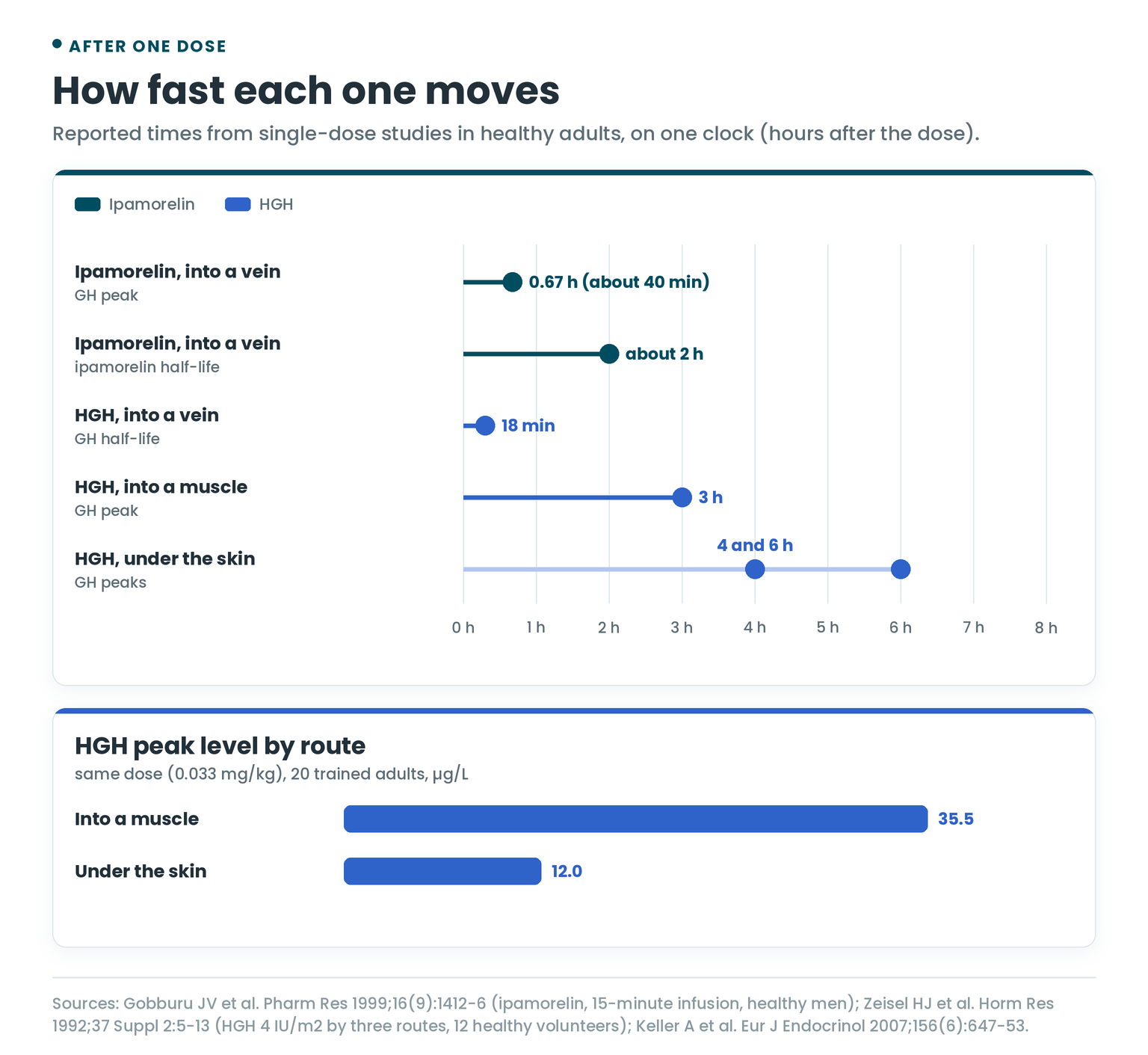
In a 1999 study, healthy men got ipamorelin as a 15-minute IV infusion, with eight men at each of five dose levels. Every dose set off a single burst of growth hormone that peaked at 0.67 hours (about 40 minutes) and then fell away to almost nothing. Ipamorelin itself had a half-life of about 2 hours in the blood.
HGH: Fast Into a Vein, Slow Under the Skin
How HGH behaves depends on how it’s given. In the 1992 study of 12 healthy volunteers, HGH given into a vein had an elimination half-life of 18 minutes. Into a muscle, it peaked at 36.9 ng/mL at 3 hours. Under the skin, levels were lower but lasted longer, peaking at 16.4 and 16.3 ng/mL at 4 and 6 hours. The total exposure (area under the curve) was lower under the skin than into a muscle (134 against 194 ng·h/mL). In one GH-deficient child, an injection under the skin kept GH at 10 to 20 ng/mL for 8 hours.
A 2007 crossover study in 20 trained adults (10 men, 10 women) found the same pattern. At 0.033 mg/kg, peak GH was 35.5 µg/L into a muscle and 12.0 µg/L under the skin, and total exposure was 196.2 against 123.8. Men reached higher peaks and exposures than women, and their downstream responses were stronger.
So an ipamorelin dose gives a GH spike that’s over within a couple of hours, while an HGH injection under the skin gives a lower hump that peaks 4 to 6 hours later and stays up for hours.
Does the Pattern Matter?
In rats with no pituitary, it did. In a 1985 experiment, human GH given into a vein in pulses (eight 5-minute pulses a day, every 3 hours) raised body weight more than the same daily amount given as a steady infusion. Nine pulses a day beat three, and three beat one. A steady infusion of bovine GH lost some of its effect in a second 5-day period, while the pulses kept working. The length of each pulse (4, 16 or 64 minutes) made no difference.
A 1988 follow-up looked inside the tissues. Pulsed GH (one pulse every 3 hours) raised IGF-1 mRNA, the gene’s working copy, 3- to 5-fold in skeletal muscle and the growth plates of the ribs, while a steady infusion was much less effective there. In the liver, both patterns raised it about equally. Pulsed GH also drove more bone lengthening.
In people, the gap was smaller. A 1990 study gave six GH-deficient patients the same 2 IU of HGH into a vein three ways, on separate stays. Eight small pulses and a steady infusion raised IGF-1 almost identically (average levels of 147.6 and 151.2 µg/L), while two large pulses raised it less (125.3). The authors suggested that how long GH stays above zero may matter as much as pulsing. In 10 GH-deficient children, an overnight pump that combined a steady flow with three pulses gave the same growth speed and IGF-1 pattern over 6 months as one evening injection.
Pick a pattern below to see how each study delivered the same amount of GH and what changed.
Try the Delivery Patterns
What an HGH Dose Does to Your Own GH
Growth hormone keeps itself in check. When GH rises, the body releases less of its own for a while, a loop called autonegative feedback. Several human studies measured how strong that brake is, and they used GHRP-2, a close relative of ipamorelin, as the trigger.
In Men
In 13 healthy men aged 43 to 71, a short IV pulse of HGH (3 µg/kg over 6 minutes) was given 2 hours before a dose of GHRP-2. The HGH pulse cut basal GH release 2.6-fold, pulsatile release 2.4-fold and the GHRP-2 response 2.1-fold, and it cut short the GH bursts that GHRP-2 set off. Three weekly testosterone shots eased part of that brake on basal GH and helped GH recover faster.
In Women
In 9 healthy postmenopausal women, a pulse of 10 µg/kg cut the later GH peaks by 33% for spontaneous release, 79% after GHRH and 54% after GHRP-2. A course of oral estradiol made GHRP-2 work 1.7-fold better despite the brake, while the other two responses didn’t change.
A larger 2011 study ran 25 healthy men and women through eight sessions each. Women escaped the feedback faster than men, sex hormones sped the escape, and people with a higher body mass index had fewer and smaller GH bursts as they recovered.
The 2007 injection study saw the same brake from a different angle. In women, the 20 kDa form of GH, which the body makes alongside the main 22 kDa form, fell after an HGH injection and stayed down for 14 to 18 hours at the lower dose and 30 hours at the higher one.
Ipamorelin After Repeated Doses
In rats given ipamorelin three times a day for 15 days, the GH response to an IV test dose of ipamorelin was slightly smaller afterward, while the response to GHRH and the GH stored in the pituitary were unchanged.
Side by Side in the Same Experiments
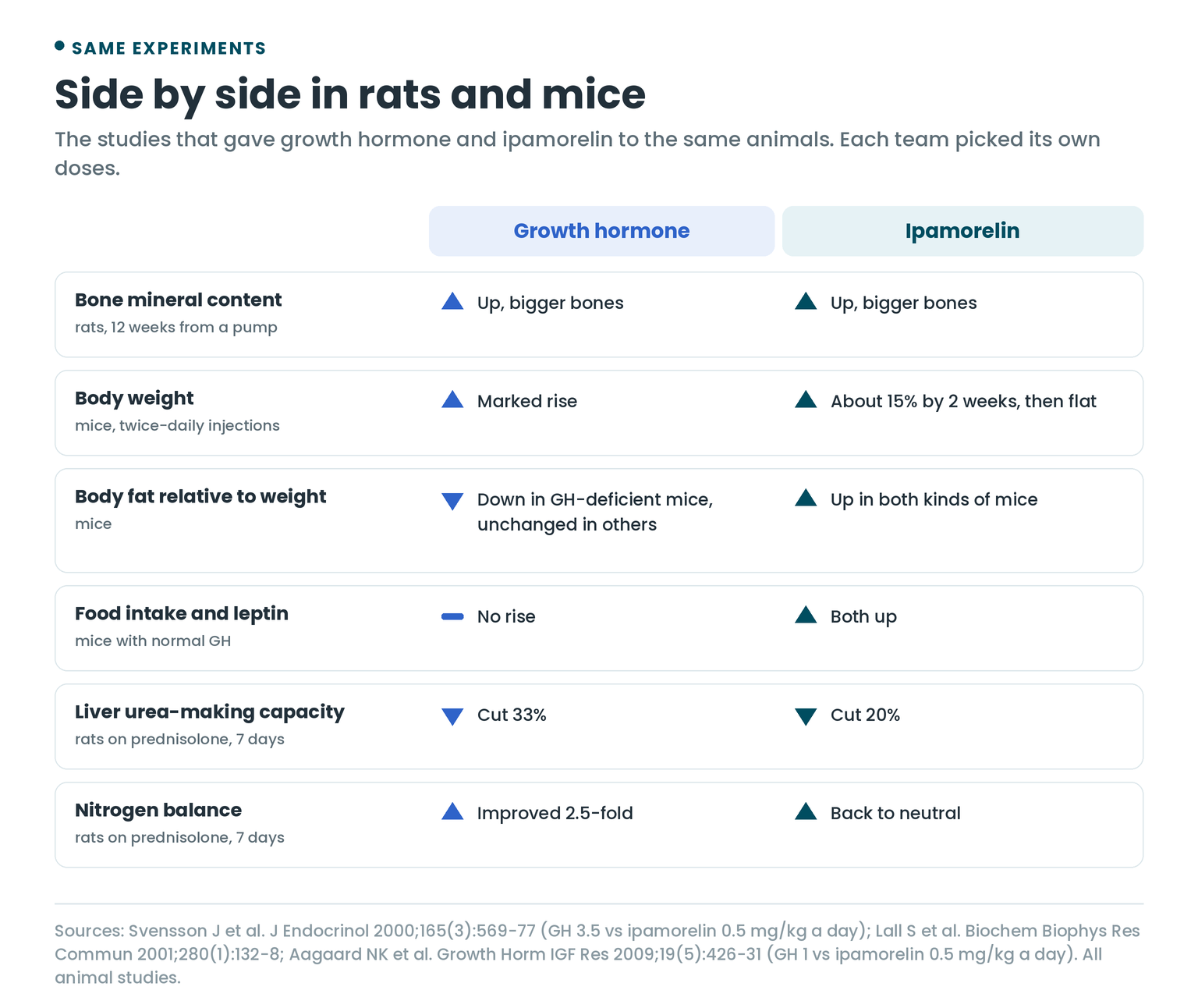
These are the studies that gave both to the same animals, at the doses each team chose.
Bone
In the 2000 study from the opening, 13-week-old female rats got ipamorelin (0.5 mg/kg a day), GHRP-6 (0.5 mg/kg a day), growth hormone (3.5 mg/kg a day) or a blank solution from a pump under the skin for 12 weeks. All three treatments raised body weight and the bone mineral content of the shin and spine. The bones got bigger, with more cross-sectional area, volume and ash weight, while bone mineral content relative to body weight and the density of the bone itself stayed the same.
Body Weight and Fat
A 2001 mouse study gave twice-daily GH or ipamorelin to GH-deficient mice and to mice with normal GH. Growth hormone raised body weight markedly in both. Ipamorelin raised it about 15% by 2 weeks, with no further gain by 9 weeks. On body fat, the two went in opposite directions: ipamorelin raised fat pad weight relative to body weight in both kinds of mice, and in the mice with normal GH it also raised leptin, a hormone made by fat, and food intake. Growth hormone lowered relative body fat in the GH-deficient mice and didn’t change it in the others. The authors described ipamorelin’s fat gain as independent of GH, possibly from more eating.
Protein Breakdown on Steroids
Steroid medicines push the body to break down protein, and the liver turns the freed nitrogen into urea. A 2009 rat study gave prednisolone (4 mg/kg a day) for 7 days, alone or with GH (1 mg/kg a day) or ipamorelin (0.5 mg/kg a day). Prednisolone raised the liver’s capacity to make urea and pushed nitrogen balance negative.
Growth hormone cut the liver’s urea-making capacity by 33% and improved nitrogen balance 2.5-fold. Ipamorelin cut it by 20%, brought nitrogen balance back to neutral and restored the nitrogen content of the organs. The authors concluded that ipamorelin worked, but less efficiently than GH at the doses given.
Ipamorelin on Its Own Under Steroids
Two more rat studies tested ipamorelin with steroids, without a GH group. In rats on methylprednisolone for 3 months, 100 µg/kg of ipamorelin three times a day kept calf muscles stronger and raised bone formation fourfold compared with the steroid alone. In another, rats on a steroid lost 13.6 g over 10 days after a minor operation, against 1.6 or 2.3 g with ipamorelin (0.4 or 1.6 mg/kg a day), and the steroid didn’t block ipamorelin’s GH release.
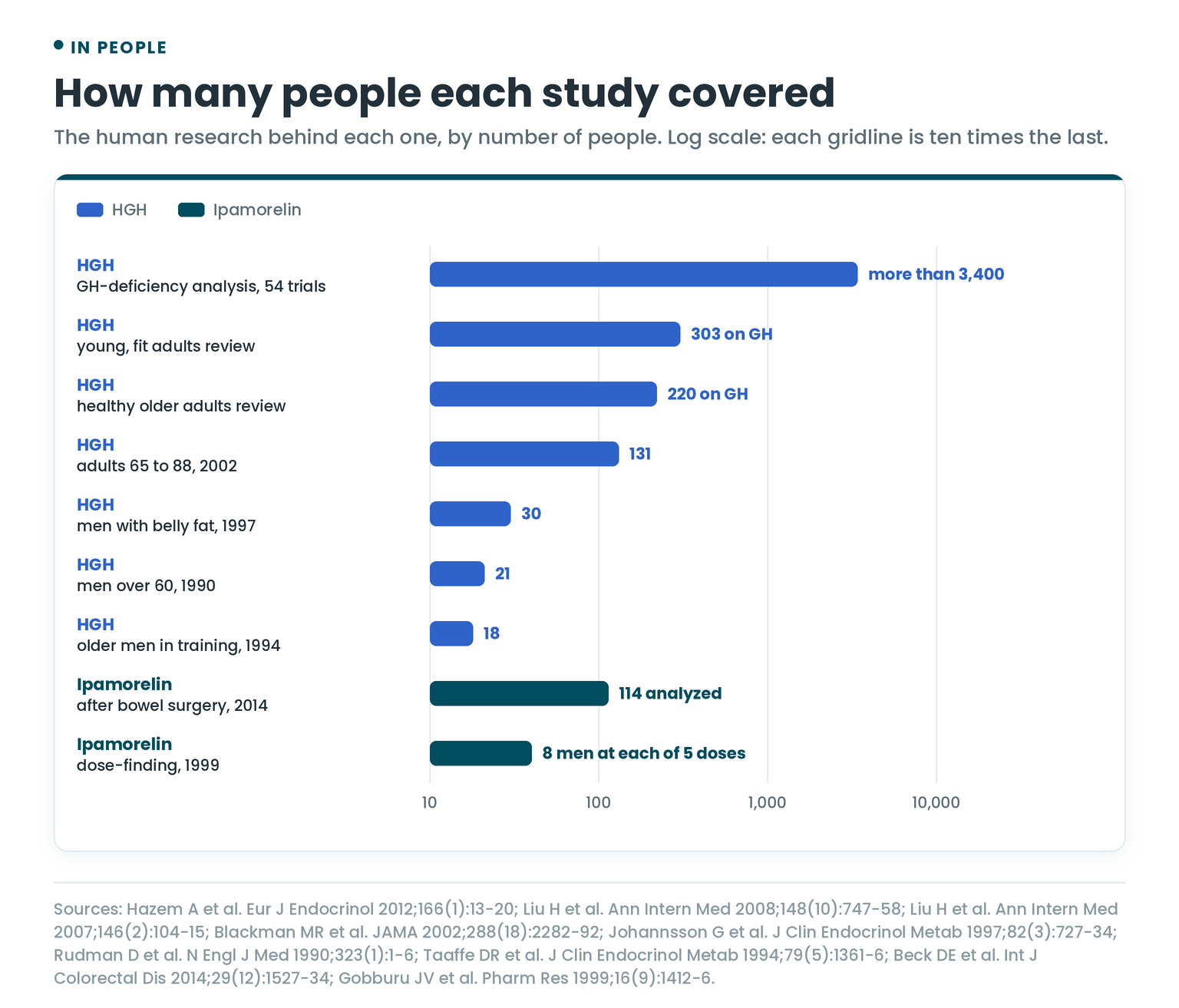
The Human Research Behind Each One
HGH
HGH has a long trial record, much of it in adults with GH deficiency and in healthy older adults.
A 2012 analysis pooled 54 placebo-controlled trials in more than 3,400 adults with GH deficiency. On GH, weight fell 2.31 kg, body fat fell 2.56 kg and lean body mass rose 1.38 kg. Quality of life improved in 11 of 16 trials that measured it.
In healthy older adults, a 2007 review of 18 study groups (220 people on GH, average age 69) found fat mass down 2.1 kg and lean mass up 2.1 kg, with no change in weight. A 1990 study of 21 men aged 61 to 81 gave 12 of them about 0.03 mg/kg three times a week for 6 months: lean body mass rose 8.8%, fat fell 14.4% and spine bone density rose 1.6%, while the 9 untreated men didn’t change. In a 2002 trial of 131 adults aged 65 to 88, men on GH alone gained 3.1 kg of lean mass, but strength didn’t rise significantly except in men on GH plus testosterone. In 18 older men on a weight-training program, adding GH for 10 weeks didn’t change strength gains, though lean mass rose and fat fell.
In 30 men with belly fat, 9 months of GH cut visceral fat 18.1% and lowered diastolic blood pressure. In young, fit adults, a 2008 review of 303 people on GH found lean mass up 2.1 kg without better strength or exercise capacity. Our MK-677 vs HGH post covers these trials outcome by outcome.
Ipamorelin
The published human data for ipamorelin come from two studies. The 1999 dose-finding study described above measured how the body handled single doses. A 2014 phase 2 trial gave 30 µg/kg into a vein twice a day to adults recovering from bowel surgery: 117 enrolled and 114 were analyzed. The time to the first solid meal was 25.3 hours on ipamorelin and 32.6 hours on placebo, a difference that wasn’t significant (p = 0.15).
Side Effects Reported
HGH
The 2007 review of older adults found more soft-tissue swelling (edema), joint pain, carpal tunnel syndrome and breast tissue growth in men (gynecomastia), and somewhat more new diabetes or impaired fasting glucose. In the 2002 trial, 39% of women on GH had edema, 41% of men on GH had joint pain, 32% of men on GH plus testosterone had carpal tunnel symptoms, and 18 GH-treated men developed diabetes or glucose intolerance, against 7 men not on GH. In adults with GH deficiency, edema was about six times as likely on GH as on placebo, and joint stiffness about four times as likely. In 40 men with belly fat, 12 months of GH made obstructive sleep apnea worse: the number of breathing interruptions rose from 31 to 43 an hour as the soft tissue in the neck grew.
Single doses were milder. In the 1992 study, HGH raised free fatty acids at 4 hours and IGF-1 at 24 hours, left insulin and blood sugar almost unchanged over the first 4 hours, and caused no adverse reactions.
Ipamorelin
In the bowel surgery trial, any side effect during treatment was reported by 87.5% of patients on ipamorelin and 94.8% on placebo, and the authors called it well tolerated. In mice, the effects seen were the weight gain, extra body fat and extra eating described above.
Cortisol and Other Hormones
The word “selective” in ipamorelin’s description comes from pigs. GHRP-6 and GHRP-2 raised ACTH and cortisol, the body’s stress hormones, along with GH. Ipamorelin didn’t, even at more than 200 times the dose that gave half its maximum GH release, and none of the three changed FSH, LH, prolactin or TSH.
HGH vs Ipamorelin at a Glance
| HGH | Ipamorelin | |
|---|---|---|
| What it is | Growth hormone itself (recombinant) | Lab-made chain of five amino acids |
| How it raises GH | Adds GH directly | Signals the pituitary and hypothalamus through the ghrelin receptor |
| GH after one dose | Into a vein: half-life 18 minutes. Under the skin: peaks at 4 to 6 hours and stays up for hours | One GH pulse, peak at about 40 minutes, then gone; ipamorelin half-life about 2 hours |
| Bone in rats (12 weeks) | Bigger bones, more mineral content | Bigger bones, more mineral content |
| Body weight in mice | Marked rise | About 15% by 2 weeks, then flat (also in GH-deficient mice) |
| Body fat in mice | Down in GH-deficient mice, unchanged in others | Up relative to weight, with more eating |
| Protein breakdown in steroid-treated rats | Liver urea capacity cut 33% | Liver urea capacity cut 20% |
| Human research | Dozens of trials, more than 3,400 adults in the GH-deficiency analysis alone | Two studies: single doses in healthy men; 114 patients after bowel surgery |
| Side effects reported | Edema, joint pain, carpal tunnel, gynecomastia, higher blood sugar | Similar rate to placebo after surgery; weight gain, fat and appetite in mice |
Doses Used in the Research
HGH, people:
- 0.033 mg/kg under the skin or into a muscle, and 0.083 mg/kg under the skin, as single doses in trained adults.
- 4 IU (1.3 mg) per square meter of body surface, once, into a vein, a muscle or under the skin, in healthy volunteers.
- About 0.03 mg/kg three times a week for 6 months in men over 60.
- 30 µg/kg, then 20 µg/kg, three times a week for 26 weeks in adults aged 65 to 88.
- 0.02 mg/kg a day for 10 weeks in older men on a training program.
- 9.5 µg/kg a day for 9 months in men with belly fat.
- An average starting dose of 14 µg/kg a day in the older-adult review, and an average of 36 µg/kg a day in the review of young, fit adults.
- 3 or 10 µg/kg as a 6-minute IV pulse in the feedback studies.
- 2 IU into a vein as two pulses, eight pulses or a 6-hour infusion in the delivery-pattern study.
Ipamorelin, people:
- 3, 10, 30, 60 or 100 µg/kg as a single 15-minute IV infusion in healthy men.
- 30 µg/kg into a vein twice a day for up to 7 days after bowel surgery.
Head-to-head in animals:
- Bone, rats: GH 3.5 mg/kg a day against ipamorelin 0.5 mg/kg a day, from a pump for 12 weeks.
- Protein breakdown, rats on prednisolone: GH 1 mg/kg a day against ipamorelin 0.5 mg/kg a day for 7 days.
- Body weight and fat, mice: twice-daily injections of each.
For how peptide vials are mixed and measured, see our reconstitution guide, and for other peptides’ study doses, our dosage chart.
Frequently Asked Questions
What’s the main difference between HGH and ipamorelin?
HGH is growth hormone itself. Ipamorelin is a five-amino-acid peptide that makes the pituitary release more of its own growth hormone, so it depends on a working pituitary and hypothalamus.
Which raises growth hormone longer?
In the studies, an HGH injection under the skin kept GH up for hours, peaking at 4 to 6 hours. An IV dose of ipamorelin gave one GH pulse that peaked at about 40 minutes and then faded.
Have HGH and ipamorelin been compared directly?
Yes, in rats and mice. Both built bigger bones in rats; GH raised body weight more in mice and cut protein breakdown more in steroid-treated rats, while ipamorelin raised body fat and food intake in mice.
Does HGH shut down your own growth hormone?
In short studies, a single IV pulse of HGH cut the body’s own GH release and the response to GHRP-2 for the next few hours. In men, the GHRP-2 response fell 2.1-fold; in postmenopausal women, it fell 54%.
Does ipamorelin raise cortisol like other GH-releasing peptides?
In pigs it didn’t raise ACTH or cortisol, even at more than 200 times its half-maximal GH dose, while GHRP-6 and GHRP-2 raised both.
What are the side effects of HGH?
The trials in older adults reported edema, joint pain, carpal tunnel syndrome, gynecomastia and higher blood sugar. In men with belly fat, a year of GH made sleep apnea worse.
How much human research is there on ipamorelin?
Two published studies: single IV doses of 3 to 100 µg/kg in healthy men, and 30 µg/kg twice a day in 114 patients after bowel surgery.
Does ipamorelin need a working pituitary and hypothalamus?
Its GH release does. In people, GHRP-6, which uses the same receptor, was almost fully blocked when the hypothalamus was cut off from the pituitary. In GH-deficient mice, ipamorelin still raised body weight about 15% and body fat, which the researchers traced to GH-independent effects such as more eating.
Is pulsed GH better than steady GH?
In rats with no pituitary, pulses drove more growth and more IGF-1 in muscle and bone than a steady infusion. In GH-deficient people, eight small pulses and a steady infusion raised IGF-1 equally, and two large pulses raised it less.
Stay sharp,
Joe Mars
The Peptide Report
P.S. Comparing HGH and ipamorelin and want other people’s take on the research? Join the conversation in the Peptides & Biohacking Hub on Skool.
References
- Svensson J, Lall S, Dickson SL, Bengtsson BA, Rømer J, Ahnfelt-Rønne I, et al. The GH secretagogues ipamorelin and GH-releasing peptide-6 increase bone mineral content in adult female rats. J Endocrinol. 2000;165(3):569-577. doi:10.1677/joe.0.1650569
- Zeisel HJ, von Petrykowski W, Wais U. Pharmacokinetics and short-term metabolic effects of mammalian cell-derived biosynthetic human growth hormone in man. Horm Res. 1992;37 Suppl 2:5-13. doi:10.1159/000182369
- Raun K, Hansen BS, Johansen NL, Thøgersen H, Madsen K, Ankersen M, et al. Ipamorelin, the first selective growth hormone secretagogue. Eur J Endocrinol. 1998;139(5):552-561. doi:10.1530/eje.0.1390552
- Howard AD, Feighner SD, Cully DF, Arena JP, Liberator PA, Rosenblum CI, et al. A receptor in pituitary and hypothalamus that functions in growth hormone release. Science. 1996;273(5277):974-977. doi:10.1126/science.273.5277.974
- Kojima M, Hosoda H, Date Y, Nakazato M, Matsuo H, Kangawa K. Ghrelin is a growth-hormone-releasing acylated peptide from stomach. Nature. 1999;402(6762):656-660. doi:10.1038/45230
- Popovic V, Damjanovic S, Micic D, Djurovic M, Dieguez C, Casanueva FF. Blocked growth hormone-releasing peptide (GHRP-6)-induced GH secretion and absence of the synergic action of GHRP-6 plus GH-releasing hormone in patients with hypothalamopituitary disconnection: evidence that GHRP-6 main action is exerted at the hypothalamic level. J Clin Endocrinol Metab. 1995;80(3):942-947. doi:10.1210/jcem.80.3.7883854
- Lall S, Tung LY, Ohlsson C, Jansson JO, Dickson SL. Growth hormone (GH)-independent stimulation of adiposity by GH secretagogues. Biochem Biophys Res Commun. 2001;280(1):132-138. doi:10.1006/bbrc.2000.4065
- Gobburu JV, Agersø H, Jusko WJ, Ynddal L. Pharmacokinetic-pharmacodynamic modeling of ipamorelin, a growth hormone releasing peptide, in human volunteers. Pharm Res. 1999;16(9):1412-1416. doi:10.1023/a:1018955126402
- Keller A, Wu Z, Kratzsch J, Keller E, Blum WF, Kniess A, et al. Pharmacokinetics and pharmacodynamics of GH: dependence on route and dosage of administration. Eur J Endocrinol. 2007;156(6):647-653. doi:10.1530/EJE-07-0057
- Clark RG, Jansson JO, Isaksson O, Robinson IC. Intravenous growth hormone: growth responses to patterned infusions in hypophysectomized rats. J Endocrinol. 1985;104(1):53-61. doi:10.1677/joe.0.1040053
- Isgaard J, Carlsson L, Isaksson OG, Jansson JO. Pulsatile intravenous growth hormone (GH) infusion to hypophysectomized rats increases insulin-like growth factor I messenger ribonucleic acid in skeletal tissues more effectively than continuous GH infusion. Endocrinology. 1988;123(6):2605-2610. doi:10.1210/endo-123-6-2605
- Jørgensen JO, Møller N, Lauritzen T, Christiansen JS. Pulsatile versus continuous intravenous administration of growth hormone (GH) in GH-deficient patients: effects on circulating insulin-like growth factor-I and metabolic indices. J Clin Endocrinol Metab. 1990;70(6):1616-1623. doi:10.1210/jcem-70-6-1616
- Cavallo L, De Luca F, Bernasconi S, Russo R, Zecchino C, Arrigo T. Subcutaneous growth hormone administration in growth-hormone-deficient children. Continuous plus pulsatile overnight versus single daily injection: effects on growth rate velocity. Horm Res. 1994;42(3):86-89. doi:10.1159/000184153
- Veldhuis JD, Evans WS, Iranmanesh A, Weltman AL, Bowers CY. Short-term testosterone supplementation relieves growth hormone autonegative feedback in men. J Clin Endocrinol Metab. 2004;89(3):1285-1290. doi:10.1210/jc.2003-031017
- Anderson SM, Wideman L, Patrie JT, Weltman A, Bowers CY, Veldhuis JD. E2 supplementation selectively relieves GH’s autonegative feedback on GH-releasing peptide-2-stimulated GH secretion. J Clin Endocrinol Metab. 2001;86(12):5904-5911. doi:10.1210/jcem.86.12.8076
- Veldhuis JD, Bowers CY. Regulated recovery of pulsatile growth hormone secretion from negative feedback: a preclinical investigation. Am J Physiol Regul Integr Comp Physiol. 2011;301(4):R1143-R1152. doi:10.1152/ajpregu.00293.2011
- Johansen PB, Nowak J, Skjaerbaek C, Flyvbjerg A, Andreassen TT, Wilken M, et al. Ipamorelin, a new growth-hormone-releasing peptide, induces longitudinal bone growth in rats. Growth Horm IGF Res. 1999;9(2):106-113. doi:10.1054/ghir.1999.9998
- Aagaard NK, Grøfte T, Greisen J, Malmlöf K, Johansen PB, Grønbaek H, et al. Growth hormone and growth hormone secretagogue effects on nitrogen balance and urea synthesis in steroid treated rats. Growth Horm IGF Res. 2009;19(5):426-431. doi:10.1016/j.ghir.2009.01.001
- Andersen NB, Malmlöf K, Johansen PB, Andreassen TT, Ørtoft G, Oxlund H. The growth hormone secretagogue ipamorelin counteracts glucocorticoid-induced decrease in bone formation of adult rats. Growth Horm IGF Res. 2001;11(5):266-272. doi:10.1054/ghir.2001.0239
- Malmlöf K, Johansen PB, Haahr PM, Wilken M, Oxlund H. Methylprednisolone does not inhibit the release of growth hormone after intravenous injection of a novel growth hormone secretagogue in rats. Growth Horm IGF Res. 1999;9(6):445-450. doi:10.1054/ghir.1999.0128
- Hazem A, Elamin MB, Bancos I, Malaga G, Prutsky G, Domecq JP, et al. Body composition and quality of life in adults treated with GH therapy: a systematic review and meta-analysis. Eur J Endocrinol. 2012;166(1):13-20. doi:10.1530/EJE-11-0558
- Liu H, Bravata DM, Olkin I, Nayak S, Roberts B, Garber AM, et al. Systematic review: the safety and efficacy of growth hormone in the healthy elderly. Ann Intern Med. 2007;146(2):104-115. doi:10.7326/0003-4819-146-2-200701160-00005
- Rudman D, Feller AG, Nagraj HS, Gergans GA, Lalitha PY, Goldberg AF, et al. Effects of human growth hormone in men over 60 years old. N Engl J Med. 1990;323(1):1-6. doi:10.1056/NEJM199007053230101
- Blackman MR, Sorkin JD, Münzer T, Bellantoni MF, Busby-Whitehead J, Stevens TE, et al. Growth hormone and sex steroid administration in healthy aged women and men: a randomized controlled trial. JAMA. 2002;288(18):2282-2292. doi:10.1001/jama.288.18.2282
- Taaffe DR, Pruitt L, Reim J, Hintz RL, Butterfield G, Hoffman AR, et al. Effect of recombinant human growth hormone on the muscle strength response to resistance exercise in elderly men. J Clin Endocrinol Metab. 1994;79(5):1361-1366. doi:10.1210/jcem.79.5.7525633
- Johannsson G, Marin P, Lönn L, Ottosson M, Stenlöf K, Björntorp P, et al. Growth hormone treatment of abdominally obese men reduces abdominal fat mass, improves glucose and lipoprotein metabolism, and reduces diastolic blood pressure. J Clin Endocrinol Metab. 1997;82(3):727-734. doi:10.1210/jcem.82.3.3809
- Liu H, Bravata DM, Olkin I, Friedlander A, Liu V, Roberts B, et al. Systematic review: the effects of growth hormone on athletic performance. Ann Intern Med. 2008;148(10):747-758. doi:10.7326/0003-4819-148-10-200805200-00215
- Beck DE, Sweeney WB, McCarter MD; Ipamorelin 201 Study Group. Prospective, randomized, controlled, proof-of-concept study of the Ghrelin mimetic ipamorelin for the management of postoperative ileus in bowel resection patients. Int J Colorectal Dis. 2014;29(12):1527-1534. doi:10.1007/s00384-014-2030-8
- Karimi M, Koranyi J, Franco C, Peker Y, Eder DN, Angelhed JE, et al. Increased neck soft tissue mass and worsening of obstructive sleep apnea after growth hormone treatment in men with abdominal obesity. J Clin Sleep Med. 2010;6(3):256-263. PubMed 20572419