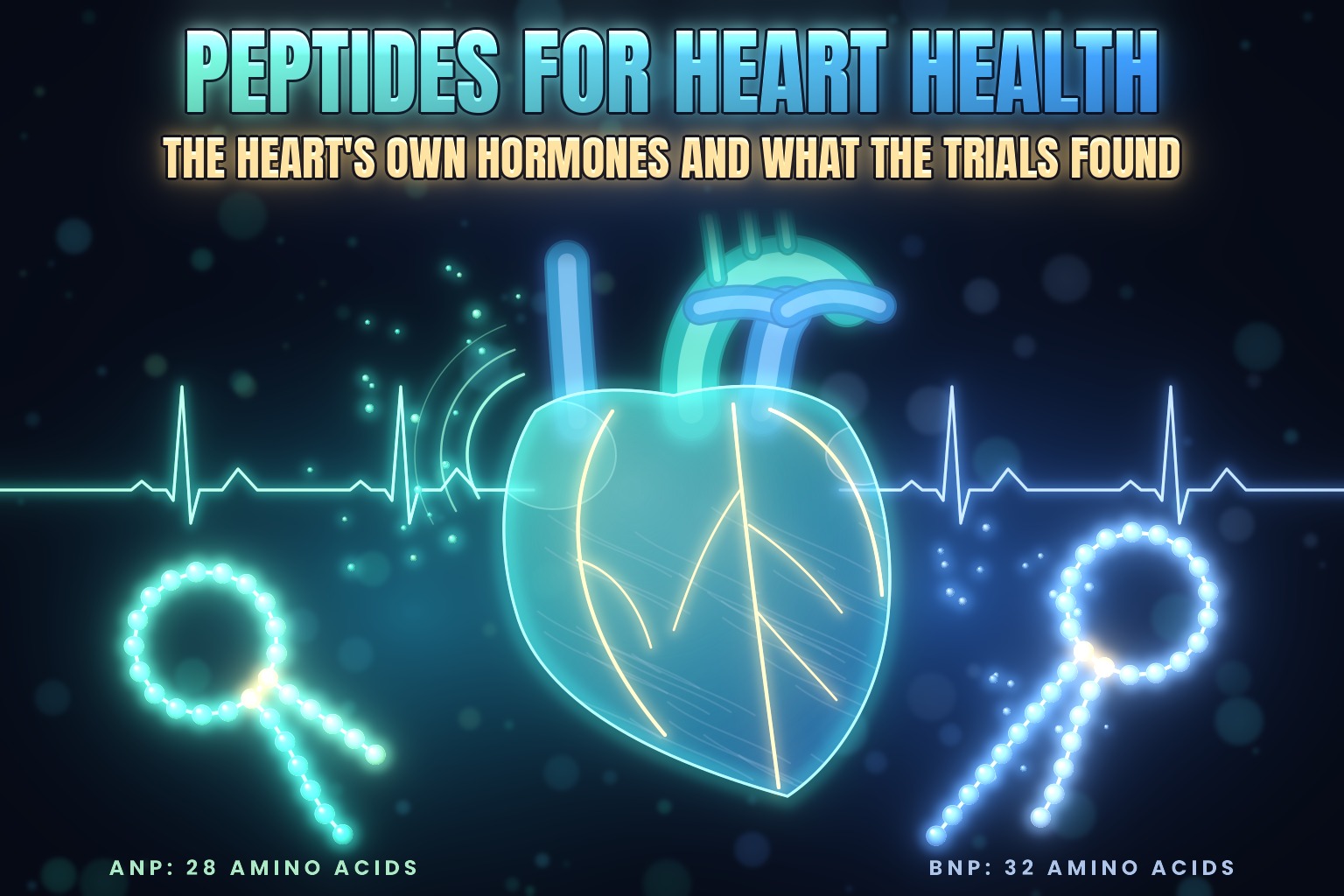
Your heart is also a gland. Stretch its walls and it releases peptide hormones into your blood, and those hormones tell your kidneys to let go of salt and water and your blood vessels to relax.
That was first seen in 1981, when researchers injected rats with an extract of heart atria and got a rapid, strong rise in the sodium leaving their bodies in urine. Since then, peptides have been tested in heart trials with thousands of patients, from the heart’s own hormones to the GLP-1 drugs. Here’s what each one did, in people first and then in animals.
The Heart Makes Its Own Peptides
The heart releases two natriuretic peptides. Natriuretic means they make the kidneys pass more sodium.
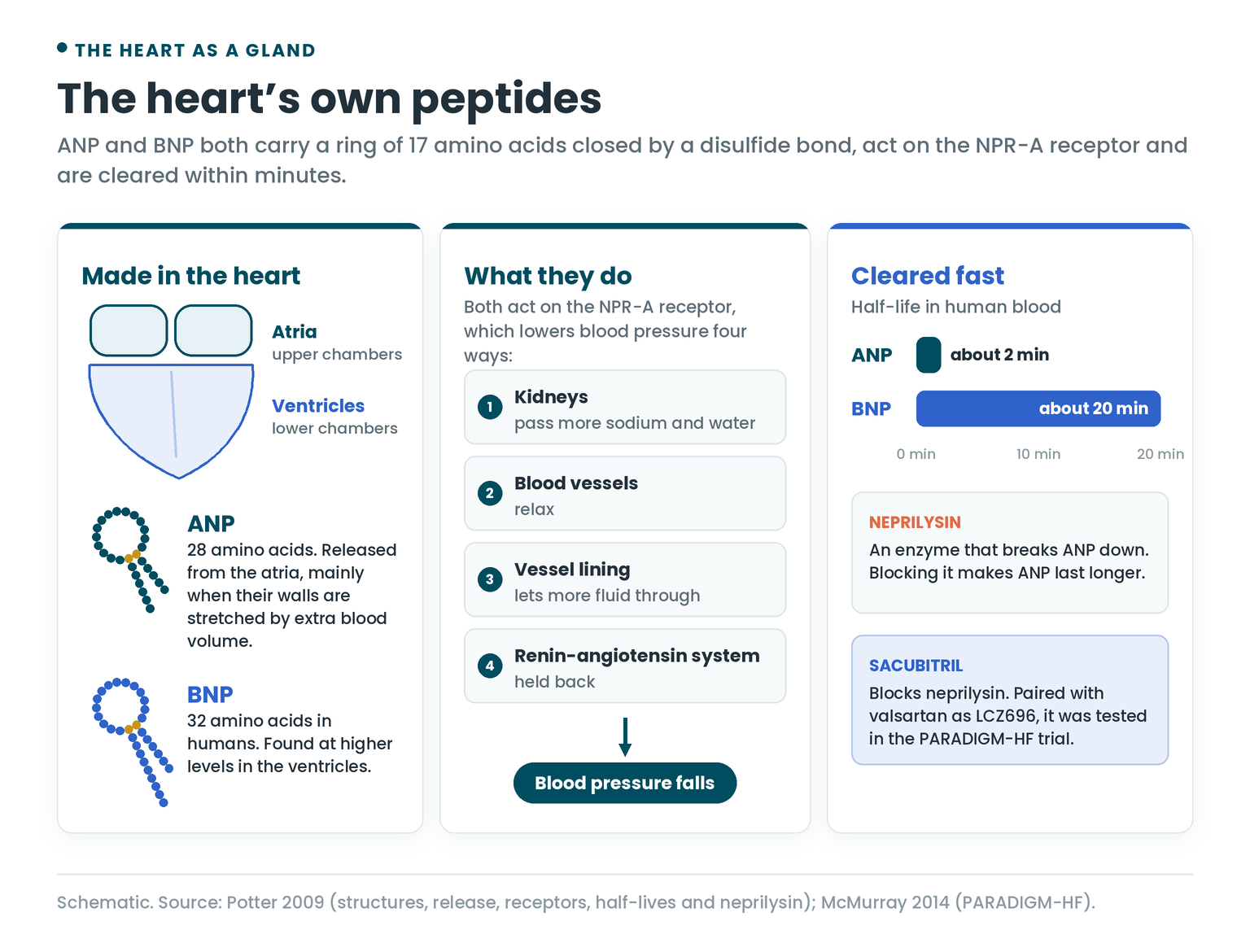
- ANP (atrial natriuretic peptide): 28 amino acids, released from the atria, the heart’s two upper chambers, mainly when their walls are stretched by extra blood volume.
- BNP (B-type natriuretic peptide): 32 amino acids in humans, found at higher levels in the ventricles, the two lower pumping chambers.
Both have a ring of 17 amino acids closed by a disulfide bond, and both act on the same receptor, NPR-A. Through it, they can lower blood pressure in four ways: the kidneys pass more sodium and water, blood vessels relax, the blood vessel lining lets more fluid through, and the renin-angiotensin system, which raises blood pressure, is held back.
They don’t last long. ANP’s half-life in human blood is about 2 minutes and BNP’s is about 20. An enzyme called neprilysin breaks ANP down, and blocking neprilysin makes ANP last longer. That’s the idea behind the first trial below.
Raising Them: PARADIGM-HF
Sacubitril blocks neprilysin. Paired with valsartan, which blocks the angiotensin receptor, it was tested as LCZ696 against enalapril, a drug that had improved survival in earlier heart failure trials. The 8,442 patients had heart failure and an ejection fraction of 40% or less. Ejection fraction is the share of blood the left ventricle pushes out with each beat.
The trial was stopped early, at a median of 27 months, because the benefit had crossed a preset boundary:
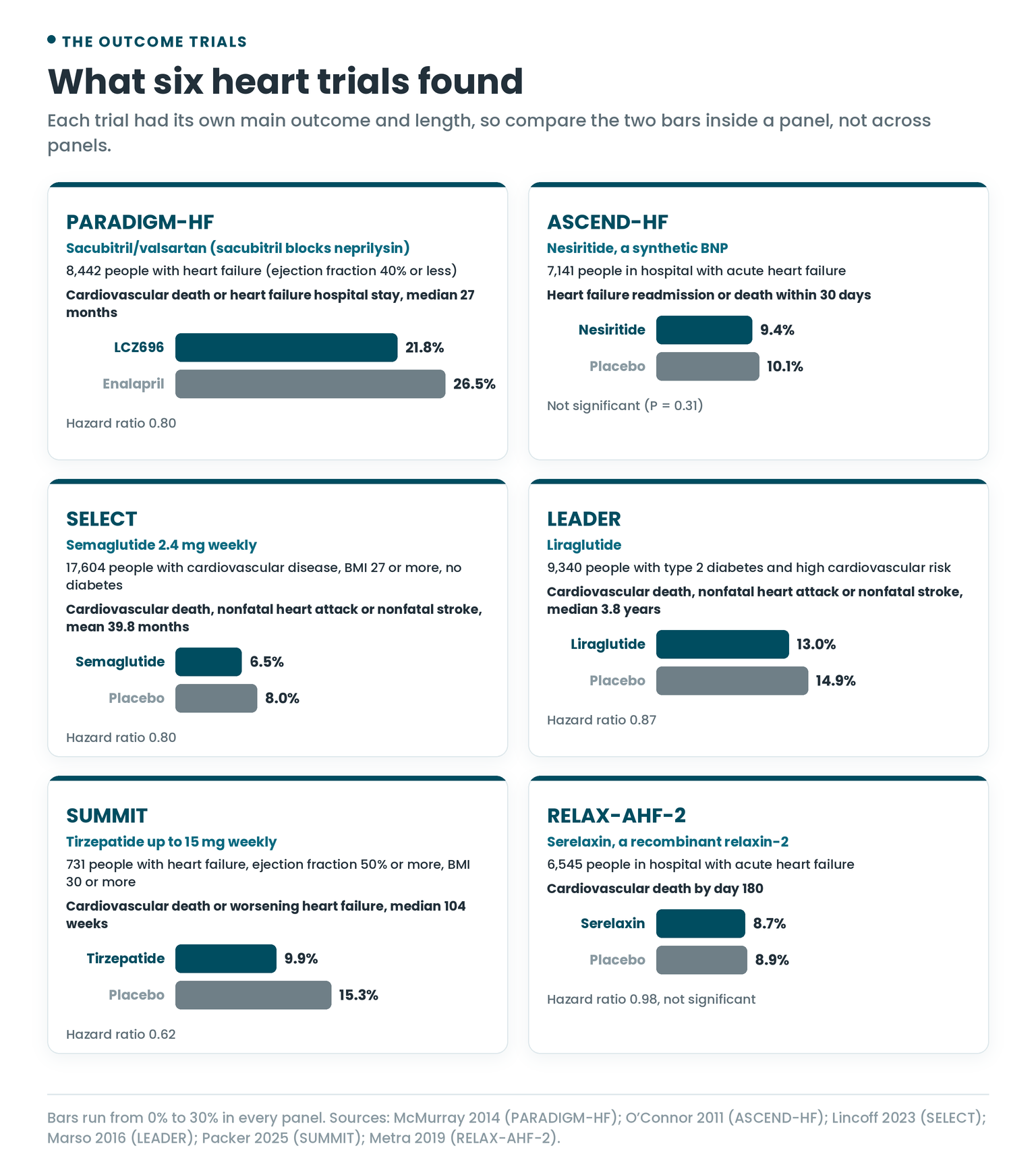
- Death from cardiovascular causes or a hospital stay for heart failure: 21.8% on LCZ696 vs 26.5% on enalapril.
- Death from cardiovascular causes: 13.3% vs 16.5%.
- Death from any cause: 17.0% vs 19.8%.
- Low blood pressure and non-serious swelling (angioedema) were more common on LCZ696; kidney problems, high potassium and cough were less common.
Giving BNP Directly: ASCEND-HF
Nesiritide is a synthetic form of BNP. ASCEND-HF gave it or a placebo for 24 to 168 hours, on top of standard care, to 7,141 patients in hospital with acute heart failure:
- Breathlessness markedly or moderately better at 6 hours: 44.5% vs 42.1%. At 24 hours: 68.2% vs 66.1%. Neither difference reached the trial’s preset level for significance.
- Another heart failure hospital stay or death within 30 days: 9.4% vs 10.1%, not a significant difference.
- Kidney function worsened in 31.4% vs 29.5%, not a significant difference. Low blood pressure was more common on nesiritide.
GLP-1 Peptides and Heart Outcomes
Semaglutide and liraglutide are long-acting peptides that act on the receptor for GLP-1, a gut hormone. The SUSTAIN-6 and FLOW trials are covered in Innovations in Diabetes Treatment. Here are SELECT, LEADER and two heart failure trials.
SELECT: Semaglutide in People Without Diabetes
SELECT enrolled 17,604 adults aged 45 or older who already had cardiovascular disease and a body-mass index of 27 or more, but no diabetes. They got semaglutide 2.4 mg or a placebo once a week and were followed for an average of 39.8 months:
- Death from cardiovascular causes, a nonfatal heart attack or a nonfatal stroke: 6.5% on semaglutide vs 8.0% on placebo, a hazard ratio of 0.80.
- Stopped the treatment for good because of adverse events: 16.6% vs 8.2%.
LEADER: Liraglutide in Type 2 Diabetes
LEADER randomized 9,340 people with type 2 diabetes and high cardiovascular risk to liraglutide or a placebo, with a median follow-up of 3.8 years. The same three-part outcome happened in 13.0% vs 14.9%. Deaths from cardiovascular causes were 4.7% vs 6.0%, and deaths from any cause were 8.2% vs 9.6%.
Heart Failure With Preserved Ejection Fraction
In this kind of heart failure the ejection fraction isn’t reduced (SUMMIT required at least 50%), yet symptoms and physical limits are often heavy, especially with obesity. Two trials tested GLP-1-based peptides in people who had both:
- STEP-HFpEF: 529 patients with a body-mass index of 30 or more got semaglutide 2.4 mg or a placebo weekly for 52 weeks. Their heart failure symptom and function score (the KCCQ, 0 to 100) rose 16.6 points vs 8.7, weight fell 13.3% vs 2.6%, and 6-minute walk distance rose 21.5 m vs 1.2 m. Serious adverse events were reported in 13.3% vs 26.7%.
- SUMMIT: tirzepatide acts on both the GLP-1 and GIP receptors. 731 patients got up to 15 mg or a placebo weekly, with a median follow-up of 104 weeks. Death from cardiovascular causes or a worsening heart failure event happened in 9.9% vs 15.3%. Worsening heart failure events alone were 8.0% vs 14.2%, cardiovascular deaths numbered 8 vs 5 (not a significant difference), and the KCCQ score rose 19.5 vs 12.7 points at 52 weeks.
Relaxin: A Pregnancy Hormone Tested in Heart Failure
Relaxin-2 is a peptide hormone that widens blood vessels and helps the heart and kidneys adapt during pregnancy. Serelaxin, a recombinant (lab-made) version, was tested in two trials as a 48-hour infusion, started within 16 hours of arrival, in patients in hospital with acute heart failure:
- RELAX-AHF (1,161 patients): breathlessness improved on one of its two main measures, a visual scale tracked over 5 days, but not on the other. Cardiovascular death or readmission for heart or kidney failure by day 60 was 13.2% vs 13.0% on placebo. Among its additional prespecified outcomes, deaths by day 180 numbered 42 vs 65.
- RELAX-AHF-2 (6,545 patients): its two main outcomes were cardiovascular death by day 180, 8.7% vs 8.9%, and worsening heart failure by day 5, 6.9% vs 7.7%. Neither differed significantly from placebo.
Growth Hormone-Releasing Peptides and the Heart Muscle
Ghrelin is a growth hormone-releasing peptide that also widens blood vessels, calms the sympathetic nervous system and stimulates appetite. Hexarelin is a synthetic growth hormone-releasing peptide. Both have been given to heart patients in small studies:
- Ghrelin in chronic heart failure: 10 patients got 2 µg/kg into a vein twice a day for 3 weeks. Ejection fraction rose from 27% to 31%, peak workload and peak oxygen use during exercise went up, and so did muscle strength and lean body mass. Eight patients with chronic heart failure who didn’t get ghrelin showed no change. The authors called the results preliminary.
- Hexarelin during bypass surgery: 24 men with coronary artery disease got one dose of hexarelin, GHRH, growth hormone or a placebo. Only hexarelin changed how the heart performed. Ejection fraction and cardiac output were up by 10 minutes and stayed up for up to 90 minutes, while its growth hormone rise was slight. The authors concluded the effect wasn’t due to growth hormone and more likely came from growth hormone secretagogue receptors in the heart and blood vessels.
- Hexarelin in badly weakened hearts: one intravenous dose raised ejection fraction in 5 patients whose heart damage came from coronary disease, from 22.6% to a peak of 26.2%. In 8 patients with dilated cardiomyopathy it went from 16.7% to 17.7%, which wasn’t a significant change.
The doses tested in people are in Hexarelin Dosage.
Elamipretide: A Peptide Aimed at the Mitochondria
Elamipretide, also called SS-31, MTP-131 or Bendavia, is a four-amino-acid peptide. It binds cardiolipin, a fat-like molecule in the inner membrane of mitochondria, the parts of a cell that make its energy.
- People with a heart attack (EMBRACE STEMI): patients with a first heart attack in the front wall of the heart, having their blocked artery opened by a catheter procedure, got a 1-hour infusion of MTP-131 or a placebo. Infarct size, measured by the heart enzyme CK-MB over 72 hours, was 5,570 vs 5,785 ng·h/mL, not a significant difference. The prespecified MRI, angiography, ECG and clinical outcomes didn’t improve either.
- Dogs with advanced heart failure: 14 dogs were randomized to a daily injection of elamipretide or saline for 3 months. Ejection fraction rose from 30% to 36% on elamipretide and slipped from 31% to 29% on saline, and the mitochondria in the heart muscle cells regained their rate of energy (ATP) production.
Peptides Tested in Animals
Thymosin Beta-4
Thymosin beta-4 is a peptide that binds actin, a protein of the cell’s inner scaffolding. For more on it, see Is TB-500 a Steroid?
- Mice: it helped heart muscle and blood vessel cells migrate, and heart muscle cells survive, in lab dishes. It formed a complex with PINCH and integrin-linked kinase that switched on Akt, a survival enzyme. In mice whose coronary artery was tied off, it raised that enzyme activity in the heart, helped heart muscle cells survive early on and improved heart function.
- The heart’s outer layer: in mice, thymosin beta-4 was needed for the coronary vessels to form during development. In tissue from adult hearts, it woke dormant cells of the epicardium, the heart’s outer layer, which went on to form fibroblasts, smooth muscle cells and blood vessel lining cells. Its four-amino-acid fragment Ac-SDKP boosted the formation of blood vessel lining cells from these adult cells.
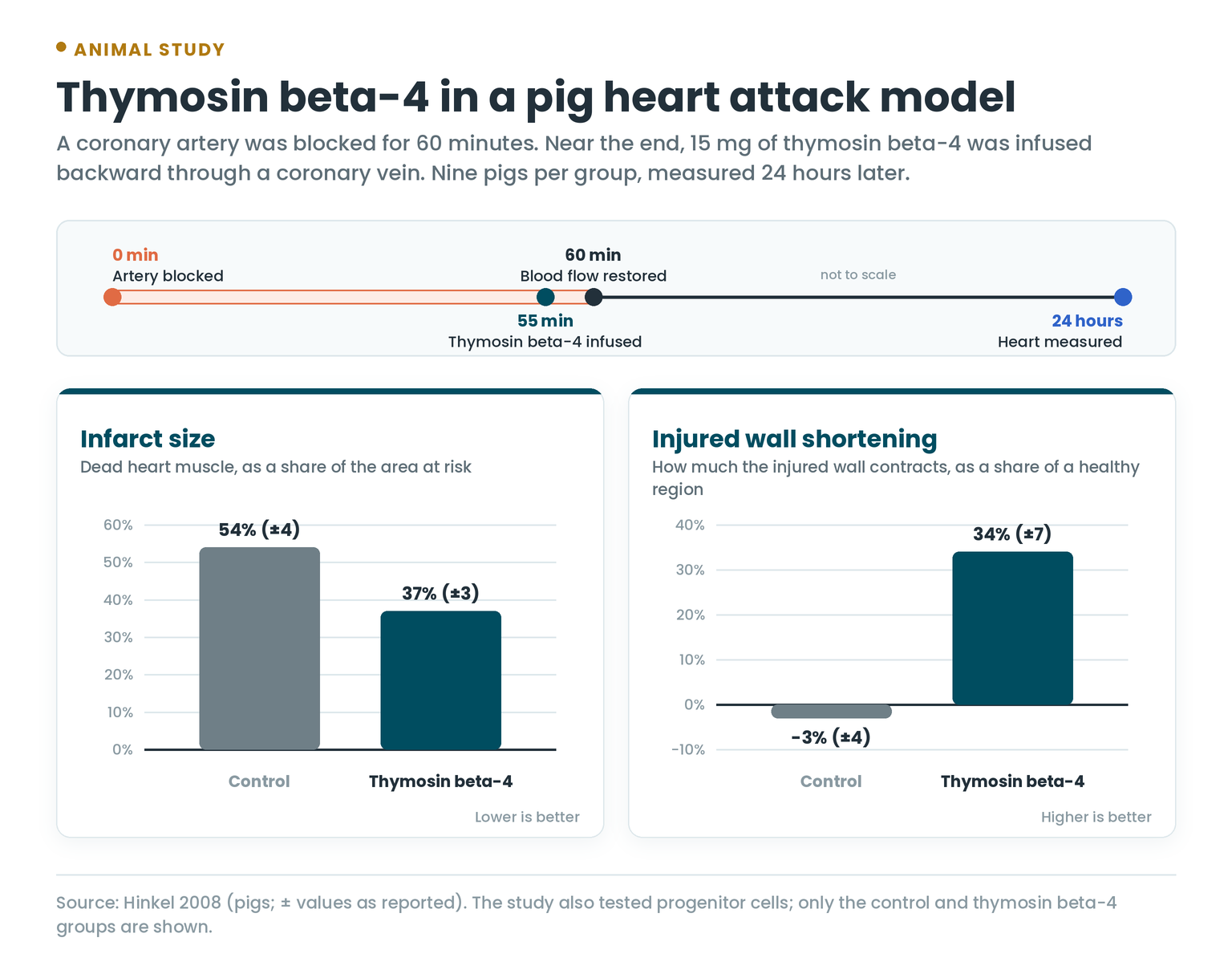
- Pigs: a coronary artery was blocked for 60 minutes, and after 55 minutes, 15 mg of thymosin beta-4 was infused backward through a coronary vein. Twenty-four hours later, the infarct covered 37% of the area at risk vs 54% in control pigs. The injured wall’s shortening, as a share of a healthy region’s, was 34% vs −3%. Each group had 9 pigs.
BPC-157
BPC-157 is a 15-amino-acid peptide. The two heart studies below are in rats and mice, and its wider research record is in BPC 157 and Cancer.
- Heart attack caused by isoprenaline (rats): 10 ng/kg or 10 µg/kg into the abdomen, 30 minutes before or 5 minutes after the drug. At 24 hours, the heart damage markers CK, CK-MB, LDH and troponin T were lower, no infarcted area was visible, the ECG showed no ischemic changes and the echo showed the left ventricle’s pumping preserved.
- Heart failure caused by doxorubicin (rats and mice): 14 days of BPC-157 by mouth, through a stomach tube in rats and in drinking water in mice. At 10 µg/kg it reversed the heart failure rise in big endothelin-1 and in the enzymes AST, ALT and CK, and the animals’ low blood pressure, fast heart and breathing rates and abdominal fluid improved.
GHRH Agonists
GHRH is the hormone that tells the pituitary to release growth hormone. Two lab-made versions were tested after heart attacks:
- Rats: for 4 weeks after a heart attack, rats got a placebo, growth hormone or the GHRH agonist JI-38 at 50 µg/kg a day. JI-38 didn’t raise growth hormone or IGF-1, yet it markedly eased the decline in heart function and the reshaping of the heart. Growth hormone raised growth hormone and IGF-1 but didn’t offset the decline. GHRH receptors were found on the heart muscle cells.
- Pigs: 12 pigs got daily injections of the GHRH agonist MR-409 (30 µg/kg) or a placebo for 4 weeks, starting 2 weeks after a heart attack. Scar mass changed by −21.9% vs +10.9%, scar size relative to the left ventricle fell further, and the heart wall relaxed better, but heart function measured by pressure-volume analysis didn’t improve.
Cortistatin
Cortistatin is a neuropeptide made by nerve cells and by immune and blood vessel cells. Two mouse studies:
- Autoimmune myocarditis: heart inflammation set off by immunizing mice with a piece of heart muscle protein. Cortistatin injections, started on day 7, 11 or 15, cut how many mice developed it, signs of heart enlargement and injury (including BNP levels) and the build-up of inflammatory cells in the heart.
- Atherosclerosis: in ApoE-deficient mice on a high-lipid diet, cortistatin reduced the number and size of plaques in the carotid artery, heart, aortic arch and aorta. It also cut foam cell formation by helping immune cells called macrophages export cholesterol.
See Where Each Peptide Works
Zoom from the whole body down to a single heart cell. Tap a marker to see what was tested there and what happened.
From body to cell
Where each peptide works
Zoom in from the whole body to a single heart muscle cell. Tap a numbered marker to see what was tested there.
Gray cards describe how a peptide works; teal cards are studies in people; gold cards are animal studies. Sources are listed under References.
Doses Used in the Research
- LCZ696 (sacubitril/valsartan): 200 mg twice a day, vs enalapril 10 mg twice a day (PARADIGM-HF).
- Nesiritide: infused for 24 to 168 hours (ASCEND-HF).
- Semaglutide: 2.4 mg under the skin once a week (SELECT, STEP-HFpEF).
- Tirzepatide: up to 15 mg under the skin once a week (SUMMIT).
- Serelaxin: 30 µg/kg a day into a vein for 48 hours (RELAX-AHF, RELAX-AHF-2).
- Ghrelin: 2 µg/kg into a vein twice a day for 3 weeks.
- Hexarelin: 2 µg/kg into a vein, once (bypass surgery study).
- Elamipretide: 0.05 mg/kg per hour into a vein for 1 hour (EMBRACE STEMI); 0.5 mg/kg under the skin once a day (dogs).
- Thymosin beta-4 (pigs): 15 mg infused into a coronary vein, once.
- BPC-157 (rats, mice): 10 µg/kg or 10 ng/kg, into the abdomen (heart attack model) or by mouth (heart failure model).
- GHRH agonists: JI-38 50 µg/kg a day (rats); MR-409 30 µg/kg under the skin daily (pigs).
Frequently Asked Questions
Which peptides have been tested in heart outcome trials?
The ones covered here: semaglutide (SELECT, 17,604 people), liraglutide (LEADER, 9,340), nesiritide (ASCEND-HF, 7,141), serelaxin (RELAX-AHF-2, 6,545) and tirzepatide (SUMMIT, 731). PARADIGM-HF (8,442) tested sacubitril/valsartan, which blocks neprilysin, the enzyme that breaks down ANP.
What are ANP and BNP?
Natriuretic peptides made by the heart: ANP (28 amino acids) comes from the atria and BNP (32 amino acids in humans) is found at higher levels in the ventricles. They make the kidneys pass more sodium and water and relax blood vessels.
Does semaglutide lower heart risk in people without diabetes?
In SELECT, adults with cardiovascular disease and a body-mass index of 27 or more but no diabetes had a cardiovascular death, nonfatal heart attack or nonfatal stroke in 6.5% of cases on semaglutide vs 8.0% on placebo, over an average of 39.8 months.
Did relaxin help in acute heart failure?
In RELAX-AHF-2, with 6,545 patients, cardiovascular death by day 180 was 8.7% on serelaxin vs 8.9% on placebo, and worsening heart failure by day 5 was 6.9% vs 7.7%. Neither difference was significant.
What did thymosin beta-4 do in heart studies?
In pigs, 15 mg infused into a coronary vein near the end of a 60-minute artery blockage left an infarct of 37% of the area at risk, vs 54% in control pigs. In mice, it helped heart muscle cells survive and improved heart function after a coronary artery was tied off.
What did BPC-157 do in heart studies?
In rats given isoprenaline to damage the heart, it lowered heart damage markers and preserved the left ventricle’s pumping at 24 hours. In rats and mice with doxorubicin heart failure, it reversed the rise in big endothelin-1.
Stay sharp,
Joe Mars
The Peptide Report
P.S. Working on your heart health and want to compare notes on the research? Come talk it through in the Peptides & Biohacking Hub on Skool.
References
- de Bold AJ, Borenstein HB, Veress AT, Sonnenberg H. A rapid and potent natriuretic response to intravenous injection of atrial myocardial extract in rats. Life Sci. 1981;28(1):89-94. doi:10.1016/0024-3205(81)90370-2
- Potter LR, Yoder AR, Flora DR, Antos LK, Dickey DM. Natriuretic peptides: their structures, receptors, physiologic functions and therapeutic applications. Handb Exp Pharmacol. 2009;(191):341-366. doi:10.1007/978-3-540-68964-5_15
- McMurray JJV, Packer M, Desai AS, et al. Angiotensin-neprilysin inhibition versus enalapril in heart failure. N Engl J Med. 2014;371(11):993-1004. doi:10.1056/NEJMoa1409077
- O’Connor CM, Starling RC, Hernandez AF, et al. Effect of nesiritide in patients with acute decompensated heart failure. N Engl J Med. 2011;365(1):32-43. doi:10.1056/NEJMoa1100171
- Lincoff AM, Brown-Frandsen K, Colhoun HM, et al. Semaglutide and cardiovascular outcomes in obesity without diabetes. N Engl J Med. 2023;389(24):2221-2232. doi:10.1056/NEJMoa2307563
- Marso SP, Daniels GH, Brown-Frandsen K, et al. Liraglutide and cardiovascular outcomes in type 2 diabetes. N Engl J Med. 2016;375(4):311-322. doi:10.1056/NEJMoa1603827
- Kosiborod MN, Abildstrøm SZ, Borlaug BA, et al. Semaglutide in patients with heart failure with preserved ejection fraction and obesity. N Engl J Med. 2023;389(12):1069-1084. doi:10.1056/NEJMoa2306963
- Packer M, Zile MR, Kramer CM, et al. Tirzepatide for heart failure with preserved ejection fraction and obesity. N Engl J Med. 2025;392(5):427-437. doi:10.1056/NEJMoa2410027
- Teerlink JR, Cotter G, Davison BA, et al. Serelaxin, recombinant human relaxin-2, for treatment of acute heart failure (RELAX-AHF): a randomised, placebo-controlled trial. Lancet. 2013;381(9860):29-39. doi:10.1016/S0140-6736(12)61855-8
- Metra M, Teerlink JR, Cotter G, et al. Effects of serelaxin in patients with acute heart failure. N Engl J Med. 2019;381(8):716-726. doi:10.1056/NEJMoa1801291
- Nagaya N, Moriya J, Yasumura Y, et al. Effects of ghrelin administration on left ventricular function, exercise capacity, and muscle wasting in patients with chronic heart failure. Circulation. 2004;110(24):3674-3679. doi:10.1161/01.CIR.0000149746.62908.BB
- Broglio F, Guarracino F, Benso A, et al. Effects of acute hexarelin administration on cardiac performance in patients with coronary artery disease during by-pass surgery. Eur J Pharmacol. 2002;448(2-3):193-200. doi:10.1016/s0014-2999(02)01934-9
- Imazio M, Bobbio M, Broglio F, et al. GH-independent cardiotropic activities of hexarelin in patients with severe left ventricular dysfunction due to dilated and ischemic cardiomyopathy. Eur J Heart Fail. 2002;4(2):185-191. doi:10.1016/s1388-9842(01)00223-9
- Tung C, Varzideh F, Farroni E, et al. Elamipretide: a review of its structure, mechanism of action, and therapeutic potential. Int J Mol Sci. 2025;26(3):944. doi:10.3390/ijms26030944
- Sabbah HN, Gupta RC, Kohli S, Wang M, Hachem S, Zhang K. Chronic therapy with elamipretide (MTP-131), a novel mitochondria-targeting peptide, improves left ventricular and mitochondrial function in dogs with advanced heart failure. Circ Heart Fail. 2016;9(2):e002206. doi:10.1161/CIRCHEARTFAILURE.115.002206
- Gibson CM, Giugliano RP, Kloner RA, et al. EMBRACE STEMI study: a Phase 2a trial to evaluate the safety, tolerability, and efficacy of intravenous MTP-131 on reperfusion injury in patients undergoing primary percutaneous coronary intervention. Eur Heart J. 2016;37(16):1296-1303. doi:10.1093/eurheartj/ehv597
- Bock-Marquette I, Saxena A, White MD, DiMaio JM, Srivastava D. Thymosin β4 activates integrin-linked kinase and promotes cardiac cell migration, survival and cardiac repair. Nature. 2004;432(7016):466-472. doi:10.1038/nature03000
- Smart N, Risebro CA, Melville AA, et al. Thymosin β4 induces adult epicardial progenitor mobilization and neovascularization. Nature. 2007;445(7124):177-182. doi:10.1038/nature05383
- Hinkel R, El-Aouni C, Olson T, et al. Thymosin β4 is an essential paracrine factor of embryonic endothelial progenitor cell-mediated cardioprotection. Circulation. 2008;117(17):2232-2240. doi:10.1161/CIRCULATIONAHA.107.758904
- Barisic I, Balenovic D, Udovicic M, et al. Stable gastric pentadecapeptide BPC 157 may counteract myocardial infarction induced by isoprenaline in rats. Biomedicines. 2022;10(2):265. doi:10.3390/biomedicines10020265
- Lovric-Bencic M, Sikiric P, Hanzevacki JS, et al. Doxorubicine-congestive heart failure-increased big endothelin-1 plasma concentration: reversal by amlodipine, losartan, and gastric pentadecapeptide BPC157 in rat and mouse. J Pharmacol Sci. 2004;95(1):19-26. doi:10.1254/jphs.95.19
- Kanashiro-Takeuchi RM, Tziomalos K, Takeuchi LM, et al. Cardioprotective effects of growth hormone-releasing hormone agonist after myocardial infarction. Proc Natl Acad Sci U S A. 2010;107(6):2604-2609. doi:10.1073/pnas.0914138107
- Bagno LL, Kanashiro-Takeuchi RM, Suncion VY, et al. Growth hormone-releasing hormone agonists reduce myocardial infarct scar in swine with subacute ischemic cardiomyopathy. J Am Heart Assoc. 2015;4(4):e001464. doi:10.1161/JAHA.114.001464
- Delgado-Maroto V, Falo CP, Forte-Lago I, et al. The neuropeptide cortistatin attenuates experimental autoimmune myocarditis via inhibition of cardiomyogenic T cell-driven inflammatory responses. Br J Pharmacol. 2017;174(3):267-280. doi:10.1111/bph.13682
- Delgado-Maroto V, Benitez R, Forte-Lago I, et al. Cortistatin reduces atherosclerosis in hyperlipidemic ApoE-deficient mice and the formation of foam cells. Sci Rep. 2017;7:46444. doi:10.1038/srep46444