Hexarelin is one of the most thoroughly dosed growth hormone peptides in the human literature. Through the 1990s, groups in Turin, London, Rome and Tel Aviv gave it to volunteers by vein, under the skin, up the nose and by mouth, at doses from 0.125 µg/kg to 40 mg, for a single morning or for eight months.
That record answers the question in this article’s title with actual numbers: where the growth hormone response tops out, how much reaches the blood by each route, what two or three injections a day do across 24 hours, and how the response changes over weeks of use.
Hexarelin Dosage at a Glance
| Route | Doses tested in people | Reaches the blood | What it did |
|---|---|---|---|
| Intravenous | 0.125 to 2 µg/kg | 100% | Growth hormone peaks at about 30 minutes; the response is half-maximal at 0.5 µg/kg and plateaus by 1 to 2 µg/kg |
| Under the skin | 1.5 and 3 µg/kg; 1.5 µg/kg two or three times a day for one day; 1.5 µg/kg twice daily for 16 weeks | 77% | 1.5 µg/kg matched a 1 µg/kg intravenous dose; two daily injections raised 24-hour growth hormone as much as three |
| Nasal | 20 µg/kg single dose; 60 µg/kg three times daily for up to 8 months in children; about 18 µg/kg three times daily for 8 days in older adults | 4.8% | 20 µg/kg matched 1 µg/kg intravenous; eight months in short children raised growth velocity from 5.3 to 8.3 cm a year |
| Oral | 10, 20 and 40 mg; 20 mg three times daily for 15 days in older women | 0.3% | 40 mg released as much growth hormone as 2 µg/kg intravenous; 15 days raised IGF-1 slightly |
What Hexarelin Is
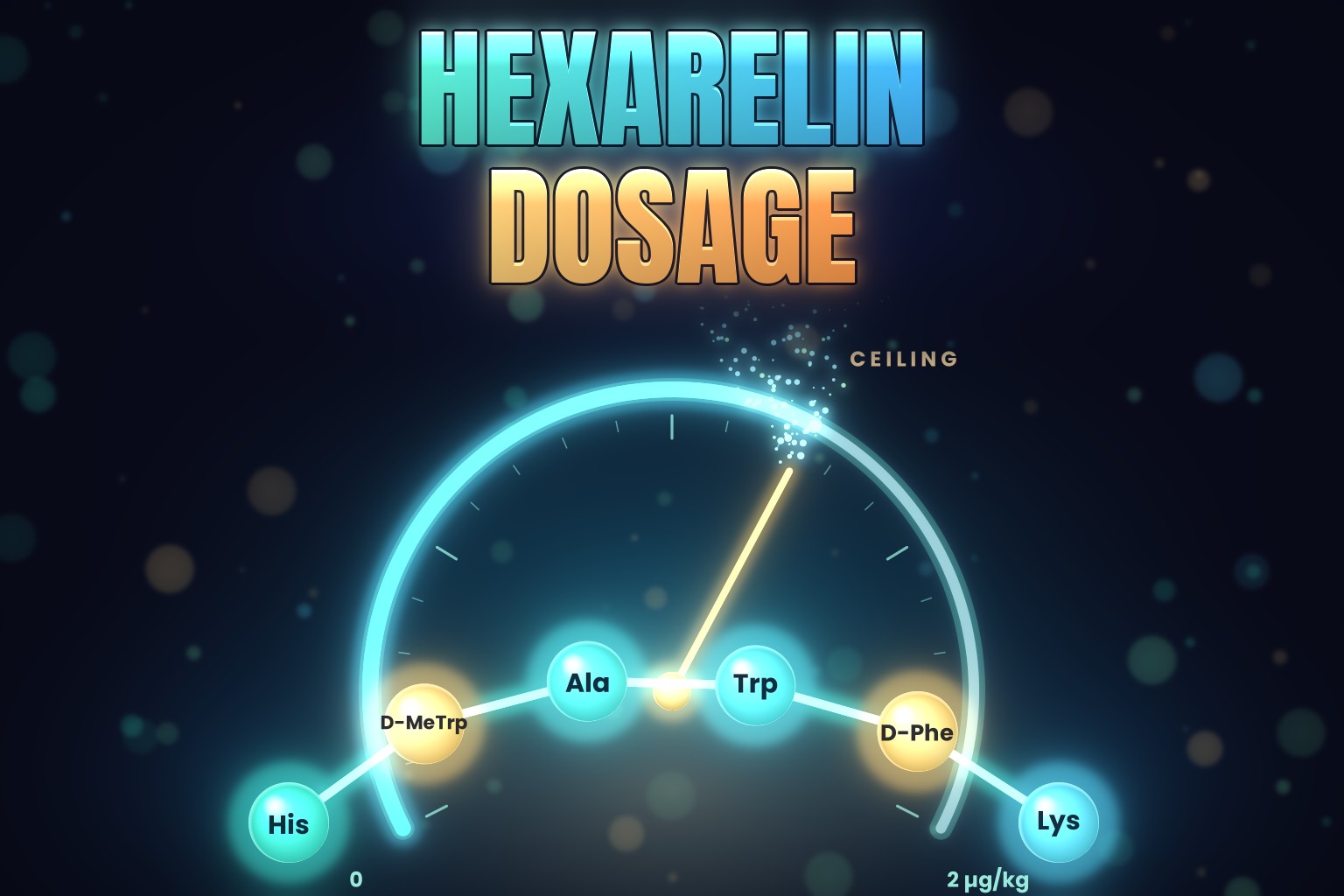
Hexarelin is a six-amino-acid peptide, His-D-2-methyl-Trp-Ala-Trp-D-Phe-Lys-NH2, built in the early 1990s as a sturdier version of GHRP-6. The two D-amino acids and the methyl group on the tryptophan protect it from the enzymes that chew up natural peptides, which is why it still works as a nasal spray and even as a tablet.
It works through the ghrelin receptor, GHS-R1a, on pituitary somatotroph cells. That is a different door from the GHRH receptor used by sermorelin, CJC-1295 and tesamorelin, and the two doors add up: in healthy men, hexarelin and GHRH together released more growth hormone than the sum of the two alone. It is also the reason hexarelin nudges a few other hormones, which GHRH analogs leave alone. For the wider family, see our guide to growth hormone peptides, and for what hexarelin has been studied for beyond dosing, hexarelin peptide benefits.
The Dose-Response Curve in People
The cleanest dosing data come from a 1994 rising-dose study in twelve healthy men. Each received intravenous hexarelin at 0.5, 1 and 2 µg/kg, with placebo slipped randomly into the sequence. Peak growth hormone came in at 3.9 ng/mL on placebo, 26.9 at 0.5 µg/kg, 52.3 at 1 µg/kg and 55.0 at 2 µg/kg. The peak arrived about 30 minutes after the injection and levels were back to baseline within four hours. Fitting a curve to those points gave a half-maximal dose of 0.50 µg/kg and a theoretical maximum of 55 ng/mL, so the 2 µg/kg dose was already sitting on the ceiling.
A London group ran the same experiment with finer steps up to 1 µg/kg and found the plateau in the same place: the growth hormone curve flattened at 1 µg/kg with a half-maximal dose of 0.48 µg/kg. Two labs, two countries, the same number.
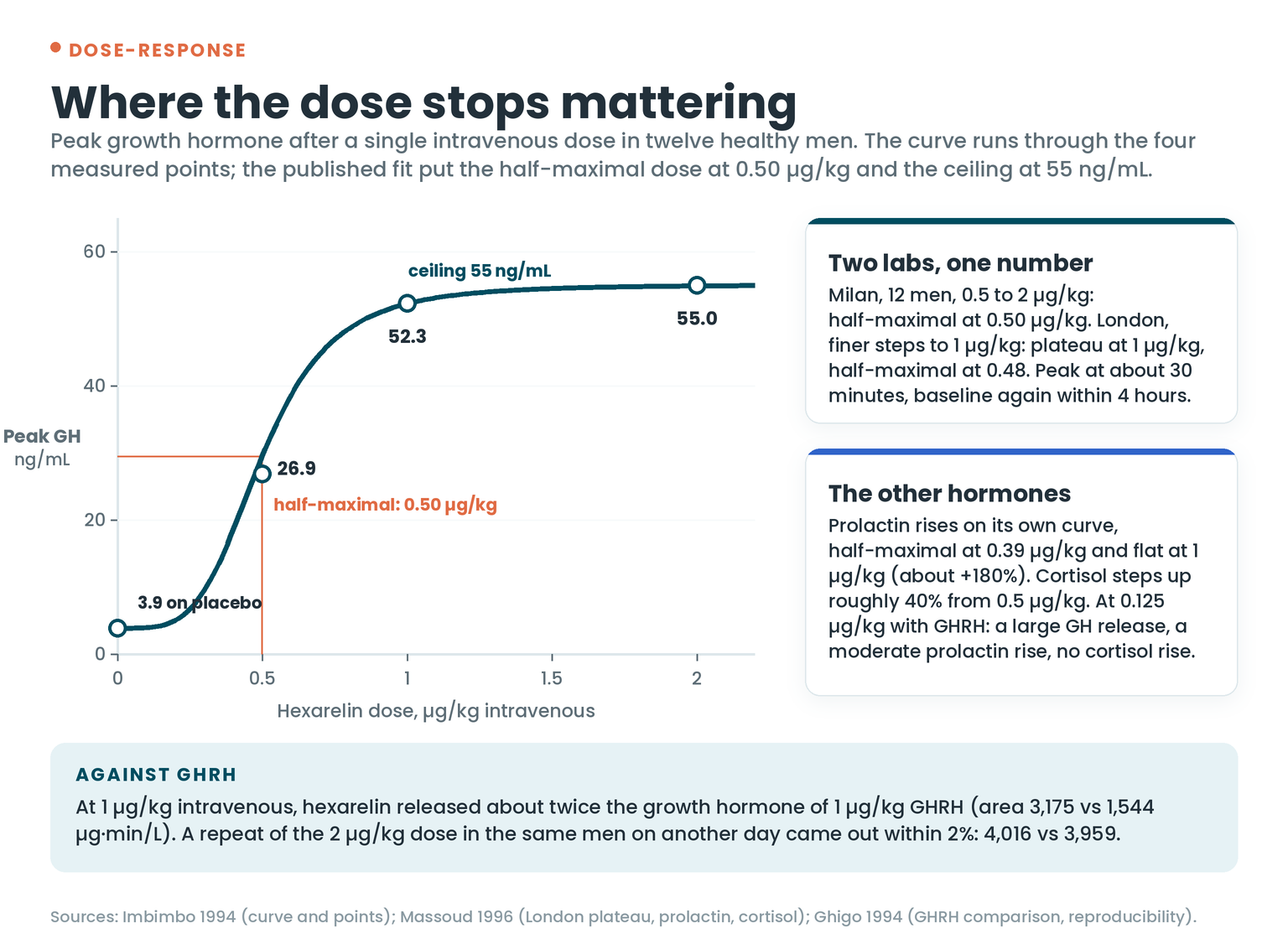
Against GHRH, hexarelin is the stronger single stimulus. In the Turin study that compared routes, 1 µg/kg intravenous hexarelin released about twice the growth hormone of 1 µg/kg GHRH, and a repeat of the 2 µg/kg dose in the same volunteers gave almost identical results on two separate days. That reproducibility is why 2 µg/kg became the standard “maximal” test dose in the pediatric and adult studies that followed.
Routes: Injection, Nasal Spray and Oral
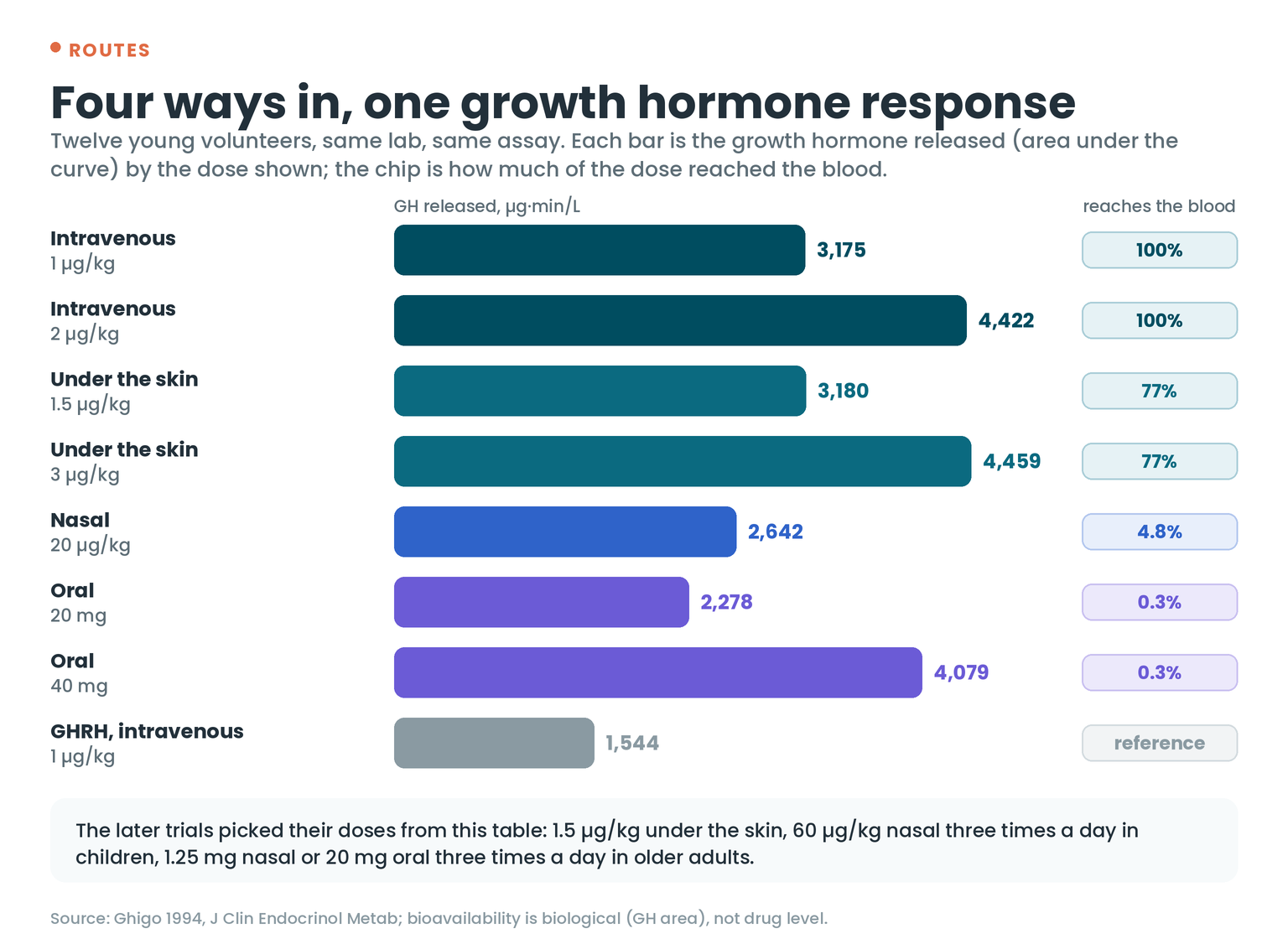
The same Turin group gave twelve young volunteers hexarelin by four routes and measured how much growth hormone each one produced. Under the skin, 1.5 µg/kg matched the 1 µg/kg intravenous dose and 3 µg/kg matched 2 µg/kg, which works out to a biological bioavailability of 77%. A 20 µg/kg nasal dose also matched 1 µg/kg intravenous, at a bioavailability of 4.8%. By mouth, 20 and 40 mg released growth hormone in a dose-related way, with 40 mg matching the 2 µg/kg injection, at a bioavailability of 0.3%.
Those numbers explain the dosing in every later study. Subcutaneous trials used 1.5 µg/kg. Nasal trials in children used 60 µg/kg three times a day, and nasal trials in older adults used 1.25 mg, about 18 µg/kg, three times a day. Oral trials used 10 mg in children and 20 mg three times a day in older women.
What Two or Three Injections a Day Do
The study that comes closest to an everyday schedule sampled blood every 20 minutes for 24 hours in six young men, on a day with two subcutaneous injections of 1.5 µg/kg and on a day with three. Both schedules raised mean and total 24-hour growth hormone by the same amount. They did it by making each natural pulse bigger rather than adding pulses, and the growth hormone half-life and the irregularity of the pattern both went up. Prolactin, ACTH and cortisol over the 24 hours were unchanged, and so was IGF-1 after a single day.
At the end of each day the men got a 1 µg/kg intravenous test dose. The growth hormone response was blunted compared with their untreated baseline, the ACTH and cortisol responses were abolished, and the prolactin response was unchanged. That blunting is the central fact about hexarelin dosing, and the next section is about it.
Hexarelin, Dose by Dose
Slide along the intravenous dose range. The curve is the published dose-response fit in healthy men; the cards show what each study measured at or near that dose.
Curve: Imbimbo 1994 (ceiling 55 ng/mL, half-maximal 0.50 µg/kg, drawn through the four measured points). Prolactin and cortisol: Massoud 1996. Route equivalents scale the dose by Ghigo 1994's bioavailability (77%, 4.8%, 0.3%); they are arithmetic, not measurements.
What Repeated Dosing Does to the Response
Within One Day
In six healthy men, a second 1 µg/kg intravenous bolus given two hours after the first produced a lower peak secretion rate than the first; given one hour after, the drop was smaller and did not reach significance. A Milan group saw the same thing: a second hexarelin bolus at 120 minutes released about a fifth of what the first did, which still beat a second GHRH bolus, whose response had nearly vanished. The synergy with GHRH was also lost on the second round.
Over 16 Weeks in Adults
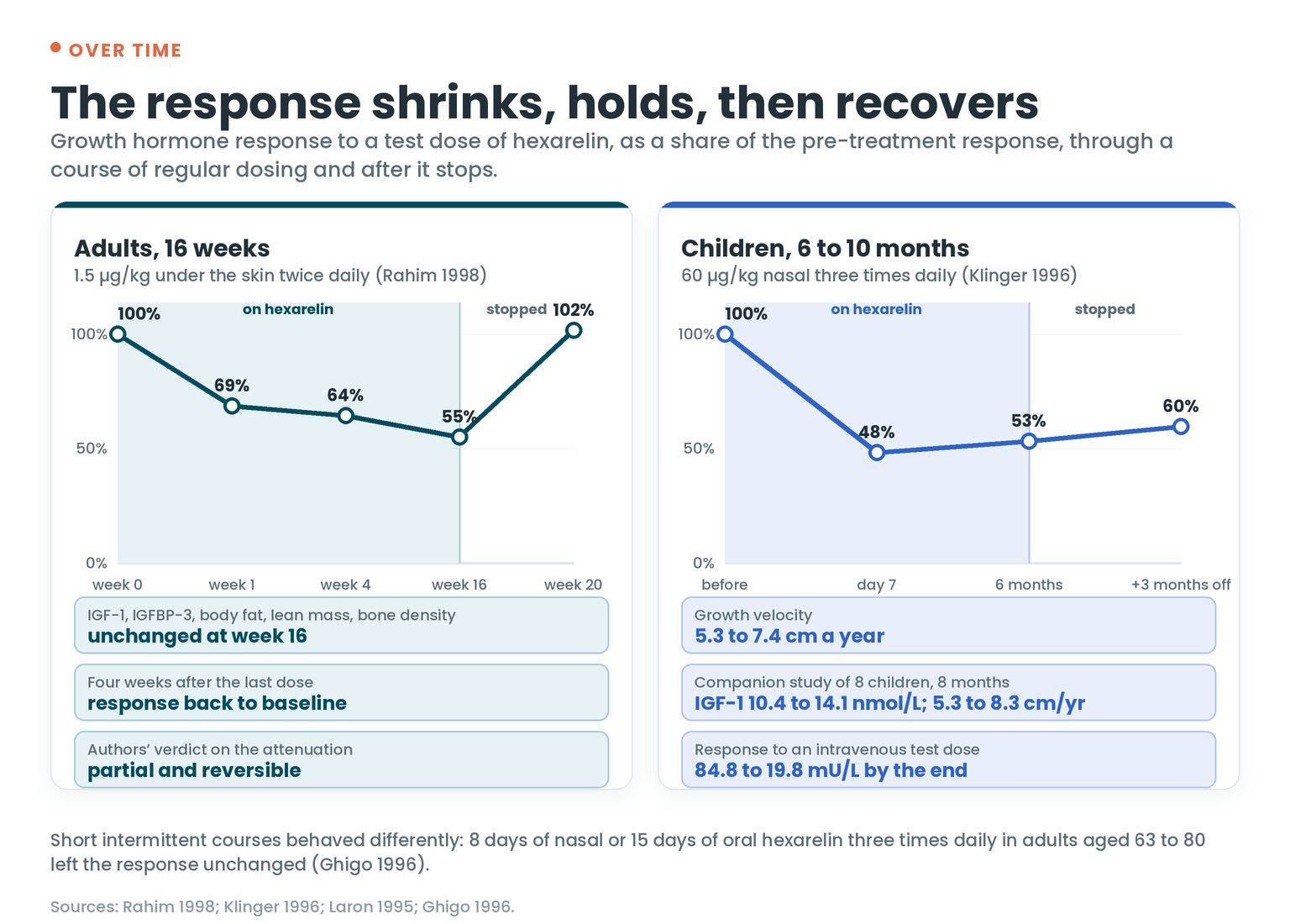
The longest adult course is a Manchester study of twice-daily 1.5 µg/kg subcutaneous hexarelin for 16 weeks. The growth hormone response to a test injection fell from an area of 19.1 µg/L·h at baseline to 13.1 at one week, 12.3 at four weeks and 10.5 at 16 weeks. Four weeks after the last dose it was back to 19.4, indistinguishable from the start. Over the same 16 weeks, IGF-1, IGFBP-3, body fat, lean mass and bone density did not change, and of the bone markers measured only the type I collagen propeptide rose. The authors’ summary was that the attenuation was partial and reversible, and that this schedule’s effect on the growth hormone axis was minimal.
Over Eight Months in Children
Tel Aviv ran the longest course of all: 60 µg/kg nasal hexarelin three times a day in eight short prepubertal children for up to eight months. IGF-1 rose from 10.4 to 14.1 nmol/L and growth velocity from 5.3 to 8.3 cm a year, with thinner skinfolds despite weight gain. In a companion group of seven, the growth hormone peak after a nasal test dose dropped from 70.6 to 34.1 mU/L after just seven days of treatment, then held at about 37.5 for the next six months; the response to an intravenous test fell from 84.8 to 19.8 mU/L by the end. Growth velocity still rose from 5.3 to 7.4 cm a year, and three months after stopping, the response had recovered to 42.1 mU/L.
Over Eight to Fifteen Days in Older Adults
Short intermittent courses behaved differently. In seven adults aged 67 to 80, eight days of nasal hexarelin at about 18 µg/kg three times a day left the growth hormone response to the peptide intact, with a trend upward, and raised IGFBP-3. In seven women aged 63 to 80, 15 days of 20 mg oral hexarelin three times a day left the response unchanged and nudged both IGF-1 and IGFBP-3 up by about 10%. Neither course changed prolactin or cortisol or caused side effects.
Beyond Growth Hormone: Cortisol, Prolactin, Sleep and the Heart
Hexarelin’s receptor sits on more than somatotrophs, and the dose-response work mapped the other hormones alongside growth hormone. In the London study, prolactin rose with dose up to a plateau of about 180% above baseline, with a half-maximal dose of 0.39 µg/kg. Cortisol behaved differently: a step rise of roughly 40% appeared at 0.5 µg/kg rather than a smooth curve. At the low end of the range, 0.125 µg/kg hexarelin given with 1 µg/kg GHRH produced a very large growth hormone release, a moderate prolactin rise and no cortisol rise at all.
In healthy adults, a 2 µg/kg dose raised ACTH from 16 to 32 pg/mL and cortisol from 110 to 136 µg/L, about what human CRH does at the same dose. Chronic dosing went the other way: after 16 weeks of twice-daily injections, the cortisol response to a morning dose was lower than at baseline, 24-hour urinary cortisol and the ACTH response were unchanged, and prolactin did not change.
Given at night, hexarelin changes sleep. Seven volunteers given 50 µg at 10, 11, 12 and 1 o’clock had less stage 4 sleep in the first half of the night and less delta power across the whole night, with growth hormone, prolactin, ACTH and cortisol all higher. A daytime versus night-time comparison in eight men found the growth hormone peak the same at both times, but the area under the curve higher at night because growth hormone cleared more slowly during sleep.
The heart is the unexpected entry. In seven male volunteers, an intravenous dose raised left ventricular ejection fraction from 64% to 70.7% within 15 minutes, peaking at 30 and lasting about an hour, with no change in blood pressure or heart rate; an intravenous dose of growth hormone itself did nothing to ejection fraction, so the effect was not coming from the growth hormone it released. The same team saw the ejection fraction rise in patients with ischemic cardiomyopathy and in 24 men with coronary disease during bypass surgery, where cardiac output rose for 90 minutes, and no rise in patients with dilated cardiomyopathy.
Who Responds Less to the Same Dose
Age is the biggest factor. At 2 µg/kg intravenous, men aged 65 to 84 released less than half the growth hormone of men aged 24 to 30, and the response in people aged 53 to 79 was a third of that in adults aged 22 to 30. Prepubertal children also respond weakly, while pubertal children respond more strongly than adults, 77.5 versus 39.4 µg/L for pubertal against prepubertal, with girls ahead of boys. In five boys with constitutional growth delay, one testosterone injection a week before testing raised the response.
Body fat is the second factor. In 21 healthy older adults given 1.5 µg/kg under the skin, the growth hormone peak correlated with fat mass at r = −0.72, and fat mass predicted the peak better than sex, weight or BMI. Obese children in the Rome study also released less than lean children, though hexarelin still beat GHRH in both.
Timing against meals is the third. In twelve young adults, a meal cut the growth hormone response to hexarelin by 41%; the same meal cut the response to GHRH by 70%.
The exception that proves the mechanism is hypothalamic disconnection. In children and adults whose growth hormone deficiency came with a pituitary stalk interruption, hexarelin released nothing, while in idiopathic growth hormone deficiency it worked as well as in short healthy children. The peptide needs an intact hypothalamus to act.
Pairing Hexarelin With GHRH
Because the two signals use different receptors, small doses of each do more together than large doses of either. In older men, adding 2 µg/kg GHRH to 2 µg/kg hexarelin nearly doubled the response; adding arginine did the same in the elderly but not in the young. At the diagnostic end, 0.25 µg/kg hexarelin plus 1 µg/kg GHRH gave a mean growth hormone peak of 83.6 µg/L in 25 healthy young adults, reproducible on retest, and that combination is sensitive enough to be used as a test for adult growth hormone deficiency. For the GHRH side of the pairing, see sermorelin vs CJC-1295; for the ghrelin-receptor cousin that leaves cortisol alone, ipamorelin vs sermorelin.
Side Effects in the Studies
The single-dose study in short and obese children reported no adverse effects. The eight-month nasal course in children was described by its authors as seemingly without undesirable side effects, and the 8- and 15-day nasal and oral courses in older adults caused none. In the 16-week adult course, the authors looked specifically for over-stimulation of the adrenal axis and prolactin and found neither.
What the studies do record is the pharmacology above: a transient cortisol and prolactin rise with each injection at doses of 0.5 µg/kg and up, a blunted growth hormone response that builds over days and reverses within weeks of stopping, lighter deep sleep when it is given at night, and a short-lived rise in cardiac output after an intravenous dose.
Doses Used in the Research
- Intravenous, single dose: 0.125, 0.25, 0.5, 1 and 2 µg/kg; 2 µg/kg is the usual maximal test dose; 0.25 µg/kg with 1 µg/kg GHRH is the diagnostic combination.
- Under the skin: 1.5 and 3 µg/kg single doses; 1.5 µg/kg two or three times in one day; 1.5 µg/kg twice daily for 16 weeks.
- Nasal: 20 µg/kg single dose; 60 µg/kg three times daily for 6 to 8 months in children; 1.25 mg (about 18 µg/kg) three times daily for 8 days in adults aged 67 to 80.
- Oral: 10 mg in children; 20 and 40 mg single doses in young adults; 20 mg three times daily for 15 days in women aged 63 to 80.
- At night: 2 µg/kg intravenous within 30 minutes of sleep onset; 50 µg at 10 pm, 11 pm, midnight and 1 am.
FAQ
What dose of hexarelin produced the biggest growth hormone response?
Intravenously, the response was half-maximal at about 0.5 µg/kg and flat from 1 µg/kg upward, with 2 µg/kg giving 55 ng/mL in healthy men. Under the skin, 1.5 µg/kg matched 1 µg/kg intravenous because 77% reaches the blood.
Does hexarelin stop working with repeated use?
The response shrinks but holds. After 16 weeks of twice-daily injections, the growth hormone response to a test dose was about half of baseline, and four weeks after stopping it was back to normal. In children on an eight-month nasal course the response fell within a week, then stayed steady, and growth still accelerated.
How long does one dose of hexarelin last?
Growth hormone peaked about 30 minutes after an intravenous dose and returned to baseline within four hours. The rise in ejection fraction after a dose lasted about an hour.
Does hexarelin raise cortisol?
Yes, from 0.5 µg/kg upward, by roughly 40% after a single dose, about the same as CRH at the same dose. A 0.125 µg/kg dose combined with GHRH released a large amount of growth hormone with no cortisol rise, and 16 weeks of twice-daily dosing lowered the cortisol response rather than raising it.
Does hexarelin work when taken orally or nasally?
Both routes released growth hormone in people. Oral bioavailability was 0.3%, so the oral studies used 10 to 40 mg; nasal bioavailability was 4.8%, so the nasal studies used 20 to 60 µg/kg.
Why do older people and people with more body fat respond less?
In the elderly the response to 2 µg/kg was a third to a half of that in young adults, and it was partly restored by adding GHRH or arginine. In older adults given 1.5 µg/kg under the skin, total fat mass was the strongest predictor of the growth hormone peak.
References
- Imbimbo BP, et al. Growth hormone-releasing activity of hexarelin in humans. A dose-response study. Eur J Clin Pharmacol. 1994;46(5):421-425. DOI
- Ghigo E, et al. Growth hormone-releasing activity of hexarelin, a new synthetic hexapeptide, after intravenous, subcutaneous, intranasal, and oral administration in man. J Clin Endocrinol Metab. 1994;78(3):693-698. DOI
- Massoud AF, et al. Hexarelin-induced growth hormone, cortisol, and prolactin release: a dose-response study. J Clin Endocrinol Metab. 1996;81(12):4338-4341. DOI
- Loche S, et al. The growth hormone-releasing activity of hexarelin, a new synthetic hexapeptide, in short normal and obese children and in hypopituitary subjects. J Clin Endocrinol Metab. 1995;80(2):674-678. DOI
- Loche S, et al. The effect of hexarelin on growth hormone (GH) secretion in patients with GH deficiency. J Clin Endocrinol Metab. 1995;80(9):2692-2696. DOI
- Bellone J, et al. Growth hormone-releasing activity of hexarelin, a new synthetic hexapeptide, before and during puberty. J Clin Endocrinol Metab. 1995;80(4):1090-1094. DOI
- Bellone J, et al. Hexarelin, a synthetic GH-releasing peptide, is a powerful stimulus of GH secretion in pubertal children and in adults but not in prepubertal children and in elderly subjects. J Endocrinol Invest. 1998;21(8):494-500. DOI
- Arvat E, et al. Arginine and growth hormone-releasing hormone restore the blunted growth hormone-releasing activity of hexarelin in elderly subjects. J Clin Endocrinol Metab. 1994;79(5):1440-1443. DOI
- Massoud AF, et al. The effect of repeated administration of hexarelin, a growth hormone releasing peptide, and growth hormone releasing hormone on growth hormone responsivity. Clin Endocrinol (Oxf). 1996;44(5):555-562. DOI
- Sartorio A, et al. GH responsiveness to repeated GHRH or hexarelin administration in normal adults. J Endocrinol Invest. 1995;18(9):718-722. DOI
- Maccario M, et al. Impact of two or three daily subcutaneous injections of hexarelin, a synthetic growth hormone (GH) secretagogue, on 24-h GH, prolactin, adrenocorticotropin and cortisol secretion in humans. Eur J Endocrinol. 2002;146(3):310-318. DOI
- Rahim A, O’Neill PA, Shalet SM. Growth hormone status during long-term hexarelin therapy. J Clin Endocrinol Metab. 1998;83(5):1644-1649. DOI
- Rahim A, O’Neill PA, Shalet SM. The effect of chronic hexarelin administration on the pituitary-adrenal axis and prolactin. Clin Endocrinol (Oxf). 1999;50(1):77-84. DOI
- Rahim A, O’Neill P, Shalet SM. The effect of body composition on hexarelin-induced growth hormone release in normal elderly subjects. Clin Endocrinol (Oxf). 1998;49(5):659-664. DOI
- Laron Z, et al. Intranasal administration of the GHRP hexarelin accelerates growth in short children. Clin Endocrinol (Oxf). 1995;43(5):631-635. DOI
- Klinger B, et al. Desensitization from long-term intranasal treatment with hexarelin does not interfere with the biological effects of this growth hormone-releasing peptide in short children. Eur J Endocrinol. 1996;134(6):716-719. DOI
- Ghigo E, et al. Short-term administration of intranasal or oral Hexarelin, a synthetic hexapeptide, does not desensitize the growth hormone responsiveness in human aging. Eur J Endocrinol. 1996;135(4):407-412. DOI
- Ghigo E, et al. Adrenocorticotropin- and cortisol-releasing effect of hexarelin, a synthetic growth hormone-releasing peptide, in normal subjects and patients with Cushing’s syndrome. J Clin Endocrinol Metab. 1997;82(8):2439-2444. DOI
- Loche S, et al. Acute administration of hexarelin stimulates GH secretion during day and night in normal men. Clin Endocrinol (Oxf). 1997;46(3):275-279. DOI
- Frieboes RM, et al. Hexarelin decreases slow-wave sleep and stimulates the secretion of GH, ACTH, cortisol and prolactin during sleep in healthy volunteers. Psychoneuroendocrinology. 2004;29(7):851-860. DOI
- Bisi G, et al. Acute cardiovascular and hormonal effects of GH and hexarelin, a synthetic GH-releasing peptide, in humans. J Endocrinol Invest. 1999;22(4):266-272. DOI
- Imazio M, et al. GH-independent cardiotropic activities of hexarelin in patients with severe left ventricular dysfunction due to dilated and ischemic cardiomyopathy. Eur J Heart Fail. 2002;4(2):185-191. DOI
- Broglio F, et al. Effects of acute hexarelin administration on cardiac performance in patients with coronary artery disease during by-pass surgery. Eur J Pharmacol. 2002;448(2-3):193-200. DOI
- De Marinis L, et al. Role of food intake in the modulation of hexarelin-induced growth hormone release in normal human subjects. Horm Metab Res. 2000;32(4):152-156. DOI
- Gasperi M, et al. Low dose hexarelin and growth hormone (GH)-releasing hormone as a diagnostic tool for the diagnosis of GH deficiency in adults: comparison with insulin-induced hypoglycemia test. J Clin Endocrinol Metab. 1999;84(8):2633-2637. DOI
- Arvat E, et al. Effects of GHRP-2 and hexarelin, two synthetic GH-releasing peptides, on GH, prolactin, ACTH and cortisol levels in man. Comparison with the effects of GHRH, TRH and hCRH. Peptides. 1997;18(6):885-891. DOI
Stay sharp,
Joe Mars
The Peptide Report
P.S. If you want to compare notes on hexarelin against the GHRH side of the family, the Peptides and Biohacking Hub on Skool is where our members do it. It’s free. Come join us.