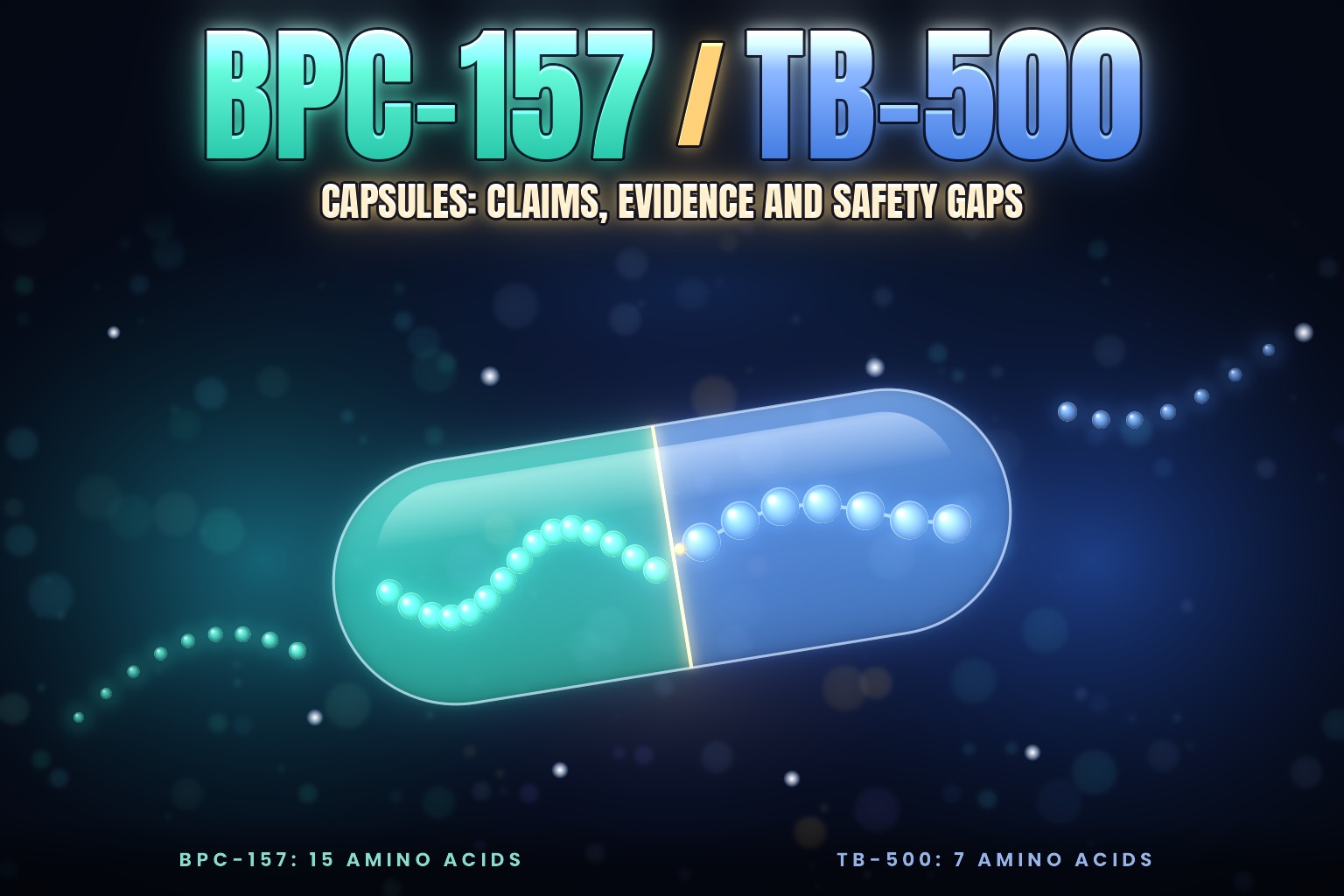
BPC-157/TB-500 capsules are marketed for recovery, gut health, and joint support. These benefits have not been established for the combined oral product in reliable human trials. Swallowing two compounds in one capsule does not make the combination proven or safe.
This page reviews capsule-specific claims. For a broader route comparison, read BPC-157 oral vs injection. For the combination research, see our BPC-157/TB-500 combination guide.
Which claimed benefits are supported?
| Claim | What the evidence can tell us |
|---|---|
| Faster muscle or tendon recovery | Preclinical findings for individual compounds do not prove a benefit from combined capsules in people. |
| Better joint comfort | A small knee-injection report did not test capsules or establish oral treatment. |
| Gut repair | Interest in BPC-157’s gut effects does not establish that an oral blend treats IBS, ulcers, or inflammatory bowel disease. |
| Better memory or focus | A clinical benefit from combined capsules is not established. |
| Synergy | A controlled comparison with the individual ingredients is needed to support this claim. |
Why the exact ingredients matter
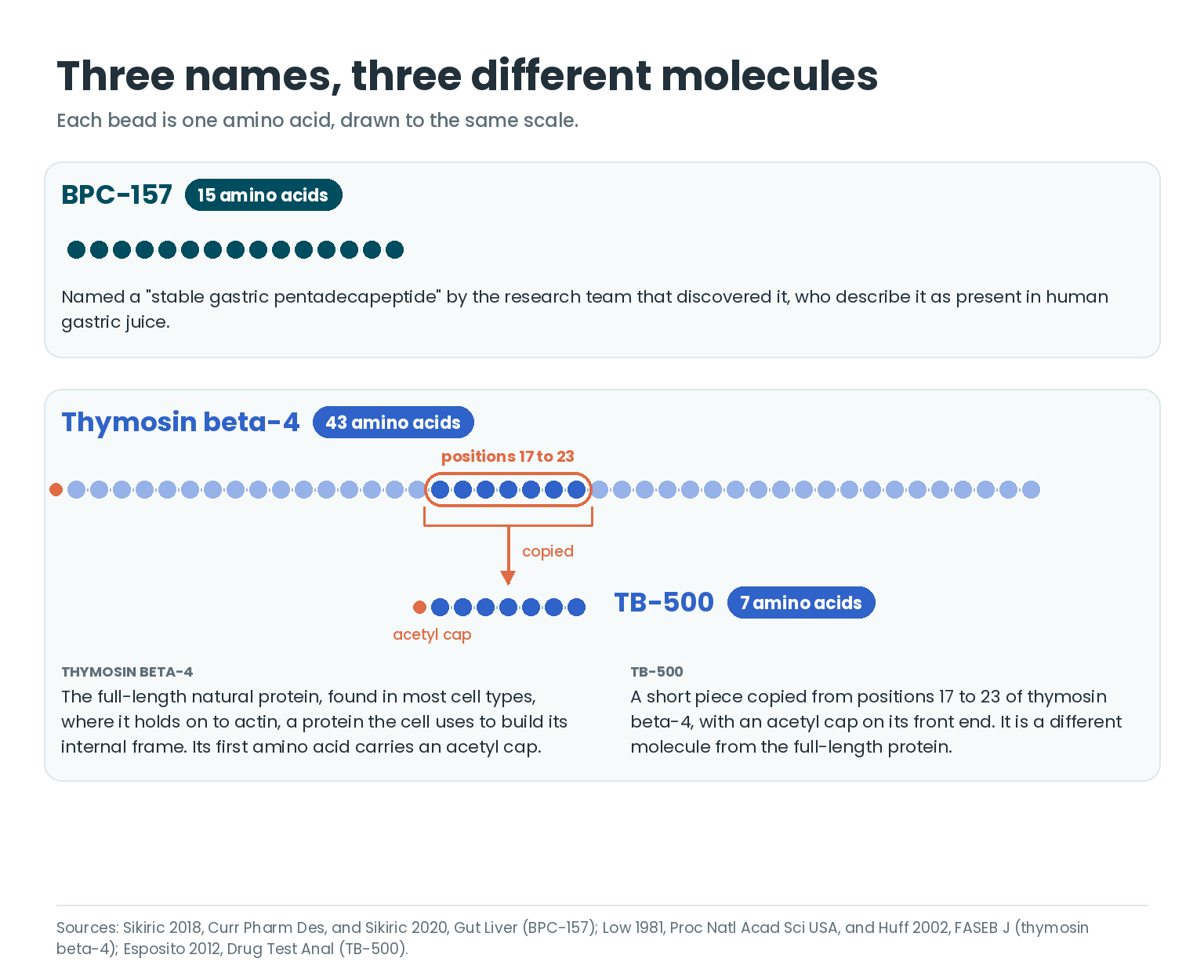
BPC-157 is a synthetic peptide with 15 amino acids. TB-500 is often used loosely in marketing. Full-length thymosin beta-4 has 43 amino acids; the TB-500 fragment evaluated by the FDA has seven. Those names should not be treated as interchangeable.
Check whether the capsule label names each ingredient and amount. A combined total does not explain the ratio. A different molecule, route, or formula can change how relevant a study is to the product.
What human research is available?
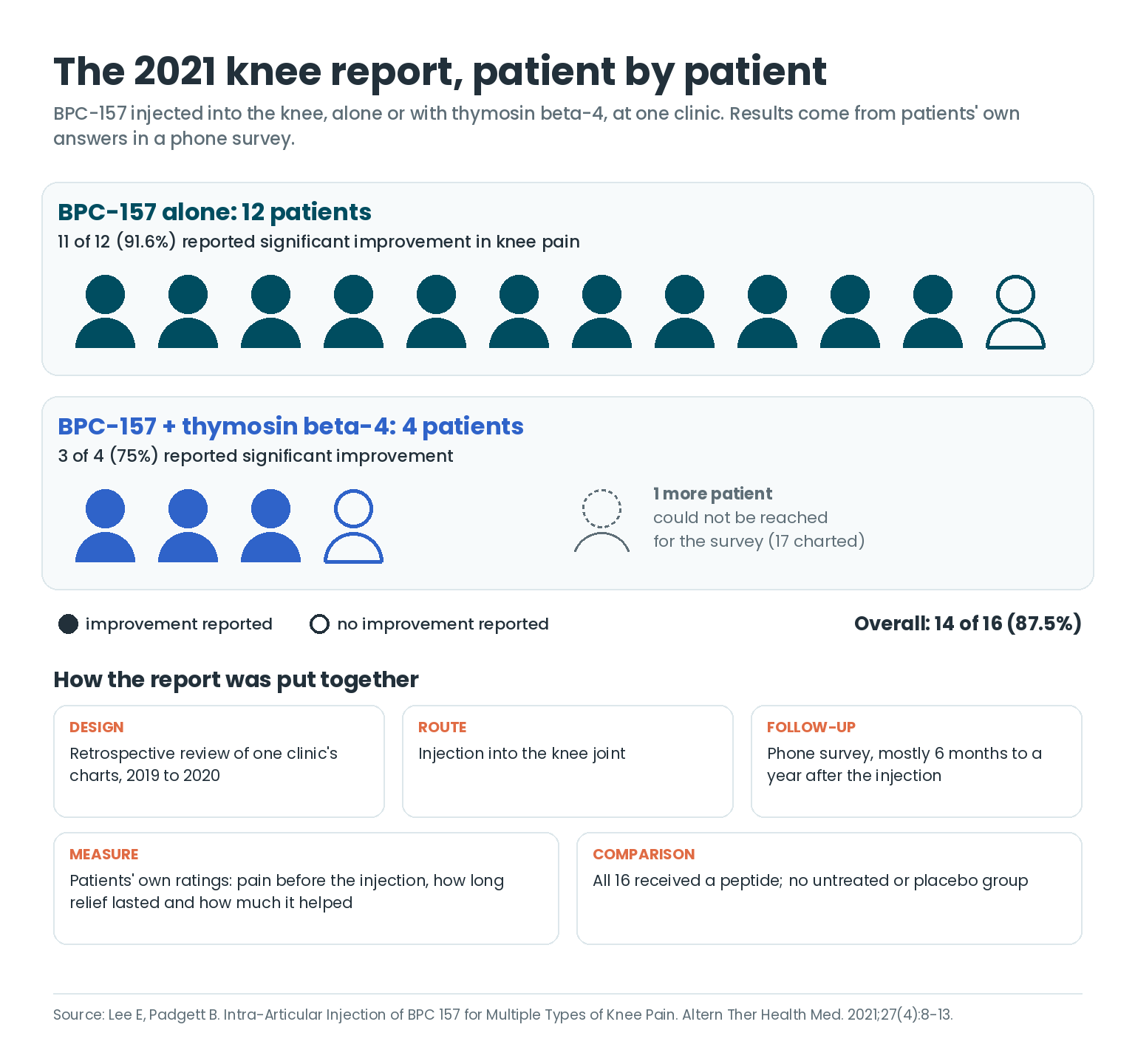
The 2021 knee-pain report involved joint injections, including BPC-157 alone and BPC-157 with thymosin beta-4. It was a small retrospective report without a randomized control group. It did not test oral absorption or this capsule blend.
The FDA’s 2026 BPC-157 review found no human studies using the proposed oral route. Its TB-500 review found no clinical studies or human exposure data for the TB-500 substances evaluated. Research using other routes and related molecules does not fill the oral-blend evidence gap.
Does a stable capsule mean it is absorbed?
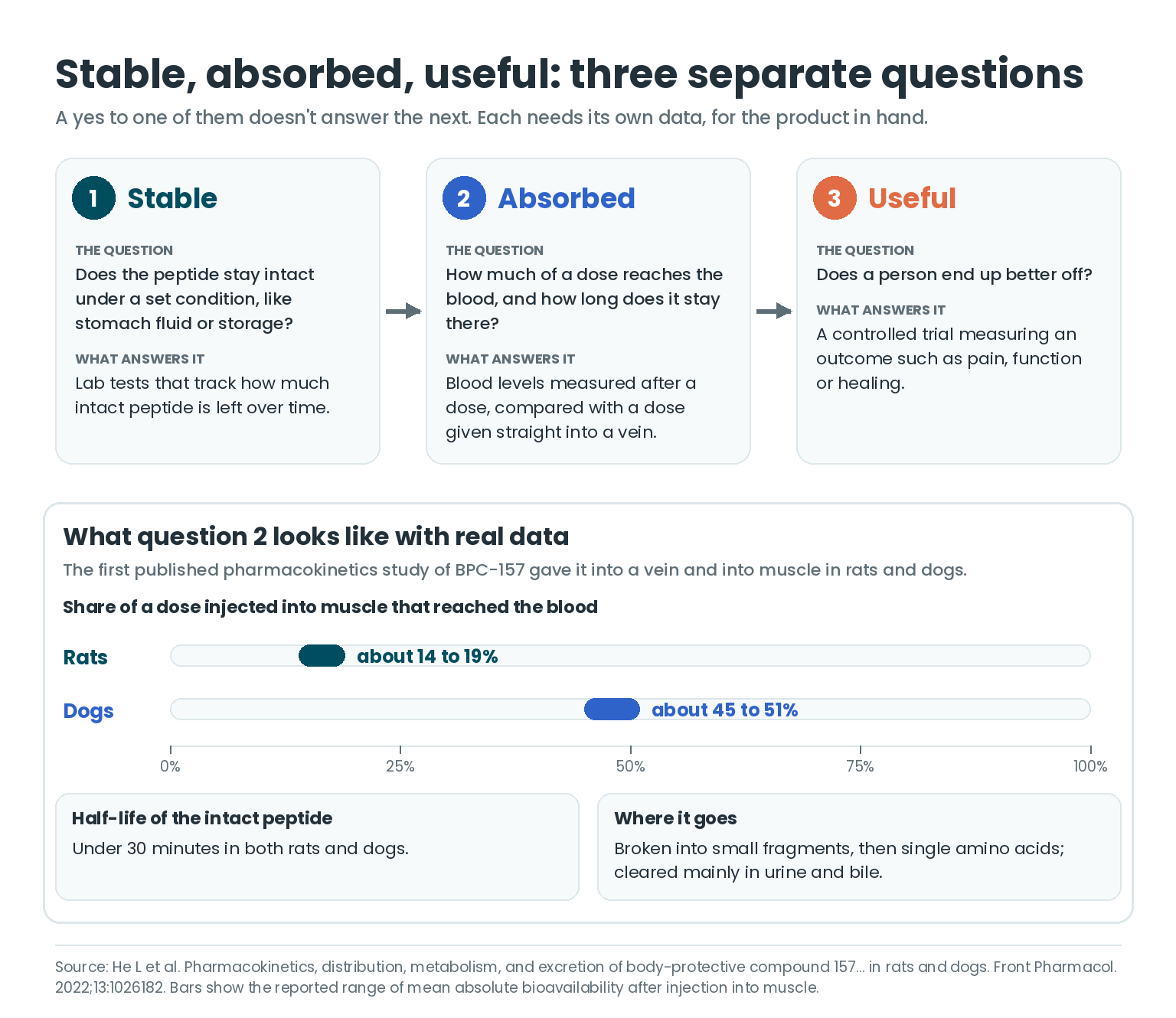
Not necessarily. Stability asks whether the compound stays intact under certain conditions. Absorption asks how much reaches the body. Clinical benefit asks whether a person has a useful health outcome. These are separate questions.
Words such as protected, stable, or high absorption need supporting data for the actual product. Avoid assuming that a swallowed dose is equivalent to an injected dose.
Is there an established capsule dose?
No validated regimen for general recovery is established here. Injection examples from other articles are not oral dose recommendations. There is no supported conversion that makes a capsule and an injection equivalent.
For label checks, distinguish the amount per capsule from the amount per serving. If a serving contains two capsules, its listed total may cover both. Also check whether the number applies to each ingredient or the blend as a whole. This helps explain a label; it does not establish a safe dose.
Are capsules safer?
Capsules avoid needles and injection-site risks. That does not establish long-term safety, drug interactions, or the contents of a particular product. The rate and range of side effects for this oral combination are not well known.
Seller reviews and purity certificates do not prove that a capsule works. A laboratory result for raw material also does not answer every question about a finished capsule. New or worsening symptoms should not be described as a normal sign of healing.
How much weight should testimonials carry?
A customer story cannot separate a product’s effect from rest, rehabilitation, other treatment, or natural recovery. It may also leave out harms and people who did not improve. This article does not use unsourced celebrity endorsements or testimonials as evidence.
For an injury or ongoing gut symptoms, discuss the diagnosis and established care options with a qualified clinician. A convenient product form is not a reason to delay care.