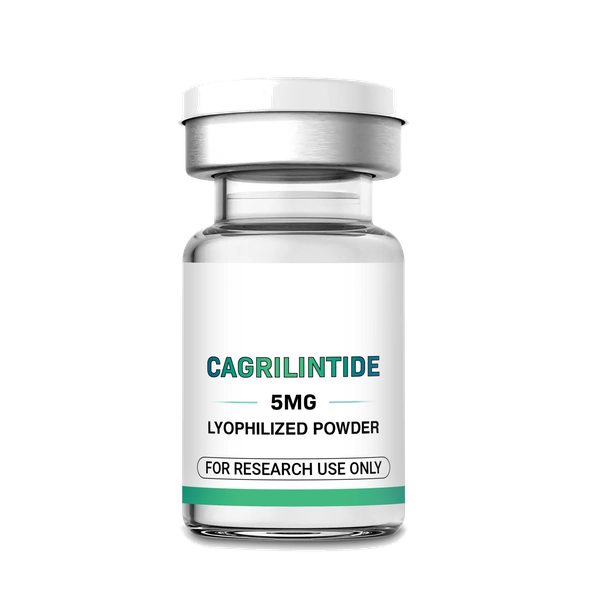
Powder vials
Store at −20 °C (−4 °F) in dry, dark conditions and keep them in the original packaging.

The reported ladder is 0.25, then 0.5, then 1.0, then 1.7, then 2.4 mg once weekly, with a step up every four weeks. With a 5 mg vial mixed with 1 mL of water, 1 mg is 20 units on a U-100 syringe. The trial that established this class used a different top dose, 4.5 mg, and ran under supervision for 26 weeks.
The amounts in this chart come from online communities. The vial label shows the total peptide in milligrams (mg). The Amount column shows a portion of that total in micrograms (mcg). The syringe mark shows how much liquid corresponds to that amount.
Syringe marks below are based on a 5 mg vial with 1 mL of water added. Change vial size or water in the calculator
| Reported | Amount | Volume | Syringe mark (U-100) | Draws per vial |
|---|
Convert your vial to mcg, because 1 mg is the same as 1,000 mcg.
Divide by your water to see how much is in 1 mL.
Find what one unit holds. A U-100 syringe has 100 units in 1 mL.
Divide your amount by what one unit holds.
Follow one step at a time. The steps use the water amount from your calculator.
Find the mg printed on your vial and enter it in the calculator. Let a frozen vial reach room temperature first.
Clean the top of the peptide vial and the water vial with an alcohol swab. Let them dry.
Draw bacteriostatic water with a sterile syringe.
Let the water run down the inside wall of the vial. This helps prevent foaming.
Roll the vial until the powder fully dissolves. Do not shake it hard.
Write today's date on the vial and refrigerate it at 2–8 °C (35.6–46.4 °F), away from light.
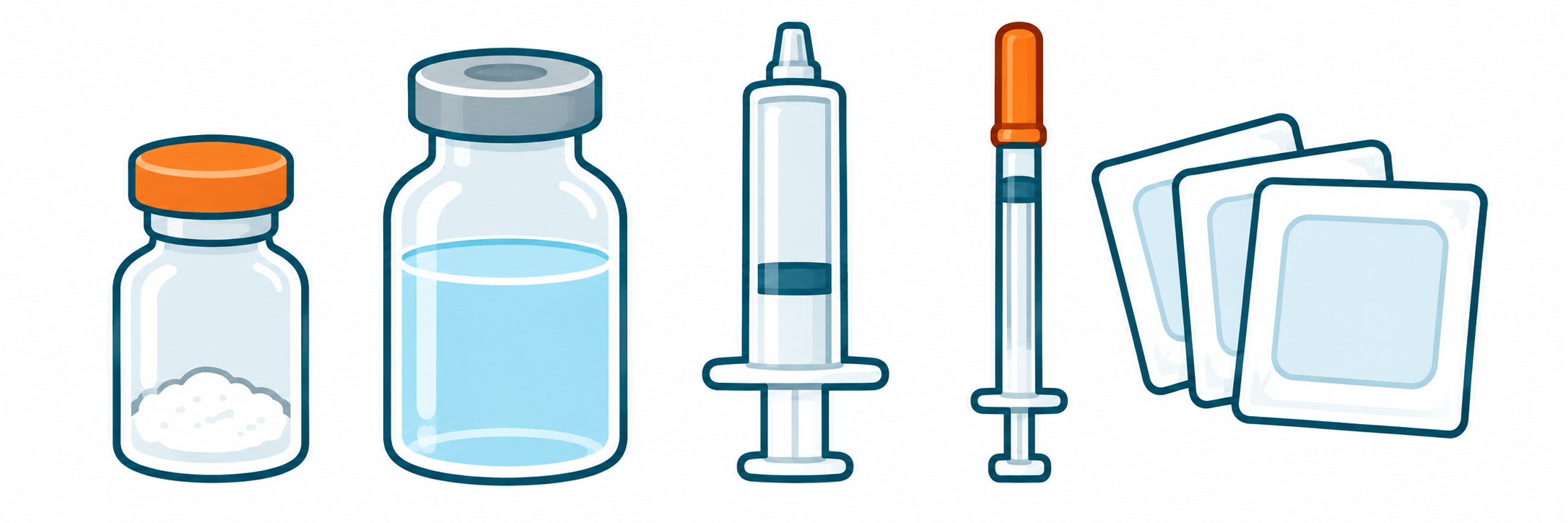
Pick how many weeks you will run it and how many shots you take each week. The list below shows everything you need.
Store at −20 °C (−4 °F) in dry, dark conditions and keep them in the original packaging.
Keep them refrigerated and away from light. How long a mixed vial lasts depends on the product, so check its stability data.
Cagrilintide is a long-acting amylin analog. Amylin is released alongside insulin and signals fullness, which is a different pathway from the GLP-1 drugs everyone knows.
Most of the attention it gets is as half of a combination. Paired with semaglutide it becomes CagriSema, and that pairing is what the large trial programme has been built around.
The entire focus of the programme, alone and in combination.
The pairing known as CagriSema, which is where most of the research effort has gone.
Amylin rather than GLP-1, which is why combining the two does more than either alone.
The dose-finding trial measured at 26 weeks and the combination trial at 32 weeks. This is not a compound measured in days.
A 2021 phase 2 trial randomised participants to five once-weekly doses, 0.3, 0.6, 1.2, 2.4 and 4.5 mg, against placebo and against liraglutide 3.0 mg daily, with lifestyle intervention. Around 706 participants.
Weight loss was 9.7 percent and 10.8 percent at the top doses at week 26, against 3.0 percent on placebo.
A 32 week phase 2 trial in 92 adults with type 2 diabetes compared cagrilintide and semaglutide, each at 2.4 mg, alone and together. Reported weight loss was about 15.6 percent for the combination against roughly 8.1 percent for cagrilintide alone and about 5.1 percent for semaglutide alone.
Around 180 hours is what supports once-weekly dosing. It also means a dose you take is still around a week later, which is the reason the ramp is spaced in weeks rather than days.
Secondary summaries of these trials disagree in places. The primary sources are the 2021 Lancet dose-finding paper and the 2023 phase 2 combination trial.
Quality varies a lot between sellers. I have been around research peptides for 10 years, and BioEdge is the supplier I send my readers to. Here is why.
The Peptide Report has a business relationship with BioEdge Research Labs. BioEdge sells this product for laboratory research only. BioEdge shipping policy
Pick a tool and try it. Each one uses the numbers from your calculator.
Use the same four steps. Once you can solve these, you can work out the units for any vial you ever pick up.
Your score: 0 correct.
Each line on the syringe is a unit of liquid. A unit measures volume, so the amount of peptide in it depends on your mix.
Tap the syringe or move the slider. The numbers use the vial you entered above. Read the line at the top edge of the plunger.
More water makes the mix weaker, so the same amount takes up more units. The amount of peptide in the vial stays the same.
A draw under 5 units is harder to read accurately. Tap a row to use that water amount.
The circulating ladder is 0.25, 0.5, 1.0, 1.7 and 2.4 mg once weekly, stepping up about every four weeks. The phase 2 trial used 0.3 to 4.5 mg once weekly.
With a 5 mg vial and 1 mL of water, 1 mg is 20 units on a U-100 syringe, 0.25 mg is 5 units and 2.4 mg is 48 units. Use the calculator if your mix is different.
Nausea tracks with how fast you increase, not only with the final amount. The ramp is what keeps it tolerable.
Cagrilintide combined with semaglutide. In a 32 week trial the combination reached about 15.6 percent weight loss against roughly 8.1 and 5.1 percent for the two alone.
It works on amylin rather than GLP-1. Different pathway, which is why combining them adds up to more than either on its own.
Its half-life is around 180 hours.
Most charts assume one vial size and one water amount. If your mix is different, every unit number changes, so run your own numbers.