Powder vials
Store at −20 °C (−4 °F) in dry, dark conditions and keep them in the original packaging.

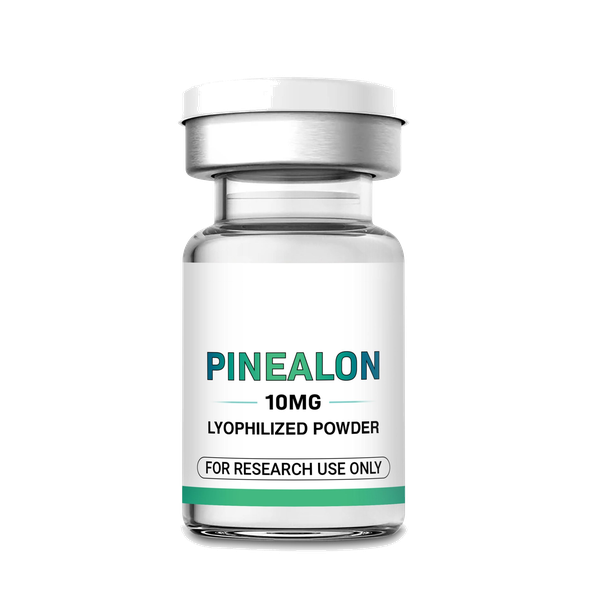
The research protocol people follow is 200 to 300 mcg of Pinealon a day by subcutaneous injection for 30 days, then a break. With a 20 mg vial mixed with 3 mL of water, 300 mcg is 4.5 units on a U-100 syringe. People repeat the course with one to four months off in between rather than running it continuously.
The amounts in this chart come from online communities. The vial label shows the total peptide in milligrams (mg). The Amount column shows a portion of that total in micrograms (mcg). The syringe mark shows how much liquid corresponds to that amount.
Syringe marks below are based on a 20 mg vial with 3 mL of water added. Change vial size or water in the calculator
| Reported | Amount | Volume | Syringe mark (U-100) | Draws per vial |
|---|
Convert your vial to mcg, because 1 mg is the same as 1,000 mcg.
Divide by your water to see how much is in 1 mL.
Find what one unit holds. A U-100 syringe has 100 units in 1 mL.
Divide your amount by what one unit holds.
Follow one step at a time. The steps use the water amount from your calculator.
Find the mg printed on your vial and enter it in the calculator. Let a frozen vial reach room temperature first.
Clean the top of the peptide vial and the water vial with an alcohol swab. Let them dry.
Draw bacteriostatic water with a sterile syringe.
Let the water run down the inside wall of the vial. This helps prevent foaming.
Roll the vial until the powder fully dissolves. Do not shake it hard.
Write today's date on the vial and refrigerate it at 2–8 °C (35.6–46.4 °F), away from light.
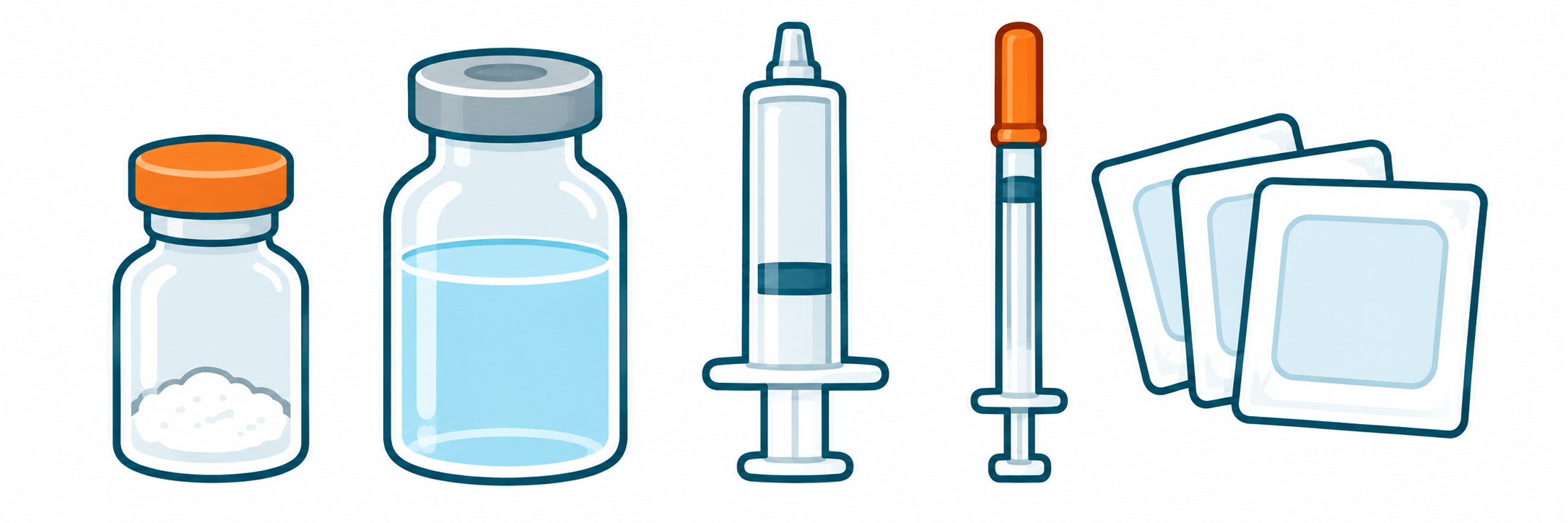
Pick how many weeks you will run it and how many shots you take each week. The list below shows everything you need.
Store at −20 °C (−4 °F) in dry, dark conditions and keep them in the original packaging.
Keep them refrigerated and away from light. How long a mixed vial lasts depends on the product, so check its stability data.
Pinealon is a three amino acid peptide, Glu-Asp-Arg, written EDR. It is the brain peptide in the Russian bioregulator family, and the one with the most actual experimental work behind it.
Bioregulators come out of a different research tradition from most of the peptides on this site. The protocols are short courses repeated a few times a year rather than long continuous cycles, and most of the published work is Russian. That is worth knowing before you compare one with something like BPC-157, which is run very differently.
The main thread. The animal and cell work is about neurons under stress.
The Russian framing is about brain aging and memory rather than about treating a diagnosed condition.
The in vitro work used cells put under oxidative stress, which is the most specific model in the file.
The cumulative model means this is not a peptide where you watch the first week. The protocol is built around repeating a short course over months.
The protocol carried in the Russian literature for this family is a short daily course by subcutaneous injection, 30 days per cycle, followed by a real break before the next one. For this peptide the reported amount is 200 to 300 mcg a day.
A tripeptide, EDR, described in the Russian literature as a geroprotector. The sequence is one of the better documented things in this family.
The most specific study looked at rat offspring exposed to high homocysteine before birth, through maternal methionine loading. A review also describes gene expression changes, less cell death and dendritic spines being preserved in preclinical models.
A separate in vitro study used cerebellar granule cells, neutrophils and PC12 cells under oxidative stress.
Some pineal research that gets attached to Pinealon is actually on Glu-Asp-Gly, a different tripeptide. Worth checking which molecule a study used before you count it.
One site lists a 35 to 45 percent infarct reduction from 2009 and microarray results from 2014, with no citations I could check.
Most of the published work on this family comes from Vladimir Khavinson's group at the St Petersburg Institute of Bioregulation and Gerontology, or from researchers tied to it. There are no independent Western controlled trials.
Quality varies a lot between sellers. I have been around research peptides for 10 years, and BioEdge is the supplier I send my readers to. Here is why.
The Peptide Report has a business relationship with BioEdge Research Labs. BioEdge sells this product for laboratory research only. BioEdge shipping policy
Pick a tool and try it. Each one uses the numbers from your calculator.
Use the same four steps. Once you can solve these, you can work out the units for any vial you ever pick up.
Your score: 0 correct.
Each line on the syringe is a unit of liquid. A unit measures volume, so the amount of peptide in it depends on your mix.
Tap the syringe or move the slider. The numbers use the vial you entered above. Read the line at the top edge of the plunger.
More water makes the mix weaker, so the same amount takes up more units. The amount of peptide in the vial stays the same.
A draw under 5 units is harder to read accurately. Tap a row to use that water amount.
The reported protocol is 200 to 300 mcg a day by subcutaneous injection for 30 days, then a break before repeating with one to four months off in between.
With a 20 mg vial and 3 mL of water, 300 mcg is 4.5 units on a U-100 syringe and 200 mcg is 3 units. Use the calculator if your mix is different.
30 days. This is not a 12-week cycle.
With one to four months off in between is what the protocol describes. The model is cumulative rather than continuous.
Thinner than the numbers make it look. Almost all of it comes from one research group, most of it is in Russian, and there are no independent controlled human trials.
3 mL is the usual choice, which makes 6.67 mg per mL and puts 300 mcg at 4.5 units.
Most charts assume one vial size and one water amount. If your mix is different, every unit number changes, so run your own numbers.