If symptoms stop improving while using BPC-157 or TB-500, that does not prove the peptides stopped working—or that another stack will fix the problem. Human evidence for injury recovery remains limited. A plateau is a reason to review the injury and the care plan, rather than assume that more peptides are needed.
My shoulder story: what I felt and what it cannot prove
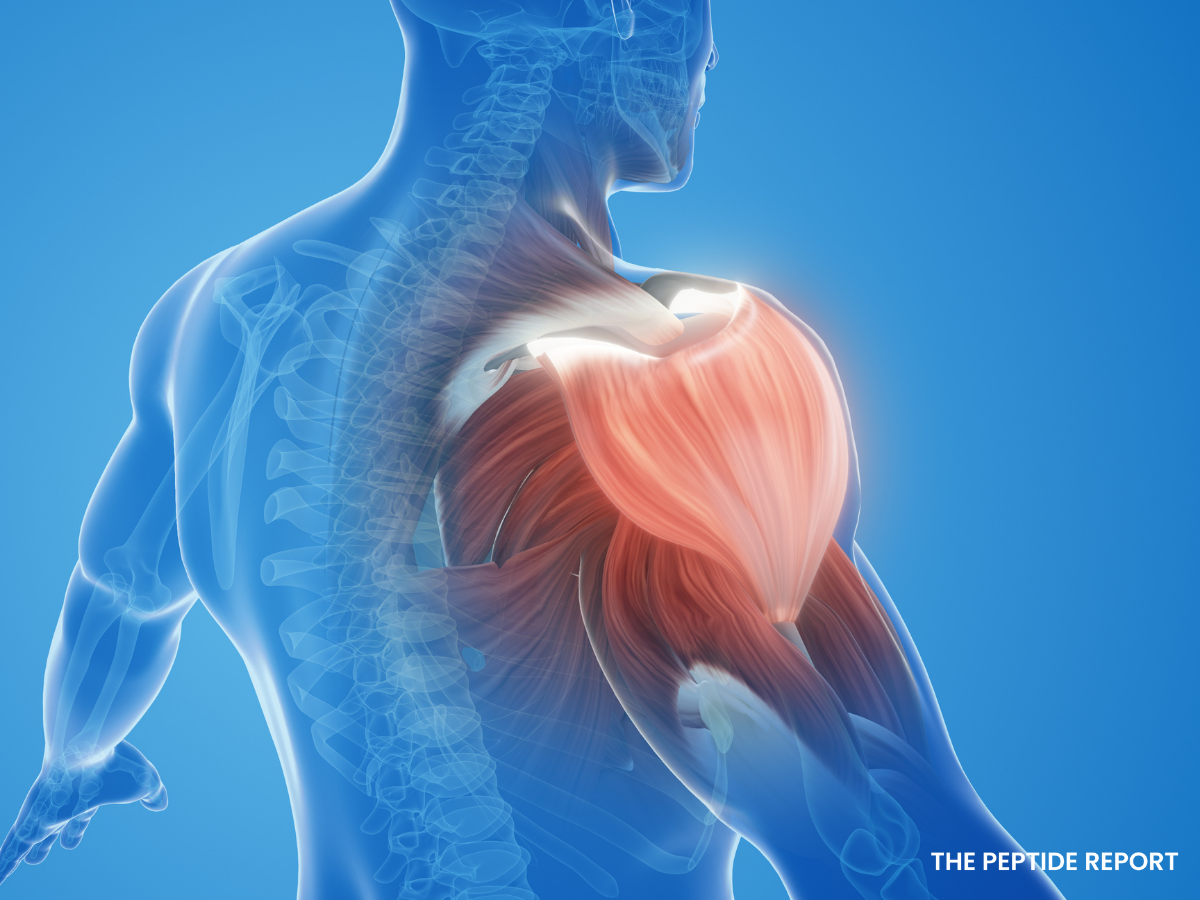
I dealt with morning stiffness and flare-ups after heavy pressing. I used BPC-157 and TB-500 alongside rest, rehab, and mobility work. My shoulder improved, then seemed to stay at the same point for months. Increasing amounts and changing injection sites did not give me the progress I wanted.
I described myself as about “70 percent” better. That was my own sense of pain and function. It was not a scan, a measure of repaired tissue, or evidence that a peptide delivered only part of a healing signal.
Later, while using SS-31, KPV, and Cartalax, I noticed less stiffness, fewer flare-ups, and better movement. Those observations are part of my story. They cannot show which compound caused a change, whether tissue regrew, or what would have happened with rehab and time alone.
Why the old explanation went too far
An earlier version said BPC-157 and TB-500 repair only what blood can reach, then stop at a fixed percentage. It also said SS-31, KPV, and Cartalax bypass that limit. Those claims are not established by the evidence cited here.
A proposed effect inside a cell is different from proving delivery to an injured tissue. A change in pain is also different from proof that cartilage, a tendon, or a disc has rebuilt. There is no validated “70 percent plateau” rule for these compounds.
For the research on the original pair, see our BPC-157/TB-500 combination evidence guide. It separates individual-compound findings from evidence about using them together.
What the research says about the added compounds
SS-31, also called elamipretide
Elamipretide has human research and an approved formulation, Forzinity. The FDA granted it accelerated approval in 2025 for Barth syndrome in people weighing at least 30 kg. That specific approval does not establish treatment for a shoulder injury or validate a research-vial stack.
The FDA announcement describes its mitochondrial action and the need for a confirmatory trial. It does not support the claim that SS-31 needs no circulation or rebuilds injured tendons in six weeks.
KPV
KPV is studied for inflammation-related effects. A 2008 study used cell lines and mouse models of colitis. It did not test a home injection schedule for shoulder recovery in people.
That work is a research lead. It does not prove that KPV switched my shoulder from a damage state to a repair state.
Cartalax
Cartalax is discussed as a peptide bioregulator. This article does not establish a controlled human benefit for cartilage, tendons, discs, or nerves. Claims that it supplies a DNA blueprint or restores structural tissue need direct supporting evidence.
My shoulder feeling more stable is not proof of cartilage growth. It should not be presented as a result other people can expect.
The examples I reported using
These are author-reported examples from my earlier account, not validated clinical regimens or recommendations. They do not establish a safe dose, timing, route, cycle, or combination.
| Compound | Reported example |
|---|---|
| SS-31 | 2 mg subcutaneously, five days a week, for six weeks, followed by four weeks off. |
| KPV | 500 mcg subcutaneously, five days a week, for six weeks, followed by four weeks off. |
| Cartalax | 1 mg subcutaneously, five days on and two days off, during a 30-day period. |
The earlier account placed SS-31 and Cartalax in the morning and KPV in the evening. It does not establish that this timing or fasting improves results. Listing compounds together also does not establish that they can be mixed in one syringe.
My observations over those weeks are not a week-by-week forecast. There is no supported basis here to promise that flare-ups stop by week four or that tissue is rebuilt by week six.
What to review when an injury is not improving
Persistent symptoms deserve a review with a qualified clinician or physical therapist. Useful questions include whether the diagnosis still fits, whether the training load and rehab plan need to change, and whether further assessment is needed.
Record what you can measure: pain during a task, range of motion, strength, and which activities trigger symptoms. That is more useful than assigning a percentage of tissue healing based on how a joint feels.
Increasing a dose, moving an injection closer to an injury, or adding several compounds is not a proven answer to a plateau. It can add uncertainty and make side effects harder to trace.
Questions this story cannot answer
Does this stack work without BPC-157 and TB-500?
This account cannot establish that the three-compound stack works alone, or that adding it is better than established care. The combination needs its own controlled study.
Is it a treatment for lower-back or disc pain?
No treatment benefit for disc pain is established here. Persistent or worsening back symptoms need assessment; the shoulder story cannot be used to select a disc treatment.
Is cycling proven to improve safety?
No. The breaks in my account are personal examples. They do not prove that repeated cycles prevent harm or preserve effectiveness.
What I take from the experience
My shoulder felt better over time. I can share that observation without claiming to know exactly why. Rest, rehabilitation, changing activity, natural recovery, and the compounds were not separated in a controlled test.
Use this as one personal account, not proof of a deeper repair pathway or a reason to replace medical care. For concentration math rather than treatment selection, see the BPC-157/TB-500 blend calculation reference.