The biopsy trials in this article grade a drug on a two-line report card. A pathologist reads a liver biopsy before and after treatment and answers two questions. Did the steatohepatitis resolve, or in one trial improve, without the scarring getting worse? And did the scarring, the fibrosis, improve without the steatohepatitis getting worse?
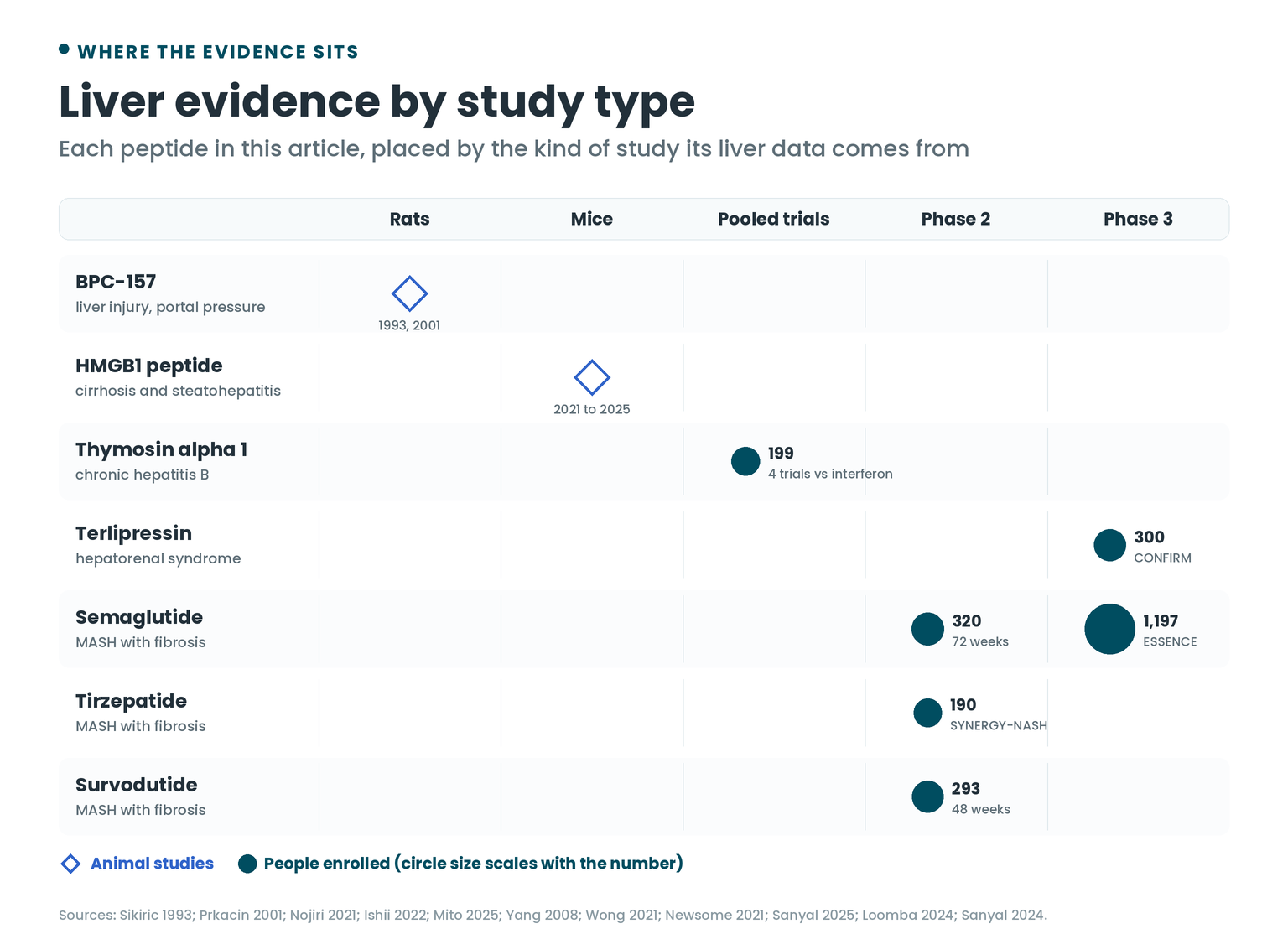
The second line is the one tied to what happens to people years later. Here’s how the GLP-1 drugs score on both, plus the other peptides with liver data, from rat and mouse studies to a 1,197-patient phase 3 trial.
Why the Scarring Line Matters Most
Paul Angulo’s 2015 study followed 619 people with fatty liver disease, diagnosed between 1975 and 2005 in the US, Europe and Thailand, for a median of 12.6 years. A third of them died or had a liver transplant in that time. Of everything the original biopsies showed, fibrosis stage was the only feature independently linked to death, transplant and liver-related events.
The risk climbed with every stage. Compared with no fibrosis, the hazard ratio for death or transplant was 1.88 at stage 1, 2.89 at stage 2, 3.76 at stage 3 and 10.9 at stage 4. People with fibrosis had shorter survival whether or not their biopsy showed steatohepatitis.
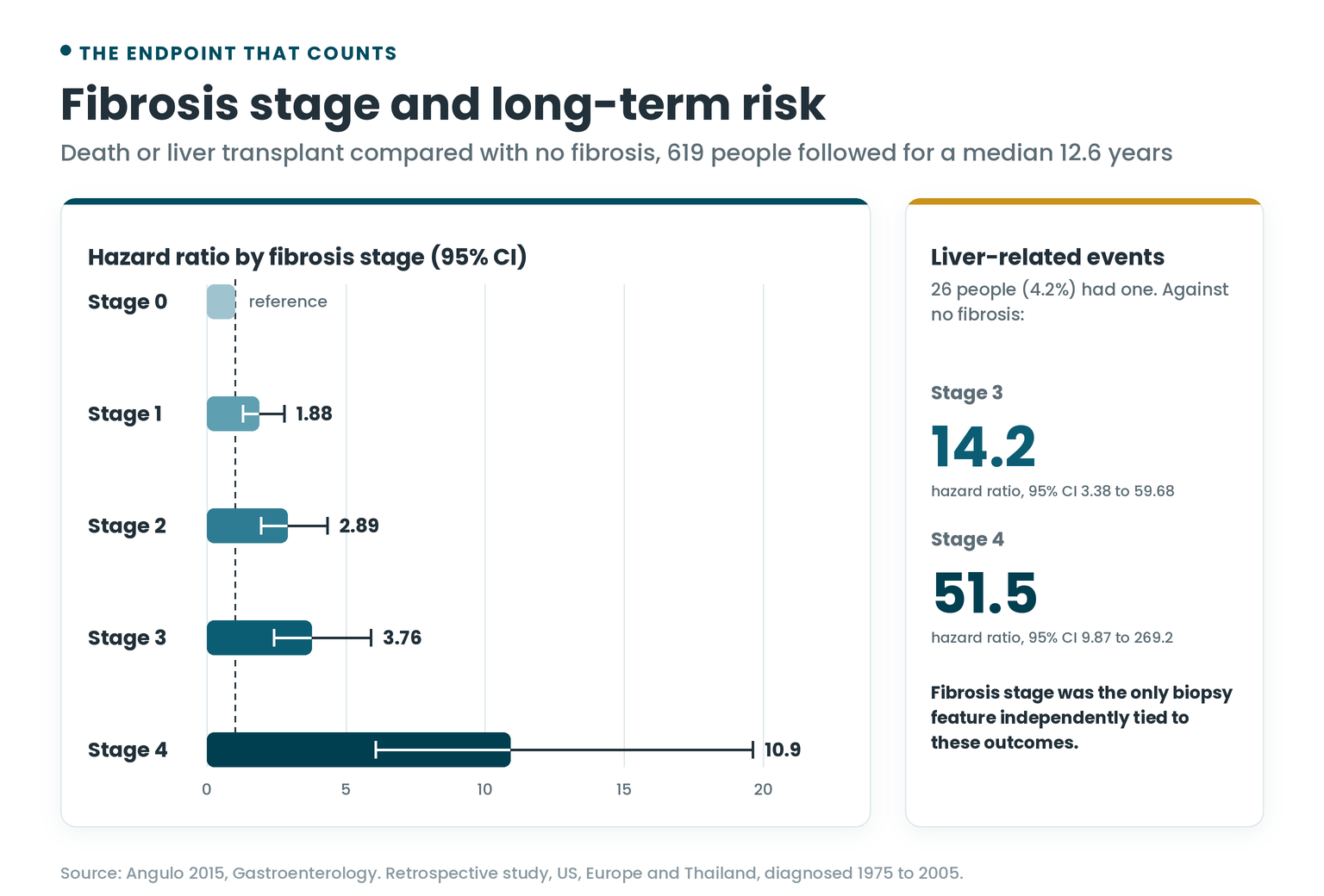
That’s why the trials below enroll people by fibrosis stage and score the scarring as its own endpoint.
GLP-1 Drugs in Steatohepatitis Trials
The largest biopsy trials in this article come from the GLP-1 family of drugs. Older papers call the disease NASH, nonalcoholic steatohepatitis; the newer ones call it MASH, metabolic dysfunction-associated steatohepatitis. All of these trials required a biopsy to get in, and all were placebo-controlled with injections under the skin. If you want the eating side of semaglutide, I cover it in the Semaglutide Diet Plan piece.
Semaglutide: Phase 2, Then Phase 3
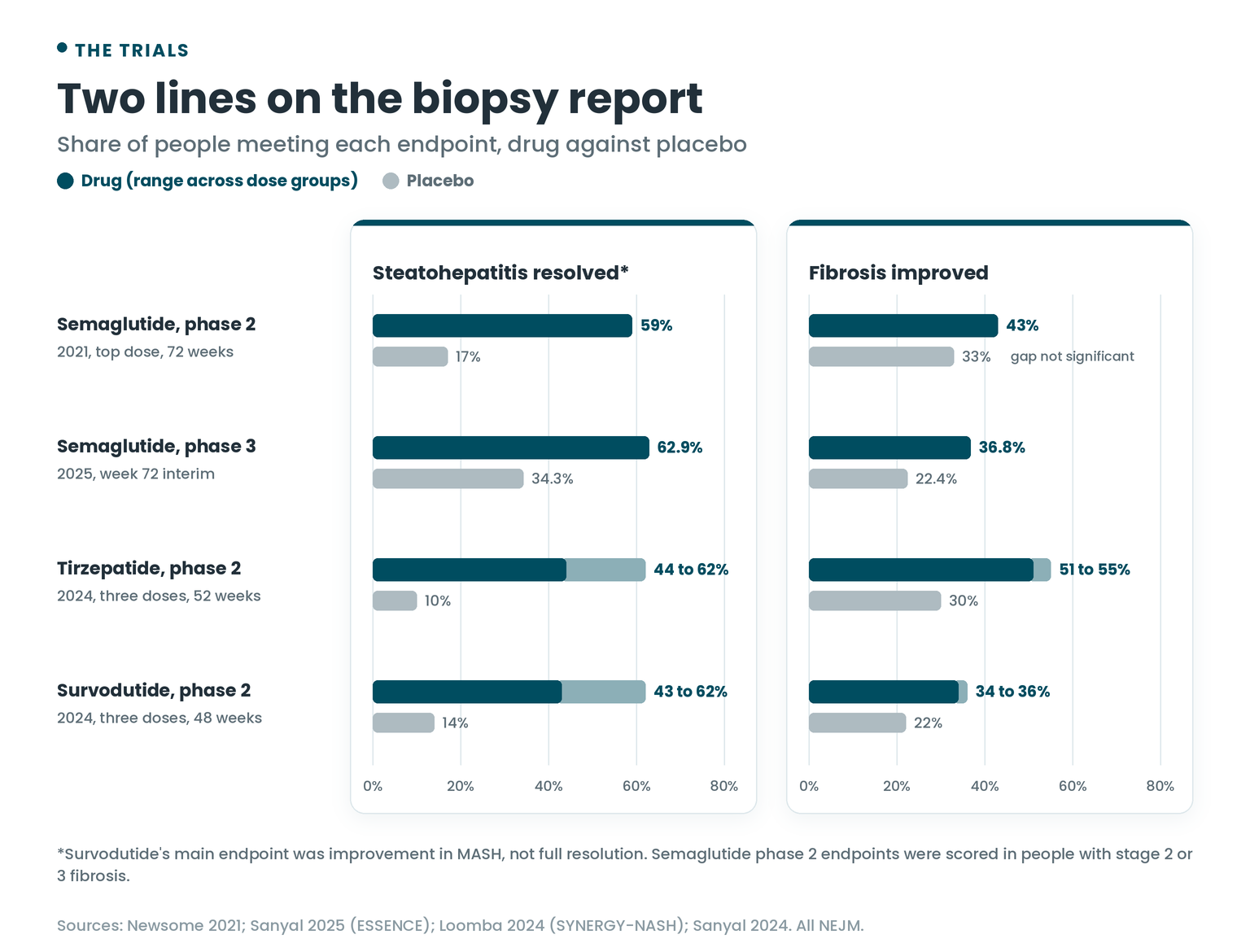
Philip Newsome’s 2021 phase 2 trial gave 320 people with stage 1 to 3 fibrosis daily semaglutide at one of three doses, or placebo, for 72 weeks, and scored the two main endpoints in the 230 with stage 2 or 3. On the steatohepatitis line, 59 percent of the top dose group resolved against 17 percent on placebo. On the scarring line, it was 43 percent against 33 percent, a gap that wasn’t statistically significant. The top dose group lost 13 percent of body weight on average, against 1 percent on placebo. Nausea, constipation and vomiting were more common on semaglutide. Malignant tumors were reported in 3 people on semaglutide, about 1 percent, against none on placebo, and tumors of all kinds showed no pattern by organ.
The phase 3 trial, ESSENCE, published by Arun Sanyal in 2025, enrolled 1,197 people with stage 2 or 3 fibrosis on once-weekly semaglutide or placebo, planned for 240 weeks. Its first look, at week 72 in the first 800 patients, hit both lines. Steatohepatitis resolved in 62.9 percent against 34.3 percent, and fibrosis was reduced in 36.8 percent against 22.4 percent. Both happened together in 32.7 percent against 16.1 percent. Body weight fell 10.5 percent against 2.0 percent, and gastrointestinal side effects were more common on semaglutide.
Tirzepatide
Tirzepatide acts on two receptors, GLP-1 and GIP, the glucose-dependent insulinotropic polypeptide receptor. Rohit Loomba’s 2024 phase 2 trial, SYNERGY-NASH, randomized 190 people with stage 2 or 3 fibrosis to one of three weekly doses or placebo for 52 weeks. Steatohepatitis resolved in 44 to 62 percent across the dose groups against 10 percent on placebo. Fibrosis improved in 51 to 55 percent against 30 percent. The most common side effects were gastrointestinal and mostly mild or moderate, and the authors called for larger and longer trials.
Survodutide
Survodutide pairs GLP-1 receptor action with glucagon receptor action. Sanyal’s 2024 phase 2 trial randomized people with stage 1 to 3 fibrosis to one of three weekly doses or placebo for 48 weeks, and 293 received at least one dose. Its main endpoint was a little different: improvement in MASH, not full resolution. That happened in 43 to 62 percent across the doses against 14 percent on placebo. Liver fat dropped by at least 30 percent in 57 to 67 percent against 14 percent, and fibrosis improved by at least one stage in 34 to 36 percent against 22 percent. Nausea hit 66 percent against 23 percent, and vomiting 41 percent against 4 percent.
Stage by Stage
The four trials above, side by side on the fibrosis scale.
Fibrosis stages and the GLP-1 trials
Tap a stage for its long-term risk, or pick a trial to see which stages it enrolled and how it scored on both biopsy lines.
Fibrosis stage, with the hazard ratio for death or transplant
Trials
The HMGB1 Peptide in Mice
A group led by Shuji Terai has been testing a peptide made from box A, one region of the protein HMGB1 (high mobility group box 1). In Shunsuke Nojiri’s 2021 study, mice were given carbon tetrachloride to induce cirrhosis, then treated. Nothing changed within 36 hours. Liver damage eased after one week and fibrosis was suppressed after two, and the scarring kept regressing even though the liver injury continued, which the authors read as active breakdown of fibrosis.
In a dish, the researchers couldn’t confirm a direct effect on macrophages. Inside the liver, though, macrophages were the immune cells that changed most, with more scar-associated macrophages carrying anti-inflammatory markers. The group called it a new concept for cell-free therapy in cirrhosis.
Two follow-ups widened the picture. In Yui Ishii’s 2022 study in a genetic mouse model of steatohepatitis, short-term treatment reduced liver damage, fat buildup and fibrosis progression, and long-term treatment prevented progression to cirrhosis and cut tumor development by about a third. Masaki Mito’s 2025 study used spatial gene mapping in cirrhotic mice and found macrophages changed first, followed by a drop in activated stellate cells, the cells that lay down scar tissue, from two weeks on.
Other Peptides With Liver Data
Terlipressin and Hepatorenal Syndrome
Terlipressin is an analog of the hormone vasopressin and works as a blood vessel constrictor. Florence Wong’s 2021 CONFIRM trial gave it or placebo for up to 14 days to 300 adults with cirrhosis and type 1 hepatorenal syndrome, where kidney function fails. Verified reversal of the kidney syndrome happened in 32 percent against 17 percent on placebo. By day 90, deaths stood at 51 percent against 45 percent, and deaths from respiratory causes at 11 percent against 2 percent. The authors concluded terlipressin improved kidney function but came with serious adverse events, including respiratory failure.
Thymosin Alpha 1 and Hepatitis B
Thymosin alpha 1, the immune peptide I covered in Thymosin Alpha 1 and Bodybuilding, has a delayed-effect pattern in chronic hepatitis B. Chan’s 2001 meta-analysis of thymosin trials pooled five studies and 353 patients. Against placebo or usual care, the odds ratio for viral response was 0.56 at the end of treatment and 2.67 twelve months after stopping, with no difference in liver enzyme normalization at any point. A 2008 meta-analysis of four trials of thymosin alpha 1 against interferon alpha, led by Yong-Feng Yang, found interferon ahead on complete response at the end of treatment, an odds ratio of 0.54, and thymosin alpha 1 ahead six months later, with odds ratios of 2.69 to 3.71, mostly in HBeAg-negative patients.
BPC-157 in Rats
The BPC-157 liver studies are in rats. Sikiric’s group reported in 1993 that it prevented liver necrosis and fatty changes after bile duct and hepatic artery ligation, restraint stress and carbon tetrachloride, while the comparison drugs did little. A 2001 study by the same group gave rats alcohol in their drinking water for three months: BPC-157 prevented portal hypertension, and reversed it when started in the last month. I go deeper on this peptide’s research record in BPC 157 and Cancer.
Frequently Asked Questions
What is MASH?
MASH is metabolic dysfunction-associated steatohepatitis, a progressive liver disease linked to liver complications and death. Earlier trials, like the 2021 semaglutide study, call it NASH, nonalcoholic steatohepatitis.
Does semaglutide improve liver fibrosis?
In the phase 3 ESSENCE trial, fibrosis was reduced in 36.8 percent of people on semaglutide against 22.4 percent on placebo at week 72. The earlier phase 2 trial found a smaller gap that wasn’t statistically significant.
Why does fibrosis stage matter so much?
Over a median 12.6 years of follow-up in 619 people with fatty liver disease, fibrosis stage was the only biopsy feature independently tied to death, liver transplant and liver-related events, and the risk rose with each stage.
What is the HMGB1 peptide?
It’s a peptide synthesized from the box A region of the HMGB1 protein. In mice with induced cirrhosis or steatohepatitis it reduced liver damage and fibrosis. The cirrhosis studies point to changes in liver macrophages, and the steatohepatitis study to better fat burning in the liver.
Has BPC-157 been tested on the liver?
Yes, in rats. Studies from Sikiric’s group report protection against several kinds of chemical and surgical liver injury and against alcohol-related portal hypertension.
Stay sharp,
Joe Mars
The Peptide Report
P.S. Following a liver number, a biopsy result or one of these trials and want a second pair of eyes on it? Bring it to the Skool community and we’ll look at it together.
References
- Angulo P, Kleiner DE, Dam-Larsen S, et al. Liver fibrosis, but no other histologic features, is associated with long-term outcomes of patients with nonalcoholic fatty liver disease. Gastroenterology. 2015;149(2):389-397.e10. doi:10.1053/j.gastro.2015.04.043
- Newsome PN, Buchholtz K, Cusi K, et al. A placebo-controlled trial of subcutaneous semaglutide in nonalcoholic steatohepatitis. N Engl J Med. 2021;384(12):1113-1124. doi:10.1056/NEJMoa2028395
- Sanyal AJ, Newsome PN, Kliers I, et al. Phase 3 trial of semaglutide in metabolic dysfunction-associated steatohepatitis. N Engl J Med. 2025;392(21):2089-2099. doi:10.1056/NEJMoa2413258
- Loomba R, Hartman ML, Lawitz EJ, et al. Tirzepatide for metabolic dysfunction-associated steatohepatitis with liver fibrosis. N Engl J Med. 2024;391(4):299-310. doi:10.1056/NEJMoa2401943
- Sanyal AJ, Bedossa P, Fraessdorf M, et al. A phase 2 randomized trial of survodutide in MASH and fibrosis. N Engl J Med. 2024;391(4):311-319. doi:10.1056/NEJMoa2401755
- Nojiri S, Tsuchiya A, Natsui K, et al. Synthesized HMGB1 peptide attenuates liver inflammation and suppresses fibrosis in mice. Inflamm Regen. 2021;41(1):28. doi:10.1186/s41232-021-00177-4
- Ishii Y, Tsuchiya A, Natsui K, et al. Synthesized HMGB1 peptide prevents the progression of inflammation, steatosis, fibrosis, and tumor occurrence in a non-alcoholic steatohepatitis mouse model. Hepatol Res. 2022;52(12):985-997. doi:10.1111/hepr.13825
- Mito M, Tsuchiya A, Ishii S, et al. Multidirectional therapeutic effects of synthesized HMGB1 peptide on liver cirrhosis in mice. Biochem Biophys Rep. 2025;42:102061. doi:10.1016/j.bbrep.2025.102061
- Kam PCA, Williams S, Yoong FFY. Vasopressin and terlipressin: pharmacology and its clinical relevance. Anaesthesia. 2004;59(10):993-1001. doi:10.1111/j.1365-2044.2004.03877.x
- Wong F, Pappas SC, Curry MP, et al. Terlipressin plus albumin for the treatment of type 1 hepatorenal syndrome. N Engl J Med. 2021;384(9):818-828. doi:10.1056/NEJMoa2008290
- Chan HL, Tang JL, Tam W, Sung JJ. The efficacy of thymosin in the treatment of chronic hepatitis B virus infection: a meta-analysis. Aliment Pharmacol Ther. 2001;15(12):1899-1905. doi:10.1046/j.1365-2036.2001.01135.x
- Yang YF, Zhao W, Zhong YD, et al. Comparison of the efficacy of thymosin alpha-1 and interferon alpha in the treatment of chronic hepatitis B: a meta-analysis. Antiviral Res. 2008;77(2):136-141. doi:10.1016/j.antiviral.2007.10.014
- Sikiric P, Seiwerth S, Grabarevic Z, et al. Hepatoprotective effect of BPC 157, a 15-amino acid peptide, on liver lesions induced by either restraint stress or bile duct and hepatic artery ligation or CCl4 administration. A comparative study with dopamine agonists and somatostatin. Life Sci. 1993;53(18):PL291-PL296. doi:10.1016/0024-3205(93)90589-u
- Prkacin I, Separovic J, Aralicia G, et al. Portal hypertension and liver lesions in chronically alcohol drinking rats prevented and reversed by stable gastric pentadecapeptide BPC 157 (PL-10, PLD-116), and propranolol, but not ranitidine. J Physiol Paris. 2001;95(1-6):315-324. doi:10.1016/s0928-4257(01)00044-4