Of 1,828 runners who were healthy going into the Los Angeles Marathon, 236 reported an infection in the week after the race. Among similarly experienced runners who skipped it, the count was 3 out of 134.
That survey came from David Nieman in 1990. Below is what hard training does to your immune cells, what thymosin alpha 1 is, and where it has been tested in people.
What Hard Training Does to Your Immune System
Nieman’s marathon survey went further than race week. Runners logging 97 kilometers a week or more had twice the odds of an infection in the two months before the race compared with those under 32 kilometers a week. Those were self-reported illnesses. Work like this tied heavy exertion to more infections, and exercise scientists call the idea the “open window”: a hard session leaves you briefly exposed.
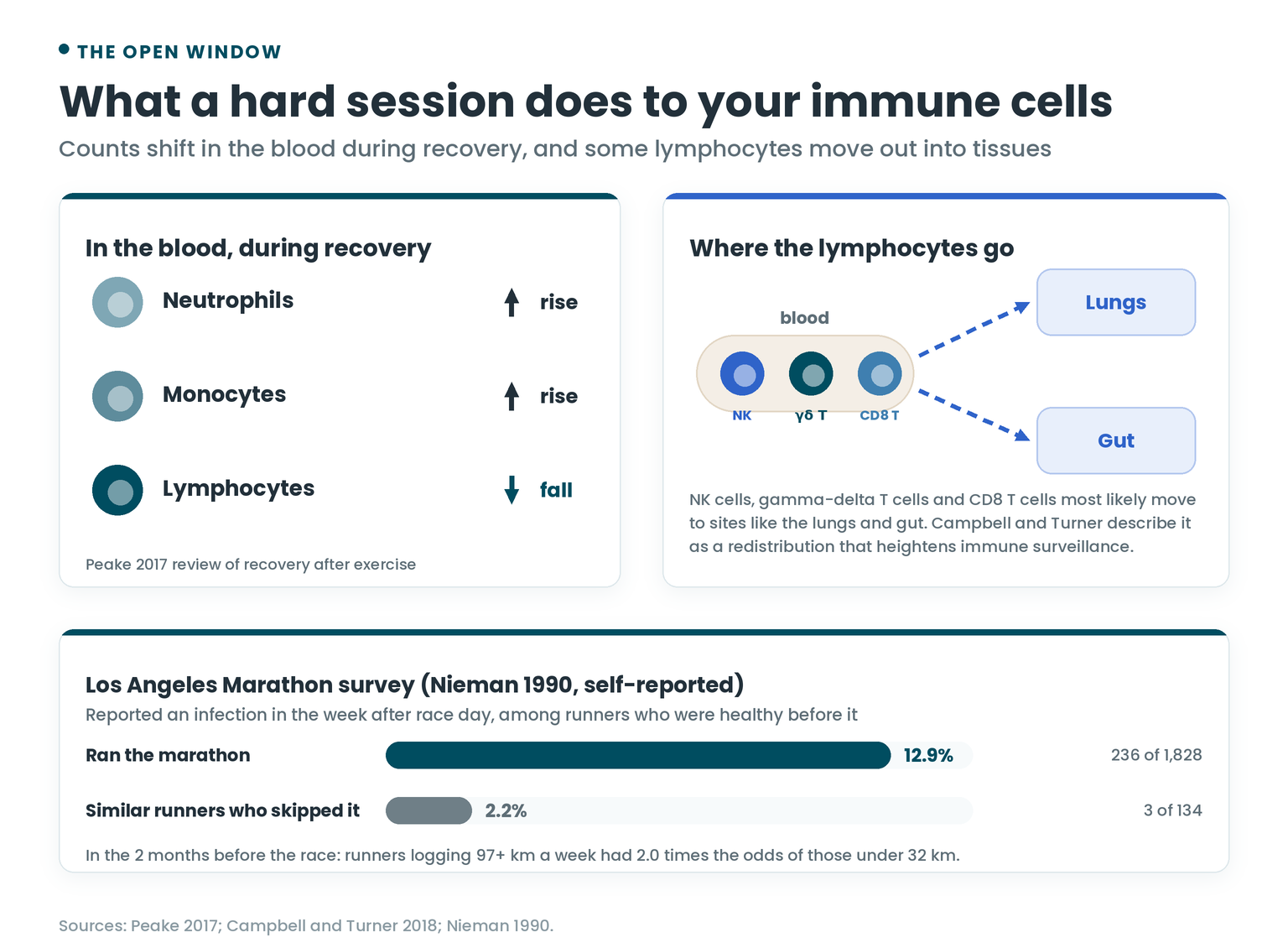
Jonathan Peake’s 2017 review describes what happens in your blood during recovery from a hard session: neutrophils and monocytes rise while lymphocytes fall. The lymphocytes that leave are mainly natural killer cells, gamma-delta T cells and CD8 T cells, and they most likely move out to places like the lungs and gut. Peake’s group calls this redeployment an integral part of the stress response.
John Campbell and James Turner argued in 2018 that the drop in blood lymphocytes one to two hours after exercise reflects cells redeploying into tissues, a state of heightened surveillance, and they point to vaccination studies where people mounted stronger responses after a bout of exercise. In a 2020 debate paper led by Richard Simpson, researchers from both sides agreed that regular moderate exercise helps immune defense, that infection is second only to injury as a cause of lost training days for elite athletes preparing for major events, and that infection risk has many contributing factors, including anxiety, poor sleep, travel, exposure to germs, gaps in nutrition and extreme environments. Whether the exercise itself raises the risk is still unresolved.
Recovery has its own immune side too. Gøran Paulsen’s 2012 review links muscle damage to white blood cells gathering in the worked muscle, and notes that sessions like regular resistance training usually cause mild damage that clears within a few days. For keeping the immune disturbance after training small, Peake’s review ranks carbohydrate as the most effective nutritional strategy, with sleep flagged as important and still understudied.
What Thymosin Alpha 1 Is
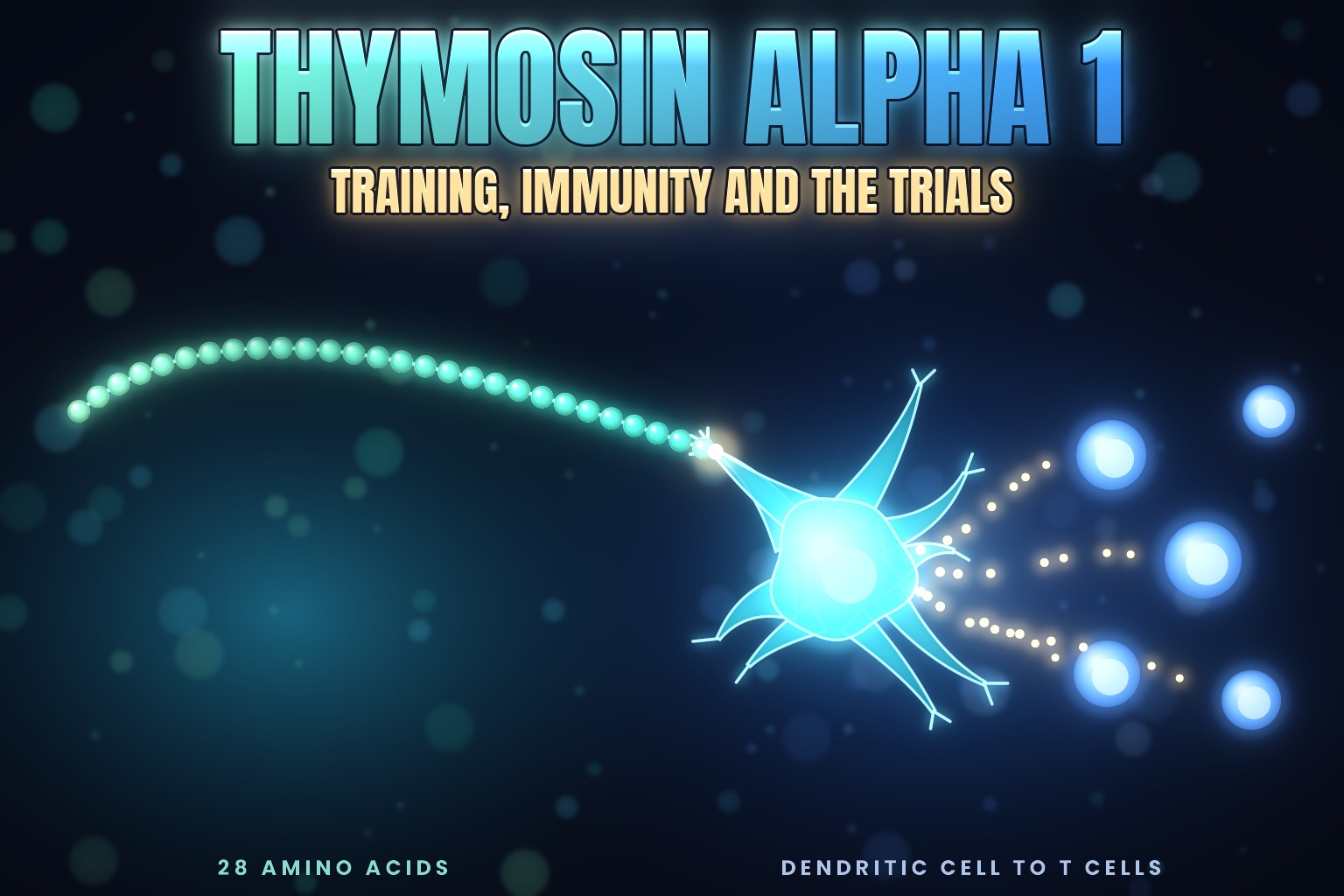
Goldstein’s group sequenced thymosin alpha 1 in 1977 from a calf thymus extract called thymosin fraction 5. It’s a small, heat-stable, highly acidic peptide of 28 amino acids, one of several peptides in that extract thought to help regulate how T cells develop and work.
It turned out to be the front end of something bigger. In 1984, Haritos and Horecker isolated prothymosin alpha from rat thymus, a protein of roughly 112 amino acids that carries the thymosin alpha 1 sequence at its starting end, and a 1986 follow-up put the human version at 109 to 110. In rats the thymus held the most, with brain, liver, kidney, lung and spleen carrying 15 to 65 percent as much. When they extracted tissue in a way that avoided enzyme breakdown, they found prothymosin alpha but no free peptide the size of thymosin alpha 1, and proposed that the 28-residue piece is cut free during the extraction used to make fraction 5.
How It Works on Immune Cells
Luigina Romani’s 2004 work traced the mechanism in dendritic cells, the immune system’s scouts. Thymosin alpha 1 pushed fungus-exposed dendritic cells to mature and release interleukin-12, signaling through Toll-like receptors, the MyD88 pathway, p38 and NF-kB. In mice, the synthetic peptide switched on Th1-dependent antifungal immunity, a type of helper T cell response, and sped up recovery of myeloid immune cells. Mice given blood-forming (hematopoietic) transplants, which leaves them highly vulnerable, were protected from aspergillosis, an Aspergillus fungal infection.
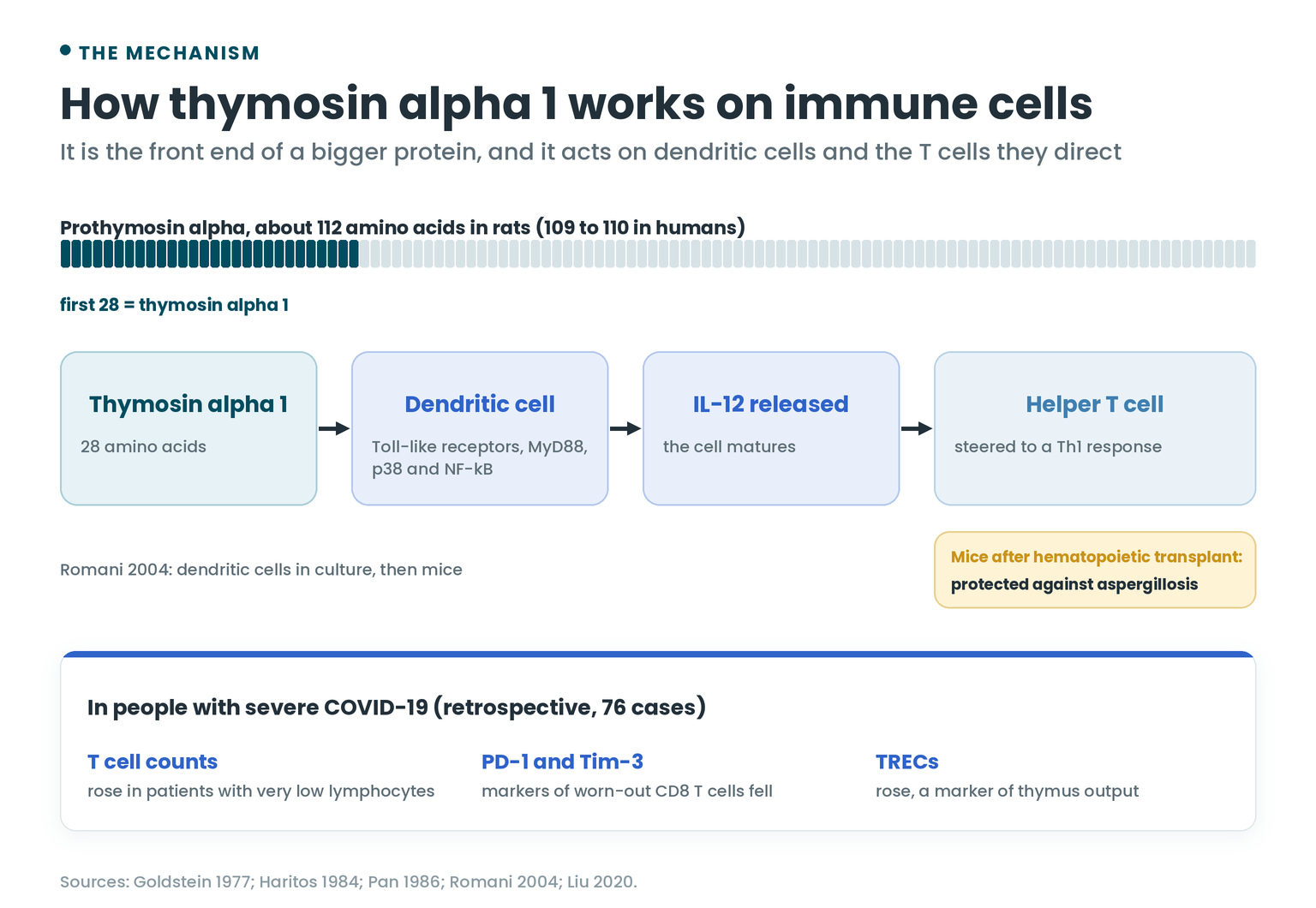
A 2011 vaccine review by Panatto and colleagues sums up its reported effects as enhancing T cell, dendritic cell and antibody responses and adjusting the production of cytokines and chemokines. In people, Yueping Liu’s 2020 study of severe COVID-19 patients found that thymosin alpha 1 raised blood T cell counts in those with very low lymphocytes and lowered PD-1 and Tim-3, two markers of exhausted, or worn-out, T cells, alongside a rise in a blood marker of new T cells coming out of the thymus.
Where It’s Been Tested in People
Vaccine Responses
Older adults often respond poorly to vaccines, and the immunization failure rate in the elderly may run as high as 50 percent. In a 1989 double-blind trial, Stefan Gravenstein gave 90 men aged 65 to 99 either thymosin alpha 1 or placebo alongside the flu vaccine. William Ershler’s 2007 summary of this line of work reports enhanced vaccine responses in both animal experiments and human trials. Carraro’s 2012 pilot in hemodialysis patients found better antibody levels 21 days after an H1N1 flu vaccine when thymosin alpha 1 was added.
Sepsis
The ETASS trial, a single-blind study run in six Chinese hospitals and published by Jianfeng Wu in 2013, randomized 361 patients with severe sepsis. Deaths within 28 days were 26.0 percent with thymosin alpha 1 against 35.0 percent in the control group, a relative risk of 0.74 with a confidence interval of 0.54 to 1.02, and a marker of immune cell function, monocyte HLA-DR, improved more by days 3 and 7.
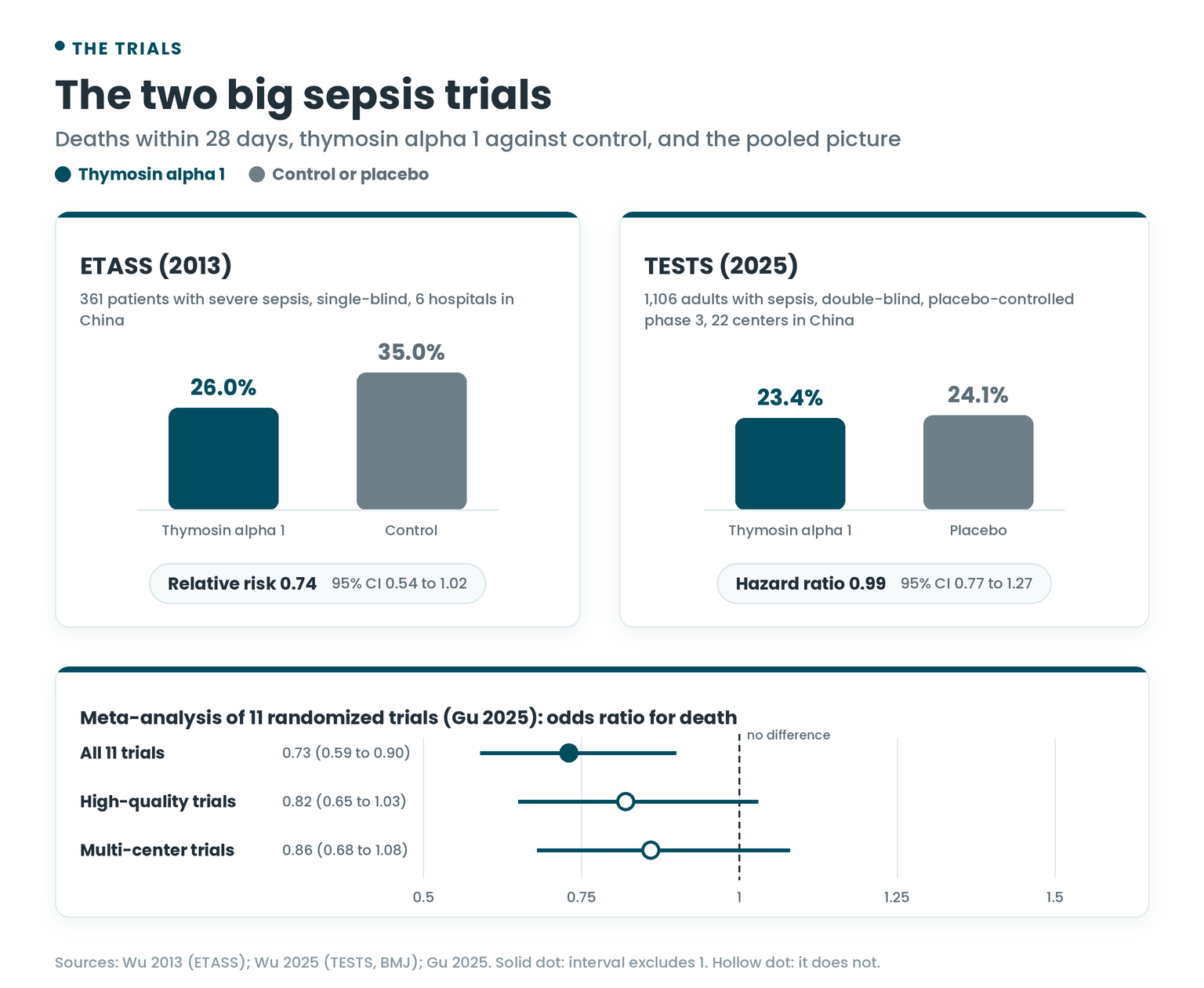
The same group then ran TESTS, a double-blind, placebo-controlled phase 3 trial across 22 centers in China, published in the BMJ in 2025. It enrolled 1,106 adults with sepsis. Deaths within 28 days were 23.4 percent with thymosin alpha 1 and 24.1 percent with placebo, a hazard ratio of 0.99, and no secondary outcome differed between groups. Planned subgroup analyses split by age: in patients under 60 the hazard ratio was 1.67, and at 60 and over it was 0.81. A 2025 meta-analysis of 11 trials by Bin Gu found lower mortality across all of them pooled, an odds ratio of 0.73, but when the analysis was limited to high-quality or multi-center trials the benefit was no longer statistically significant.
COVID-19
Liu’s 2020 study looked back at 76 severe COVID-19 cases in Wuhan and found deaths of 11.1 percent among treated patients against 30.0 percent among untreated ones. A 2023 meta-analysis by Weifeng Shang pooled nine studies and 5,352 patients and found no overall effect on mortality, a risk ratio of 1.03. The risk ratio was 0.68 in studies with an average patient age over 60, and 0.66 in severe or critical cases.
Melanoma
Michele Maio’s 2010 trial split 488 people with metastatic melanoma across five arms of chemotherapy-based treatment, with or without thymosin alpha 1. Two of the thymosin arms had 10 and 12 tumor responses against 4 in the control group. Median survival was 9.4 months with thymosin alpha 1 against 6.6 months, a hazard ratio of 0.80 with a P value of .08.
Who Was in the Trials
Each dot below stands for about ten people. Tap a study to see who it enrolled, how it was designed and what it found.
Six thymosin alpha 1 studies, drawn to scale
2,220 people across the six studies. Color the dots by who was enrolled or by how each study was run.
Dot counts are rounded to the nearest ten people.
Side Effects in the Trials
ETASS recorded no serious drug-related adverse events. In TESTS, no safety outcome differed from placebo. Adding thymosin alpha 1 to melanoma treatment brought no extra toxicity, Gravenstein’s flu vaccine study recorded no toxicity in either group, and the dialysis vaccine pilot found no side effects linked to thymosin alpha 1.
Where Training and Thymosin Alpha 1 Meet
The overlap between these two fields is the T cell. In the hours after a hard session, training shifts T cells out of the blood and into tissues. Thymosin alpha 1 works through dendritic cells, which direct T cells, and the people it has been tested in were older adults, dialysis patients, hospital patients with sepsis or severe COVID-19, and people with advanced melanoma.
Frequently Asked Questions
What is thymosin alpha 1?
It’s a 28-amino-acid peptide first sequenced in 1977 from a calf thymus extract. It’s the front end of a larger protein, prothymosin alpha, and in lab and clinical studies it activates dendritic cells and T cells.
Is Zadaxin the same as thymosin alpha 1?
Yes. Zadaxin is the product name for synthetic thymosin alpha 1, and thymalfasin is its drug name. Clinical papers use all three for the same 28-residue peptide.
Does hard training weaken your immune system?
It’s debated. Heavy training and marathons were linked to more self-reported infections in Nieman’s 1990 survey. Later reviews argue that the post-workout drop in blood lymphocytes is cells moving into tissues, and that infection risk in athletes has many contributing factors, including sleep, travel, stress and nutrition.
Did thymosin alpha 1 lower deaths in sepsis?
The 361-patient ETASS trial found 26.0 versus 35.0 percent mortality, a relative risk of 0.74 with a confidence interval of 0.54 to 1.02. The larger 1,106-patient TESTS phase 3 trial found 23.4 versus 24.1 percent, a hazard ratio of 0.99.
How is thymosin alpha 1 related to TB-500?
They’re separate peptides. TB-500 is a fragment of thymosin beta-4, as Mendias and Awan’s 2026 sports medicine review lists it, while thymosin alpha 1 is the 28-amino-acid front end of prothymosin alpha. We cover how TB-500 is built in Is TB-500 a Steroid?
Stay sharp,
Joe Mars
The Peptide Report
P.S. If you’re trying to make sense of the training-and-immunity research, or you’ve got a question about any of these trials, bring it to the Skool community and we’ll dig in.
References
- Nieman DC, Johanssen LM, Lee JW, Arabatzis K. Infectious episodes in runners before and after the Los Angeles Marathon. J Sports Med Phys Fitness. 1990;30(3):316-328. PubMed 2266764
- Peake JM, Neubauer O, Walsh NP, Simpson RJ. Recovery of the immune system after exercise. J Appl Physiol. 2017;122(5):1077-1087. doi:10.1152/japplphysiol.00622.2016
- Campbell JP, Turner JE. Debunking the myth of exercise-induced immune suppression: redefining the impact of exercise on immunological health across the lifespan. Front Immunol. 2018;9:648. doi:10.3389/fimmu.2018.00648
- Simpson RJ, Campbell JP, Gleeson M, et al. Can exercise affect immune function to increase susceptibility to infection? Exerc Immunol Rev. 2020;26:8-22. PubMed 32139352
- Paulsen G, Mikkelsen UR, Raastad T, Peake JM. Leucocytes, cytokines and satellite cells: what role do they play in muscle damage and regeneration following eccentric exercise? Exerc Immunol Rev. 2012;18:42-97. PubMed 22876722
- Goldstein AL, Low TL, McAdoo M, et al. Thymosin alpha1: isolation and sequence analysis of an immunologically active thymic polypeptide. Proc Natl Acad Sci U S A. 1977;74(2):725-729. doi:10.1073/pnas.74.2.725
- Haritos AA, Goodall GJ, Horecker BL. Prothymosin alpha: isolation and properties of the major immunoreactive form of thymosin alpha 1 in rat thymus. Proc Natl Acad Sci U S A. 1984;81(4):1008-1011. doi:10.1073/pnas.81.4.1008
- Haritos AA, Tsolas O, Horecker BL. Distribution of prothymosin alpha in rat tissues. Proc Natl Acad Sci U S A. 1984;81(5):1391-1393. doi:10.1073/pnas.81.5.1391
- Pan LX, Haritos AA, Wideman J, et al. Human prothymosin alpha: amino acid sequence and immunologic properties. Arch Biochem Biophys. 1986;250(1):197-201. doi:10.1016/0003-9861(86)90717-4
- Carraro G, Naso A, Montomoli E, et al. Thymosin-alpha 1 (Zadaxin) enhances the immunogenicity of an adjuvated pandemic H1N1v influenza vaccine (Focetria) in hemodialyzed patients: a pilot study. Vaccine. 2012;30(6):1170-1180. doi:10.1016/j.vaccine.2011.12.014
- Romani L, Bistoni F, Gaziano R, et al. Thymosin alpha 1 activates dendritic cells for antifungal Th1 resistance through toll-like receptor signaling. Blood. 2004;103(11):4232-4239. doi:10.1182/blood-2003-11-4036
- Panatto D, Amicizia D, Lai PL, et al. Utility of thymosin alpha-1 (Zadaxin) as a co-adjuvant in influenza vaccines: a review. J Prev Med Hyg. 2011;52(3):111-115. PubMed 22010537
- Liu Y, Pan Y, Hu Z, et al. Thymosin alpha 1 reduces the mortality of severe coronavirus disease 2019 by restoration of lymphocytopenia and reversion of exhausted T cells. Clin Infect Dis. 2020;71(16):2150-2157. doi:10.1093/cid/ciaa630
- Gravenstein S, Duthie EH, Miller BA, et al. Augmentation of influenza antibody response in elderly men by thymosin alpha one: a double-blind placebo-controlled clinical study. J Am Geriatr Soc. 1989;37(1):1-8. doi:10.1111/j.1532-5415.1989.tb01561.x
- Ershler WB, Gravenstein S, Geloo ZS. Thymosin alpha 1 as an adjunct to influenza vaccination in the elderly: rationale and trial summaries. Ann N Y Acad Sci. 2007;1112:375-384. doi:10.1196/annals.1415.050
- Wu J, Zhou L, Liu J, et al. The efficacy of thymosin alpha 1 for severe sepsis (ETASS): a multicenter, single-blind, randomized and controlled trial. Crit Care. 2013;17(1):R8. doi:10.1186/cc11932
- Wu J, Pei F, Zhou L, et al. The efficacy and safety of thymosin α1 for sepsis (TESTS): multicentre, double blinded, randomised, placebo controlled, phase 3 trial. BMJ. 2025;388:e082583. doi:10.1136/bmj-2024-082583
- Gu B, Zhou Y, Nie Y, et al. Efficacy of thymosin α1 for sepsis: a systematic review and meta-analysis of randomized controlled trials. Front Cell Infect Microbiol. 2025;15:1673959. doi:10.3389/fcimb.2025.1673959
- Shang W, Zhang B, Ren Y, et al. Thymosin alpha1 use in adult COVID-19 patients: a systematic review and meta-analysis on clinical outcomes. Int Immunopharmacol. 2023;114:109584. doi:10.1016/j.intimp.2022.109584
- Maio M, Mackiewicz A, Testori A, et al. Large randomized study of thymosin alpha 1, interferon alfa, or both in combination with dacarbazine in patients with metastatic melanoma. J Clin Oncol. 2010;28(10):1780-1787. doi:10.1200/JCO.2009.25.5208
- Mendias CL, Awan TM. Safety and efficacy of approved and unapproved peptide therapies for musculoskeletal injuries and athletic performance. Sports Med. 2026;56(8):1921-1935. doi:10.1007/s40279-026-02437-0