
TB-500 (10mg Vial) Dosage Protocol
Quickstart Highlights
TB-500, also referred to as Thymosin Beta-4 or Timbetasin, is a synthetic peptide modeled after a naturally occurring protein present in both humans and animals.
Research into this peptide traces back to 1981, when scientists first isolated thymosin beta-4 from bovine thymus tissue. This endogenous peptide—composed of 43 amino acids—was identified as an important regulator of cellular repair processes and tissue remodeling.
During the early 2010s, TB-500 was introduced as a laboratory-produced analog and initially explored in veterinary settings. It later drew widespread attention within competitive horse racing, where its alleged performance-enhancing properties led to regulatory scrutiny and eventual prohibition by racing authorities and organizations governed by the World Anti-Doping Agency (WADA).
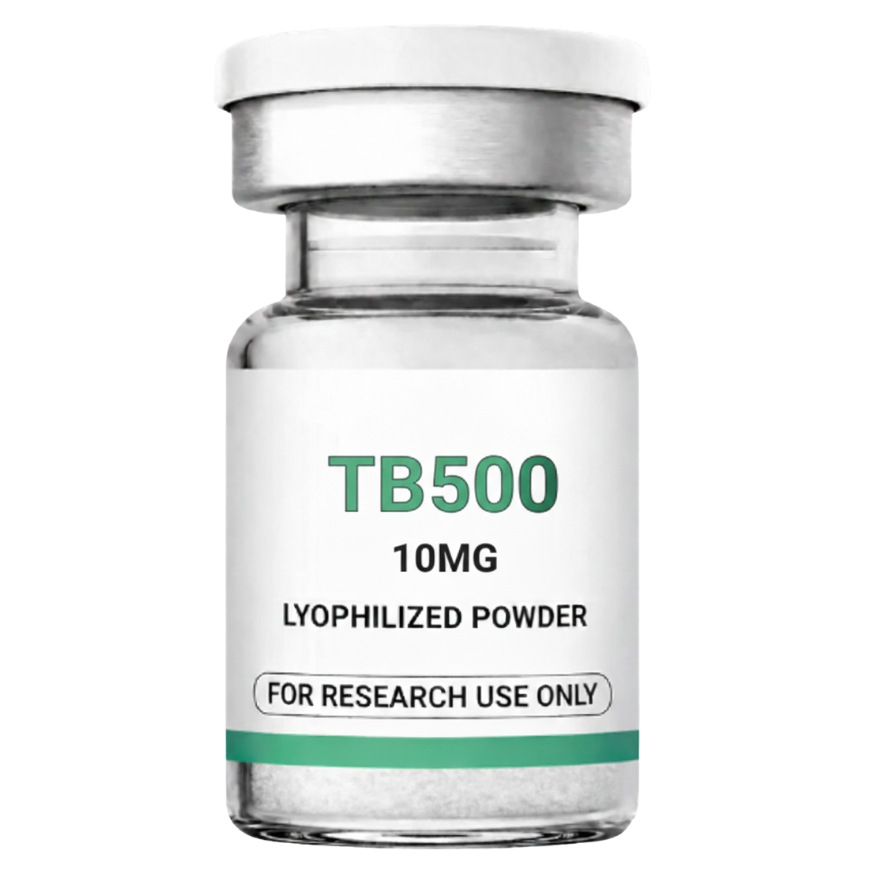
Dosing & Reconstitution Guide
Educational guide for reconstitution and daily dosing
Standard / Gradual Approach
WEEK | DAILY DOSE | UNITS (PER INJECTION) (ML) |
|---|---|---|
Weeks 1–2 | 500 mcg per day | 15 units |
Weeks 3–4 | 600 mcg per day | 18 units |
Weeks 5-8 | 750 mcg per day | 23 units |
Weeks 9-12 (Maintenance Phase) | 1,000 mcg per day | 30 units |
Reconstitution Steps
Important: This guide is for educational purposes only and is not medical advice. For research use only. Not for human or animal use. LAB ONLY.
Dosing Overview
Suggested daily titration approach.
Protocol Overview
Concise summary of the once‑daily regimen.
Storage Instructions
Proper storage preserves peptide quality and potency.
What Does TB-500 Do?
TB-500 is studied primarily for its activity at the cellular level, where it plays a key role in tissue structure, movement, and repair. Its core function centers on the regulation of actin, a structural protein essential for maintaining cell shape, enabling movement, and coordinating repair processes.
Actin can be thought of as part of the body’s cellular framework. When tissue stress or damage occurs, TB-500 helps regulate how actin behaves, allowing repair signals and cells to mobilize efficiently toward the affected area. Because TB-500 has a relatively low molecular weight, it can diffuse readily through tissues, enabling it to localize to sites undergoing stress or recovery.
Research has identified several key mechanisms through which TB-500 operates:
Actin sequestration: TB-500 stabilizes actin dynamics at areas of damage, helping initiate and organize repair signaling.
Cell migration: By influencing actin movement, TB-500 supports the directed movement of cells toward regions requiring repair.
Cell differentiation: It assists cells in transitioning into specialized forms, such as muscle or epithelial cells, needed for tissue rebuilding.
Angiogenesis support: TB-500 is associated with processes involved in new blood vessel formation, improving oxygen and nutrient delivery to recovering tissue.
Structural regulation: Through actin polymerization control, it helps maintain cellular integrity during remodeling and repair phases.
Together, these coordinated actions make TB-500 a central focus in research related to wound repair, tissue integrity, inflammatory signaling, and age-related cellular changes. Its continued study reflects the progression from early peptide discovery toward more advanced regenerative research frameworks.
TB-500 Side Effects
Based on available research and anecdotal observations, TB-500 is generally described as well tolerated when used within commonly referenced research parameters. As with any investigational peptide, individual response and dosage levels can influence tolerability. Reported effects are typically mild, short-lived, and self-resolving.
Commonly Reported Reactions
Nausea: Occasionally observed, most often diminishing as the body adapts.
Temporary fatigue or low energy: Some subjects note brief lethargy during early exposure.
Headache: Infrequently reported and sometimes associated with vascular activity.
Injection site reactions: Mild redness, irritation, or sensitivity may occur and can usually be minimized with proper injection technique and site rotation.
Less Common or Observational Findings
Hormonal variations: Reported primarily in male subjects, though current evidence is limited and inconclusive.
Immune response modulation: Because TB-500 interacts with immune signaling pathways, rare instances of increased infection susceptibility have been noted.
Transient muscle soreness: Occasionally reported, potentially related to tissue remodeling activity.
Careful attention to administration practices and dosing accuracy is recommended. While adverse effects are not widely reported, monitoring response and adjusting protocols when needed is considered best practice in research settings.
Clinical observations support its favorable safety profile. In one study evaluating thymosin beta-4, participants received intravenous doses ranging from 42 mg to 1,260 mg, with minimal to no adverse effects reported. Any mild reactions observed were temporary and easily managed.
TB-500 Clinical Trials
TB-500 has been widely investigated for its role in tissue repair and regenerative research. While much of the available data comes from preclinical and early clinical studies, results consistently point to its ability to support healing processes, regulate inflammation, and influence cellular recovery—including in complex tissues such as the heart.
What sets TB-500 apart is its action at the cellular level. Rather than targeting symptoms alone, it interacts with core repair mechanisms, offering valuable insight into next-generation regenerative strategies. Below is a breakdown of the most studied and compelling research-backed areas of interest.
Injury Repair and Tissue Recovery
Recovering from tissue damage can be a prolonged process. Research suggests TB-500 may help accelerate key stages of healing by supporting cell movement, vascular development, and structural repair.
Skin wound healing: In a 1999 animal study, rats receiving TB-500 experienced faster wound closure, increased angiogenesis, and improved collagen organization. Compared to controls, treated wounds healed more efficiently and showed reduced scar formation—an outcome with important implications for wound management research.
Ligament recovery: In a rat model involving surgically transected ligaments, a single administration of TB-500 resulted in measurable biochemical recovery and regrowth of collagen fibers, indicating enhanced connective tissue repair.
General tissue regeneration: Phase II clinical trials examining pressure ulcer treatment found that TB-500 accelerated healing by approximately 30 days, reduced inflammatory response, and lowered the risk of reinfection.
Scientific literature frequently notes that TB-500 supports wound healing by promoting cell migration, proliferation, and differentiation, with demonstrated relevance to muscle injuries, ligament damage, and skin lesions. Its ability to localize to injured tissue and coordinate recovery processes continues to drive interest in regenerative research.
Cardiac Tissue Repair and Heart Health Research
Restoring damaged heart tissue remains one of the most complex challenges in modern medicine. TB-500 has attracted attention for its ability to influence cardiac repair mechanisms in ways that differ from conventional approaches.
Research published in the Annals of the New York Academy of Sciences demonstrated that TB-500 could reactivate dormant cardiac progenitor cells in mice, stimulating the formation of new heart muscle cells. Notably, this effect was observed even in the absence of acute injury, suggesting a broader role in maintaining cardiac regenerative capacity.
In addition, a pilot study conducted by Regenerx Biopharmaceuticals reported that TB-500 supported regeneration of damaged heart tissue in human subjects recovering from heart attacks. Participants showed improved cardiac function without significant adverse effects.
Key cardiac-related mechanisms associated with TB-500 include:
Cell preservation: Helping protect existing heart muscle cells from programmed cell death
New cell formation: Supporting the development of new cardiac muscle cells
Neovascularization: Encouraging the growth of new blood vessels to improve oxygen and nutrient delivery
Research findings indicate that administering thymosin beta-4 following cardiac injury may help reactivate intrinsic repair pathways and contribute to tissue restoration.
Is TB-500 Safe?
The safety profile of TB-500 continues to be evaluated as research expands. While existing findings are encouraging, it is important to recognize both what is known and where limitations remain.
Available animal data and early human studies suggest that TB-500 is generally well tolerated. Reported reactions are typically mild, with fatigue and occasional headaches being among the most commonly noted effects. That said, long-term outcomes have not yet been thoroughly studied, underscoring the need for careful use in research environments.
TB-500 is not an FDA-approved drug and has not undergone full regulatory review for human use. As a result, comprehensive data on drug interactions, misuse potential, and effects in sensitive populations—such as those who are pregnant or breastfeeding—are limited or unavailable.
Ethical and regulatory considerations are also relevant. TB-500 is prohibited by athletic governing bodies, including the World Anti-Doping Agency (WADA), meaning non-research use may carry professional or competitive consequences for athletes.
Despite these limitations, Phase I and Phase II clinical trials have demonstrated a favorable safety profile at both localized and systemic dosing levels. These findings support continued investigation into TB-500’s broader clinical and regenerative research potential.
In summary, TB-500 shows strong promise when handled responsibly within appropriate research frameworks. Ongoing studies, cautious administration, and adherence to ethical guidelines remain essential as scientific understanding continues to evolve.
Supplies Needed
Get Your Free Copy of The Ultimate Peptide Blueprint
Exact stacks, dosages & cutting-edge protocols to cut fat, build muscle, and keep results-no fluff.
No spam. Unsubscribe anytime.
Important Notes
Proper storage preserves peptide quality and potency.
Peptides can get expensive, but as an FYI - BioEdge is doing 10% off this month (code pep10 at bioedgepeptides.com), one of the few suppliers that consistently delivers what their lab reports claim.

I’m Joe Mars, and I’ve dedicated the past ten years to understanding peptide therapy, longevity, and how to optimize the body through practical, real-life testing. My journey started when I was tired, inflamed, and aging faster than I should have been. Clear information on peptides was almost impossible to find, so I dug in, researched nonstop, and tested protocols on myself.
Over the years, I have learned from experts like Jay Campbell, Dr. Seeds, Jim LaValle, and Ben Greenfield, and I have completely transformed my health. Now in my fifties, I feel stronger and sharper than I did in my twenties. That experience is why I write. I want to give people simple and honest guidance so they can use peptides safely and effectively.
I believe in data, smart protocols, and taking responsibility for your own health. You are the protocol. Your habits, your consistency, and your awareness shape your results. Through The Peptide Report, I share what actually works so you can make informed decisions and build a healthier, more resilient body.