
Dosage Guide
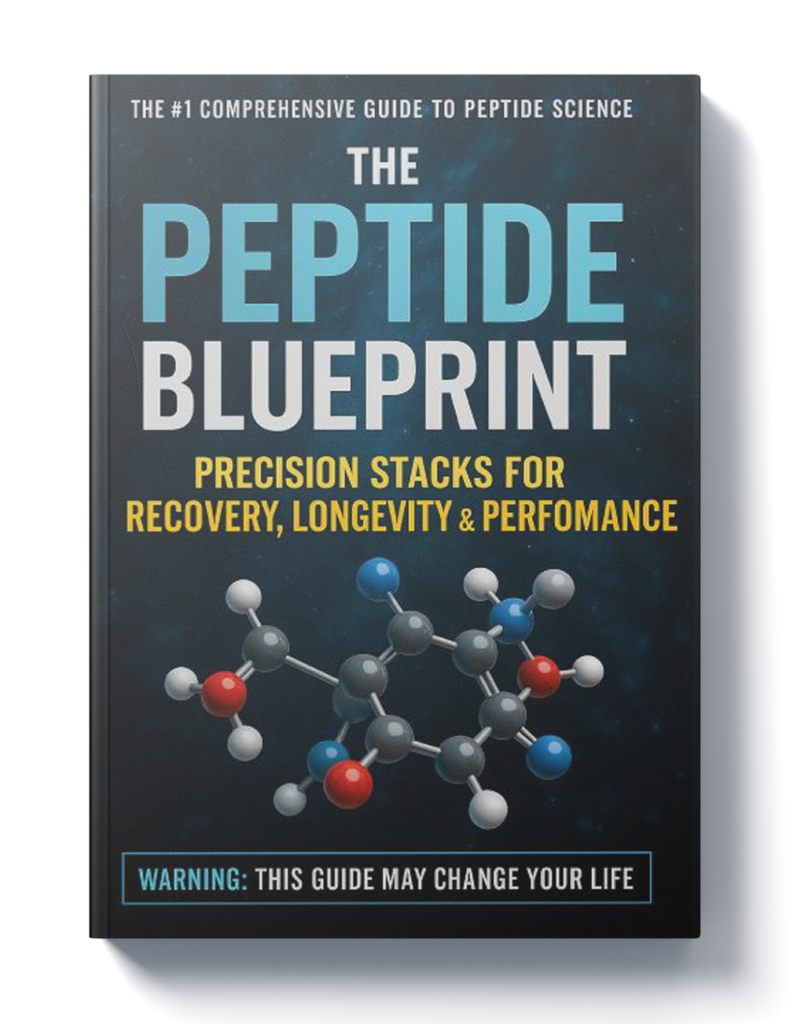
Free Download – The #1 Reference Guide
The Ultimate Peptide Blueprint
Reconstitute
3.0mL bacteriostatic water
3.33 mg/mL
Daily Range
Daily (gradual titration)
Storage
Lyophilized: Freeze at−20 °C (−4 °F)
After reconstitution, refrigerate at 2–8 °C (35.6–46.4 °F) and use within 1–2 weeks.
Free Download
Want the Complete Stack?
Ipamorelin is a synthetic peptide classified within the growth hormone–releasing peptide (GHRP) family. It has been studied for its ability to selectively stimulate endogenous growth hormone secretion through interaction with specific receptor pathways involved in hormonal signaling.
One characteristic that differentiates ipamorelin from other GHRPs is its high degree of selectivity. Research has shown that, unlike many related compounds, ipamorelin does not significantly activate pathways associated with stress-related hormones such as cortisol or prolactin. This targeted activity has made it a point of interest in studies focused on growth hormone modulation with reduced off-target effects.
Although ipamorelin has demonstrated promising properties in early and preclinical research, the overall body of data remains limited. Ongoing investigation is required to better understand its pharmacological profile, long-term behavior, and optimal parameters for research use. These gaps highlight the importance of controlled study design and cautious interpretation of results.
Due to its unique mechanism and selective action, ipamorelin continues to attract attention within peptide research. The sections below explore its biological pathways, current research insights, and considerations related to handling and evaluation.
Educational guide for reconstitution and daily dosing.
Week 1-2
Daily Dose: 100 MCG
Week 3-4
Daily Dose: 150 MCG
Week 5+
Daily Dose: 200 MCG
Week 8+
Daily Dose: 250 MCG
8 units
Important
Free Download – Complete Peptide Reference
The Ultimate Peptide Blueprint
Ipamorelin is studied as a growth hormone–releasing peptide (GHRP) that interacts with specific signaling pathways involved in endogenous growth hormone secretion. Its primary mechanism centers on stimulating the pituitary gland to increase growth hormone output, a process that has been examined in the context of cellular maintenance, tissue recovery, and regenerative biology.
From a molecular standpoint, ipamorelin is a pentapeptide, meaning it is composed of five amino acids. Its structure was engineered to resemble ghrelin, a naturally occurring hormone that plays a role in appetite regulation and growth hormone signaling. By binding to ghrelin (GHS-R) receptors, ipamorelin initiates a signaling cascade that promotes growth hormone release without broadly activating unrelated endocrine pathways.
A defining feature of ipamorelin is its receptor selectivity. Compared to earlier growth hormone–releasing peptides, ipamorelin demonstrates minimal interaction with pathways associated with stress hormones such as cortisol. This selective activity profile has made it a subject of interest for researchers seeking compounds that modulate growth hormone signaling while limiting off-target hormonal effects.
Because of these characteristics, ipamorelin continues to be explored in studies related to muscle tissue biology, recovery mechanisms, and cellular repair processes. As research progresses, further investigation will help clarify its role, limitations, and potential applications within controlled scientific settings.
Ipamorelin is generally well-tolerated in research settings, with side effects being relatively mild and uncommon. While human trials have shown that adverse effects are rare, some participants have experienced mild, temporary reactions such as facial flushing and increased hunger. The latter is attributed to ipamorelin’s ability to mimic ghrelin, a hormone involved in appetite regulation.
Other potential side effects, although not frequent, include:
Mild Systemic Symptoms
Current research literature generally characterizes ipamorelin as having a favorable tolerability profile when evaluated under controlled experimental conditions. One of its most frequently cited attributes is its selective mechanism of action, which appears to stimulate growth hormone signaling without broadly activating stress-related hormonal pathways.
Unlike several earlier growth hormone–releasing peptides, ipamorelin has been shown in studies to exhibit minimal interaction with cortisol or other stress hormones. This targeted activity profile has contributed to interest in ipamorelin as a research compound with reduced off-target endocrine effects.
Preclinical studies and limited clinical investigations have reported that ipamorelin is generally well tolerated, particularly when compared to other compounds within the same peptide class. Observed adverse effects have been relatively infrequent, which aligns with its narrow receptor engagement and focused signaling behavior.
Research interest in ipamorelin centers on its role as a selective growth hormone–releasing peptide (GHRP). By influencing growth hormone secretion without broadly activating unrelated endocrine pathways, ipamorelin has been examined across several physiological systems. Its targeted signaling profile is a key reason it continues to be studied in preclinical and experimental settings.
Below is an overview of the primary biological areas where ipamorelin has been investigated.
One area of investigation involves bone metabolism and structural integrity. Growth hormone signaling plays a known role in bone remodeling, and ipamorelin’s ability to stimulate this pathway has been explored in models examining bone loss and skeletal resilience.
Research findings have included observations such as:
Reduction of bone loss in models exposed to glucocorticoids, compounds known to negatively affect bone density
Increased bone mineral content in animal studies following ipamorelin exposure
Changes in long-bone development observed during early-stage experimental trials
These findings have positioned ipamorelin as a compound of interest in studies related to bone aging, injury recovery, and skeletal maintenance, although further research is needed to clarify translational relevance.
Ipamorelin has also been examined in the context of muscle tissue maintenance and recovery. Growth hormone is closely linked to protein synthesis and muscle turnover, making GHRPs relevant to studies focused on muscle preservation.
Research observations include:
Preservation of muscle strength in experimental models subjected to catabolic stress
Improved smooth muscle activity within gastrointestinal tissues, suggesting broader effects on muscle function
Associations between growth hormone signaling and skeletal muscle repair processes
While ipamorelin has drawn attention in athletic and performance discussions, its primary relevance remains within controlled research environments investigating muscle integrity and recovery mechanisms.
Ipamorelin’s structural similarity to ghrelin has prompted exploration into potential vascular and cardiovascular pathways. Ghrelin is known to influence blood vessel formation and circulation, and ghrelin-mimetic compounds have been evaluated for related effects.
Research has noted that:
Ghrelin signaling is associated with angiogenesis and vascular density
Disruption of ghrelin pathways can reduce blood vessel formation in certain tissues
Compounds interacting with ghrelin receptors may influence circulatory support mechanisms
Although direct cardiovascular data on ipamorelin remain limited, these associations make it a candidate for continued investigation in vascular biology research.
Another area of scientific interest involves connective tissue and collagen-related pathways. Collagen synthesis is essential for joint health, cartilage integrity, and skin structure, and ghrelin-related signaling has been shown to influence these processes.
Research examining related mechanisms has suggested:
Upregulation of cartilage-associated gene expression
Enhanced targeting of damaged tissue by progenitor and stem-cell populations
Support of connective tissue repair processes
While much of this research is rooted in ghrelin biology rather than ipamorelin directly, the peptide’s receptor activity profile makes it a relevant subject for further exploration in tissue repair and regenerative research.
As studies progress, ipamorelin remains an important tool for researchers examining bone health, muscle preservation, vascular biology, and tissue repair within controlled experimental frameworks.
Important

Joe Mars
Founder, The Peptide Report
I’m Joe Mars, and I’ve dedicated the past ten years to understanding peptide therapy, longevity, and how to optimize the body through practical, real-life testing. My journey started when I was tired, inflamed, and aging faster than I should have been. Clear information on peptides was almost impossible to find, so I dug in, researched nonstop, and tested protocols on myself.
Over the years, I have learned from experts like Jay Campbell, Dr. Seeds, Jim LaValle, and Ben Greenfield, and I have completely transformed my health. Now in my fifties, I feel stronger and sharper than I did in my twenties. That experience is why I write. I want to give people simple and honest guidance so they can use peptides safely and effectively.
I believe in data, smart protocols, and taking responsibility for your own health. You are the protocol. Your habits, your consistency, and your awareness shape your results. Through The Peptide Report, I share what actually works so you can make informed decisions and build a healthier, more resilient body.
Instant e-Book Download