Peptides manufactured in the United States are generally produced under stricter regulatory and quality-control standards. Domestic facilities commonly follow cGMP guidelines, which emphasize controlled production environments, documented processes, batch traceability, and quality testing. These practices help reduce variability and contamination risk, resulting in more consistent and verifiable manufacturing quality.

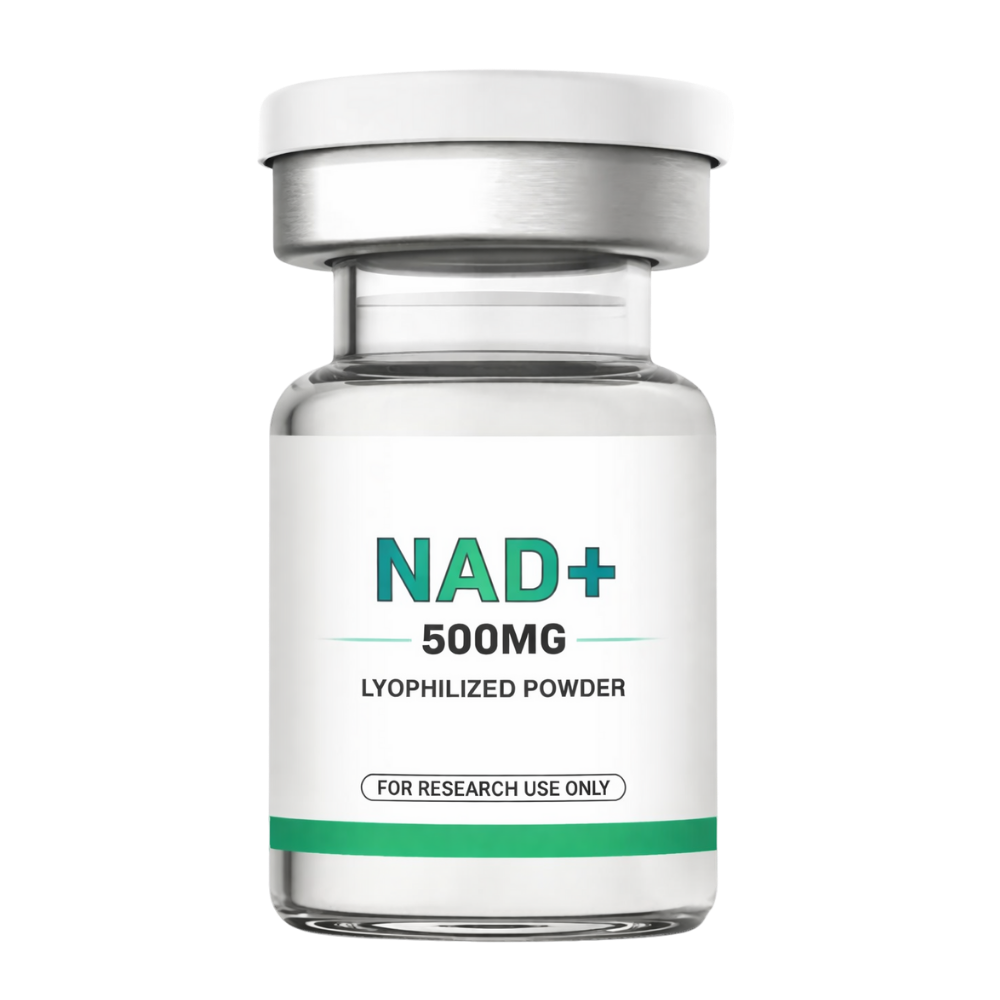
NAD+ (500mg Vial) Dosage Protocol
Quickstart Highlights
NAD+ (nicotinamide adenine dinucleotide) is a naturally occurring coenzyme involved in cellular energy metabolism, DNA maintenance, and mitochondrial function. Research has primarily explored high-dose intravenous administration, while lower-dose subcutaneous approaches have gained attention as a more practical option for routine use. This educational protocol outlines a once-daily subcutaneous framework with gradual titration, intended to support tolerability and consistency.
Dosing & Reconstitution Guide
Educational guide for reconstitution and daily dosing
Standard / Gradual Approach
WEEK | DAILY DOSE | UNITS (PER INJECTION) (ML) |
|---|---|---|
Weeks 1 | 50mg | 30 units |
Weeks 2 | 75mg | 45 units |
Weeks 3-8 | 100mg | 60 units |
Weeks 9-12 | 100mg | 60 units |
Weeks 13-16 |
100mg |
60 units |
Reconstitution Steps
Important: This guide is for educational purposes only and is not medical advice. For research use only. Not for human or animal use. LAB ONLY.
Dosing Overview
Suggested daily titration approach.
Our Go-To Supplier: BioEdge Research Labs
Let me tell you how most peptide suppliers actually operate. They're buying vials from random brokers on WhatsApp. No relationship with a manufacturer. No verified source. Just some guy sending them product photos and a price list. They get a shipment of vials, slap their own labels on them in their living room, and ship them out to you
Here's why they're the only supplier I use:
COA? Here's the part most people don't understand about third-party testing and COAs. Even if they show you a Certificate of Analysis claiming 99% purity, that's only testing the peptide chain itself. It's not telling you what else is in that powder. What bulking agents did they use? What contaminants are in there? Heavy metals? Endotoxins? You have no idea. A 99% purity COA means nothing if the other 1% is toxic garbage or the reconstitution solution is contaminated.
Hear me: I use BioEdge, and am an affiliate for them, because after 20 years in this industry I know exactly how the game works. I've seen the WhatsApp broker networks. I've seen the bedroom relabeling operations.
I know which suppliers are real and which ones are just reselling random vials they bought from strangers. If you're injecting something into your body you need to know exactly what it is and where it came from. BioEdge is one of the very few suppliers that actually controls their supply chain.
If you're going to invest in your longevity don't cheap out on source quality. It's the difference between results and wasted money.
Try BioEdge Today — Use Code MARS10 for 10% Off
Supplies Needed
Protocol Overview
Concise summary of the once‑daily regimen.
Storage Instructions
Proper storage preserves peptide quality and potency.
What Does NAD+ Do?
NAD+ (nicotinamide adenine dinucleotide) is a naturally occurring coenzyme present in all living cells and plays a central role in fundamental cellular processes. It functions primarily as an electron carrier in metabolic reactions, enabling cells to convert nutrients into usable energy through pathways such as glycolysis and oxidative phosphorylation.
Beyond energy metabolism, NAD+ is involved in DNA maintenance and cellular stress response mechanisms. It serves as a required cofactor for several enzyme families that regulate DNA repair, gene expression, and cellular signaling. NAD+ availability also influences mitochondrial activity, as many mitochondrial enzymes rely on NAD+-dependent reactions to maintain normal cellular function.
Because NAD+ levels naturally decline with age and under certain physiological stresses, it has become a subject of ongoing research focused on cellular resilience, metabolic efficiency, and overall biological maintenance. This section summarizes established biochemical roles of NAD+ and does not imply therapeutic outcomes.
GHK-Cu Side Effects
Discussions of NAD+ side effects are primarily based on observational reports and small-scale human studies rather than large, long-term clinical trials. Reported responses vary depending on dose, administration method, and individual sensitivity.
Commonly described effects include temporary injection-site discomfort, such as redness, warmth, or mild swelling. Some individuals report transient systemic sensations, including fatigue, headache, nausea, or flushing, particularly during early exposure or dose increases. These effects are often described as short-lived.
Higher doses or rapid administration have been associated with increased likelihood of discomfort, which is why gradual dose escalation and consistent administration schedules are frequently referenced in educational protocols. Individual variability plays a significant role, and not all users report side effects.
Is GHK-Cu safe?
NAD+ is a naturally occurring molecule found in all living cells and is essential for normal metabolic and cellular function. Because it is endogenously produced and continuously utilized by the body, NAD+ has been widely studied in biochemical, cellular, and human research contexts. Existing literature generally characterizes NAD+ as biologically compatible when examined under controlled conditions.
Safety discussions surrounding NAD+ typically emphasize that outcomes depend on factors such as dosage, method of administration, duration of exposure, and individual variability. Human studies and observational reports often describe acceptable tolerability profiles, particularly when lower doses and gradual titration approaches are used. However, comprehensive long-term safety data from large-scale clinical trials remain limited.
It is also important to note that NAD+ is not approved as a pharmaceutical treatment, and many current uses fall within research, investigational, or supplemental frameworks. As with many compounds studied for cellular and metabolic roles, conclusions about safety continue to evolve as additional research becomes available.
NAD+ Clinical Trials
Clinical and human research involving NAD+ has primarily focused on its role in cellular metabolism and mitochondrial function rather than its use as a therapeutic intervention. Many studies have examined NAD+ indirectly by evaluating NAD+-related pathways, precursors, or enzymatic activity in controlled laboratory and human research settings.
Human studies exploring NAD+ administration have most often involved intravenous delivery in monitored environments, where researchers assess tolerability, metabolic markers, and short-term physiological responses. Emerging research has also explored lower-dose and alternative delivery methods, though these studies are generally limited in scale and duration.
Across available human research, NAD+ has been described as biologically active and generally well tolerated under study conditions. However, most trials are exploratory in nature, with small sample sizes and varying methodologies. As a result, current findings are best interpreted as preliminary evidence supporting biochemical activity rather than definitive conclusions regarding long-term effects or clinical outcomes.
Ongoing research continues to investigate optimal delivery methods, dosing frameworks, and the broader implications of NAD+ modulation in human biology.
Trusted Vendor Supplies
Get Your Free Copy of The Ultimate Peptide Blueprint
Exact stacks, dosages & cutting-edge protocols to cut fat, build muscle, and keep results-no fluff.
No spam. Unsubscribe anytime.
Important Notes
Proper storage preserves peptide quality and potency.
Peptides can get expensive, but as an FYI - BioEdge is doing 10% off this month (code pep10 at bioedgepeptides.com), one of the few suppliers that consistently delivers what their lab reports claim.

I’m Joe Mars, and I’ve dedicated the past ten years to understanding peptide therapy, longevity, and how to optimize the body through practical, real-life testing. My journey started when I was tired, inflamed, and aging faster than I should have been. Clear information on peptides was almost impossible to find, so I dug in, researched nonstop, and tested protocols on myself.
Over the years, I have learned from experts like Jay Campbell, Dr. Seeds, Jim LaValle, and Ben Greenfield, and I have completely transformed my health. Now in my fifties, I feel stronger and sharper than I did in my twenties. That experience is why I write. I want to give people simple and honest guidance so they can use peptides safely and effectively.
I believe in data, smart protocols, and taking responsibility for your own health. You are the protocol. Your habits, your consistency, and your awareness shape your results. Through The Peptide Report, I share what actually works so you can make informed decisions and build a healthier, more resilient body.