
Table of Contents
 Look, I’m 54 years old.
I lift heavy four days a week. I watch what I eat. I run peptide protocols.
But even doing all that, I could feel my energy slowly shifting as I got older. Recovery taking longer. Fat creeping back even when my diet hadn’t changed.
That’s when I started looking seriously at mitochondrial peptides.
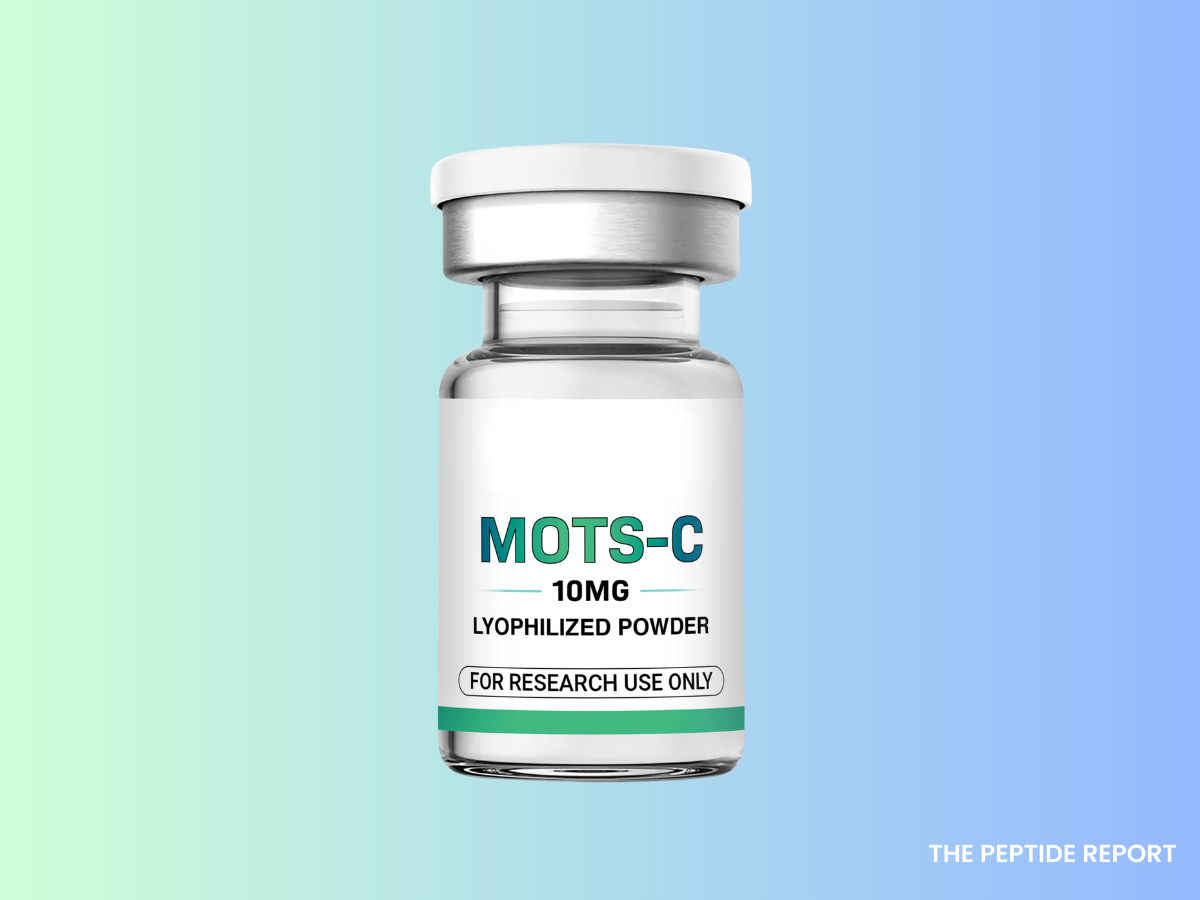
MOTS-C was at the top of that list.
After 10+ years in this space, I’ve seen a lot of peptides come and go. Most don’t live up to the hype. But the research on MOTS-C is legitimately impressive, especially if you care about staying lean, strong, and sharp as you age.
Get Your Free Copy of The Ultimate Peptide Blueprint Exact stacks, dosages & cutting-edge protocols to cut fat, build muscle, and keep results-no fluff. No spam. Unsubscribe anytime.
What is MOTS-C?
MOTS-C is a peptide your body actually makes on its own.
It comes from your mitochondria, specifically from the mitochondrial DNA. It’s made up of 16 amino acids. Small peptide, big effects.
What makes it unusual is how it works. Most peptides signal from the outside in. MOTS-C works differently. It travels from your mitochondria to your cell nucleus and directly affects how your genes express themselves, particularly the genes involved in how your body produces and uses energy.
Think of it as your body’s internal signal for “metabolic efficiency mode.”
When MOTS-C levels are high, your cells handle glucose better. They burn fat more effectively. They respond to insulin the way they’re supposed to. Your energy systems run cleaner.
When MOTS-C levels drop (which they do as you age), the opposite happens.
That’s why researchers are excited about it, and why I’ve been paying close attention.
Peptides can get expensive, but as an FYI - BioEdge is doing 15% off this month (code MARS15 at bioedgepeptides.com), one of the few suppliers that consistently delivers what their lab reports claim.
How MOTS-C Works: The Mechanism
MOTS-C works by activating a pathway called AMPK.
If you’ve spent any time reading about metabolism, you’ve probably heard of AMPK. It’s essentially your body’s master energy switch. When AMPK is activated, your cells shift into a more efficient mode.
More specifically, MOTS-C activation triggers:
Better glucose uptake. Your muscle cells pull glucose out of the blood more effectively. That means less blood sugar floating around, and more fuel actually getting into the tissue that needs it.
Improved insulin sensitivity. Your cells respond to insulin the way they did when you were younger. This matters a lot if you’re carrying extra weight or have a family history of metabolic issues.
Increased fat burning. AMPK activation ramps up fatty acid oxidation, meaning your body burns fat for fuel more readily.
Mitochondrial biogenesis. Your body actually builds more mitochondria. More mitochondria means more capacity to produce energy.
Antioxidant support. MOTS-C helps upregulate enzymes like catalase and superoxide dismutase. That means less oxidative damage, especially during intense training.
There’s also a connection to Sirtuin 1 (SIRT1), which is one of the main longevity pathways researchers have been studying for years.
MOTS-C and Exercise: What the Research Shows
Here’s something I find really interesting.
When you exercise, your body naturally produces more MOTS-C.
This isn’t a coincidence. It’s part of why exercise is so good for your metabolic health. Physical activity stimulates mitochondrial biogenesis, which increases MOTS-C production, which then improves how your cells handle energy.
It’s a positive feedback loop.
The research in mice showed that MOTS-C supplementation boosted exercise-induced physical performance through an HSF1-dependent mechanism. That’s the heat shock factor pathway, which plays a role in protecting cells under stress.
In studies with sedentary healthy young men, adding MOTS-C to exercise training significantly improved physical capacity compared to training alone.
Participants showed:
- Increased stamina during cardio work
- Better muscle power during strength training
- Reduced fatigue at higher intensities
For someone like me who trains consistently, that kind of improvement in exercise efficiency is meaningful. Better output from the same training. Better recovery. Less accumulated fatigue over time.
MOTS-C Benefits: What You Actually Care About
Let me break down what the research shows in plain terms.
Physical Performance
MOTS-C appears to improve how skeletal muscle uses fuel during exercise.
Your muscles run on ATP. The better your mitochondria work, the more efficiently they produce ATP. MOTS-C pushes the mitochondria to work better, which translates to more endurance, more power output, and less fatigue.
If you’re training hard, that matters.
Metabolic Health and Fat Loss
This is where I think MOTS-C has the most real-world impact for most people.
Insulin resistance is one of the biggest drivers of age-related fat gain, low energy, and metabolic decline. MOTS-C directly targets this by improving insulin sensitivity and glucose metabolism.
It also suppresses lipogenesis, meaning it makes it harder for your body to store fat while simultaneously making it easier to burn fat. That’s the combination you want.
Healthspan and Aging
The mouse studies on this are worth knowing about.
Mice treated with MOTS-C across different age groups (young, middle-aged, and old) showed improved physical performance, better glucose metabolism, and reduced oxidative stress.
The old mice responded too, not just the young ones.
That’s significant, because it suggests MOTS-C isn’t just optimizing people who are already healthy. It may actually help reverse some of the metabolic decline that comes with aging.
Heart Health in Diabetics
Research has shown MOTS-C can help protect the heart in people with diabetes by improving cardiac function and reducing oxidative stress. The mechanism involves activation of PGC-1α and improved mitochondrial function in cardiac tissue.
If you or someone you care about is dealing with diabetes-related cardiovascular risk, this is a peptide worth knowing about.
Peptides can get expensive, but as an FYI - BioEdge is doing 15% off this month (code mars15 at bioedgepeptides.com), one of the few suppliers that consistently delivers what their lab reports claim.
MOTS-C and Age-Related Physical Decline
Here’s the honest truth about aging that most people don’t want to face.
Your mitochondria get less efficient as you get older. They produce more oxidative waste. They signal less clearly. And as that happens, everything downstream starts to break down too: your metabolism, your muscle function, your energy, your insulin response.
MOTS-C levels naturally decline with age.
That’s part of why staying lean gets harder. Why recovery slows down. Why you feel like you’re working harder for less.
The research shows MOTS-C can help maintain muscle function and metabolic health in older individuals. By activating the key cellular pathways, it may slow down the loss of muscle mass and performance that most people just accept as inevitable.
I’m not accepting that, and you don’t have to either.
How to Dose MOTS-C
MOTS-C is typically administered via subcutaneous injection after reconstituting with bacteriostatic water.
The research dosing protocols have varied across studies. I’d recommend doing your own research on current dosing protocols and working with someone who has experience with peptides if this is new territory for you.
The general process is the same as most injectable peptides:
- Reconstitute the lyophilized powder with bacteriostatic water according to the manufacturer’s instructions to reach your target concentration.
- Draw your dose and inject subcutaneously, typically in the abdomen or thigh.
- Store reconstituted peptide refrigerated.
Since I’m not a doctor, I won’t tell you specifically what to take. But if you’re looking for a quality source, I use BioEdge Research Labs. Their lab reports back up what they claim, and that matters more than the price.
Where to Get MOTS-C
If you’re going to run a peptide protocol, source quality matters.
I use and recommend BioEdge Research Labs. One of the few suppliers that consistently delivers what their lab reports actually claim.
Peptides can get expensive, but as an FYI - BioEdge is doing 15% off this month (code MARS15 at bioedgepeptides.com), one of the few suppliers that consistently delivers what their lab reports claim.
Frequently Asked Questions
Change the Way You Think About Aging
MOTS-C isn’t the flashiest peptide in the space.
It’s not going to heal a torn tendon overnight the way BPC-157 can. It’s not going to melt fat as fast as a GLP-1.
But if you’re thinking long-term, and you care about how your body ages at the cellular level, MOTS-C is one of the most interesting peptides out there right now.
The research connects it directly to the things that drive aging: mitochondrial decline, insulin resistance, loss of muscle function, increased oxidative stress.
It targets all of them.
At 54, with a son I’m chasing around and weights I’m still moving, I want every advantage I can get. Mitochondrial health is a big part of that equation.
Worth doing your homework on this one.
P.S. — Join Our Exclusive Skool Group for real stories, sleep protocols, and community support.

I’m Joe Mars, and I’ve dedicated the past ten years to understanding peptide therapy, longevity, and how to optimize the body through practical, real-life testing. My journey started when I was tired, inflamed, and aging faster than I should have been. Clear information on peptides was almost impossible to find, so I dug in, researched nonstop, and tested protocols on myself.
Over the years, I have learned from experts like Jay Campbell, Dr. Seeds, Jim LaValle, and Ben Greenfield, and I have completely transformed my health. Now in my fifties, I feel stronger and sharper than I did in my twenties. That experience is why I write. I want to give people simple and honest guidance so they can use peptides safely and effectively.
I believe in data, smart protocols, and taking responsibility for your own health. You are the protocol. Your habits, your consistency, and your awareness shape your results. Through The Peptide Report, I share what actually works so you can make informed decisions and build a healthier, more resilient body.
Peptides can get expensive, but as an FYI - BioEdge is doing 15% off this month (code mars15 at bioedgepeptides.com), one of the few suppliers that consistently delivers what their lab reports claim.