
Table of Contents
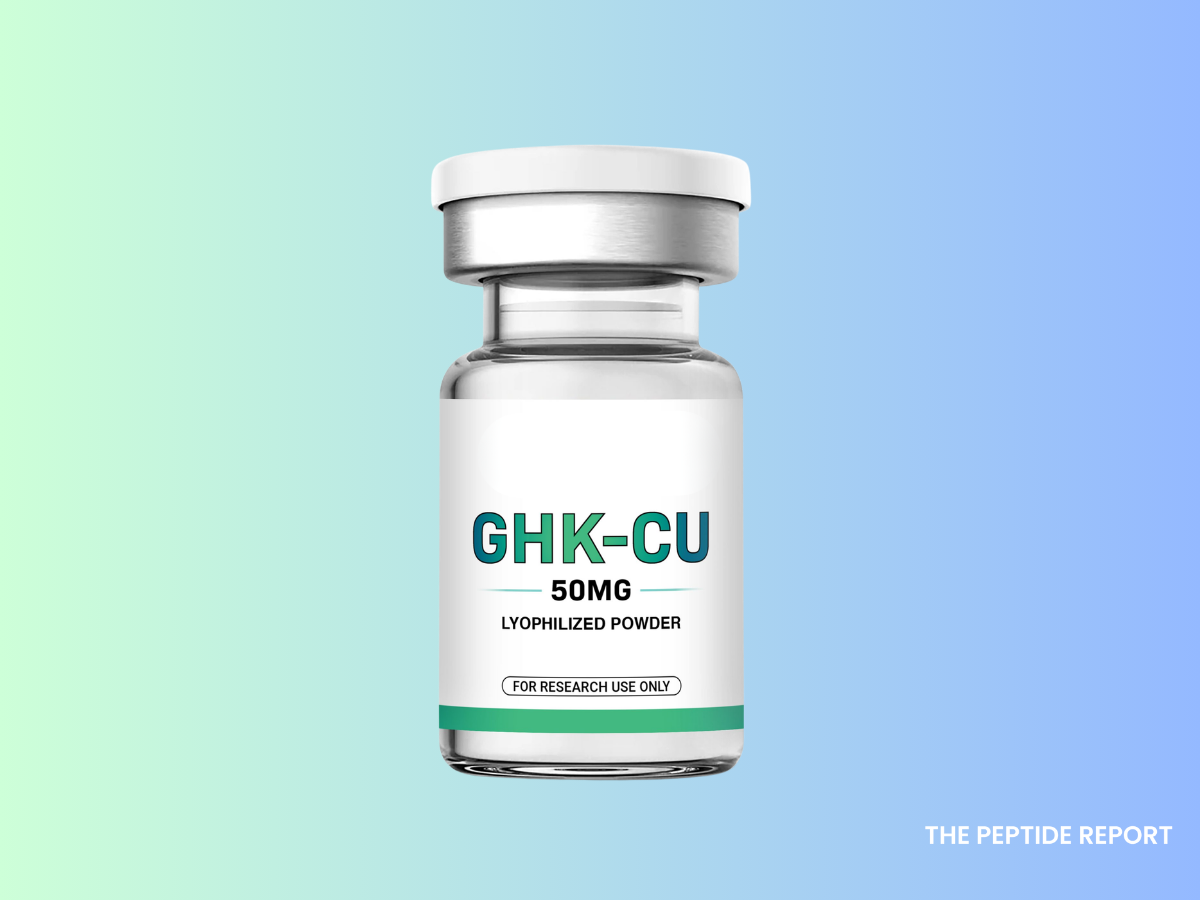 I’ll be straight with you.
Most skincare content is either trying to sell you something that doesn’t work, or it’s written by someone who has never actually used the thing they’re writing about.
I’ve been in the peptide space for over 10 years. I got into it because I needed it. Injuries. Weight. Recovery. And along the way, I started paying attention to what was happening to my skin too.
I’m 54 now. I still lift heavy 3-4 times a week. And I get comments all the time about how I don’t look my age.
GHK-Cu has been part of that.
This isn’t a magic potion. But the research behind it is real, and when you use it right, it works. Here’s what you need to know.
Get Your Free Copy of The Ultimate Peptide Blueprint Exact stacks, dosages & cutting-edge protocols to cut fat, build muscle, and keep results-no fluff. No spam. Unsubscribe anytime.
What is GHK-Cu Peptide and Why Does it Matter for Skin?
GHK-Cu is short for Glycyl-L-Histidyl-L-Lysine copper. It’s a small peptide that occurs naturally in your body.
When you’re young, your body makes plenty of it. As you get older, levels drop. And when GHK-Cu drops, so does your skin’s ability to repair and rebuild itself.
What it does is pretty straightforward:
- Tells your skin cells to produce more collagen. Collagen is what keeps your skin firm and elastic. Without it, skin sags and wrinkles.
- Speeds up wound healing. This is actually one of the most well-documented things about it.
- Has antioxidant properties. That means it’s fighting the daily damage that makes skin look older.
- Reduces inflammation. Inflammation is a big driver of aging skin. Redness, irritation, dullness, all of it.
This isn’t theoretical. There’s real published research behind every one of those points.
Peptides can get expensive, but as an FYI - BioEdge is doing 15% off this month (code MARS15 at bioedgepeptides.com), one of the few suppliers that consistently delivers what their lab reports claim.
The Real Benefits of GHK-Cu Peptide for Skin Rejuvenation
Let me break this down in plain terms. Here’s what the research actually shows.
It Rebuilds Collagen
Collagen is the scaffolding under your skin. After 30, your body produces less of it every year. GHK-Cu directly stimulates collagen synthesis. More collagen means firmer skin, fewer fine lines, and better texture over time.
It Helps Skin Heal Faster
If you have scars, sun damage, or any kind of skin trauma, GHK-Cu accelerates the repair process. It does this by activating the genes responsible for tissue repair. That’s not marketing copy. That’s what the studies show.
It Fights the Signs of Aging
Fine lines, wrinkles, uneven tone. GHK-Cu addresses all three. People using it consistently report skin that looks more even, feels softer, and looks younger than their age. I’ve experienced this myself.
It Protects Against Daily Damage
Oxidative stress from sun, pollution, and lifestyle adds up. GHK-Cu acts as an antioxidant, helping neutralize that damage before it shows up on your face.
What to Know Before You Start Using GHK-Cu Peptide
A few things I’d want someone to know before they start.
I’m a researcher and someone who has used these things on myself for years. What I share is educational. Talk to a qualified healthcare provider if you have specific concerns.
Be consistent. Peptides work over time. You’re not going to see results in a week. Most people start noticing real changes around 4 to 8 weeks of regular use.
Quality matters a lot. There’s a huge difference between a quality peptide from a reliable supplier and something knockoff. More on where to find high quality GHK-Cu soon.
GHK-Cu Peptide Dosage Guide: How Much to Use
A common starting point is 1-5 mg. The key is to start low, assess how your skin responds, and adjust from there. Don’t rush it.
Always start at the lower end of any range. You can always increase. You can’t undo a bad reaction.
GHK-Cu Peptide: Microneedling Method
Microneedling with GHK-Cu
Microneedling creates tiny microchannels in the skin.
A lot of people doing serious skin protocols combine the two. The microneedling stimulates collagen on its own, and then the GHK-Cu amplifies that effect.
If you haven’t tried microneedling before, start with a professional treatment before doing it yourself. Learn what it feels like at the right depth before experimenting at home.
Where I Source My GHK-Cu
I source my GHK-Cu from BioEdge Research Labs. Quality is consistent, and they’re one of the few suppliers I actually trust. Use code MARS15 for 15% off your order. If you’re paying by ACH or Cash App, you can stack an additional 10% on top of that.
Peptides can get expensive, but as an FYI - BioEdge is doing 15% off this month (code mars15 at bioedgepeptides.com), one of the few suppliers that consistently delivers what their lab reports claim.
How to Stack GHK-Cu Peptide With Other Skincare Ingredients
GHK-Cu works well on its own. But it plays nicely with a few other ingredients.
Hyaluronic acid: A popular combo. Hyaluronic acid pulls moisture into the skin and holds it there. GHK-Cu drives collagen. Together, you get skin that’s both hydrated and firmer.
Retinol: Retinol accelerates cell turnover. GHK-Cu supports the new skin coming in. Some people find retinol irritating on its own, and GHK-Cu’s anti-inflammatory properties can actually help with that.
Vitamin C serum: Vitamin C is a collagen co-factor, meaning your body needs it to make collagen. Stacking with GHK-Cu can amplify the collagen-building effect and help with hyperpigmentation and uneven skin tone.
One note: don’t layer everything at once without knowing how your skin reacts to each ingredient individually. Add one thing at a time and give your skin a few weeks before adding another.
GHK-Cu Peptide Side Effects and Safety Precautions
GHK-Cu has a solid safety profile. Most people tolerate it well. But here’s what to watch for.
Mild skin irritation or redness: Usually happens when you first start, especially if your skin is sensitive. If it happens, scale back frequency and build up gradually.
Digestive discomfort: This can come up with oral or injectable use. If it does, review your dose and consult with a healthcare provider.
Allergic reactions: Rare, but possible. If you see swelling, difficulty breathing, or serious rash, stop immediately and get medical attention.
The most common mistake I see is people overdoing it early on. Start slow. Your skin needs time to adjust to any active peptide.
How to Track Your Skin Rejuvenation Progress With GHK-Cu
Here’s what I recommend:
Take photos: Same lighting, same angle, every two weeks. This is the most honest way to see real change. Memory lies. Photos don’t.
Keep a journal: Note how your skin feels, any reactions, what products you’re using. It sounds tedious but when something works, you want to know exactly what you did.
Track skin texture and hydration: These often improve before you notice visual changes. If your skin feels smoother and less dry, that’s the GHK-Cu working.
Give it at least 8 weeks of consistent use before you decide whether it’s working. Peptides build on each other. The results are real but they take time.
Peptides can get expensive, but as an FYI - BioEdge is doing 15% off this month (code MARS15 at bioedgepeptides.com), one of the few suppliers that consistently delivers what their lab reports claim.
Frequently Asked Questions
GHK-Cu Peptide for Skin Rejuvenation
GHK-Cu is one of the most well-researched peptides for skin health. It’s not overhyped. The science is solid.
But like everything in this space, quality matters. Source it from somewhere you can trust. Be consistent. Start low and build up. And take photos so you can actually see the difference.
I’ve seen a lot of people dismiss peptides as hype. Usually it’s because they bought low-quality product or gave up too soon. Neither of those is a fair test.
Give it a real shot. Your skin will tell you the rest.
Make sure to buy from a reputable source, I always source from BioEdge Research Labs.
P.S. — Join Our Exclusive Skool Group for real stories, sleep protocols, and community support.
Joe Mars
The Peptide Report
This content is for educational purposes only. Peptides should be used under proper supervision. Always consult qualified healthcare providers before beginning any peptide protocol.

I’m Joe Mars, and I’ve dedicated the past ten years to understanding peptide therapy, longevity, and how to optimize the body through practical, real-life testing. My journey started when I was tired, inflamed, and aging faster than I should have been. Clear information on peptides was almost impossible to find, so I dug in, researched nonstop, and tested protocols on myself.
Over the years, I have learned from experts like Jay Campbell, Dr. Seeds, Jim LaValle, and Ben Greenfield, and I have completely transformed my health. Now in my fifties, I feel stronger and sharper than I did in my twenties. That experience is why I write. I want to give people simple and honest guidance so they can use peptides safely and effectively.
I believe in data, smart protocols, and taking responsibility for your own health. You are the protocol. Your habits, your consistency, and your awareness shape your results. Through The Peptide Report, I share what actually works so you can make informed decisions and build a healthier, more resilient body.
Peptides can get expensive, but as an FYI - BioEdge is doing 15% off this month (code mars15 at bioedgepeptides.com), one of the few suppliers that consistently delivers what their lab reports claim.