
CJC 1295 (10mg Vial) Dosage Protocol
Quickstart Highlights
CJC-1295 is a synthetic analogue of growth hormone-releasing hormone (GHRH) and a growth hormone secretagogue (GHS). It was developed in the mid-2000s by ConjuChem Technologies and is widely recognized in research for its potential applications in growth hormone deficiency, sleep enhancement, and longevity studies.
Initially created to address obesity-related issues in HIV/AIDS patients, CJC-1295 has gained attention for its ability to stimulate growth hormone production. Its unique feature lies in the Drug Affinity Complex (DAC) technology, which significantly prolongs its half-life by enabling stronger binding to blood proteins. The standard CJC-1295 peptide, composed of 29 amino acids, has been further refined with DAC to improve its efficacy and duration.
Notably, some confusion surrounds the variations of CJC-1295 available on the market. The original peptide developed by ConjuChem contained DAC, but other manufacturers later produced versions without DAC. These are often labeled as “CJC-1295 Without DAC” or “CJC-1295 No DAC” to distinguish them.
While CJC-1295 shows promise in scientific studies, it remains an investigational compound. It is not approved by the FDA and is available only for research purposes. This article will explore its mechanisms, benefits, and potential applications, offering researchers a comprehensive look into this intriguing peptide.
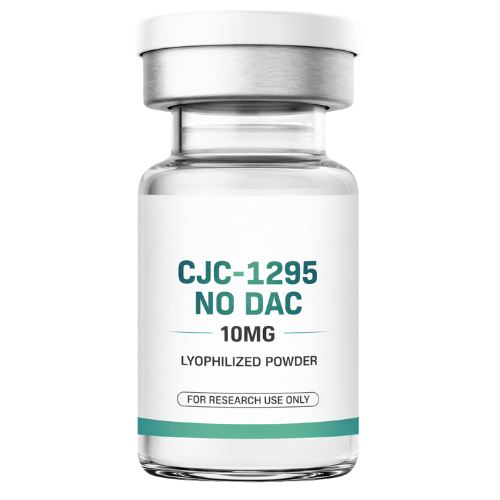
Dosing & Reconstitution Guide
Educational guide for reconstitution and daily dosing
Standard / Gradual Approach (3 mL = ~3.33 mg/mL)z
WEEK | DAILY DOSE | UNITS (PER INJECTION) (ML) |
|---|---|---|
Weeks 1-2 | 100mcg | 3 units (0.03 mL) |
Weeks 3–4 | 150 mcg | 5 units (0.05 mL) |
Weeks 5–6 | 200 mcg | 6 units (0.06 mL) |
Weeks 7–12 | 250–300 mcg | 8–9 units (0.08–0.09 mL) |
Reconstitution Steps
Important: This guide is for educational purposes only and is not medical advice. For research use only. Not for human or animal use. LAB ONLY.
Dosing Overview
Suggested daily titration approach.
Storage Instructions
Proper storage preserves peptide quality and potency.
What Does CJC-1295 Do?
CJC-1295 interacts with receptors in the pituitary gland to trigger the release of growth hormone (GH) and insulin-like growth factor 1 (IGF-1). These hormones play crucial roles in regulating various physiological processes, including growth, metabolism, and recovery.
The peptide mimics the action of natural growth hormone-releasing hormone (GHRH), leading to increased GH secretion. However, what sets CJC-1295 apart is its extended duration of action. The addition of Drug Affinity Complex (DAC) significantly extends its half-life, allowing GH levels to remain elevated for longer periods compared to alternatives like sermorelin.
Without DAC, CJC-1295 has a very short half-life of about 30 minutes. With DAC, its half-life ranges from 6 to 10 days. This extended duration provides a sustained release of GH and IGF-1, enhancing its potential for applications in research.
Animal studies have confirmed that CJC-1295 binds to receptors in the anterior pituitary gland, activating growth hormone pathways. Its prolonged action makes it a promising tool for studies on muscle growth, fat metabolism, and sleep regulation.
Is CJC-1295 Safe?
CJC-1295 interacts with receptors in the pituitary gland to trigger the release of growth hormone (GH) and insulin-like growth factor 1 (IGF-1). These hormones play crucial roles in regulating various physiological processes, including growth, metabolism, and recovery.
The peptide mimics the action of natural growth hormone-releasing hormone (GHRH), leading to increased GH secretion. However, what sets CJC-1295 apart is its extended duration of action. The addition of Drug Affinity Complex (DAC) significantly extends its half-life, allowing GH levels to remain elevated for longer periods compared to alternatives like sermorelin.
Without DAC, CJC-1295 has a very short half-life of about 30 minutes. With DAC, its half-life ranges from 6 to 10 days. This extended duration provides a sustained release of GH and IGF-1, enhancing its potential for applications in research.
Animal studies have confirmed that CJC-1295 binds to receptors in the anterior pituitary gland, activating growth hormone pathways. Its prolonged action makes it a promising tool for studies on muscle growth, fat metabolism, and sleep regulation.
CJC-1295 Benefits | Clinical Trials
CJC-1295 has gained attention in scientific research for its ability to elevate growth hormone (GH) levels and improve various physiological processes. Researchers are particularly interested in its potential for muscle growth, fat metabolism, and sleep enhancement.
CJC-1295 Enhances Muscle Growth
CJC-1295’s ability to boost growth hormone (GH) and insulin-like growth factor 1 (IGF-1) levels has made it a subject of great interest for muscle research. These hormones play a central role in protein synthesis, the process critical for building and repairing muscle tissue.
Preliminary studies suggest that CJC-1295 promotes anabolic activity, potentially increasing muscle mass and aiding recovery. This could make it beneficial in studying muscle-wasting conditions, recovery after injury, or aging-related muscle loss.
To maximize effects, researchers often pair CJC-1295 with ipamorelin. The combination enhances protein synthesis and muscle repair while potentially offering synergistic benefits.
Key insights from research include:
- Stimulated protein synthesis for muscle growth.
- Enhanced muscle recovery after physical stress or injury.
- Improved retention of muscle mass during aging.
- Synergistic results when combined with ipamorelin.
While promising, these benefits require further research to determine long-term effects and broader applications in human models.
CJC-1295 Improves Fat Metabolism
The role of CJC-1295 in fat metabolism has been explored in various studies, with researchers focusing on its ability to regulate hormonal pathways. One of its significant effects is the normalization of prolactin, a hormone associated with fat accumulation in certain conditions.
Animal studies, including research involving GHRH knockout mice, suggest that CJC-1295 promotes effective fat metabolization. This highlights its potential as a tool for studying obesity and metabolic disorders.
Additionally, the combination of CJC-1295 with GHRP-2 has shown even greater promise. GHRP-2 activates a different receptor in the growth hormone pathway, working synergistically with CJC-1295 to enhance fat loss.
Notable benefits of this peptide combination include:
- Improved breakdown of stored fat.
- Reduction in visceral fat accumulation.
- Increased metabolic efficiency and energy expenditure.
- Potential improvements in cardiovascular and immune health.
- Enhanced body composition through fat-to-muscle ratio shifts.
These findings underscore CJC-1295’s potential as a key peptide in fat metabolism research, although more human studies are needed to validate these effects.
CJC-1295 Supports Restorative Sleep
CJC-1295’s role in sleep regulation has made it a compelling area of study. By mimicking natural growth hormone-releasing hormone (GHRH), it plays a potential role in improving sleep quality, which is crucial for recovery and overall health.
A study by Fehm et al. investigated the effects of intranasal GHRH on sleep in healthy male participants, divided into young and elderly groups. Participants were administered GHRH or a placebo 30 minutes before bedtime, with sleep monitored throughout the night.
The results were significant:
- Increased rapid-eye-movement (REM) sleep phases.
- Enhanced slow-wave sleep (SWS), particularly in the latter half of the night.
- Stabilized hypothalamic hormone secretory activity.
- Reduced cortisol levels early in sleep.
These findings suggest that GHRH, and by extension CJC-1295, supports dual neuronal and endocrine roles during sleep. This peptide's potential to promote restorative sleep extends to its ability to improve non-REM sleep. Non-REM sleep, often linked to growth hormone release, aids muscle recovery and overall physical restoration.
Furthermore, GH is known to enhance sleep quality after periods of deprivation. For researchers exploring sleep regulation, CJC-1295 could serve as a valuable tool in studying disorders, recovery, and aging-related sleep challenges.
While the benefits are promising, long-term studies are needed to confirm CJC-1295’s role in improving sleep across different models.
CJC-1295 Side Effects
Research into CJC-1295 has uncovered several mild, self-reported side effects among participants. These effects vary in intensity and may include:
- Headaches: Common among participants, possibly linked to hormonal fluctuations.
- Nausea: Some users report mild stomach discomfort.
- Hives: A potential allergic reaction in sensitive individuals.
- Anxiety: Rare but noted in certain cases during peptide use.
- Irritability: Observed as a transient mood change.
- Flu-like symptoms: General fatigue and malaise resembling the common flu.
During its initial development, CJC-1295 was studied as a treatment for HIV-associated lipodystrophy. Although one participant in a trial tragically passed away, the attending physician determined that the death was unrelated to the peptide itself. However, this incident underscores the need for more thorough studies to establish the peptide’s complete safety profile.
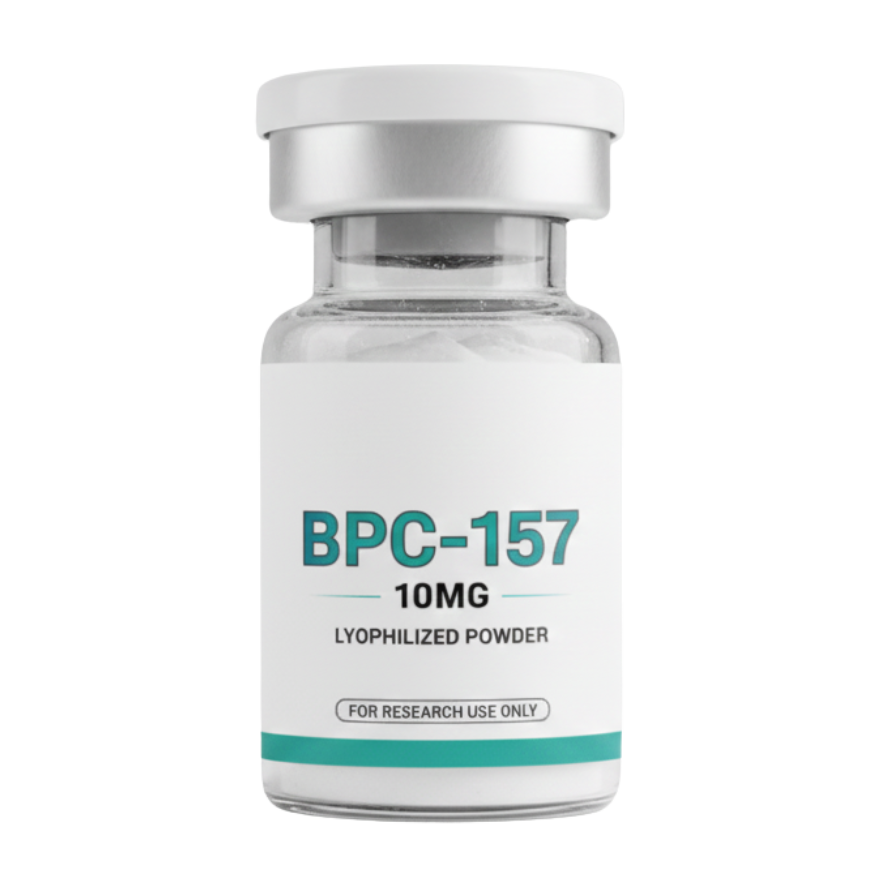
Supplies Needed
Get Your Free Copy of The Ultimate Peptide Blueprint
Exact stacks, dosages & cutting-edge protocols to cut fat, build muscle, and keep results-no fluff.
No spam. Unsubscribe anytime.
Important Notes
Proper storage preserves peptide quality and potency.
Peptides can get expensive, but as an FYI - BioEdge is doing 10% off this month (code pep10 at bioedgepeptides.com), one of the few suppliers that consistently delivers what their lab reports claim.

I’m Joe Mars, and I’ve dedicated the past ten years to understanding peptide therapy, longevity, and how to optimize the body through practical, real-life testing. My journey started when I was tired, inflamed, and aging faster than I should have been. Clear information on peptides was almost impossible to find, so I dug in, researched nonstop, and tested protocols on myself.
Over the years, I have learned from experts like Jay Campbell, Dr. Seeds, Jim LaValle, and Ben Greenfield, and I have completely transformed my health. Now in my fifties, I feel stronger and sharper than I did in my twenties. That experience is why I write. I want to give people simple and honest guidance so they can use peptides safely and effectively.
I believe in data, smart protocols, and taking responsibility for your own health. You are the protocol. Your habits, your consistency, and your awareness shape your results. Through The Peptide Report, I share what actually works so you can make informed decisions and build a healthier, more resilient body.