
Table of Contents
I went from 240 pounds to 185.
Not with some crash diet. Not with a magic pill.
Peptides played a huge role. Combined with training and nutrition, they completely changed my body composition.
So when people ask me, “Joe, what are the best peptides for fat loss?” I don’t have to guess. I’ve lived it.
In this guide, I’m going to break down exactly which peptides work for fat loss, how they work, real dosages, and how to combine them with diet and exercise for actual results.
Let’s get into it.
Get Your Free Copy of The Ultimate Peptide Blueprint
Exact stacks, dosages & cutting-edge protocols to cut fat, build muscle, and keep results-no fluff.
No spam. Unsubscribe anytime.
How Peptides Promote Fat Reduction
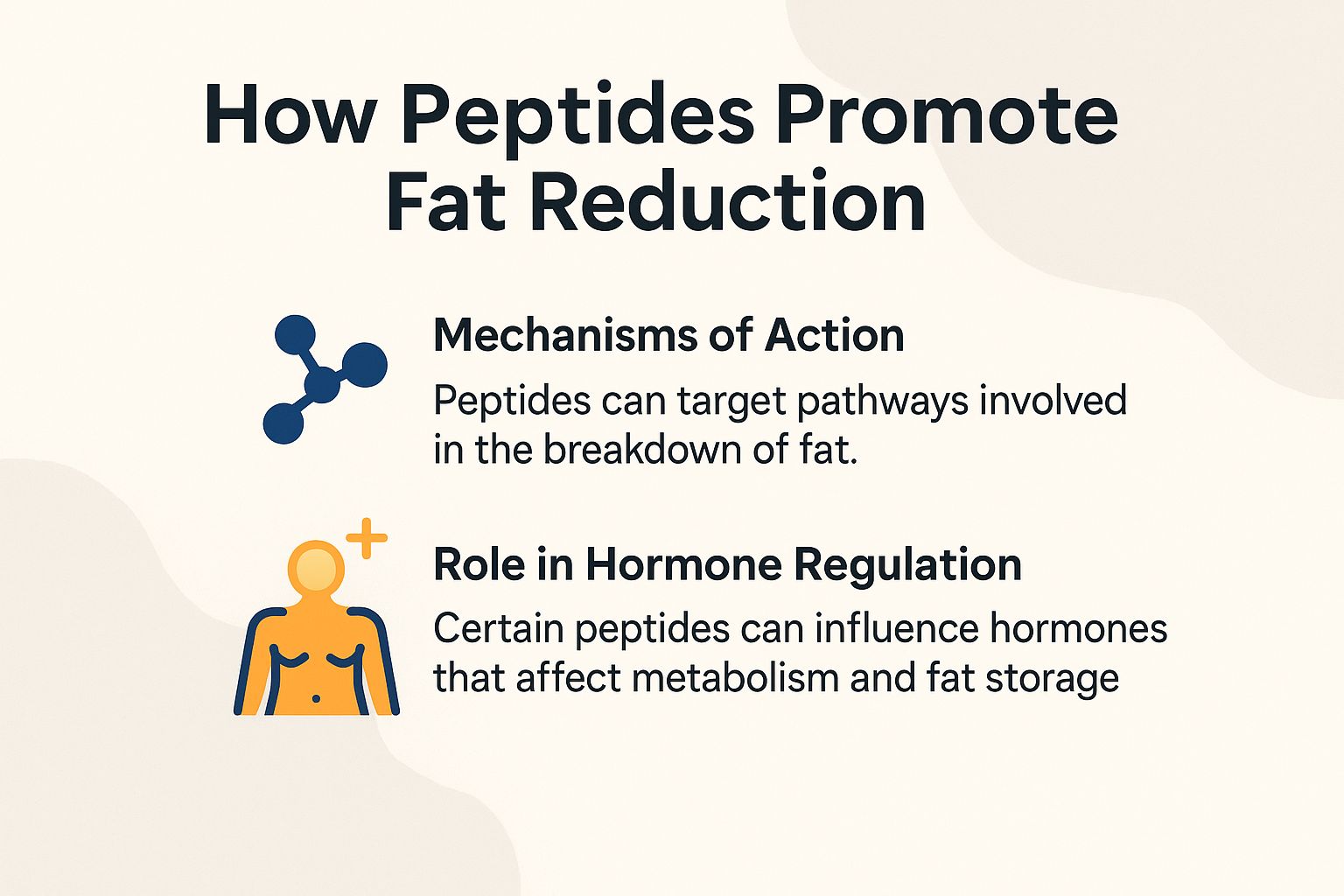
Peptides aren’t steroids. They aren’t stimulants. They work with your body’s own systems to promote fat loss.
The big ones in the fat loss space are GLP-1 agonists. These mimic hormones that your gut naturally produces to regulate hunger and blood sugar.
Studies published in JAMA Internal Medicine showed that GLP-1 agonists can improve insulin sensitivity by 20-30% in type 2 diabetes patients. That’s significant. Better insulin sensitivity means your body handles glucose more efficiently instead of storing it as fat.
Mechanisms of Action
Here’s how peptides actually promote fat loss in simple terms.
They slow down gastric emptying. That means food sits in your stomach longer. You feel full faster. You eat less. Studies show this can reduce calorie intake by about 15%.
They boost insulin release. Better insulin response means better blood sugar control. Less blood sugar spikes. Less fat storage.
They ramp up fat burning directly. In the STEP trials, participants lost 10-15% of their visceral fat in just 12 weeks.
Most people start seeing effects within 2-4 weeks.
One thing I’ll say. Subcutaneous injections absorb about 90% of the compound. Oral versions sit around 1%. That’s a massive difference. It’s why most serious protocols are injectable.
And this should go without saying, but the quality of the peptide matters. Low-quality compounds from questionable sources will give you low-quality results. Or worse.
Role in Hormone Regulation
Peptides regulate hormones in ways that directly impact fat loss.
GLP-1 and GIP are the two big ones. Together, they can lower HbA1c (a key blood sugar marker) by up to 1.5% in type 2 diabetes patients.
Here’s how the main compounds break down.
Semaglutide (the compound behind Ozempic and Wegovy) boosts insulin sensitivity by about 25% over 6 months. Typical starting dose is 0.25 mg weekly.
Tirzepatide (the compound behind Mounjaro and Zepbound) works on both GLP-1 and GIP pathways. The SURPASS trials showed 15-20% weight loss over a year. You ramp up slowly to 5 mg.
Ipamorelin and Sermorelin work on a different pathway. They release growth hormone, which helps you preserve up to 80% of your muscle mass while dieting. That’s huge. Losing fat without losing muscle is the entire game.
One important thing. The brain signaling (CNS pathway) that these peptides trigger is what actually curbs your appetite. It cuts calorie intake by 10-15% without you white-knuckling it.
Always monitor your bloodwork. Get your A1C checked. Watch for side effects like nausea, diarrhea, and vomiting, especially early on. They usually fade, but keep your doctor in the loop.
Top Peptides for Effective Fat Loss
Alright. Here’s where I’m going to give you the real breakdown.
These are the peptides that actually move the needle for fat loss based on clinical data and real-world results.
My top pick right now? Retatrutide.
If you’ve been in the peptide space for a while, you might also see it referred to as GLPR3. Same compound. It’s a triple agonist that hits GLP-1, GIP, and glucagon receptors all at once. Nothing else on the market does that.
The clinical data is staggering. 22.1% body weight reduction at 12 mg over 48 weeks. That blows everything else away.
Here’s the full lineup.
- Retatrutide (GLPR3): Triple agonist (GLP-1/GIP/glucagon). The most powerful fat loss peptide available right now. 22.1% weight loss in trials.
- Tirzepatide: Dual GLP-1/GIP agonist. 17.8% weight loss. Excellent for fat burning and insulin sensitivity.
- Semaglutide: GLP-1 agonist. The compound that started the whole movement. 13.9% weight loss.
- Tesamorelin: Targets visceral fat specifically. FDA approved for HIV lipodystrophy but has broader applications for belly fat.
- Ipamorelin and Sermorelin: Growth hormone releasers. Support muscle retention during fat loss.
- CJC-1295: Growth hormone secretagogue. Great for fat metabolism and recovery.
- AOD-9604: Fragment of human growth hormone. Directly targets fat breakdown.
- BPC-157: Primarily a healing peptide, but supports gut health and inflammation reduction during a fat loss protocol.
Clinical data shows you can drop 5-10% body fat in 3-6 months when you pair these with proper diet and training.
But here’s the thing. The compound is only as good as the source. I source all of my research peptides from BioEdge Research Labs. Everything is US made. Third-party COAs on every product page. Batch consistency is locked in.
Use code MARS15 at checkout for 15% off.
Weight Loss Efficacy of Peptides (Percentage Reduction)
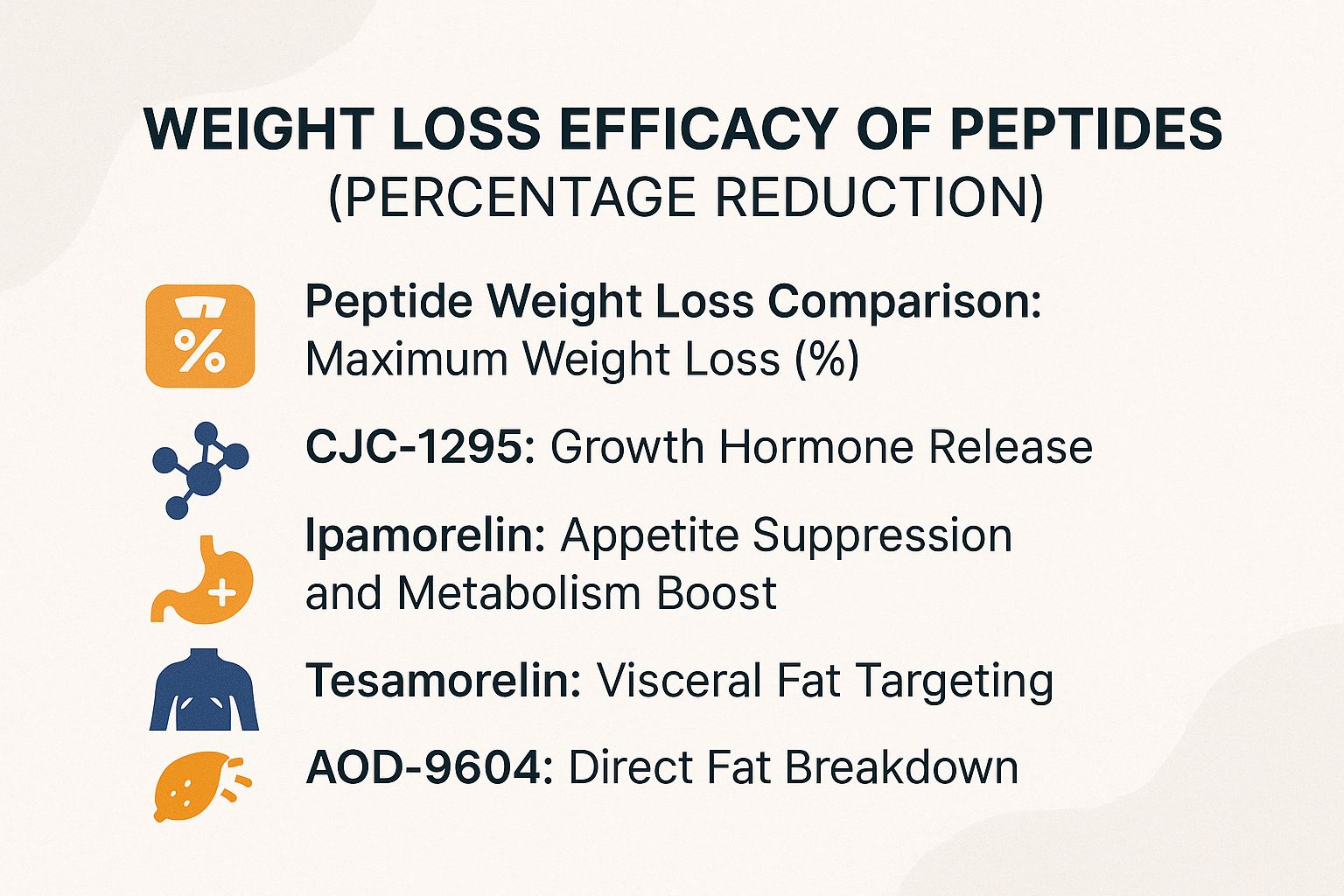
Let me put the actual numbers side by side so you can see what the clinical trials showed.
Retatrutide 12 mg (48 weeks): 22.1% weight loss. This is the one I’m most excited about. Triple receptor agonist. Hits GLP-1, GIP, and glucagon. Nothing else comes close to these numbers right now. If you’re serious about fat loss, this is the compound to watch. You may also see it called GLPR3 in research circles.
Tirzepatide 15 mg (72 weeks): 17.8% weight loss. Dual GLP-1/GIP agonist. Excellent for appetite control and insulin sensitivity. A strong choice, especially for people managing type 2 diabetes alongside fat loss goals.
Semaglutide 2.4 mg (68 weeks): 13.9% weight loss. The most well-known GLP-1 agonist. Proven track record. Good muscle mass preservation compared to traditional diets. This is where a lot of people start.
Tesamorelin (24 weeks): 9.3% weight loss. This one is special because it targets visceral fat specifically through growth hormone stimulation. Ideal for people carrying stubborn belly fat.
Liraglutide 3.0 mg (26 weeks): 5.8% weight loss. The earliest GLP-1 option. Daily dosing. Fewer long-term studies compared to the weekly options. Still effective for moderate weight management.
The numbers speak for themselves. Retatrutide is leading the pack by a wide margin.
Keep in mind, these are averages from clinical trials. Your results will depend on your starting point, how well you stick to your diet, and whether you’re actually training. Peptides aren’t a shortcut. They’re a tool. A powerful one, but still a tool.
CJC-1295: Growth Hormone Release
CJC-1295 works by stimulating growth hormone release. We’re talking 2 to 10 times above baseline levels. In 12-week trials, participants averaged about 8% fat loss.
Standard dosing is 100-200 mcg subcutaneously, 2-3 times per week. Most people inject in the evening to align with your body’s natural growth hormone pulses.
It also elevates IGF-1 levels by 1.5 to 3 times and improves fat metabolism by up to 20%.
The big advantage of CJC-1295 over something like Sermorelin is the half-life. CJC-1295 lasts about 7 days. Sermorelin lasts minutes. That means fewer injections and more consistent results.
Mild water retention is possible. That’s normal. It usually resolves on its own.
Ipamorelin: Appetite Suppression and Metabolism Boost
Ipamorelin is one of my favorites because of how clean it is.
It stimulates growth hormone release without spiking cortisol. That’s a big deal. Cortisol is the stress hormone that promotes fat storage, especially around the midsection.
Users report a 20-30% reduction in appetite and 4-7% fat loss over 8 weeks.
A 2019 study in the Journal of Clinical Endocrinology and Metabolism showed that Ipamorelin enhances lipolysis (fat breakdown) by 15% through its action on ghrelin receptors.
Standard dose is 200-300 mcg subcutaneously each evening. Best results come when you pair it with training. One endurance athlete in the research lost 8 pounds of fat in 6 weeks combining Ipamorelin with HIIT.
Cycling protocol: 3 months on, 1 month off. This keeps your receptors fresh and maintains efficacy.
Skip the high-carb meals around injection time. Elevated insulin blunts growth hormone release.
Compared to CJC-1295, Ipamorelin has fewer side effects like water retention. It promotes a more natural pulsatile growth hormone pattern. The CJC-1295/Ipamorelin stack is incredibly popular for a reason. They complement each other perfectly.
Tesamorelin: Visceral Fat Targeting
Tesamorelin is FDA approved and has solid clinical data behind it.
In 26-week trials published in The New England Journal of Medicine, it reduced visceral fat by 15-18% in patients with HIV lipodystrophy.
The dose is 2 mg daily via subcutaneous injection. It promotes growth hormone release that specifically targets visceral adipose tissue (the deep belly fat around your organs).
In FDA Phase III trials, participants saw abdominal fat volume drop from 5,000 cm to 4,200 cm over 26 weeks. That’s twice the rate of diet and exercise alone.
If you’re carrying stubborn belly fat that won’t budge no matter what you do, Tesamorelin is worth looking into.
One note. Get your liver enzymes checked quarterly. About 5% of trial participants showed elevations. Stay on top of your bloodwork.
AOD-9604: Direct Fat Breakdown
AOD-9604 is a fragment of human growth hormone. Specifically, amino acid positions 177-191.
It directly stimulates lipolysis (fat breakdown) without the side effects of full growth hormone, like insulin resistance.
Clinical data shows 5-10% fat reduction in targeted areas over 12 weeks. A 2004 study published in Obesity Research backed this up.
Standard dose is 300 mcg daily subcutaneously. Best taken after a workout.
Here’s the key. AOD-9604 needs to be paired with a caloric deficit and exercise. Without physical activity, its effectiveness drops by up to 50%. This isn’t a sit-on-the-couch compound.
In a 2018 clinical program, participants who combined AOD-9604 with 30-minute HIIT sessions lost an average of 12 pounds over three months.
AOD-9604 is different from BPC-157 or HCG. Those support tissue repair and hormonal weight loss respectively. AOD-9604 goes straight after fat cells.
Where I source my peptides:
Everything I use comes from BioEdge Research Labs. US made. Third-party tested. COAs on every product page.
Use code MARS15 at checkout for 15% off.
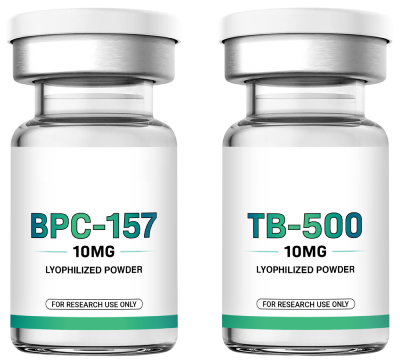
Peptides can get expensive, but as an FYI - BioEdge is doing 15% off this month (code mars15 at bioedgepeptides.com), one of the few suppliers that consistently delivers what their lab reports claim.
Dosage Guidelines and Cycles
Getting the dose right is everything. Too low and you won’t see results. Too high and you’re asking for side effects.
Here’s the general framework for the main fat loss peptides.
Semaglutide: Start at 0.25 mg weekly. Ramp up gradually to 2.4 mg over several weeks. Subcutaneous injection. Standard cycle is 12-16 weeks.
Tirzepatide: Start at 0.5-1 mg three times per week (or 2.5 mg once weekly). Ramp up slowly. The slow ramp is what keeps the nausea manageable.
Retatrutide (GLPR3): Follow a similar slow-titration approach. Start low. Increase based on tolerance. This compound is potent. Respect the dosage.
Ipamorelin: 200-300 mcg daily subcutaneously. 4 weeks on, 2 weeks off to prevent tolerance.
CJC-1295: 100-200 mcg, 2-3 times per week. Evening injection preferred.
Three things to remember.
One. Get bloodwork done every 4 weeks. Monitor hormone levels and watch for side effects.
Two. Start low and titrate up. Every single time. No exceptions.
Three. Don’t use compounded formulations from random sources. Quality matters. FDA warnings have flagged compounded products for higher side effect rates. Source from reputable labs.
You should start seeing visible effects within 2-4 weeks on most of these compounds.
Potential Side Effects and Risks
Let’s be straight about this. Every compound has potential side effects. Pretending otherwise would be irresponsible.
GLP-1 agonists like semaglutide can cause nausea in about 44% of users. Diarrhea in about 30%. These numbers come straight from FDA data.
The good news? These side effects almost always fade within the first four weeks. Starting low and ramping up slowly makes a huge difference. A study in JAMA Internal Medicine showed that gradual dose increases cut vomiting by 60%.
Here’s what to watch for.
GI issues. Nausea is the most common side effect. It’s caused by delayed gastric emptying. Start with a low dose (0.25 mg weekly for semaglutide). If it’s rough, talk to your doctor about antiemetics like ondansetron.
Injection site reactions. Redness and itching happen in about 5-10% of users. Rotate your injection sites (abdomen, thigh, upper arm) weekly.
Blood sugar. If you’re combining with insulin, monitor your glucose daily. Adjust insulin doses with your doctor.
Thyroid concerns. The FDA has a boxed warning about a rare thyroid cancer risk (0.1%) with GLP-1 agonists. If you have a family history of thyroid cancer, talk to your doctor before starting.
Growth hormone peptide risks. Too much growth hormone stimulation over long periods can have consequences. This is why cycling is important. Don’t run growth hormone peptides year-round without breaks.
Bottom line. Work with a healthcare professional. Get your bloodwork done. Don’t wing it.
Combining Peptides with Diet and Exercise
This is where the magic happens. Or doesn’t.
Because here’s the truth that nobody wants to hear. Peptides without diet and exercise will give you mediocre results at best.
The STEP trials showed that combining peptides with a 500-calorie daily deficit and 150 minutes of weekly exercise boosted fat loss by 50% and cut body weight by 20% over 40 weeks.
That’s not just good. That’s life-changing.
Here’s my framework.
1. High protein diet. I eat close to 1g of protein per pound of bodyweight every day. This is non-negotiable when you’re using GLP-1 peptides. They suppress appetite, which is great, but you still need to feed your muscles. Aim for at least 1.6 grams per kg of body weight.
2. Resistance training 3-4 times per week. I lift heavy. Squats, deadlifts, rows, bench, overhead press. Studies in the Journal of Clinical Endocrinology and Metabolism show resistance training preserves up to 90% of muscle mass during a caloric deficit. Without it, you’re losing muscle along with the fat. That’s not the goal.
3. Time your injections strategically. Injecting before meals can maximize the appetite suppression effect of GLP-1 peptides. This helps you stick to your caloric targets naturally.
4. Track everything. Use MyFitnessPal or something similar. Track calories and macros daily. What gets measured gets managed.
5. Don’t be afraid to stack. After 8 weeks on a primary compound, adding something like AOD-9604, CJC-1295, Ipamorelin, or BPC-157 can help break through plateaus.
And one more time for the people in the back. Source matters. I get my compounds from BioEdge Research Labs. US made. Third-party tested. Every single batch. Use code MARS15 for 15% off.
Stay educated. Stay consistent. Trust the process.
Joe Mars
The Peptide Report
Disclaimer: This article is for educational and informational purposes only. Nothing in this post should be considered medical advice. Always consult a qualified healthcare professional before starting any new supplement, peptide, or research compound. The Peptide Report and its authors are not responsible for any individual decisions made based on this content.
P.S. Want to connect with thousands of other people who are serious about peptides, fat loss, and optimizing their health? Come join us in the free community.
Join The Peptide Report Community on Skool
Peptides can get expensive, but as an FYI - BioEdge is doing 15% off this month (code mars15 at bioedgepeptides.com), one of the few suppliers that consistently delivers what their lab reports claim.