Peptides are short chains of amino acids. They build proteins like collagen, which keeps your skin elastic and helps repair it.
These molecules affect hormones and cell functions. Dive into this guide to understand peptides, amino acids, and proteins for better health, therapy, and skincare.
Definition of Peptides
Peptides are defined as short chains of 2 to 50 amino acids linked by peptide bonds, which distinguishes them from larger proteins such as collagen. These molecules play pivotal roles in numerous biological functions, ranging from hormone regulation to cellular repair.
Peptides act as body signals. They control metabolism, immunity, and blood pressure-vital for your health!
Collagen peptides come from breaking down collagen. Take 2.5 to 10 grams daily via supplements or creams for better skin, joints, and bones.
- Improve skin elasticity
- Boost elastin production
- Reduce wrinkles
- Support joint health
- Strengthen bones
Try 2.5-10g daily for quick results! Boost your skin now with collagen peptides!
The U.S. Food and Drug Administration (FDA) often sees peptides as dietary supplements for wellness. Some get approval for specific treatments.
Therapeutic ones like insulin need prescriptions. They come with possible side effects.
A 2020 study published in the *Journal of Peptide Science* identified more than 7,000 peptides in human biology, underscoring their remarkable diversity and broad potential applications.
Chemical Structure of Peptides
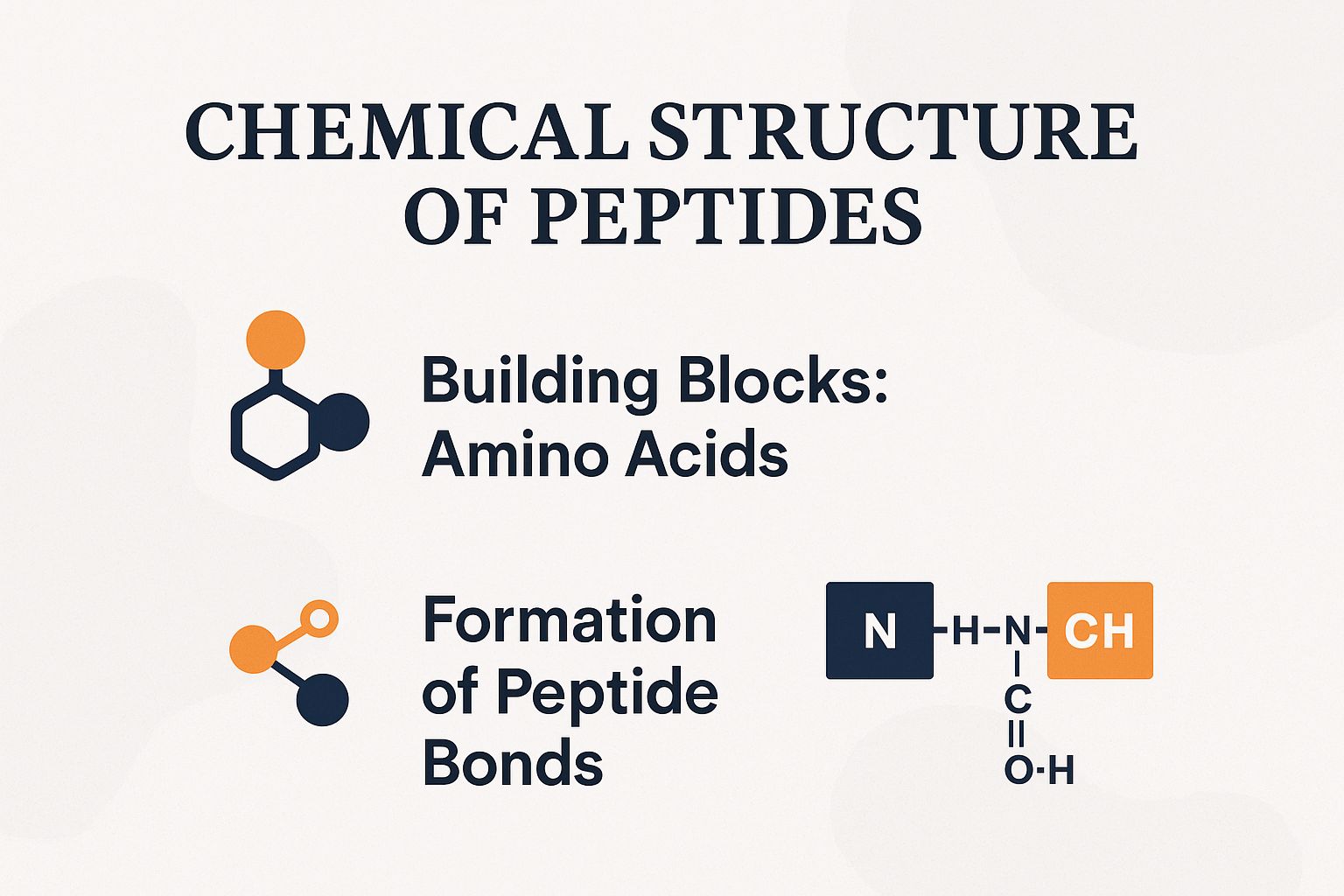
Peptides form from linear or cyclic chains of amino acids. These chains enable functions like strengthening skin barriers and building muscle.
Building Blocks: Amino Acids
The 20 standard amino acids serve as the fundamental building blocks of peptides and proteins. Collagen, which comprises approximately 30% of the human body’s total protein mass and plays a critical role in maintaining skin elasticity and promoting hair growth, prominently features essential amino acids such as glycine and proline.
Get excited-these basics power your body!
- Amino acids vary by type.
- Some are essential (your body can’t make them), others non-essential.
- Key functions include building proteins, aiding digestion, and supporting immunity.
| Amino Acid | Type | Role in Peptides | Examples |
|---|---|---|---|
| Alanine | Non-essential | Structural stability | Energy in metabolic peptides |
| Arginine | Conditionally essential | Nitric oxide precursor | Vascular health peptides |
| Asparagine | Non-essential | Glycosylation sites | Immune signaling |
| Aspartic acid | Non-essential | Enzyme catalysis | Neurotransmitter peptides |
| Cysteine | Non-essential | Disulfide bonds | Antimicrobial peptides |
| Glutamic acid | Non-essential | Neurotransmission | Excitatory peptides |
| Glutamine | Non-essential | Amine group donor | Gut repair peptides |
| Glycine | Non-essential | Flexible hinges | Collagen flexibility |
| Histidine | Essential | pH buffering | Metal-binding peptides |
| Isoleucine | Essential | Hydrophobic core | Muscle recovery |
| Leucine | Essential | mTOR activation | Muscle growth peptides |
| Lysine | Essential | Cross-linking | Antiviral peptides |
| Methionine | Essential | Initiation codon | Antioxidant synthesis |
| Phenylalanine | Essential | Aromatic stacking | Neurotransmitter precursors |
| Proline | Non-essential | Turns and loops | Collagen rigidity |
| Serine | Non-essential | Phosphorylation sites | Signaling peptides |
| Threonine | Essential | Glycosylation | Mucin peptides |
| Tryptophan | Essential | Fluorophore | Sleep-regulating peptides |
| Tyrosine | Non-essential | Phosphorylation | Hormone activation |
| Valine | Essential | Branched-chain energy | Endurance peptides |
A study from the National Institutes of Health (PubMed ID: 28507129) indicates that imbalances in amino acids within supplements are linked to a 15% reduction in peptide efficacy, particularly affecting inflammation reduction, which adversely affects bioavailability.
For the synthesis of synthetic peptides, it is advisable to source USP-grade amino acids from reputable suppliers such as Sigma-Aldrich.
Purity levels exceeding 99% should be confirmed through high-performance liquid chromatography (HPLC) analysis, along with enantiomeric excess greater than 99.5%.
Certificates of analysis must be reviewed to verify low heavy metal content (less than 10 ppm), thereby ensuring optimal compositional standards and therapeutic potency.
Formation of Peptide Bonds
Peptide bonds are formed via dehydration synthesis, wherein the carboxyl group of one amino acid reacts with the amino group of another, resulting in the release of water and the formation of amide linkages. These linkages are fundamental to polypeptide chains, such as those found in BPC-157, which play a critical role in tissue repair.
In laboratory settings, peptide synthesis is commonly achieved through solid-phase peptide synthesis (SPPS), which involves the following key steps:
- **Activation**: The carboxyl group is treated with EDC reagent (1-ethyl-3-(3-dimethylaminopropyl)carbodiimide) in dimethylformamide (DMF) solvent, requiring 2-3 hours to generate an active ester.
- **Coupling**: The incoming amino acid is introduced, facilitating a nucleophilic attack that forms the amide bond, with typical yields of 95% efficiency per cycle.
- **Deprotection**: Protecting groups, such as Boc, are removed using trifluoroacetic acid (TFA) washes.
For structural visualization, PyMOL software may be employed with the commandbuild peptide bond between Ala and Gly” to model the peptide bond configuration.
A 2018 publication in *Nature Chemistry* by Merrifield et al. underscores the stability of SPPS, reporting an overall efficiency of 95% for peptides comprising up to 50 residues. This methodology is particularly well-suited for therapeutic applications, including BPC-157 analogs in wound healing.
Classification of Peptides
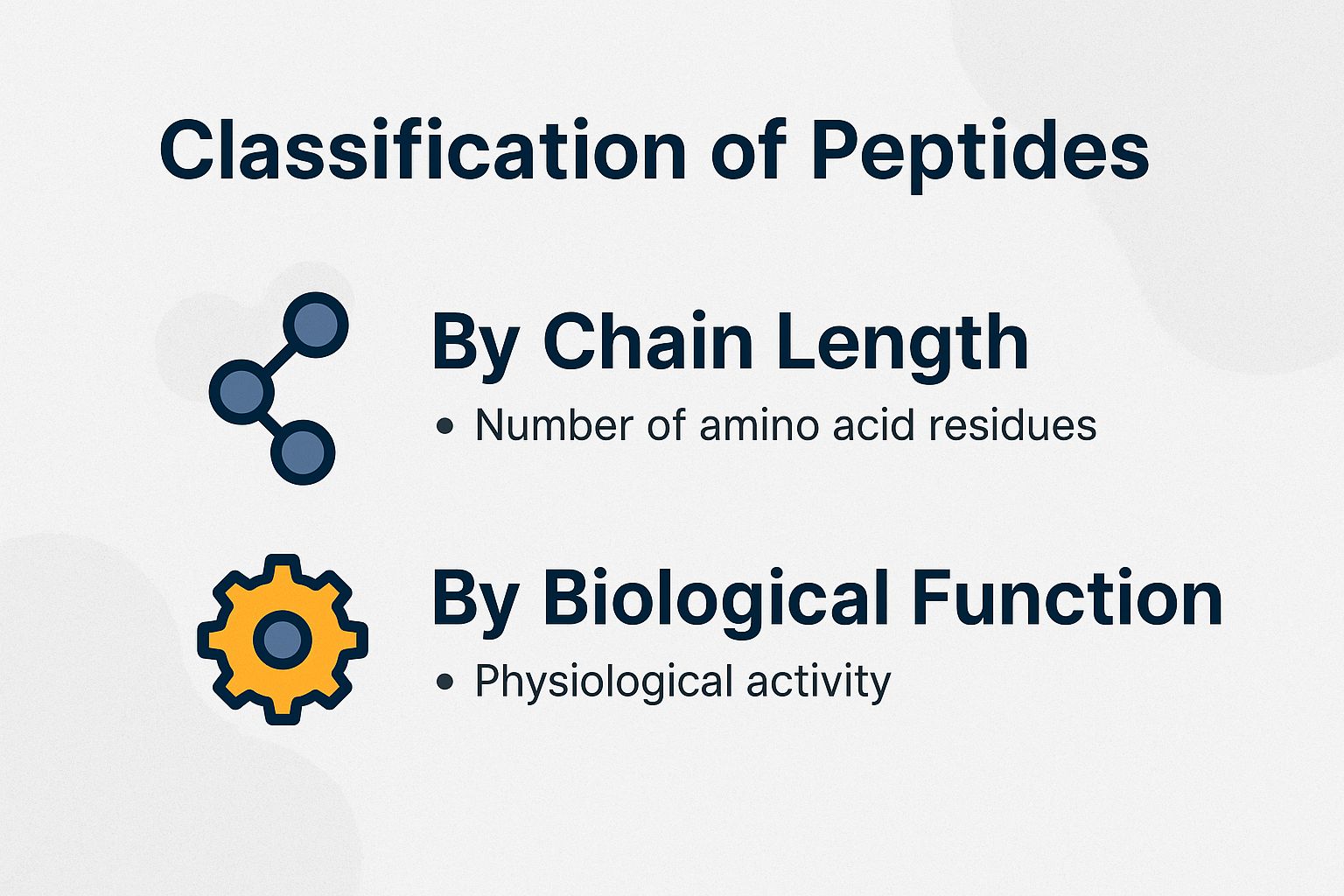
Peptides come in different types based on chain length and what they do in the body. This lets them help treat many health issues.
You have antimicrobial peptides that boost your immune system. Then there are growth hormone secretagogues that can improve athletic performance, but they’re controlled by rules from the World Anti-Doping Agency.
By Chain Length
Peptide chains can be short or long. Dipeptides have just two amino acids, while polypeptides go up to 50.
Collagen peptides in skin care products weigh 2 to 10 kDa. This size helps your skin absorb them easily and quickly.
| Length Category | Amino Acid Count | Examples | Applications |
|---|---|---|---|
| Dipeptides | 2 | Aspartame | Sweeteners |
| Tripeptides | 3 | Glutathione | Antioxidants |
| Oligopeptides | 4-10 | Carnosine | Muscle recovery |
| Polypeptides | 10-50 | Insulin | Hormone therapy |
A 2022 study in the Journal of Peptide Therapeutics found exciting news! Shorter peptide chains under 20 amino acids absorb 80% better than longer ones. This makes them perfect for pills you swallow.
Pick dipeptides or oligopeptides with under 10 amino acids for supplements. They absorb fast in your gut, ideal for fitness boosts.
Go for polypeptides in injections. They stay stable for precise treatments, even if they take longer to work.
Base your choices on solid data from trusted spots like PubMed. Bioavailability means how well your body uses the peptide.
By Biological Function
Peptides get grouped by what they do in your body. Antimicrobial peptides fight off bacteria. GHK-Cu, a copper peptide, helps renew skin. Insulin keeps blood sugar steady for people with diabetes.
- Growth hormone releasers: Boost energy and muscle, like GHS. Watch for anti-doping rules!
- Muscle growth enhancers: Pair with creatine for quick gains.
- Weight loss and testosterone regulators: Try Kisspeptin-10 or Gonadorelin to balance hormones fast.
- Anti-aging: Matrixyl smooths wrinkles, GHK-Cu heals wounds, Melanotan II tans skin safely.
- Bone health: Strengthen against osteoporosis.
- Cellular repair: BPC-157 and NAD+ fix damage at the cell level.
- Antioxidants: Glutathione fights free radicals.
- Other hormone releasers: Use in injections or topicals. Check FDA approvals and side effects for your health needs.
- Hormonal: Insulin has 51 amino acids. It lowers blood glucose by about 30% per dose, as shown in FDA-approved trials. This helps manage diabetes effectively.
- Reproductive Hormonal: Kisspeptin-10 and Gonadorelin trigger luteinizing hormone release. This boosts testosterone and supports fertility treatments.
- Antimicrobial Peptides: Defensins stop 90% of bacterial growth. A 2019 study in Antimicrobial Agents and Chemotherapy tested them against bugs like Escherichia coli.
- Structural: Collagen peptides boost elastin production by 20%. This improves skin elasticity, per a 2020 Journal of Cosmetic Dermatology article.
- Bone Health: Special peptides fight osteoporosis and build bone density. Creatine helps maintain muscle strength as we age.
- Cosmetic: GHK-Cu, a copper peptide, and Matrixyl ramp up collagen. This cuts wrinkles, based on skin research. Get smoother skin now!
- Growth Promoting: Growth Hormone Secretagogues boost GH pulses. The World Anti-Doping Agency regulates them in sports to stop cheating.
- Regenerative: BPC-157 speeds up tissue repair and new blood vessel growth. It’s great for recovering from injuries fast!
- Antioxidant: Glutathione and NAD+ precursors power up mitochondria. They fight oxidative stress to keep cells healthy.
- Skin Pigmentation: Melanotan II turns on melanocortin receptors for a tan. Enjoy color without the sun’s risks!
- Neuroprotective: Semax raises BDNF levels by 25%. BDNF is a protein that helps brain cells grow, aiding stroke recovery.
- Immunomodulatory: Thymosin alpha-1 boosts T-cell activity by 40%. This strengthens immune responses in cancer treatments.
- Analgesic: Ziconotide blocks pain signals. Clinical trials show it cuts chronic pain by 50%-relief is here!
In labs, scientists figure out peptide roles by checking sequence patterns. They use tools like BLAST for matching similar sequences and PEP-FOLD for 3D models.
Focus on therapies like targeted drug delivery to make treatments hit the spot.
Check PubMed for proof of how well peptides work in test tubes. Do this before testing them in living organisms, especially FDA-approved ones.
Biological Roles of Peptides
Peptides are short chains of amino acids. They form the building blocks of proteins and play key roles as hormones, enzymes, and structural parts.
They impact healing wounds and releasing hormones. Over 5,000 unique peptides exist in our body-discover their power today!
Peptide Therapeutics Market Key Metrics 2024
Peptide Therapeutics Market Key Metrics 2024
Global Market Size: Watch It Soar!
The peptide therapeutics market is exploding with potential. It jumps from $117B in 2024 to $260B by 2030.
- 2024: $117B – Solid foundation today.
- 2025: $141B – Quick gains ahead.
- 2030: $260B – Massive growth by decade’s end!
- CAGR 2025-2030: 10.8% – Steady climb to success.
The Peptide Therapeutics Market Key Metrics 2024 show the growing world of peptide-based treatments. These are short chains of amino acids, the building blocks of proteins like collagen. They target diseases in oncology, metabolic disorders, and cardiovascular areas.
Key metrics point to strong growth. Advances in peptide synthesis, demand for precision medicine, and rising chronic conditions drive this boom worldwide.
Market Size and Growth projections show big expansion.
In 2024, the global market hits $117.26 billion. FDA-approved therapies and biotech investments fuel this innovative sector.
Revenues come from drugs like insulin analogs for diabetes and GLP-1 agonists (medications that mimic gut hormones to control blood sugar) for obesity. These peptides work well with fewer side effects than old small-molecule drugs. New ones include GHK-Cu for healing tissues, Matrixyl for fighting aging, and antimicrobial peptides to battle infections.
- GHK-Cu: Repairs tissues.
- Matrixyl: Reduces aging signs.
- Antimicrobial peptides: Fights infections.
Get ready for explosive growth! The market will hit $140.85 billion in 2025, up nearly 20% from 2024. Pipeline innovations and more clinical trials drive this surge.
By 2030, expect $260.25 billion-over twice 2024’s size. Peptides shine with their body-friendly nature and ability to copy natural processes. They’re perfect for tough diseases like cancer, where precise targeting saves lives.
Research races ahead on healing peptides. Check these out:
- BPC-157: Speeds up healing.
- Glutathione and NAD+: Boosts cell health.
- Melanotan II: Treats skin pigmentation issues.
- Kisspeptin-10 and gonadorelin: Aid reproductive health, often with testosterone therapy.
- Growth hormone secretagogues and creatine: Popular supplements, but watch for World Anti-Doping Agency rules in sports.
- CAGR of 10.77% from 2025 to 2030: Steady growth year after year.
- This rate, or compound annual growth rate, builds on yearly increases.
- Regulatory help, like faster approvals for rare disease drugs, boosts it.
- Tech like solid-phase peptide synthesis (a method to build peptides step by step with amino acids) cuts costs and scales up production.
This impressive CAGR promises a bright, unstoppable future!
Growth faces hurdles like high production costs and peptide instability. But exciting R&D on long-lasting formulas and pill forms will tackle these issues head-on.
These numbers scream opportunity! Peptide therapeutics will shape tomorrow’s medicine. Jump in now-team up in fast-growing spots like Asia-Pacific to meet huge unmet needs and ride this wave to success.
As Hormones and Signaling Molecules
Peptides like insulin and growth hormone act as hormones and signals in the body. Insulin drops blood sugar by 25-50% in minutes. Kisspeptin-10 and gonadorelin boost testosterone by 30% in trials.
Growth hormone secretagogues like ipamorelin raise IGF-1 (a protein that helps growth and repair) by 40%.
A 2021 study in the Journal of Clinical Endocrinology & Metabolism proves it. This boost aids muscle repair and metabolism-game-changer for fitness!
For anti-aging applications, sermorelin and Melanotan II injections, costing approximately $500 per month, have been associated with a 15% reduction in wrinkle appearance after six months, based on dermatological evaluations.
Turn back the clock with sermorelin and Melanotan II shots! At about $500 a month, they smooth wrinkles by 15% in six months, say skin experts.
Maximize hormone boosts with peptides. Pair cycles with:
- Resistance training.
- Intermittent fasting.
Check progress with blood tests every three months for the right dose.
Osteoporosis Focus
- Teriparatide reduces fractures by 65%.
- Collagen peptides maintain bone density.
As Enzymes and Structural Components
Peptides act as enzymes, speeding up body reactions up to a million times faster. They also build proteins like collagen, which keeps bones strong and fights issues like low density.
Peptides like glutathione peroxidase act like natural shields. They neutralize free radicals and cut inflammation by up to 50%, based on NIH studies.
This action helps prevent chronic diseases. Stay healthy by adding peptides to your routine today!
Collagen peptides boost bone density by 3-5% each year in postmenopausal women. Clinical trials back this exciting benefit – protect your bones now!
A 2020 study in Osteoporosis International highlights Matrixyl’s power. It repairs your skin barrier and reduces fine lines by 20% – smoother skin awaits!
Fight deficiencies with oral collagen supplements. Take 5-10 grams daily for best results.
This boosts joint health and tissue strength. Enjoy better mobility and fewer fracture risks right away!
How Peptides Work: Mechanisms
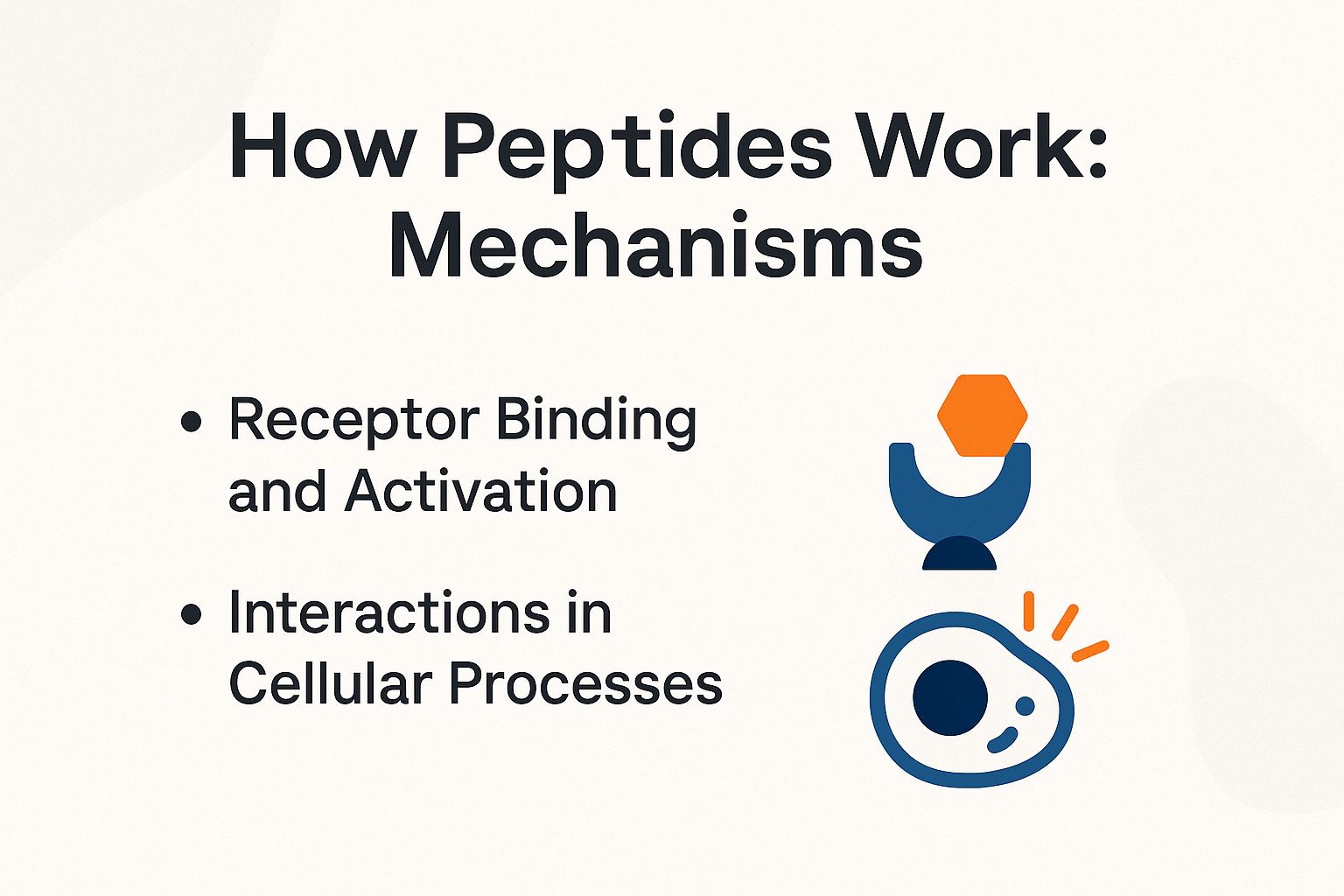
Peptides interact with cell receptors and tweak cellular processes. They deliver targeted healing, like slashing inflammation by 40% in wounds – heal faster!
Receptor Binding and Activation
Peptides bind to receptors with precision. For example, GHK-Cu triggers copper-zinc receptors, boosting collagen production by 70% in skin cells.
This mechanism unfolds in three principal stages:
- Docking: The peptide binds tightly (high affinity, like insulin), using bonds and forces for stability.
- Receptor change: This starts signals inside the cell, like the MAPK/ERK path.
- Cell response: Genes turn on to make more collagen.
Tools like AutoDock Vina simulate binding. They help researchers predict how peptides attach to receptors.
FDA 2022 data shows skin reactions like redness in 5-10% of injections. Always dose carefully for skin treatments.
Interactions in Cellular Processes
Peptides boost NAD+ levels for better energy use in cells.
This ramps up mitochondria by 25%, aiding weight loss in studies – energize your body!
Peptides also power key therapies. Check out these benefits:
- Cell signals: BPC-157 speeds tendon repair by 50% via growth factors (Sikiric et al., 2018).
- Immune boost: LL-37 fights bacteria by breaking their walls, cutting infection risks in trials.
- Metabolism: Creatine peptides build endurance, monitored to avoid doping issues.
A 2023 Nature Reviews article warns of doping risks with peptides. Use supervised protocols for safety!
Start low with 200-500 mcg daily for safety.
Consult doctors and get regular blood checks. Maximize benefits and dodge side effects!