
Dosage Guide
TB-500 concentration and U-100 unit calculations for a 10 mg vial in 3 mL. The schedules are author examples, not validated clinical regimens. Full-length thymosin beta-4 studies do not establish safety or dosing for a TB-500 fragment.
Free Download – The #1 Reference Guide
The Ultimate Peptide Blueprint
Reconstitute
3.0mL bacteriostatic water
3.33 mg/mL
Amount Examples
Standalone amount conversions; no validated titration.
Storage
Lyophilized: Freeze at−20 °C (−4 °F)
Storage and expiry need verified data for the exact preparation. No universal 1–2 week shelf life is established here.
Free Download
Want the Complete Stack?
Check the molecule before interpreting a TB-500 study. Full-length thymosin beta-4 has 43 amino acids. FDA materials describe TB-500-related substances as the shorter LKKTETQ fragment and its acetylated form. Commercial naming varies, so a TB-500 label alone does not establish which molecule is in a vial. Human findings with full-length thymosin beta-4 cannot be carried over to a fragment, a different route, or a blend.
Educational guide for reconstitution and daily dosing.
Amount example A
Amount: 500 MCG
Amount example B
Amount: 600 MCG
Amount example C
Amount: 750 MCG
22.5 U-100 units (0.225 mL)
Amount example D
Amount: 1000 MCG
Important
Standalone arithmetic examples, not a titration plan.
Summary of concentration math and evidence limits.
Storage cannot be determined from concentration math alone.
Free Download – Complete Peptide Reference
The Ultimate Peptide Blueprint
Cell movement and actin biology explain research interest in thymosin beta-4 and related fragments. The exact molecule matters. These mechanisms do not establish that a TB-500 product travels to injured tissue, coordinates repair in people, or produces a predictable clinical result.
Actin-related findings need a matching molecule and experiment. They do not establish repair signaling in a human injury.
Cell movement in a research model does not prove that a fragment directs cells to an injury in people.
Human tissue rebuilding by a TB-500 fragment is not established by the evidence here.
Blood-vessel findings involving related molecules do not establish improved human injury recovery from this fragment.
Proposed actin biology is not proof of tissue remodeling or clinical benefit.
There is not enough direct human TB-500 evidence here to assign a frequency or sex-specific pattern to hormonal effects.
Direct human data are insufficient to quantify infection susceptibility or other immune effects of the TB-500 fragment.
Unverified reports cannot establish how often soreness occurs or prove that soreness reflects beneficial tissue remodeling.
A randomized study in healthy volunteers tested intravenous full-length thymosin beta-4, including single and repeated doses of 42–1,260 mg (Ruff et al., 2010; PMID 20536472). It reported no dose-limiting toxicity under those study conditions. This was not a trial of a TB-500 fragment, subcutaneous research-vial use, or a BPC-157 combination. It does not establish a general safe dose or long-term safety.
Full-length thymosin beta-4 has been investigated in animal and human research. That does not mean the shorter TB-500 fragment has the same evidence. FDA’s 2026 review did not identify clinical studies or human exposure data for the TB-500 substances it evaluated. The molecule, route, and formulation must be checked before applying a study result.
Thymosin beta-4 research includes tissue-repair models and studies of specific wound formulations. Those findings should not be labeled as proof that TB-500 fragments speed human injury recovery. A claim of healing 30 days faster or preventing reinfection needs a matching trial of the exact product and indication; this guide does not establish either claim.
Cardiac-repair studies of thymosin beta-4 are a separate research area. Findings in mice do not establish human heart-muscle regeneration. This guide does not provide evidence that a TB-500 fragment repairs heart damage in people or improves post-heart-attack function. Such claims should not be inferred from full-length thymosin beta-4 studies or company development announcements.
Human safety of the TB-500 fragment is not established by trials of full-length thymosin beta-4. Reliable adverse-effect rates, interactions, long-term effects, and safety in children, pregnancy, and breastfeeding remain uncertain. A research-use label, animal tolerability, or correct vial math does not establish safe human use.
Correct calculations do not establish clinical safety.
Important
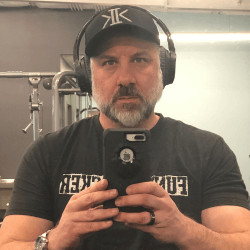
Joe Mars
Founder, The Peptide Report
I’m Joe Mars, and I’ve dedicated the past ten years to understanding peptide therapy, longevity, and how to optimize the body through practical, real-life testing. My journey started when I was tired, inflamed, and aging faster than I should have been. Clear information on peptides was almost impossible to find, so I dug in, researched nonstop, and tested protocols on myself.
Over the years, I have learned from experts like Jay Campbell, Dr. Seeds, Jim LaValle, and Ben Greenfield, and I have completely transformed my health. Now in my fifties, I feel stronger and sharper than I did in my twenties. That experience is why I write. I want to give people simple and honest guidance so they can use peptides safely and effectively.
I believe in data, smart protocols, and taking responsibility for your own health. You are the protocol. Your habits, your consistency, and your awareness shape your results. Through The Peptide Report, I share what actually works so you can make informed decisions and build a healthier, more resilient body.
Instant e-Book Download