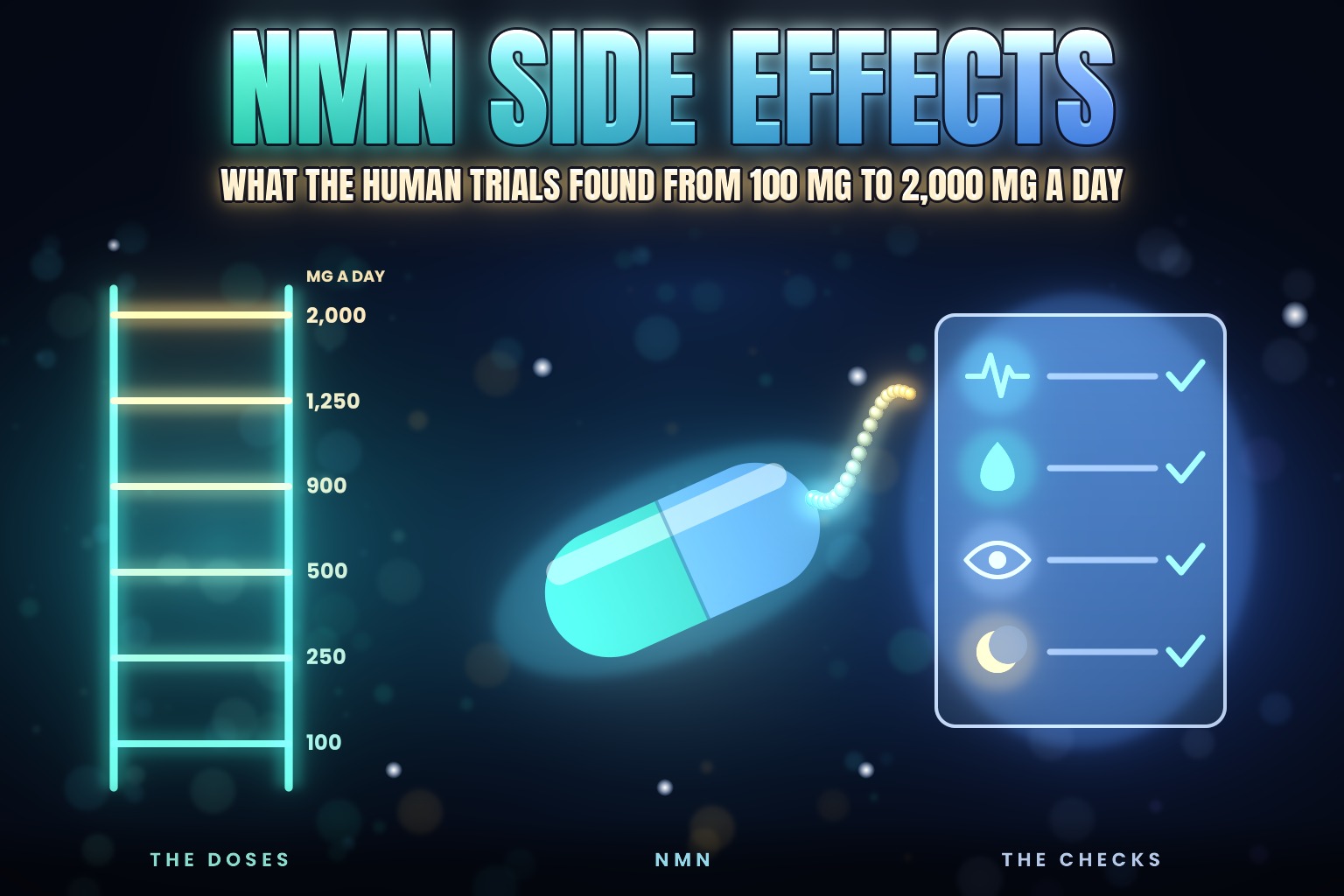
100 mg. 250 mg. 500 mg. 900 mg. 1,250 mg. 2,000 mg.
Those are doses of NMN that have been tested in people, from single capsules in 10 men to 28 days at 2,000 mg a day. Each trial checked something different: blood work, heart rate, body fat, sleep, eyes.
Here’s what each one looked for and what it found, rung by rung.
What NMN Is
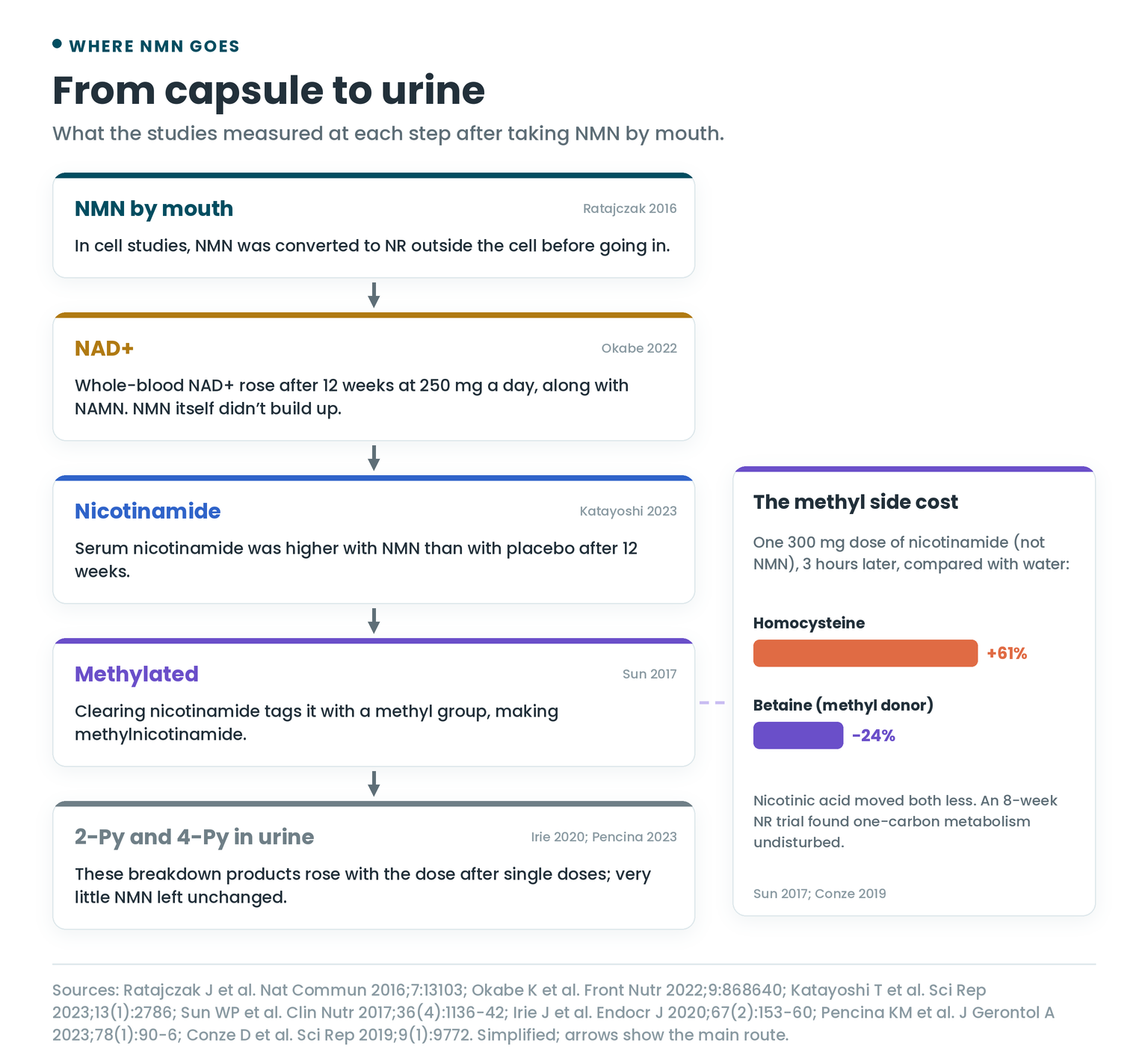
NMN (nicotinamide mononucleotide) is one step from NAD+, the coenzyme your cells use to make energy and that sirtuins and PARPs use up. Taken by mouth, it raises NAD+ in the blood, and in cell studies it was converted to NR outside the cell before going in.
For how NMN compares with NR and NAD+ itself, see Best NAD+ Supplements. For the mouse research behind the interest, see David Sinclair’s NMN.
The Human Trials, Rung by Rung
| Daily dose | Length | People | What the abstract reports on safety |
|---|---|---|---|
| 100, 250, 500 mg (single doses) | 5 hours after each | 10 healthy men | No symptoms; heart rate, blood pressure, oxygen and temperature unchanged; lab shifts stayed in the normal range |
| 250 mg | 8 weeks | 11 middle-aged men (no placebo group) | Well tolerated |
| 250 mg | 12 weeks | 30 healthy adults | No abnormalities in physiological or lab tests; no obvious adverse effects |
| 250 mg (125 mg twice a day) | 12 weeks | 36 healthy middle-aged adults | No adverse events |
| 250 mg | 6 or 12 weeks | Older men | Well tolerated, no significant harmful effect |
| 250 mg | 24 weeks | 14 men with diabetes, average age 81 | No severe adverse events |
| 300, 600 or 900 mg | 60 days | 80 healthy adults aged 40 to 65 | No safety issues in adverse events, labs or clinical measures |
| 1,250 mg | 4 weeks | 31 healthy adults aged 20 to 65 | No changes beyond normal variation in blood, urine or body measures; no severe adverse events |
| 1,000 or 2,000 mg | 14 days | 32 overweight adults aged 55 to 80 | Adverse events at similar rates with NMN and placebo |
| 2,000 mg | 28 days | 30 overweight adults 45 and older | Adverse events similar to placebo |
Two numbers frame that table. The highest daily dose tested is 2,000 mg, for up to 28 days. The longest trial ran 24 weeks, at 250 mg a day.
Explore the Trials
Filter the trials by dose and length, then tap a bar to see what each one measured.
Side Effects the Trials Looked For
Blood Work
The first human study gave 10 healthy men single doses of 100, 250 and 500 mg and followed them for 5 hours after each. A few lab values shifted: bilirubin went up, and creatinine, chloride and blood glucose went down. All of them stayed inside the normal range, and the shifts didn’t depend on the dose.
At the high end, 31 adults took 1,250 mg a day for 4 weeks. Blood counts, blood chemistry, urine tests and body measurements stayed within normal variation.
Heart Rate, Blood Pressure and Temperature
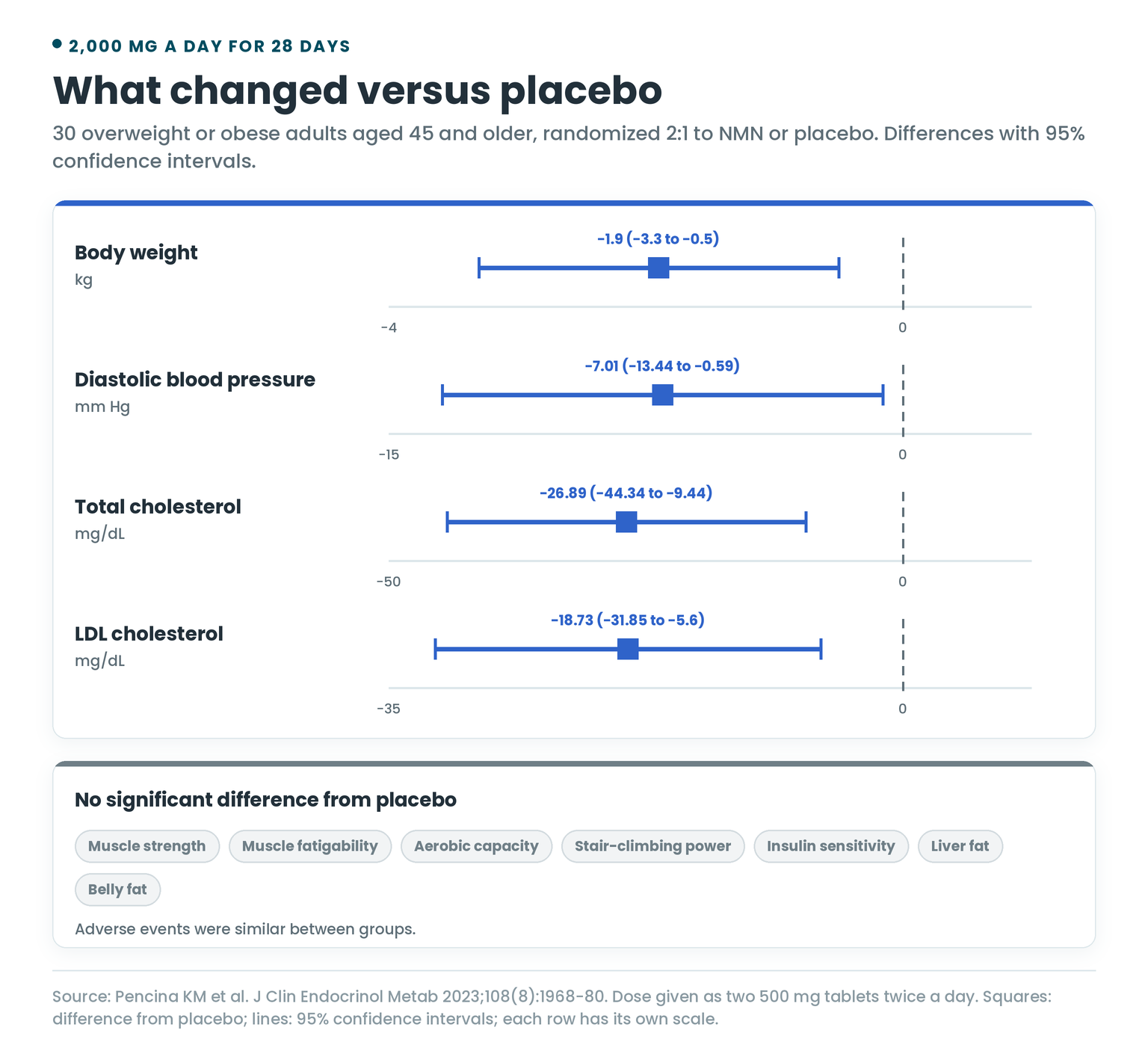
Single doses up to 500 mg left heart rate, blood pressure, oxygen saturation and body temperature where they were. In the 28-day trial at 2,000 mg a day, diastolic blood pressure fell by about 7 mm Hg more than with placebo.
In a 12-week trial at 250 mg a day, pulse wave velocity, a measure of artery stiffness, trended down with NMN without a significant difference from placebo.
Sleep and Drowsiness
Sleep quality was unchanged after single doses. In a 12-week trial, 108 older adults took 250 mg or placebo either in the morning or in the afternoon. Drowsiness improved in both afternoon groups, NMN and placebo alike, and the afternoon NMN group showed the largest effect sizes for drowsiness and for a sit-to-stand test.
Blood Sugar and Insulin
Blood glucose dipped slightly after single doses, within the normal range. Over longer stretches, the results split by measure:
- At 300 to 900 mg a day for 60 days, HOMA-IR, a blood-test estimate of insulin resistance, didn’t differ from placebo.
- At 2,000 mg a day for 28 days, insulin sensitivity measured directly didn’t change in either group.
- In women with prediabetes, 10 weeks of NMN raised muscle insulin sensitivity.
Weight and Body Composition
Body composition held steady at 1,250 mg a day for 4 weeks and at 250 mg a day for 6 or 12 weeks in older men. At 2,000 mg a day for 28 days, body weight fell 1.9 kg more than with placebo. In mice given NMN for a year, age-related weight gain was smaller.
Eyes
Eye exams were unchanged after single doses, and an 8-week study that included eye measurements found NMN well tolerated.
Does NMN Cause Flushing?
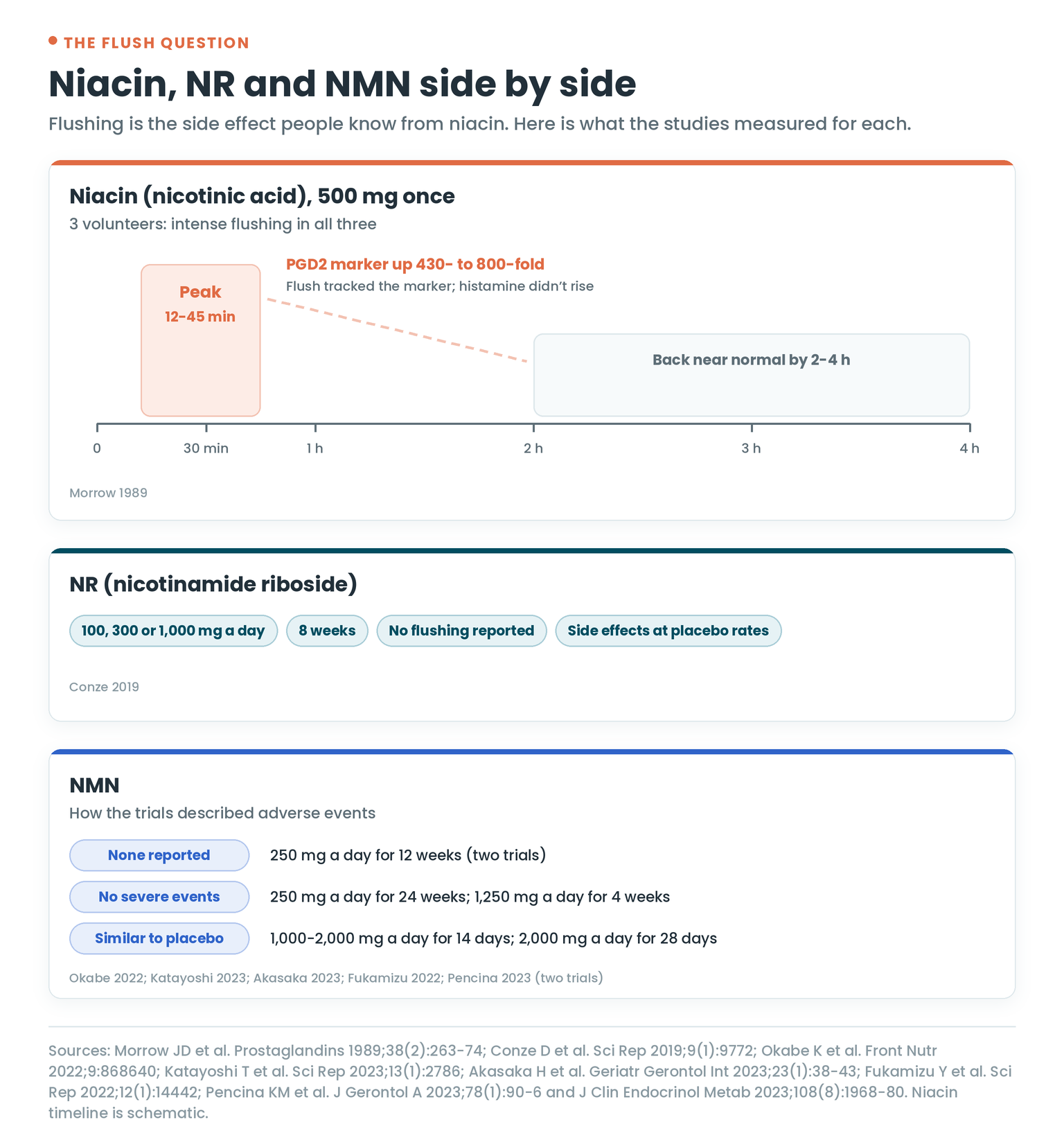
Flushing is the side effect people know from niacin, another form of vitamin B3. When 3 volunteers took 500 mg of niacin, they flushed intensely, and a marker of the blood vessel signal prostaglandin D2 rose 430- to 800-fold. It peaked 12 to 45 minutes after the dose and was back near normal within 2 to 4 hours. The flush tracked that signal in each volunteer, and histamine didn’t rise, which the authors took to mean the signal wasn’t coming from mast cells.
NR, NMN’s closest relative, caused no flushing at 100, 300 or 1,000 mg a day for 8 weeks. In the NMN trials above, adverse events were absent, not severe, or similar to placebo.
NMN vs NR on Safety
NR is the other NAD+ precursor sold as a supplement, and its safety trials run along the same lines:
- 8 weeks at 100, 300 or 1,000 mg a day: no flushing, side effects at placebo rates, no rise in LDL cholesterol and no disruption of one-carbon metabolism.
- 12 weeks at 1,000 mg twice a day in obese men: no serious adverse events from NR, and safety blood tests stayed normal.
- Two 6-week periods in healthy middle-aged and older adults: well tolerated, with NAD+ metabolism raised.
In cell studies, NMN was converted to NR outside the cell before entering, which is one reason the two behave alike. For more on that route, see Huberman on NAD.
Where NMN Goes After You Take It
Following NMN through the body explains which lab values move:
- Into NAD+: whole-blood NAD+ rose after 12 weeks at 250 mg a day, along with NAMN, a related molecule. NMN itself didn’t build up in the blood.
- Into nicotinamide: serum nicotinamide, NAD+’s leftover piece, was higher with NMN than with placebo after 12 weeks.
- Out in urine: breakdown products called 2-Py and 4-Py rose with the dose after single doses, and very little NMN left the body unchanged.
For what those breakdown products mean on a lab report, see NAD Test.
The Methyl Question
To clear nicotinamide, the body tags it with a methyl group, and that draws on the same methyl donors used elsewhere. A 2017 study gave 30 adults a single 300 mg dose of nicotinamide, nicotinic acid or water. Three hours after nicotinamide, homocysteine was 61% higher and betaine, a methyl donor, was 24% lower than with water. Nicotinic acid moved them less: homocysteine was 12.85 µmol/L after nicotinic acid against 18.08 after nicotinamide, and methylnicotinamide, the tagged product, was 1.90 against 3.62.
That study used nicotinamide itself, in one dose. In the 8-week NR trial, one-carbon metabolism, the pathway that handles methyl groups, wasn’t disrupted at up to 1,000 mg a day. The enzyme that does the tagging, NNMT, also features in 5-Amino-1MQ Side Effects.
What the Animal Safety Studies Found
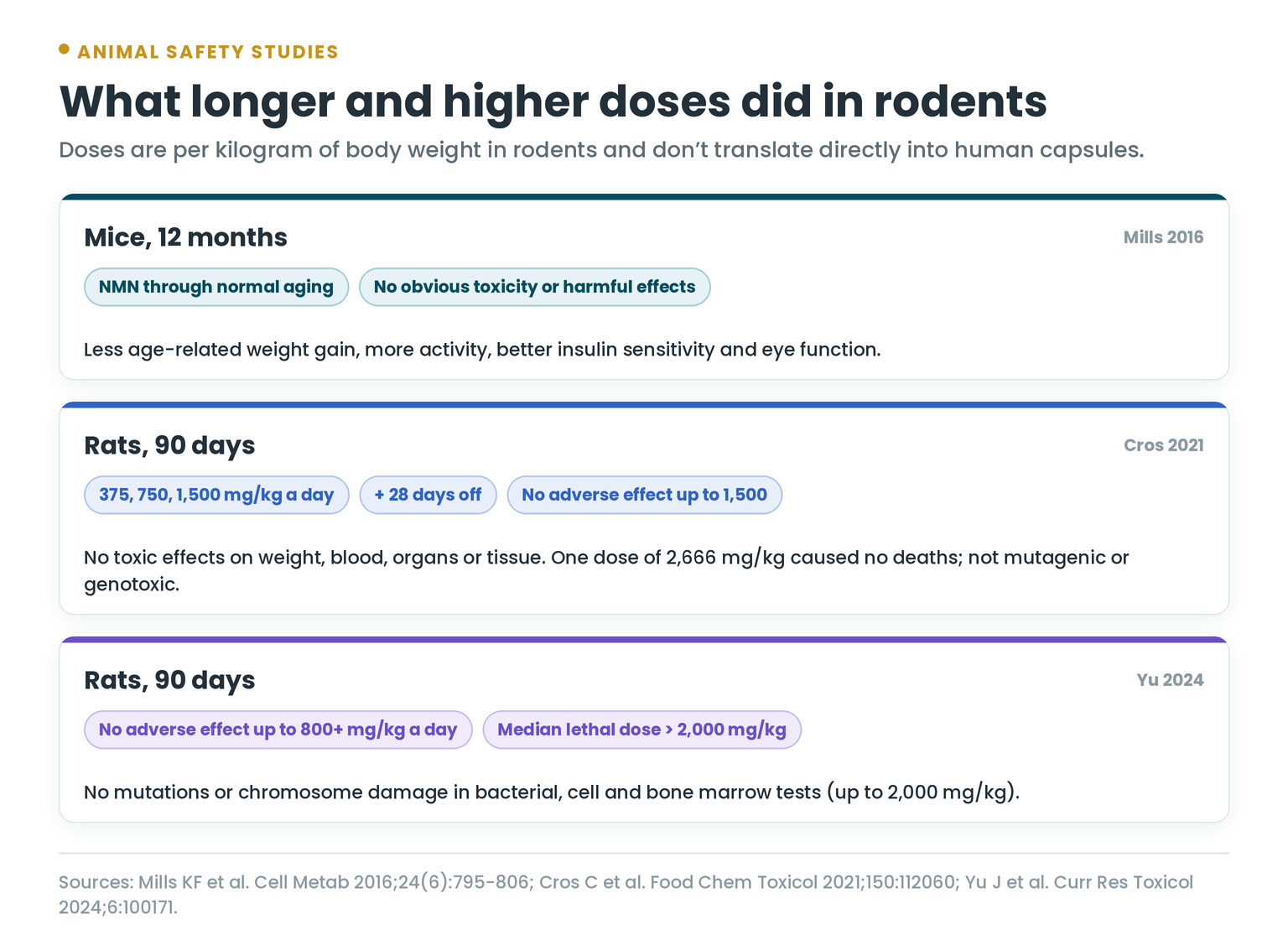
Animal studies push doses and durations further than human trials:
- Mice, 12 months: NMN given through normal aging caused no obvious toxicity or harmful effects. The mice gained less weight with age, were more active and had better insulin sensitivity and eye function.
- Rats, 90 days (2021): 375, 750 and 1,500 mg per kg of body weight a day, followed by 28 days off, caused no toxic effects on weight, blood, organs or tissue. A single dose of 2,666 mg/kg caused no deaths or adverse signs, and NMN wasn’t mutagenic or genotoxic.
- Rats, 90 days (2024): no adverse effects up to at least 800 mg/kg a day, a median lethal dose above 2,000 mg/kg, and no mutations or chromosome damage in bacterial, cell and bone marrow tests.
Those are per-kilogram doses in rodents, which don’t translate directly into human capsules.
When and How It Was Taken
Timing comes up because NAD+ runs on a daily rhythm: in mice, NAD+ and the enzyme NAMPT rise and fall over the day. In people, the 8-week study gave NMN before breakfast, and the morning-versus-afternoon trial found the largest effects in the afternoon group, with placebo also improving in the afternoon.
The schedule varied too. Most trials gave NMN once a day; one split 250 mg into two 125 mg capsules taken twice a day, and the 28-day trial used two 500 mg tablets of a microcrystalline form, twice a day.
Who Was in the Trials
The trials enrolled small groups, from 10 to 108 people. Ages ran from 20 to 65 in the 1,250 mg trial, 40 to 65 in the 60-day trial, 55 to 80 in the 14-day trial and an average of 81 in the trial of older men with diabetes. Several studied men only, one studied women with prediabetes, and three describe their volunteers as Japanese in their titles.
Most were randomized and compared NMN with a placebo. Two weren’t: the first single-dose study gave every man NMN, and in the 8-week before-breakfast study all 11 men took NMN and knew it.
Reading a Safety Result
“Adverse events similar to placebo” means the NMN group reported problems at about the same rate as people taking a dummy capsule. That comparison matters because people report headaches, stomach upsets and poor sleep in any group over a few weeks. The afternoon placebo group in the timing trial shows the same effect in reverse: their drowsiness improved too.
“No severe adverse events” means nothing serious happened. It rules out serious problems rather than every minor complaint.
Why Results Vary Between People
In the 60-day trial, NAD+ rose with the dose, but the spread within each dose group was large: the coefficient of variation ran from 29% to 113%. People whose NAD+ rose more also walked further in a 6-minute walk test and scored higher on a quality-of-life survey.
In the 12-week trial at 250 mg a day, the size of the NAD+ rise was strongly linked to each person’s pulse rate before they started. The same dose can land very differently from one person to the next. For how NAD+ is measured, see NAD Test.
What Changed Besides NAD+
The trials measured effects as well as safety:
- 2,000 mg a day for 28 days: body weight fell 1.9 kg more than with placebo, diastolic blood pressure 7 mm Hg more, total cholesterol 27 mg/dL more and LDL 19 mg/dL more. Strength, endurance, insulin sensitivity and liver and belly fat didn’t change.
- 250 mg a day for 24 weeks in older men with diabetes: grip strength and walking speed didn’t improve.
- 300 to 900 mg a day for 60 days: six-minute walk distance rose more than with placebo.
- 10 weeks in women with prediabetes: muscle insulin sensitivity rose.
- 250 mg a day for 8 weeks: in 3 men whose insulin spiked after a glucose drink, the spike was modestly smaller.
A 2023 review noted that most NMN studies have been in cells and animals, with about a dozen human trials under way at the time. For how NMN fits the NAD+ picture with NR, resveratrol and exercise, see Huberman on NAD.
Doses Used in the Research
- Single doses: 100, 250 and 500 mg (Irie 2020).
- 250 mg a day: 6 or 12 weeks (Igarashi 2022); 12 weeks (Okabe 2022; Katayoshi 2023, as 125 mg twice a day; Kim 2022, morning or afternoon); 8 weeks before breakfast (Yamaguchi 2024); 24 weeks (Akasaka 2023).
- 300, 600 or 900 mg a day: 60 days (Yi 2023).
- 300, 600 or 1,200 mg a day: 6 weeks in runners (Liao 2021).
- 1,250 mg a day: 4 weeks (Fukamizu 2022).
- 1,000 mg once or twice a day: 14 days (Pencina 2023, gerontology trial).
- 1,000 mg twice a day: 28 days (Pencina 2023, metabolism trial).
- Rats: 375 to 1,500 mg/kg a day for 90 days (Cros 2021); up to 800 mg/kg a day for 90 days (Yu 2024).
- Comparators: niacin 500 mg once (Morrow 1989); nicotinamide or nicotinic acid 300 mg once (Sun 2017); NR 100, 300 or 1,000 mg a day for 8 weeks (Conze 2019).
Frequently Asked Questions
What are the side effects of NMN?
In human trials from 100 mg to 2,000 mg a day, adverse events were absent, not severe, or similar to placebo. Single doses shifted bilirubin, creatinine, chloride and glucose slightly, all within the normal range.
Is NMN safe long-term?
The longest human trial ran 24 weeks at 250 mg a day with no severe adverse events. In mice, 12 months of NMN caused no obvious toxicity.
What’s the highest NMN dose tested in people?
2,000 mg a day, taken as 1,000 mg twice a day, for 14 days in one trial and 28 days in another. Adverse events were similar to placebo in both.
Does NMN cause flushing like niacin?
Niacin flushing comes from a surge of prostaglandin D2 within an hour of the dose. NR caused no flushing at up to 1,000 mg a day for 8 weeks, and in the NMN trials adverse events were absent, not severe, or similar to placebo.
Does NMN affect blood pressure?
Single doses left blood pressure unchanged. At 2,000 mg a day for 28 days, diastolic pressure fell about 7 mm Hg more than with placebo.
Does NMN affect sleep?
Sleep quality was unchanged after single doses. Taken in the afternoon for 12 weeks, NMN was linked with less drowsiness, though the afternoon placebo group improved too.
Can NMN raise homocysteine?
NMN raises nicotinamide, and clearing a single 300 mg dose of nicotinamide raised homocysteine 61% at 3 hours. In an 8-week NR trial, the methyl-group pathway wasn’t disrupted.
Should I take NMN in the morning or afternoon?
One 12-week trial in older adults found the largest effects with afternoon doses, though placebo also improved in the afternoon. Another trial gave NMN before breakfast.
How long does NMN take to raise NAD+?
Blood NAD+ was higher after 14 days at 1,000 to 2,000 mg a day, and at day 30 of the 60-day trial at 300 to 900 mg a day.
Does NMN affect blood sugar?
Single doses lowered blood glucose slightly, within the normal range. Over 28 to 60 days, HOMA-IR and directly measured insulin sensitivity didn’t change, while a 10-week trial in women with prediabetes found muscle insulin sensitivity rose.
Does NMN cause weight gain?
Body composition held steady in 4- to 12-week trials, and body weight fell 1.9 kg more than with placebo at 2,000 mg a day for 28 days. Mice given NMN for a year gained less weight with age.
Is NMN safer than NR?
The trials compared each one with placebo rather than with each other. NMN’s adverse events matched placebo at up to 2,000 mg a day for 28 days, and NR at 2,000 mg a day for 12 weeks caused no serious adverse events.
Is NMN safe for older adults?
Older adults were the focus of several trials: men averaging 81 with diabetes took 250 mg a day for 24 weeks with no severe adverse events, older men took 250 mg a day for up to 12 weeks without significant harmful effects, and adults aged 55 to 80 took up to 2,000 mg a day for 14 days with adverse events at similar rates in every group.
Why does NMN work differently for different people?
At the same dose, the rise in NAD+ varied widely between people, with a coefficient of variation of 29% to 113%. In one trial, the rise tracked each person’s starting pulse rate.
Stay sharp,
Joe Mars
The Peptide Report
P.S. Tracking how NMN or NR is working for you? Compare notes with others in the Peptides & Biohacking Hub on Skool.
References
- Ratajczak J, Joffraud M, Trammell SAJ, et al. NRK1 controls nicotinamide mononucleotide and nicotinamide riboside metabolism in mammalian cells. Nat Commun. 2016;7:13103. doi:10.1038/ncomms13103
- Irie J, Inagaki E, Fujita M, et al. Effect of oral administration of nicotinamide mononucleotide on clinical parameters and nicotinamide metabolite levels in healthy Japanese men. Endocr J. 2020;67(2):153-160. doi:10.1507/endocrj.EJ19-0313
- Yamaguchi S, Irie J, Mitsuishi M, et al. Safety and efficacy of long-term nicotinamide mononucleotide supplementation on metabolism, sleep, and nicotinamide adenine dinucleotide biosynthesis in healthy, middle-aged Japanese men. Endocr J. 2024;71(2):153-169. doi:10.1507/endocrj.EJ23-0431
- Okabe K, Yaku K, Uchida Y, et al. Oral administration of nicotinamide mononucleotide is safe and efficiently increases blood nicotinamide adenine dinucleotide levels in healthy subjects. Front Nutr. 2022;9:868640. doi:10.3389/fnut.2022.868640
- Katayoshi T, Uehata S, Nakashima N, et al. Nicotinamide adenine dinucleotide metabolism and arterial stiffness after long-term nicotinamide mononucleotide supplementation: a randomized, double-blind, placebo-controlled trial. Sci Rep. 2023;13(1):2786. doi:10.1038/s41598-023-29787-3
- Igarashi M, Nakagawa-Nagahama Y, Miura M, et al. Chronic nicotinamide mononucleotide supplementation elevates blood nicotinamide adenine dinucleotide levels and alters muscle function in healthy older men. NPJ Aging. 2022;8(1):5. doi:10.1038/s41514-022-00084-z
- Akasaka H, Nakagami H, Sugimoto K, et al. Effects of nicotinamide mononucleotide on older patients with diabetes and impaired physical performance: a prospective, placebo-controlled, double-blind study. Geriatr Gerontol Int. 2023;23(1):38-43. doi:10.1111/ggi.14513
- Yi L, Maier AB, Tao R, et al. The efficacy and safety of β-nicotinamide mononucleotide (NMN) supplementation in healthy middle-aged adults: a randomized, multicenter, double-blind, placebo-controlled, parallel-group, dose-dependent clinical trial. GeroScience. 2023;45(1):29-43. doi:10.1007/s11357-022-00705-1
- Fukamizu Y, Uchida Y, Shigekawa A, et al. Safety evaluation of β-nicotinamide mononucleotide oral administration in healthy adult men and women. Sci Rep. 2022;12(1):14442. doi:10.1038/s41598-022-18272-y
- Pencina KM, Lavu S, Dos Santos M, et al. MIB-626, an oral formulation of a microcrystalline unique polymorph of β-nicotinamide mononucleotide, increases circulating nicotinamide adenine dinucleotide and its metabolome in middle-aged and older adults. J Gerontol A Biol Sci Med Sci. 2023;78(1):90-96. doi:10.1093/gerona/glac049
- Pencina KM, Valderrabano R, Wipper B, et al. Nicotinamide adenine dinucleotide augmentation in overweight or obese middle-aged and older adults: a physiologic study. J Clin Endocrinol Metab. 2023;108(8):1968-1980. doi:10.1210/clinem/dgad027
- Kim M, Seol J, Sato T, et al. Effect of 12-week intake of nicotinamide mononucleotide on sleep quality, fatigue, and physical performance in older Japanese adults: a randomized, double-blind placebo-controlled study. Nutrients. 2022;14(4):755. doi:10.3390/nu14040755
- Morrow JD, Parsons WG 3rd, Roberts LJ 2nd. Release of markedly increased quantities of prostaglandin D2 in vivo in humans following the administration of nicotinic acid. Prostaglandins. 1989;38(2):263-274. doi:10.1016/0090-6980(89)90088-9
- Dollerup OL, Christensen B, Svart M, et al. A randomized placebo-controlled clinical trial of nicotinamide riboside in obese men: safety, insulin-sensitivity, and lipid-mobilizing effects. Am J Clin Nutr. 2018;108(2):343-353. doi:10.1093/ajcn/nqy132
- Martens CR, Denman BA, Mazzo MR, et al. Chronic nicotinamide riboside supplementation is well-tolerated and elevates NAD+ in healthy middle-aged and older adults. Nat Commun. 2018;9(1):1286. doi:10.1038/s41467-018-03421-7
- Conze D, Brenner C, Kruger CL. Safety and metabolism of long-term administration of NIAGEN (nicotinamide riboside chloride) in a randomized, double-blind, placebo-controlled clinical trial of healthy overweight adults. Sci Rep. 2019;9(1):9772. doi:10.1038/s41598-019-46120-z
- Sun WP, Zhai MZ, Li D, et al. Comparison of the effects of nicotinic acid and nicotinamide degradation on plasma betaine and choline levels. Clin Nutr. 2017;36(4):1136-1142. doi:10.1016/j.clnu.2016.07.016
- Mills KF, Yoshida S, Stein LR, et al. Long-term administration of nicotinamide mononucleotide mitigates age-associated physiological decline in mice. Cell Metab. 2016;24(6):795-806. doi:10.1016/j.cmet.2016.09.013
- Cros C, Cannelle H, Laganier L, et al. Safety evaluation after acute and sub-chronic oral administration of high purity nicotinamide mononucleotide (NMN-C) in Sprague-Dawley rats. Food Chem Toxicol. 2021;150:112060. doi:10.1016/j.fct.2021.112060
- Yu J, Shen Q, Li J. Toxicology study profile of nicotinamide mononucleotide after acute and 90-day sub chronic dosing in Wistar rats and mutagenicity tests. Curr Res Toxicol. 2024;6:100171. doi:10.1016/j.crtox.2024.100171
- Ramsey KM, Yoshino J, Brace CS, et al. Circadian clock feedback cycle through NAMPT-mediated NAD+ biosynthesis. Science. 2009;324(5927):651-654. doi:10.1126/science.1171641
- Kuerec AH, Wang W, Yi L, et al. Towards personalized nicotinamide mononucleotide (NMN) supplementation: nicotinamide adenine dinucleotide (NAD) concentration. Mech Ageing Dev. 2024;218:111917. doi:10.1016/j.mad.2024.111917
- Yoshino M, Yoshino J, Kayser BD, et al. Nicotinamide mononucleotide increases muscle insulin sensitivity in prediabetic women. Science. 2021;372(6547):1224-1229. doi:10.1126/science.abe9985
- Liao B, Zhao Y, Wang D, et al. Nicotinamide mononucleotide supplementation enhances aerobic capacity in amateur runners: a randomized, double-blind study. J Int Soc Sports Nutr. 2021;18(1):54. doi:10.1186/s12970-021-00442-4
- Song Q, Zhou X, Xu K, et al. The safety and antiaging effects of nicotinamide mononucleotide in human clinical trials: an update. Adv Nutr. 2023;14(6):1416-1435. doi:10.1016/j.advnut.2023.08.008