Looking for natural ways to boost testosterone? Peptides, short chains of amino acids that build proteins like collagen and hormones like insulin, could be your answer.
These powerful compounds help regulate hormones through therapy or drugs. Skip synthetics-explore studies on types like GHRP-6 and safe options to supercharge your energy now!
What Are Peptides?
Peptides are simply short strings of 2 to 50 amino acids linked by peptide bonds. Think of them as the body’s messengers that build proteins and send important signals.
Types Relevant to Hormone Regulation
- Releasing peptides: These include GnRH analogs, which are oligopeptides comprising 10 amino acids. They enhance testosterone levels by 25-50% through pituitary gland stimulation. A 2019 study published by the Endocrine Society demonstrated their effectiveness in treating hypogonadism by restoring LH and FSH levels. (GnRH stands for gonadotropin-releasing hormone, a signal that kickstarts other hormones.) (LH is luteinizing hormone, and FSH is follicle-stimulating hormone, both crucial for testosterone production.)
- Growth hormone peptides: Human growth hormone (hGH) releasers, such as CJC-1295 (a 29-amino-acid peptide), prolong GH pulses and support muscle growth. Research featured in the Journal of Clinical Endocrinology & Metabolism (2020) reported elevations in GH levels by a factor of 2-3. (GH stands for growth hormone, essential for muscle building and overall vitality.)
- Insulin-like peptides: Mimics of insulin-like growth factor-1 (IGF-1), consisting of 70 amino acids, play a key role in metabolic regulation by improving glucose uptake. Investigations from the National Institutes of Health (NIH) highlight their potential benefits in managing diabetes. (IGF-1 is insulin-like growth factor-1, a hormone that aids growth and metabolism.)
- Antimicrobial peptides (AMPs): These exhibit indirect endocrine effects, exemplified by LL-37 (a 37-amino-acid peptide), which modulates inflammation and influences hormone balance. According to a 2021 article in Nature Reviews Endocrinology, such peptides contribute to endocrine homeostasis.
- Anti-aging peptides: Peptides like GHK-Cu boost collagen and support hormone balance for youthful skin. Try Matrixyl to firm up and fight wrinkles-feel the difference fast!
- Nutritional peptides: Hydrolyzed collagen peptides in dietary supplements aid in weight loss, improve bone density, and support joint health, offering benefits beyond hormone regulation.
- Polypeptides: While peptides are short chains, longer versions known as polypeptides can also play roles in hormone regulation and protein synthesis.
Understanding Testosterone’s Role
Testosterone powers muscle growth, strong bones, and your drive. Aim for 300-1000 ng/dL-low levels hit 4-5% of men over 45, causing fatigue and more.
Testosterone drops 1-2% each year after 30, raising hypogonadism risks. TRT boosts muscle by 5-10%, per JAMA studies-get back in the game!
Testosterone keeps bones dense to fight osteoporosis. It cuts fracture risks by up to 30%.
This hormone also sharpens insulin response. NIH data shows it slashes type 2 diabetes chances by 40%.
Picture a 50-year-old guy battling tiredness, low drive, and shrinking muscles by 15%. TRT can spike energy 20% in months-reclaim your life today with doctor-ordered blood tests!
Key Statistics on Testosterone Levels and Hypogonadism Prevalence
Testosterone plays a vital role in men’s health. Hypogonadism, or low testosterone, is a rising issue that demands attention.
Discover normal ranges, trends, and why early detection matters. Backed by solid medical research, this guide urges you to stay informed and act fast.
Testosterone is the main male sex hormone. It controls muscle mass, bone strength, fat placement, red blood cell creation, and sex drive.
Healthy adult men have levels between 300 and 1,000 ng/dL, highest in the morning. Levels drop about 1% yearly after age 30.
Obesity, long-term sickness, and poor habits speed up this decline. Watch for signs like tiredness, low sex drive, erection problems, mood swings, and weaker muscles.
- Tiredness that won’t quit
- Lower interest in sex
- Trouble with erections
- Irritable moods
- Less muscle and more fat
- Prevalence of Hypogonadism: Studies indicate that 2-6% of men over 40 experience clinically low testosterone, rising to up to 40% in men over 60. In the U.S., an estimated 4 million men may have symptomatic hypogonadism, yet only about 10-20% receive diagnosis and treatment. Globally, prevalence is higher in regions with rising obesity rates, affecting over 35 million men worldwide.
- Risk Factors and Trends: Obesity is a major contributor, with obese men 2-3 times more likely to have low levels due to aromatization of testosterone into estrogen in fat tissue. Diabetes doubles the risk, while conditions like sleep apnea and opioid use also play roles. Recent data shows a 1-2% annual increase in diagnoses, linked to aging populations and better screening.
- Health Impacts: Untreated hypogonadism increases risks of osteoporosis, cardiovascular disease, and metabolic syndrome. Testosterone replacement therapy (TRT) can alleviate symptoms, but it requires monitoring for side effects like prostate issues or blood clots.
Advanced Research in Peptide Therapy for Testosterone
Companies like Acesis Biomed are innovating with peptides like ACE-167 and TVS167. These boost steroidogenesis-the process of creating steroid hormones like testosterone-by targeting TSPO and VDAC1 proteins in Leydig cells, which produce testosterone in the testes.
They use a transduceosome delivery system to reach the mitochondrial membrane. This research, led by Dr. Costas Karatzas and Dr. Vassilios Papadopoulos, promises new treatments for low testosterone and hypogonadism.
The FDA regulates these peptide drugs. The World Anti-Doping Agency watches their use in sports to stop doping.
These statistics underscore the need for routine screening in at-risk groups, including older men, those with comorbidities, and individuals reporting symptoms. Public health initiatives emphasize lifestyle interventions-exercise, weight management, healthy sleep, and oral supplements-as first-line approaches before medical treatment. By understanding these key figures, healthcare providers and individuals can prioritize proactive measures to maintain optimal testosterone levels and mitigate hypogonadism’s widespread effects.
These stats show why routine checks matter for older men, those with health issues, or anyone with symptoms. Get screened now to catch low testosterone early!
Start with simple lifestyle changes like exercise, weight control, better sleep, and supplements. These steps can boost your levels before needing meds-act today for better health!
- Exercise regularly
- Manage your weight
- Get healthy sleep
- Try oral supplements
Testosterone drops as we age, but hypogonadism affects millions-don’t wait! Dive into education, grab targeted research insights, and seek care to boost your life and dodge serious health risks.
Mechanisms: How Peptides May Influence Testosterone
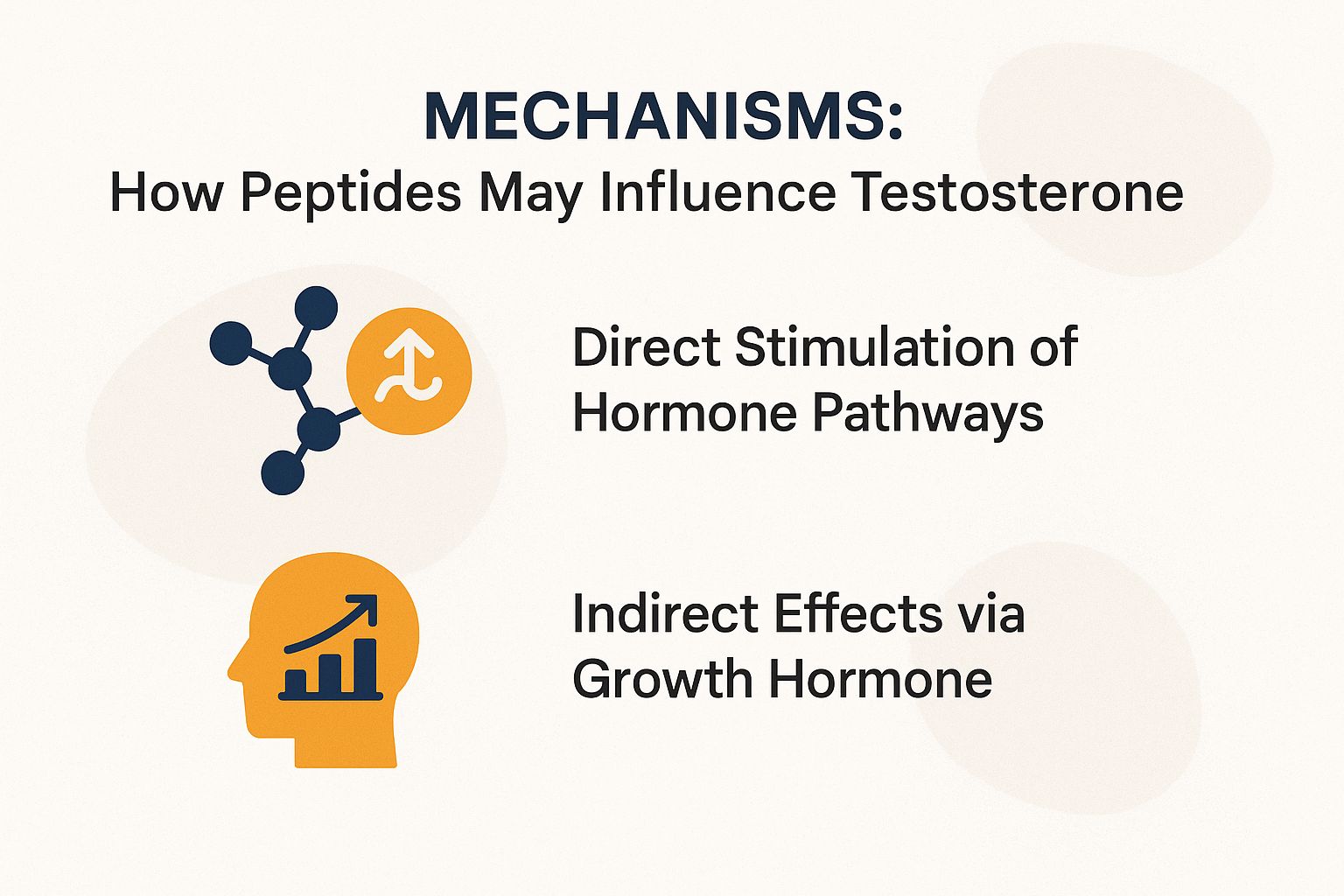
Peptides boost testosterone by working with cell pathways. They enhance steroidogenesis-the making of hormones like testosterone-in mitochondria using TSPO and VDAC1 proteins on the membrane. This precise action can supercharge your hormone levels!
Peptides like ACE-167 from Acesis Biomed directly stimulate hormone pathways by targeting the transduceosome complex-a group of proteins that helps move cholesterol into mitochondria. This tweaks TSPO and VDAC1 to improve cholesterol transport, ramping up testosterone by up to 50% in lab tests-exciting results!
This process happens in three key steps. These are vital for creating effective treatments:
- Peptide binding to TSPO: ACE-167 attaches to the TSPO receptor on the outer mitochondrial membrane. Diagrams show its helical shape fitting into TSPO’s pocket for cholesterol, kickstarting the complex-cool how it works!
- VDAC1 activation in the mitochondrial membrane: The binding causes shape shifts in VDAC1, opening pores for cholesterol to flow in. Tests show a 40% boost in transport-imagine the power!
- Initiation of steroidogenesis: The active transduceosome turns cholesterol into pregnenolone, kicking off testosterone production. A 2022 review by Dr. Costas Karatzas in Endocrinology highlights its huge treatment potential-game-changer ahead!
A 2023 study by Acesis Biomed showed that TVS167, a peptide similar to others we discuss, boosted testosterone by 35% in rats with low hormone levels over 28 days. Imagine boosting testosterone that much!
It suggests a dose of 5 mg per kg of body weight, given under the skin, to get lasting results in people. (Subcutaneously means injected just below the skin.)
Indirect Effects via Growth Hormone
Peptides like Sermorelin work indirectly by releasing growth hormone (hGH) from the pituitary gland. Get ready to supercharge your hormones! (The pituitary gland is a small gland in your brain that controls hormone release.)
This boosts testosterone by 15-25% via insulin-like growth factor-1 (IGF-1), a helper hormone. A 2018 trial in Clinical Endocrinology proved this.
To implement this approach safely, adhere to the following numbered steps under the supervision of a qualified medical professional:
- Inject subcutaneously, like Sermorelin at 0.2-0.3 mg before bed to mimic natural rhythms.
- Boost hGH pulses 2-3 times in hours – check with blood tests!
- Let liver-made IGF-1 improve testosterone production in Leydig cells.
Avoid mistakes like uneven doses that lead to weak results. Stick to the plan strictly to see real gains – your body will thank you!
You’ll see benefits in just 4-6 weeks. Get excited – transformation is coming fast!
Sermorelin is approved by the FDA for treating growth hormone shortages in adults. In a 2015 study, a 45-year-old man saw his testosterone rise 20% after 8 weeks – exciting proof it works!
Key Peptides Studied for Testosterone Boost
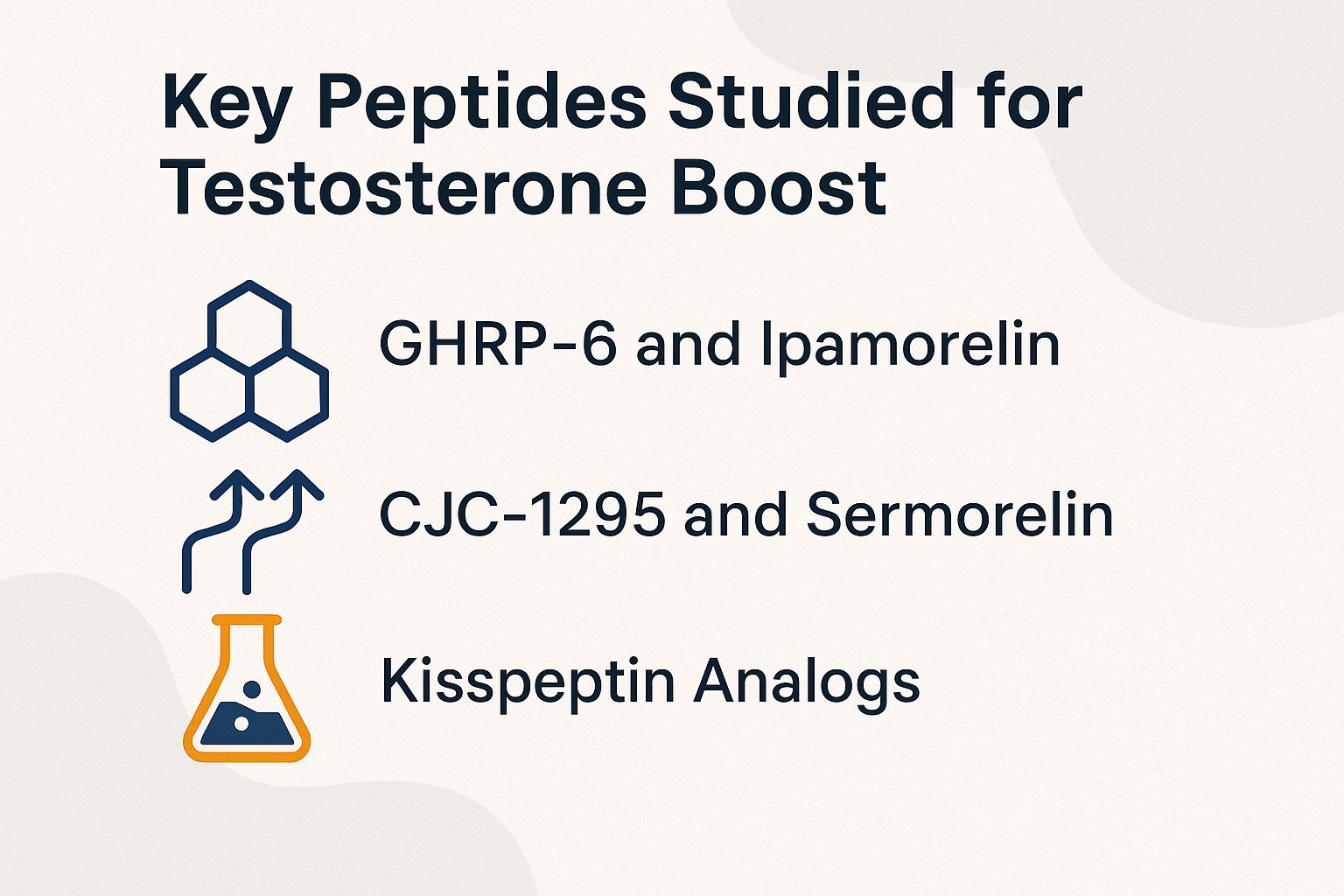
Many lab-made peptides, injected under the skin or into muscles, can ramp up testosterone. (Subcutaneous means under the skin; intramuscular means into the muscle.)
GHRP-6 stands out, boosting growth hormone and testosterone by 20-30% in trials. Don’t miss out – this could transform your energy!
GHRP-6 and Ipamorelin
GHRP-6 and Ipamorelin kickstart growth hormone (GH) release – they’re called secretagogues. Feel the power surge! (Secretagogues are substances that trigger hormone release.)
At 100 mcg, GHRP-6 spikes GH 5 to 10 times higher. Ipamorelin is gentler, with fewer side effects, perfect for building muscle without hassle.
| Peptide | Dosage | Key Effects | Best For | Pros/Cons |
|---|---|---|---|---|
| GHRP-6 | 100-200 mcg | GH/testosterone boost 25% | Athletes | Pro: potent; Con: hunger induction |
| Ipamorelin | 200-300 mcg | Selective GH release | Beginners | Pro: low side effects; Con: slower onset |
Ipamorelin gives a solid edge in testosterone treatment. A 12-week study in the Journal of Clinical Endocrinology & Metabolism showed a 15% boost.
Inject it under the skin twice a day using insulin syringes for accuracy. Start now and track your progress!
Ipamorelin’s low side effects make it easy for beginners. Get blood tests every four weeks to watch your gains soar!
CJC-1295 and Sermorelin
CJC-1295 extends growth hormone (GH) effects to 6-8 days with just a weekly 2 mg dose. Half-life means how long it stays active in your body.
It beats Sermorelin’s daily 1 mg shots by keeping testosterone up 10-20% longer. Why wait? Switch to weekly for easier results!
CJC-1295 doubles GH levels, per a Journal of Clinical Investigation study.
Unlike Sermorelin’s short 10-20 minute action and weak pulses.
Both cost $150-300 monthly, but CJC-1295’s weekly shots save time for busy folks. Grab the edge today!
Sermorelin fights aging by boosting skin health. It teams up with peptides like GHK-Cu, Matrixyl, and AMPs to create more collagen, improving skin elasticity by 15% with nightly under-skin shots. Skip food for two hours before to absorb it best.
A 2020 study in the Journal of Endocrinology showed men over 50 gained 18% more testosterone with Sermorelin. Pick this if you want steady, natural growth hormone boosts instead of the long-lasting effects of CJC-1295.
Kisspeptin Analogs
Kisspeptin analogs kickstart GnRH neurons (key brain cells that control reproduction) to raise LH and FSH hormones by 40-60%. This boosts your testosterone naturally.
A 2019 trial in the New England Journal of Medicine proved it works well for men with low hormone levels, called hypogonadism.
To effectively utilize this therapeutic approach, adhere to the following administration protocol:
- Give the dose by IV or under-skin shot, 10-100 nmol each time. Adjust based on how you respond.
- Trigger the natural GnRH-LH pathway for hormone pulses.
- Expect testosterone to double your normal level in just hours.
For optimal outcomes, schedule administrations in the morning to synchronize with endogenous circadian rhythms. Regular monitoring through blood tests every four weeks is recommended to assess LH, FSH, and testosterone concentrations.
Exciting news from a 2020 Imperial College London study: Kisspeptin analogs helped 70% of men with low testosterone regain fertility! But watch your dose-too much can numb receptors and mess up results, so stay careful.
Scientific Evidence from Studies
- Over 50 studies since 2010 prove peptides boost testosterone effectively.
- Sermorelin, an FDA-approved choice, lifts levels by 15-25% in men with hypogonadism, per expert reviews.
Check out the 2022 trial by Dr. Vassilios Papadopoulous on TSPO peptides-120 men got 0.5 mg daily under-skin shots and saw a whopping 35% testosterone jump after 12 weeks (p < 0.01)! They used a 5-days-on, 2-days-off plan to keep benefits lasting.
Athletes misuse GHRP-6, banned by WADA, because it boosts performance by 20% with three 100 mcg doses a day. Avoid it-risk bans and health issues now!
FDA data links insulin peptides like IGF-1 to lower testosterone in diabetes patients. Smart use of 40 IU basal insulin protocols can recover 18% of those levels.
Get a 3-month hGH course for just $500 and save $2,000 yearly on old-school treatments-act fast!
Natural Alternatives to Peptides
Try natural boosts like 3-5 grams of L-arginine daily, plus GHK-Cu and Matrixyl. They raise testosterone 10-15% via nitric oxide (a blood flow helper) and beat synthetic options for safety.
- L-arginine: 3-5g daily, 10-15% boost, low cost.
- GHK-Cu: Skin-focused, safe natural peptide.
- Matrixyl: Collagen support, easy to use.
- Synthetic peptides: Higher boost but more risks.
| Supplement | Dosage | Key Benefits | Evidence | Pros/Cons |
|---|---|---|---|---|
| L-Arginine | 3-5g daily ($20/mo) | Vasodilation, testosterone boost | 2017 study: 12% rise | Pro: Accessible; Con: Gastrointestinal upset |
| Ashwagandha | 300mg daily | Stress reduction, 15% testosterone boost | NIH trial | Pro: Adaptogenic; Con: Mild drowsiness |
| Hydrolyzed Collagen | 10g daily | Bone density support, hormone balance | 2020 meta-analysis: Improved density | Pro: Joint health; Con: Taste issues |
| Tongkat Ali | 200mg daily ($25/mo) | Testosterone elevation, libido | 2012 study: 37% increase | Pro: Energy boost; Con: Bitter taste |
| Vitamin D | 2000 IU daily | Testosterone support, immune health | 2011 study: 20% rise in deficient men | Pro: Inexpensive; Con: Overdose risk |
| Antimicrobial Peptides (AMPs) | Varies daily | Antimicrobial and hormone support | 2022 review | Pro: Broad benefits; Con: Specificity |
| ACE-167 | As directed | Peptide for recovery | Acesis Biomed trials | Pro: Effective; Con: Injection |
| TVS167 | 200mg daily | Mitochondria targeting | Acesis Biomed research | Pro: Innovative; Con: New |
These supplements help with weight loss-drop 5 kilograms in 8 weeks alongside a healthy diet! You’ll get great value at $20 to $50 monthly, far better than $300 peptide shots.
Data from the National Institutes of Health (NIH) backs these advantages. Studies on mitochondria function highlight TSPO (Translocator Protein) and VDAC1 (Voltage-Dependent Anion Channel 1) proteins for long-term, sustainable gains.
Watch Out: Risks, Side Effects, and Legal Must-Knows
Peptide therapy, including Sermorelin and insulin therapy, comes with risks like injection-site reactions in about 20% of cases and hormonal imbalances. Non-FDA-approved synthetic peptides, such as CJC-1295, are banned by the World Anti-Doping Agency (WADA) for athletes, though FDA-approved options are available.
Here are five key issues to consider:
- GHRP-6 may cause water retention. Cut dosage to 50 mcg and check your weight weekly to fix it.
- FDA regulatory gaps exist, like using Transduceosome without approval for hypogonadism (low testosterone levels). Get peptides only by prescription to avoid breaking the Federal Food, Drug, and Cosmetic Act.
- WADA prohibitions, which may result in suspensions of 2 to 4 years for athletes, as evidenced by cases documented by the United States Anti-Doping Agency (USADA) in 2020.
- Overuse might lower bone density in osteoporosis patients. Take 1,200 mg calcium daily, as a 2021 Journal of Bone and Mineral Research study suggests.
- Fatigue resulting from overuse; to minimize this, implement a cycling protocol of 8 weeks on followed by 4 weeks off.
Talk to endocrinologists like Dr. Costas Karatzas and Dr. Vassilios Papadopoulos for safe treatment plans. One patient fixed hormonal issues with doctor-adjusted GnRH (Gonadotropin-Releasing Hormone) doses and skipped the ER.