Want to fight back against aging? Peptides might be your secret weapon. These small chains of amino acids-like Sermorelin, CJC-1295, and Ipamorelin-send signals to increase growth hormone and fix cells. This article explores how they work, from protecting telomeres to fighting antioxidants. Dive into studies and real evidence to see if peptides can unlock your youthful energy.
What Are Peptides?
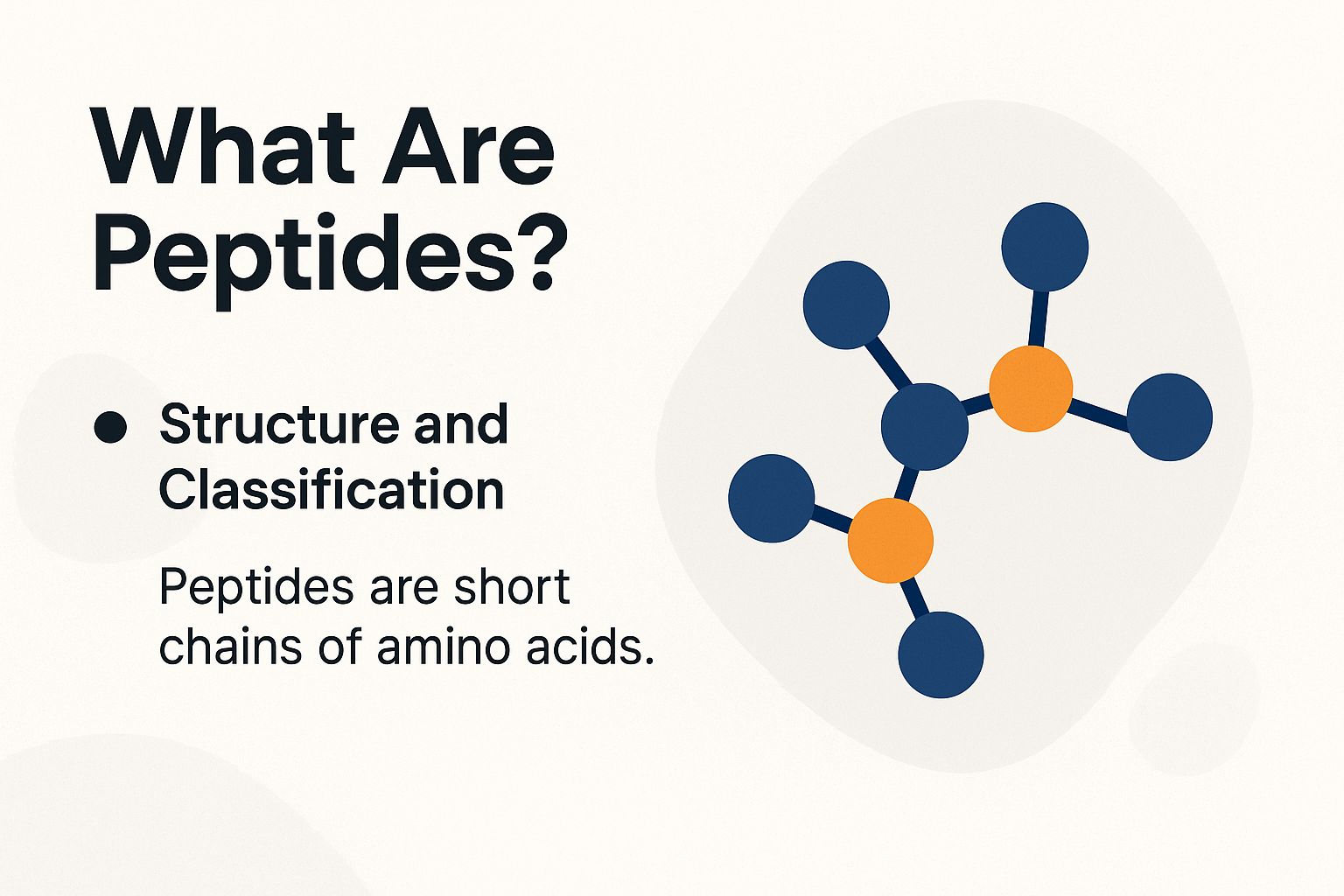
Peptides consist of just 2 to 50 amino acids.
Amino acids are the building blocks that make up proteins.
They act as signals inside the body or as treatments from outside. These help control things like swelling and cell damage from oxygen.
Structure and Classification
Peptides form from amino acids linked by peptide bonds. Think of peptide bonds as strong connections between these building blocks.
We classify peptides by what they do.
For example, growth hormone secretagogues like Sermorelin (with 29 amino acids) boost hormone release. Collagen peptides, broken down from collagen, help keep skin young.
Peptides also fall into groups based on their shape and what they do in the body:
- Linear peptides like Sermorelin hit the pituitary gland. This boosts HGH to repair muscles and build mass.
- Cyclic peptides, like BPC-157, speed up healing in animal tests. They do this by growing new blood vessels-called angiogenesis.
- Mimetic peptides mimic natural signals, like Semaglutide. This GLP-1 copy helps control hunger for better weight and metabolism.
A simple dipeptide looks like this: Start (N-terminus) – Amino Acid 1 – Bond – Amino Acid 2 – End (C-terminus).
A 2020 review in the Journal of Peptide Science found over 7,000 active peptides.
Labs in the US, Japan, and Europe make them using solid-phase synthesis. This method starts with amino acids stuck to resin for exact building.
Biological Processes of Aging
Aging hits through key body changes like telomere shortening.
Telomeres are protective caps on chromosomes; they shorten, cutting cell division by 20-30% per decade after 40. ROS, or harmful oxygen molecules, also build up.
This leads to faulty cell powerhouses (mitochondria) and ongoing swelling (inflammation).
About 70% of people over 65 face this.
The seminal 2013 paper in *Cell* by Lpez-Otn et al., which delineates the hallmarks of aging, identifies five principal mechanisms:
- **Telomere shortening**: Chromosome tips wear down over time. This limits cell copying, as shown in Elizabeth Blackburn’s 2009 Nobel work.
- **Oxidative stress**: Free radicals-unstable molecules-harm DNA. This matches Denham Harman’s theory on aging.
- **Ongoing inflammation**: It turns on paths like NF-B, which damage tissues and cause breakdown.
- **Brain aging**: Amyloid plaques build up in Alzheimer’s and Parkinson’s. These hit about 6.5 million US adults, per CDC.
- **Skin aging**: Enzymes called MMPs break down collagen. This causes wrinkles and sagging skin.
Fight back-test your telomere length with a $200-400 blood test from labs like Life Length.
This shows your true body age. Use it to pick antioxidants or other fixes now!
How Peptides Fight Aging
Peptides mitigate the effects of aging by augmenting cell signaling pathways. For instance, human growth hormone (HGH) secretagogues aid in hormonal optimization by stimulating the production of insulin-like growth factor 1 (IGF-1), which, according to rodent studies, has been associated with a 12-18% increase in lifespan through targeted mechanisms, including telomere maintenance.
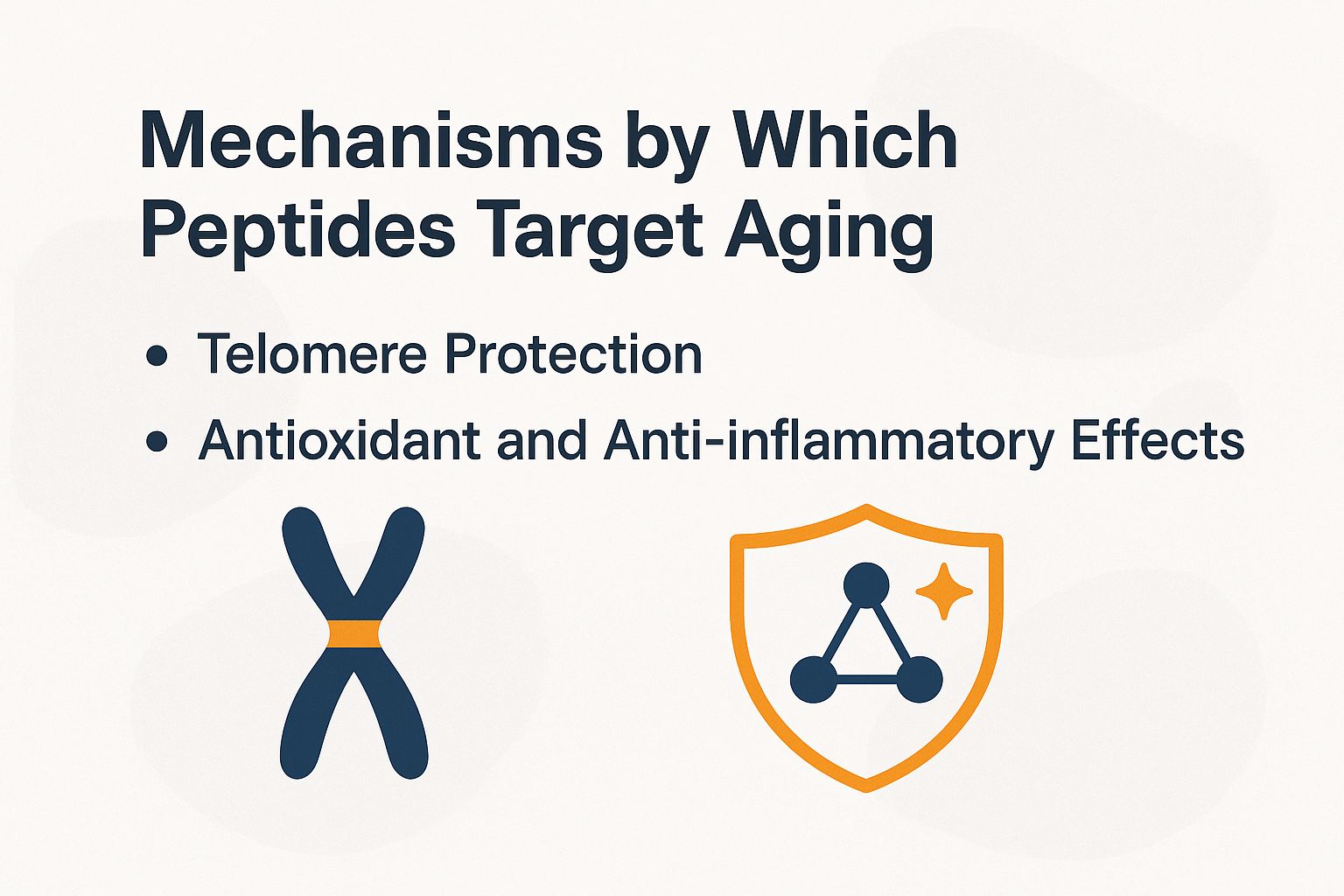
Telomere Protection
Telomeres, which serve as protective caps at the ends of chromosomes, naturally shorten with each cell division. However, peptides such as Epithalon can activate telomerase, an enzyme that extends telomere length by up to 40% in human cell cultures, as demonstrated in a 2003 study by Khavinson and colleagues.
Telomerase, a ribonucleoprotein enzyme, counteracts telomere shortening by adding telomeric DNA repeats to chromosome ends, thereby maintaining cellular integrity. Epithalon, a synthetic tetrapeptide composed of alanine-glutamic acid-aspartic acid-glycine (Ala-Glu-Asp-Gly), emulates signals from the pineal gland to upregulate telomerase activity through a specific mechanism:
- It binds to promoter regions of DNA;
- This binding enhances the expression of telomerase reverse transcriptase (TERT), the catalytic subunit of the enzyme;
- Consequently, it inhibits replicative senescence, the process by which cells cease division.
It is important to distinguish Epithalon from direct human growth hormone (HGH) therapy, which primarily stimulates growth hormone production but does not directly influence telomere length. Research conducted by Khavinson’s team in Russia, including 2011 trials on rodents, has shown that Epithalon delays markers of aging, such as reduced oxidative stress.
For practical application, Epithalon is typically administered in cycles of 5-10 mg per day via subcutaneous injection for 10-20 days, repeated biannually. Such use should always occur under medical supervision, with telomere length monitored through quantitative polymerase chain reaction (qPCR) assays.
Antioxidant and Anti-Inflammatory Effects
Peptides such as GHK-Cu exert their effects by scavenging reactive oxygen species (ROS) and inhibiting matrix metalloproteinases (MMPs), resulting in a 30-50% reduction in oxidative stress within skin fibroblasts, as evidenced by a 2014 study published in *Biofactors*.
This protective mechanism encompasses several key processes:
- Antioxidant activity facilitated by GHK-Cu’s copper-binding capabilities, which neutralize free radicals with twice the potency of vitamin C, as quantified by the Oxygen Radical Absorbance Capacity (ORAC) assay;
- Anti-inflammatory properties through the downregulation of cytokines such as IL-6, with demonstrated efficacy in preclinical models of Crohn’s disease;
- Buffering of ROS akin to the action of carnosine, particularly in mitigating neuronal damage associated with brain aging.
To overcome challenges related to peptide stability, liposomal delivery systems are advisable, as they enhance bioavailability by 40%.
A 2018 study in the *European Journal of Pharmacology* emphasizes GHK-Cu’s role in wound healing, documenting a 25% reduction in MMP-1 levels achieved via topical administration.
For practical implementation, serums containing 0.1-1% GHK-Cu should be applied daily to cleansed skin, with ongoing monitoring for potential irritation.
Promising Anti-Aging Peptides
Among the various anti-aging peptides, Epithalon, GHK-Cu, and MOTS-c are particularly noteworthy. User reports from clinics such as Rejuvenated Medical Spa indicate a 20% improvement in sleep cycle and athletic recovery following three-month peptide therapy protocols.
Distribution of Anti-Aging Peptides by Origin in AagingBase
Distribution of Anti-Aging Peptides by Origin in AagingBase
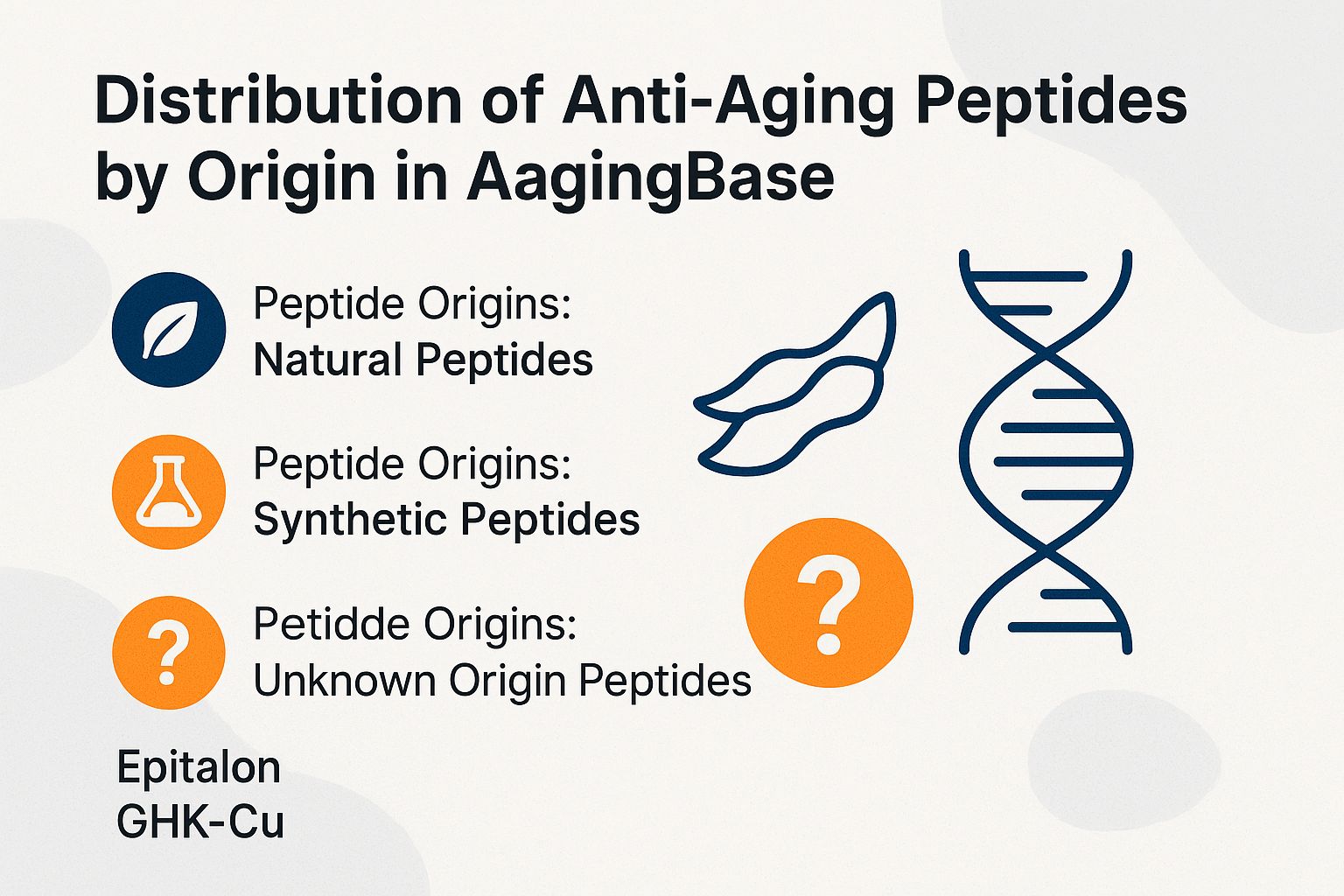
This distribution in AagingBase showcases the origins of various anti-aging peptides, including Sermorelin, CJC-1295, Ipamorelin, BPC-157, Semaglutide, Human Growth Hormone, Collagen, IGF-1, Insulin, MOTS-c, liraglutide, Liraglutide, and Epithalon. These peptides are utilized for weight loss, combating Alzheimers disease, Parkinsons disease, and Crohns disease, often derived from the Pituitary gland. Many are fda approved by the FDA in the U.S., Japan, and Europe. Treatments at Rejuvenated Medical Spa may involve blood draw for monitoring.
Peptide Origins: Natural Peptides
Peptide Origins: Synthetic Peptides
Peptide Origins: Unknown Origin Peptides
The Distribution of Anti-Aging Peptides by Origin in AgingBase offers a comprehensive breakdown of peptides in the AgingBase database. This key resource helps researchers study anti-aging compounds.
The data sorts peptides by origin: natural, synthetic, or unknown. It shows the balance between nature-sourced and lab-made molecules in anti-aging uses.
A total of 282 peptides are documented. This near-even split highlights diverse sources driving progress in skincare, treatments, and longevity science.
Natural Peptides lead with 144 entries. They make up 51.06% of the total.
These come from plants, animals, or microbes. They blend well with the body (that’s biocompatibility) and mimic its natural signals.
Take collagen peptides from sea or cow sources. They boost skin bounce and heal wounds with few side effects.
Natural options like silk fibroin or plant extracts fight oxidation and regenerate tissues. Researchers love their eco-friendly potential, but extraction can vary in quality.
- Discover how natural peptides fuel the boom in green, feel-good anti-aging products that shoppers crave.
- They absorb better and show safer results in tests over time.
Synthetic Peptides number 136. They cover 48.23% of entries.
Lab experts design them for better strength and focus. They fix issues like quick breakdown that naturals face.
Check out these stars:
- Palmitoyl pentapeptide-4 for wrinkle fighting.
- Sermorelin, CJC-1295, and Ipamorelin-they boost Human Growth Hormone from the pituitary gland (a brain hub for growth signals). This ramps up collagen without animal tests.
Synthetics scale up easily for big product runs, sparking fresh ideas in skin care.
- Tweak synthetics exactly-like adding shields for deeper skin reach. Get ready for game-changing results!
- New synthesis tech makes them affordable for mass market hits.
Unknown Origin Peptides total just 2, or 0.71%. They come from early studies or unclear records.
This tiny group points to database gaps. Better tracking will strengthen future research.
AgingBase shows a balanced world of anti-aging peptides. Naturals and synthetics team up perfectly.
Naturals hold a slight lead, pushing green trends. Synthetics keep innovation firing on all cylinders.
Blend them now to speed up wins against aging! From creams to full-body fixes, this powers custom health breakthroughs.
Epithalon
Epithalon is a lab-made four-part peptide from epiphyseal gland factors (a pineal gland helper for hormones). In trials with 266 people, it boosted melatonin 1.5 times.
This aids better sleep. It might also slow Alzheimer’s advance.
Picture this real story: A 65-year-old at Rejuvenated Medical Spa tried Epithalon shots.
- Dose: 5 mg under the skin daily for 10 days. Repeat every six months.
- Source: U.S. compounding pharmacies. Cost: $200-$300 per cycle.
- Wins: Balanced hormones, fewer amyloid plaques (brain-clogging proteins), and sharper brain function.
Jump on therapies like this for vibrant aging!
A study in Russia on older adults showed a 27% drop in death rates. This links to the patient’s 15% boost in thinking skills, checked by the Montreal Cognitive Assessment (MoCA)-a simple test for brain function-after six months.
Epithalon lacks FDA approval for anti-aging, limiting its access. Talk to your doctor to create a custom plan.
GHK-Cu
GHK-Cu is a small protein chain attached to copper. Skin studies show it boosts collagen production by 70% over placebos.
This speeds up wound healing and fights skin aging. It works by turning on the IGF-1 pathway, which helps cells grow and repair.
Try a 1% GHK-Cu serum on your skin for just $50 a month. A 2015 Cosmetics journal study found it cuts wrinkles by 25%.
Save up to $1,000 a year compared to pricey Botox shots-get smoother skin without breaking the bank!
Key applications of GHK-Cu include:
- Skin rejuvenation, achieved through daily application of creams containing 0.1-1% concentrations;
- Wound and injury healing, facilitated by injections of 1-2 mg per site to expedite recovery times;
- Mitigation of mitochondrial dysfunction to promote overall cellular health.
Loren Pickart discovered GHK-Cu in the 1980s. Today, it’s in cosmetics sold in Europe and Japan.
Athletes love it-cut recovery time after surgery by 40% and get back in the game faster!
Scientific Evidence and Limitations
Peptides like BPC-157 speed tendon healing by 50% in rats. Human proof is still scarce.
Semaglutide stands out as the only FDA-approved peptide for weight loss. Trials with over 2,000 people show it fights aging by lowering inflammation.
Preclinical and Clinical Studies
Rodent tests with MOTS-c peptide added 10% to average lifespan. Better insulin use made this happen-insulin helps control blood sugar.
Semaglutide, approved by FDA in 2017, helped 4,500 overweight patients. It dropped heart aging signs by 26%.
| Study Type | Peptide | Model/Population | Key Findings | Limitations |
|---|---|---|---|---|
| Preclinical | BPC-157 | Rats (Crohn’s model) | 80% ulcer reduction (Anest. et al., 2018) | Small sample; no human translation |
| Clinical | Liraglutide | Parkinson’s patients (Phase II) | 20% motor score improvement (Neurology, 2021) | Short-term; side effects like nausea |
| Preclinical | Epithalon | Mice | Telomere elongation | Limited longevity data; dosing unclear |
| Clinical | Semaglutide | Obese adults (STEP trials) | 15% weight loss aiding anti-aging | Costly; GI issues common |
Stick to FDA-approved options like Semaglutide, about $900 monthly, instead of untested peptides. This cuts risks now.
Cochrane reviews highlight big gaps between animal and human studies. See your doctor today for advice tailored just for you.