BPC 157 has helped injured tissue heal in animal studies. It has also helped new blood vessels grow. Tumors need a blood supply too. That is why people ask: could BPC 157 feed a tumor?
We do not have a clear answer in people.
That overlap is the whole reason people ask whether BPC 157 and cancer mix. The answer sits in a short list of studies: one on melanoma cells, one on mice with colon cancer, a handful on chemo and radiation damage, and three small human studies.
Here is what the studies found, and where the answers run out. None proves that BPC 157 treats cancer, protects you during chemo, or is safe to use for years.
BPC 157 and Cancer at a Glance
| BPC 157 | |
|---|---|
| What it is | A 15-amino-acid peptide based on a protein found in human gastric juice |
| How it may help repair | It affects blood vessel growth and other repair signals in lab and animal studies |
| Tumor studies | One on human melanoma cells in a dish, one on mice with colon cancer |
| Effect on tumor size | Tumors in the mouse study came out smaller, but the difference wasn’t statistically significant |
| Chemo and radiation studies | Rats and mice, all without tumors |
| Human studies | Three recent reports discussed here: 30 people with follow-up data for knee pain, bladder pain or short-term IV safety. This is not all human research. |
| Where the concern comes from | Some of the same signals that help tissue repair can also help tumors grow |
What Is BPC 157?
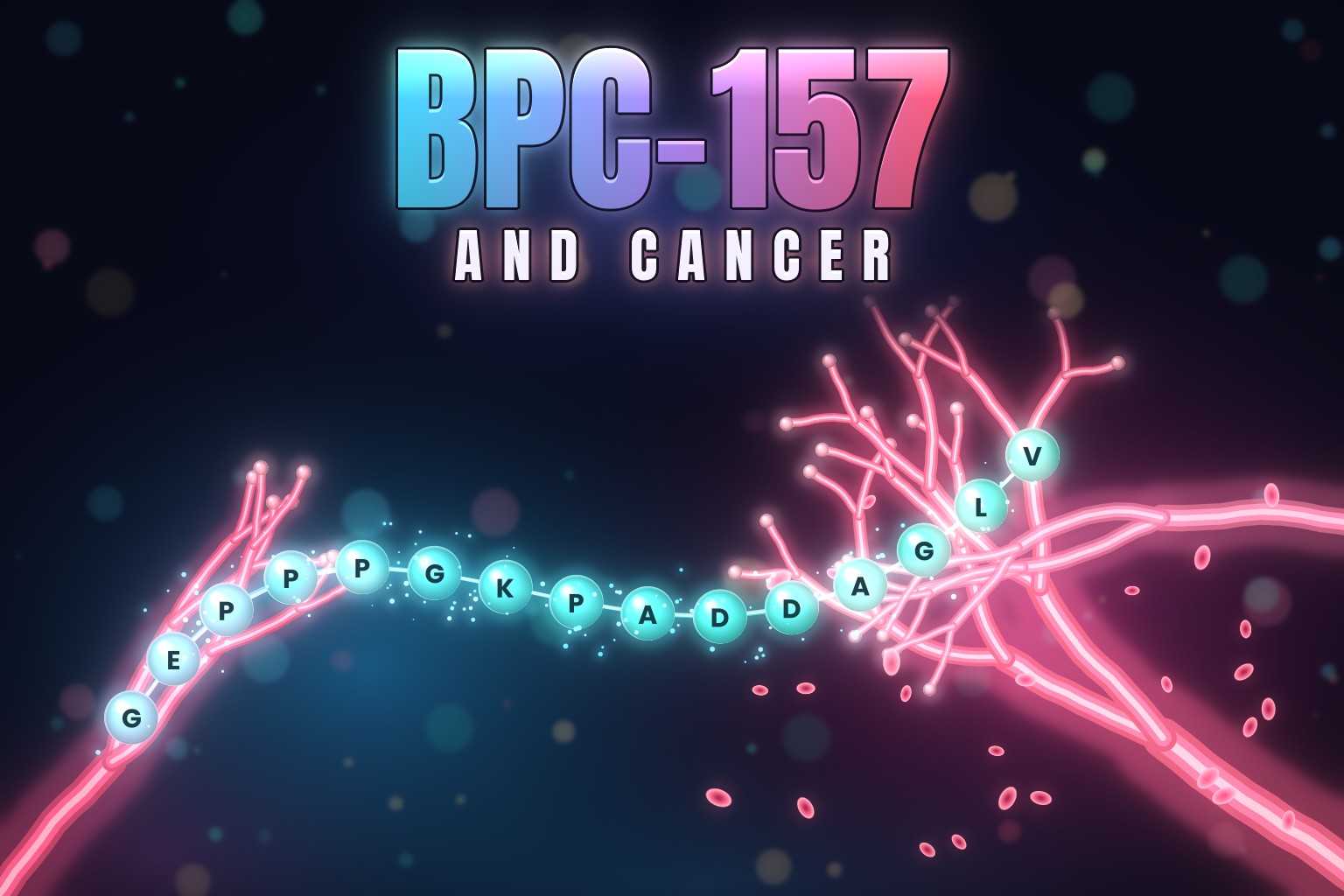
BPC 157 is a synthetic peptide made of 15 amino acids: Gly-Glu-Pro-Pro-Pro-Gly-Lys-Pro-Ala-Asp-Asp-Ala-Gly-Leu-Val. It’s a fragment of a larger protein, called body protection compound, that Croatian researchers isolated from human gastric juice.
It’s unusually stable in gastric juice, which is why it works by mouth in animal studies as well as by injection. In the blood it’s a different story: in rats and dogs its half-life was under 30 minutes, and it was broken down into small peptide fragments and single amino acids.
It got as far as phase II trials for inflammatory bowel disease under the code name PL 14736. Most of the research is still in animals, much of it from the original Croatian group.
For a broader look at what it does for injuries, see my breakdown of tendon and tissue repair peptides.
Why BPC 157 Raises Cancer Questions
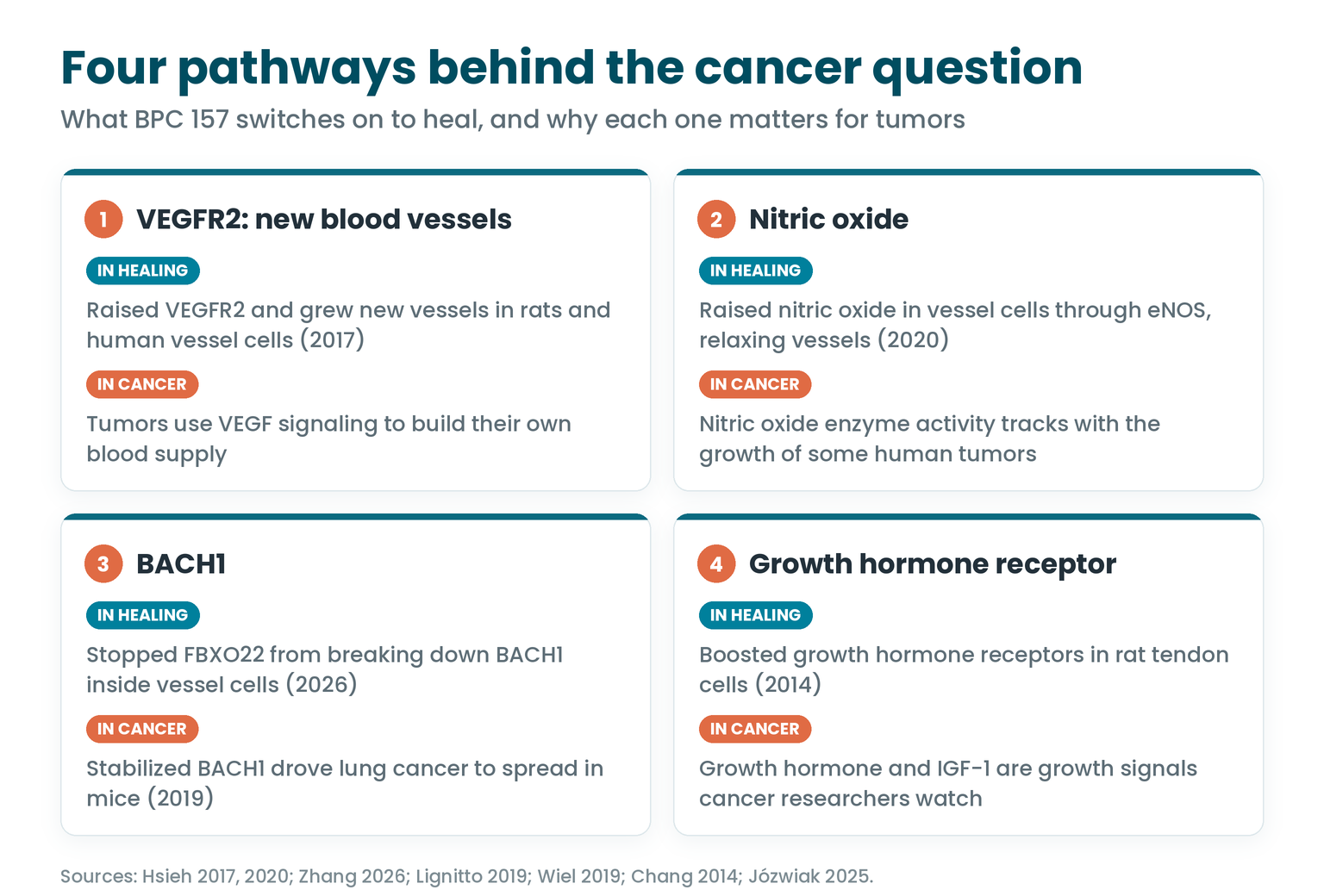
The concern comes from overlap: the machinery BPC 157 uses to heal is also machinery tumors use to grow. Four pathways come up.
It Grows New Blood Vessels Through VEGFR2
VEGF is the body’s main signal for growing new blood vessels, and VEGFR2 is the receptor that picks it up. In a 2017 study, BPC 157 raised VEGFR2 levels in human blood vessel cells and in the muscle of rats with a blocked leg artery, switched on the receptor’s downstream Akt-eNOS pathway, and sped up the return of blood flow.
In skin wounds from alkali burns in rats, it also raised VEGF itself and pushed blood vessel cells to multiply and migrate through the ERK1/2 pathway.
Tumors run on the same system. Once a tumor grows past a tiny size, it needs its own blood supply, and VEGF signaling is one of its main ways of getting it. A 2025 review points out that VEGF receptors show up in roughly half of the human cancers studied.
It Raises Nitric Oxide
BPC 157 relaxes blood vessels by raising nitric oxide, through a chain called Src-Caveolin-1-eNOS. Nitric oxide helps new vessels form, and the same review notes that the activity of the enzymes that make it tracks with the growth and aggressiveness of some human tumors.
It Stabilizes BACH1
A 2026 study found that inside blood vessel cells, BPC 157 binds a protein called FBXO22 and stops it from breaking down a transcription factor called BACH1. More BACH1 meant more vessel cell growth.
BACH1 has a history in cancer research. In two 2019 mouse studies of lung cancer, stabilizing BACH1, or removing the FBXO22 that normally breaks it down, drove the cancer to spread. The 2026 BPC 157 experiments were done in blood vessel cells, so how BPC 157 affects BACH1 inside tumor cells is an open question.
It Raises Growth Hormone Receptors
In rat tendon cells, the growth hormone receptor was one of the genes BPC 157 boosted most, at both the gene and protein level. When growth hormone was added, those cells multiplied faster. That is interesting, but cells in a dish cannot tell us whether it heals a torn tendon in a person. Growth hormone and its downstream signal IGF-1 are also growth signals that cancer researchers watch closely.
I cover the growth hormone side of this in more depth in MK-677 and cancer.
The Cancer Studies
Two studies have looked at BPC 157 with actual cancer cells.
Human Melanoma Cells
In a 2004 conference abstract, the Croatian group tested BPC 157 on a human melanoma cell line. At 2 and 10 ng/mL, it cut the share of cells entering the DNA-copying phase of division by 55%. It also blocked VEGF’s growth signal through ERK, both on its own and when VEGF was added.
Mice With Colon Cancer
In a 2018 paper, a Korean and Croatian team gave BPC 157 to mice carrying C26 colon tumors, a standard model for cancer cachexia, the severe weight and muscle loss that hits many people with advanced cancer.
BPC 157 reduced weight loss and muscle wasting, lowered the inflammatory signals IL-6 and TNF-alpha, and the authors report the mice lived longer. Tumor volume came out lower in the BPC 157 group, but the difference from untreated mice wasn’t statistically significant.
The Cornea Argument
The original researchers lean on a third study. Judah Folkman, who founded the field of tumor angiogenesis, used the cornea as a test: it has no blood vessels, so anything that makes vessels grow into it is a strong vessel-builder.
In rats with a cut cornea, untreated eyes grew new vessels in from the edge. Eyes treated with BPC 157 drops healed faster and generally grew none. The Croatian group argues this shows BPC 157 steers vessel growth rather than switching it on everywhere. Other reviewers still advise caution when cancer cells might be present, because of the VEGFR2, nitric oxide and growth signals above.
Filter every study in this article by type and topic here:
BPC 157 Cancer Research Explorer
Every study in this article in one place. Filter by what was studied and what it tells you about cancer.
Summaries of each study's main findings. Tap a source to read the original. Your filters are remembered in this browser.
BPC 157 and Chemotherapy or Radiation Side Effects
Several animal studies have tested BPC 157 against damage from cancer treatments:
- Doxorubicin heart damage: in rats and mice with heart failure from the chemo drug doxorubicin, BPC 157 reversed rising levels of a heart-strain marker and improved their condition.
- Cyclophosphamide bladder damage: in rats, it markedly reduced the bleeding, ulcers and swelling cyclophosphamide causes in the bladder, and brought bladder pressure back to normal.
- Cyclophosphamide stomach damage: in rats, it counteracted the stomach and duodenal ulcers the drug caused.
- Radiation liver damage: in mice given a high dose of radiation, oral BPC 157 reduced liver injury and liver cell death.
All of these used animals without tumors, so they show what BPC 157 did to the side effect on its own.
What the Human Studies Show
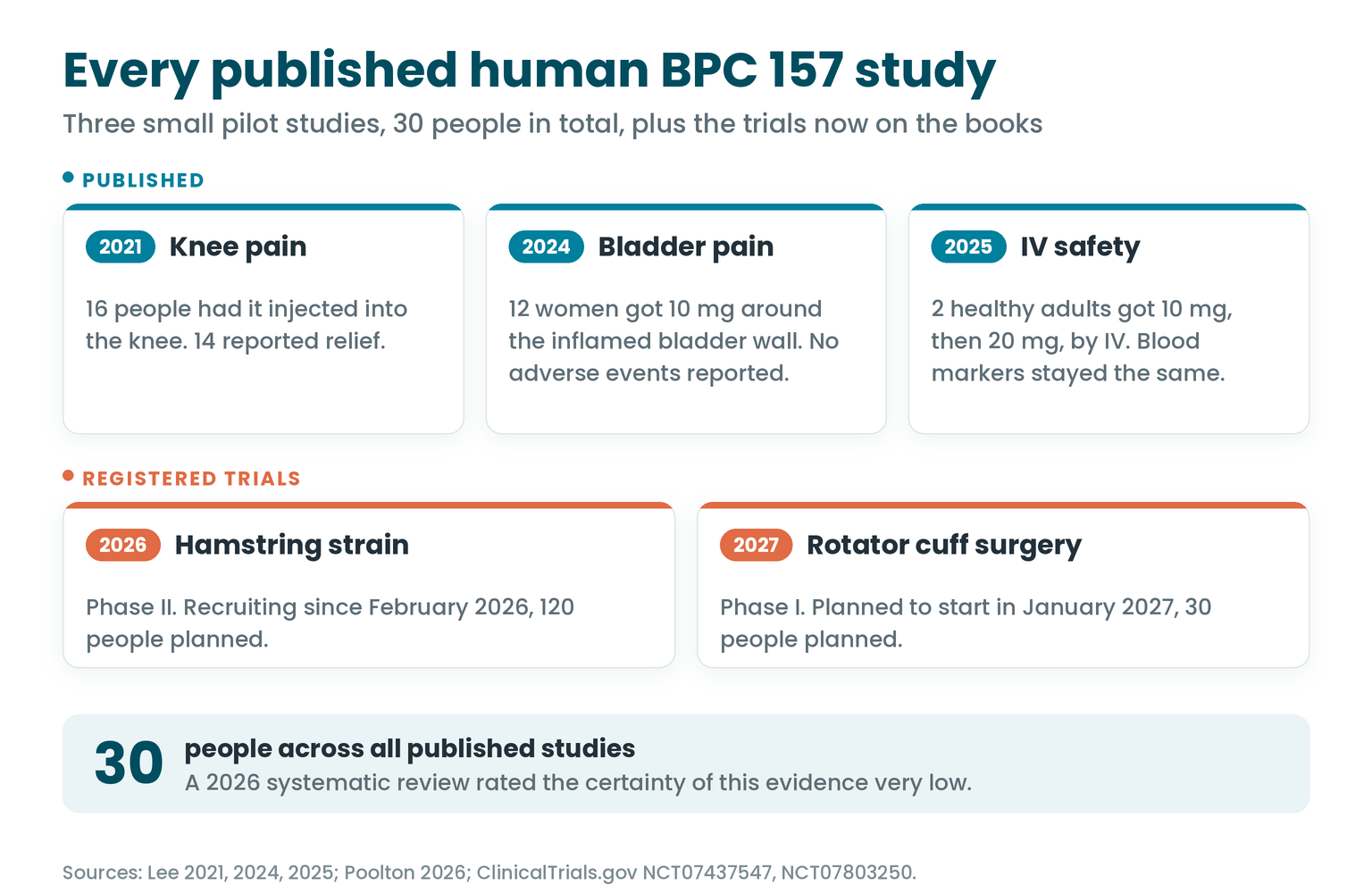
The following three recent reports, all led by the same physician, are often cited. They did not test cancer treatment or long-term cancer risk:
- Knee pain (2021): a chart review identified 17 patients; 16 could be contacted. Some received BPC 157 alone and others received it with thymosin beta-4. Fourteen of the 16 reported relief. The study had no untreated comparison group.
- Interstitial cystitis (2024): 12 women got 10 mg injected around the inflamed area of the bladder. Ten reported full relief, and no adverse events were reported.
- IV safety (2025): 2 healthy adults got 10 mg and then 20 mg as an IV drip. Heart, liver, kidney, thyroid and blood sugar markers didn’t change, and neither reported side effects.
A 2026 systematic review pooled these 30 people. It found no treatment-related adverse events, and rated the certainty of the evidence very low because of risk of bias and the small numbers.
Two controlled trials are on the books: a phase II trial for hamstring strains that started recruiting in 2026, and a phase I trial after rotator cuff surgery planned for 2027.
The FDA 2026 briefing document also describes older rectal-enema studies, including an ulcerative colitis trial reported in an abstract. The 30-person total above covers only the three recent reports, not all human exposure. None of these reports settles long-term cancer risk.
What Animal Safety Testing Found
A 2020 paper reported several animal safety tests. FDA reviewed the same work in its 2026 briefing and noted signals involving blood clotting tests and liver-related blood markers in rats and dogs. The tests were short and did not cover every way people take BPC 157. They cannot tell us that long-term use is safe. A negative mutation test or a limited fetal study does not establish cancer safety or safety in pregnancy.
Genetic toxicity tests look for certain kinds of DNA damage. A negative result does not rule out cancer risk through other pathways. FDA also found that studies needed to check long-term cancer risk were missing.
What’s in the Vial
BPC 157 sold online is made outside pharmaceutical quality control, and reviews flag contamination and impurities as risks of their own. A 2017 drug-testing study found it in confiscated vials. A certificate of analysis that confirms identity and purity is the minimum. My guide on how to judge a peptide supplier covers what to look for.
If You Have Cancer or a Cancer History
Everything above is what your oncologist would want to know before you consider BPC 157:
- Tumor studies: one on human melanoma cells and one on mice with colon cancer.
- Chemo and radiation studies: rats and mice with no tumor.
- Pathways to ask about: VEGFR2, nitric oxide, BACH1 and the growth hormone receptor.
Discuss any BPC 157 use with your cancer care team before starting or continuing it. There is no proven BPC 157 protocol for people with cancer. Do not use it in place of cancer care or put treatment off to try it. Bring the product label and the study links to that discussion.
For side effects of peptides more generally, see the risks and side effects of peptide therapy.
FAQ
Does BPC 157 cause cancer?
We do not have enough evidence to say whether BPC 157 changes cancer risk in people. The small studies discussed here cannot rule out harm. Negative genetic toxicity tests and a mouse tumor-size result do not establish long-term cancer safety.
Can BPC 157 make an existing tumor grow?
This remains uncertain. A conference abstract on melanoma cells and one mouse colon-tumor study cannot predict what will happen with other tumors or in people. The mouse tumor-size difference was not statistically significant. Shared growth signals raise a concern, but they do not prove that BPC 157 either grows or shrinks human tumors.
Does BPC 157 increase VEGF?
Yes. In rats with skin burns it raised VEGF, and in blood vessel cells it raised the VEGFR2 receptor. In human melanoma cells, it blocked VEGF’s growth signal.
Can BPC 157 help with chemotherapy side effects?
In rats and mice it reduced heart damage from doxorubicin, bladder and stomach damage from cyclophosphamide, and liver damage from radiation. These were animals without tumors. The studies do not show whether BPC 157 changes cancer control or interacts safely with chemotherapy or radiation in people.
Has BPC 157 been studied in cancer patients?
No. The published human studies were in people with knee pain, people with bladder pain and healthy adults.
What is BPC 157 made of?
15 amino acids, GEPPPGKPADDAGLV, taken from a protein found in human gastric juice.
To compare it with its most common partner, see BPC 157 vs TB-500.
References
- Sikiric P, et al. A new gastric juice peptide, BPC. An overview of the stomach-stress-organoprotection hypothesis and beneficial effects of BPC. J Physiol Paris. 1993;87(5):313-327. PubMed
- He L, et al. Pharmacokinetics, distribution, metabolism, and excretion of body-protective compound 157, a potential drug for treating various wounds, in rats and dogs. Front Pharmacol. 2022;13:1026182. DOI
- Sikiric P, et al. Focus on ulcerative colitis: stable gastric pentadecapeptide BPC 157. Curr Med Chem. 2012;19(1):126-132. DOI
- Hsieh MJ, et al. Therapeutic potential of pro-angiogenic BPC157 is associated with VEGFR2 activation and up-regulation. J Mol Med (Berl). 2017;95(3):323-333. DOI
- Huang T, et al. Body protective compound-157 enhances alkali-burn wound healing in vivo and promotes proliferation, migration, and angiogenesis in vitro. Drug Des Devel Ther. 2015;9:2485-2499. DOI
- Józwiak M, et al. Multifunctionality and possible medical application of the BPC 157 peptide: literature and patent review. Pharmaceuticals (Basel). 2025;18(2):185. DOI
- Hsieh MJ, et al. Modulatory effects of BPC 157 on vasomotor tone and the activation of Src-Caveolin-1-endothelial nitric oxide synthase pathway. Sci Rep. 2020;10(1):17078. DOI
- Zhang J, et al. BPC157 drives angiogenesis through FBXO22-dependent stabilization of BACH1. Cell Commun Signal. 2026;24(1):149. DOI
- Lignitto L, et al. Nrf2 activation promotes lung cancer metastasis by inhibiting the degradation of Bach1. Cell. 2019;178(2):316-329. DOI
- Wiel C, et al. BACH1 stabilization by antioxidants stimulates lung cancer metastasis. Cell. 2019;178(2):330-345. DOI
- Chang CH, et al. Pentadecapeptide BPC 157 enhances the growth hormone receptor expression in tendon fibroblasts. Molecules. 2014;19(11):19066-19077. DOI
- Radeljak S, Seiwerth S, Sikiric P. BPC 157 inhibits cell growth and VEGF signalling via the MAPK kinase pathway in the human melanoma cell line. Melanoma Res. 2004;14:A14-A15. Conference abstract.
- Kang EA, et al. BPC157 as potential agent rescuing from cancer cachexia. Curr Pharm Des. 2018;24(18):1947-1956. DOI
- Masnec S, et al. Perforating corneal injury in rat and pentadecapeptide BPC 157. Exp Eye Res. 2015;136:9-15. DOI
- Sikiric P, et al. Stable gastric pentadecapeptide BPC 157 as a therapy and safety key: a special beneficial pleiotropic effect controlling and modulating angiogenesis and the NO-system. Pharmaceuticals (Basel). 2025;18(6):928. DOI
- Lovric-Bencic M, et al. Doxorubicine-congestive heart failure-increased big endothelin-1 plasma concentration: reversal by amlodipine, losartan, and gastric pentadecapeptide BPC157 in rat and mouse. J Pharmacol Sci. 2004;95(1):19-26. DOI
- Sucic M, et al. Therapy of the rat hemorrhagic cystitis induced by cyclophosphamide. Stable gastric pentadecapeptide BPC 157, L-arginine, L-NAME. Eur J Pharmacol. 2019;861:172593. DOI
- Luetic K, et al. Cyclophosphamide induced stomach and duodenal lesions as a NO-system disturbance in rats: L-NAME, L-arginine, stable gastric pentadecapeptide BPC 157. Inflammopharmacology. 2017;25(2):255-264. DOI
- Huang BS, et al. Pentadecapeptide BPC 157 efficiently reduces radiation-induced liver injury and lipid accumulation through Kruppel-like factor 4 upregulation both in vivo and in vitro. Life Sci. 2022;310:121072. DOI
- Lee E, Padgett B. Intra-articular injection of BPC 157 for multiple types of knee pain. Altern Ther Health Med. 2021;27(4):8-13. PubMed
- Lee E, Walker C, Ayadi B. Effect of BPC-157 on symptoms in patients with interstitial cystitis: a pilot study. Altern Ther Health Med. 2024;30(10):12-17. PubMed
- Lee E, Burgess K. Safety of intravenous infusion of BPC157 in humans: a pilot study. Altern Ther Health Med. 2025;31(5):20-24. PubMed
- Poolton JT, Minett J, Kazmi A. Human evidence for BPC-157 in orthopaedic and regenerative medicine: a systematic review of efficacy and safety. Acta Orthop Belg. 2026;92(3). DOI
- BPC 157 for acute hamstring muscle strain repair (NCT07437547) and Impact of BPC-157 on recovery following rotator cuff repair surgery (NCT07803250). ClinicalTrials.gov. ClinicalTrials.gov
- Xu C, et al. Preclinical safety evaluation of body protective compound-157, a potential drug for treating various wounds. Regul Toxicol Pharmacol. 2020;114:104665. DOI
- Vasireddi N, et al. Emerging use of BPC-157 in orthopaedic sports medicine: a systematic review. HSS J. 2025;21(4):485-495. DOI
- Cox HD, Miller GD, Eichner D. Detection and in vitro metabolism of the confiscated peptides BPC 157 and MGF R23H. Drug Test Anal. 2017;9(10):1490-1498. DOI
Stay sharp,
Joe Mars
The Peptide Report
P.S. For questions about BPC 157 during cancer treatment, ask your cancer care team. Community discussions cannot establish safety or replace that advice. You can discuss how to read the research in the Peptides and Biohacking Hub on Skool. Join here.