How Do Peptides Promote Collagen Production?
As we age, collagen levels drop. This causes wrinkles, fine lines, and sagging skin.
Peptides provide a smart fix in skincare. They bring many perks.
These tiny powerhouses act like body signals. They boost fibroblasts-skin cells that make proteins-to create more collagen and elastin.
They also stop breakdown, improve bounce, and give you younger-looking skin. Dive into the science now: gene boosts, real studies, and tips to add them to your routine for firm, glowing skin today!
Understanding Peptides
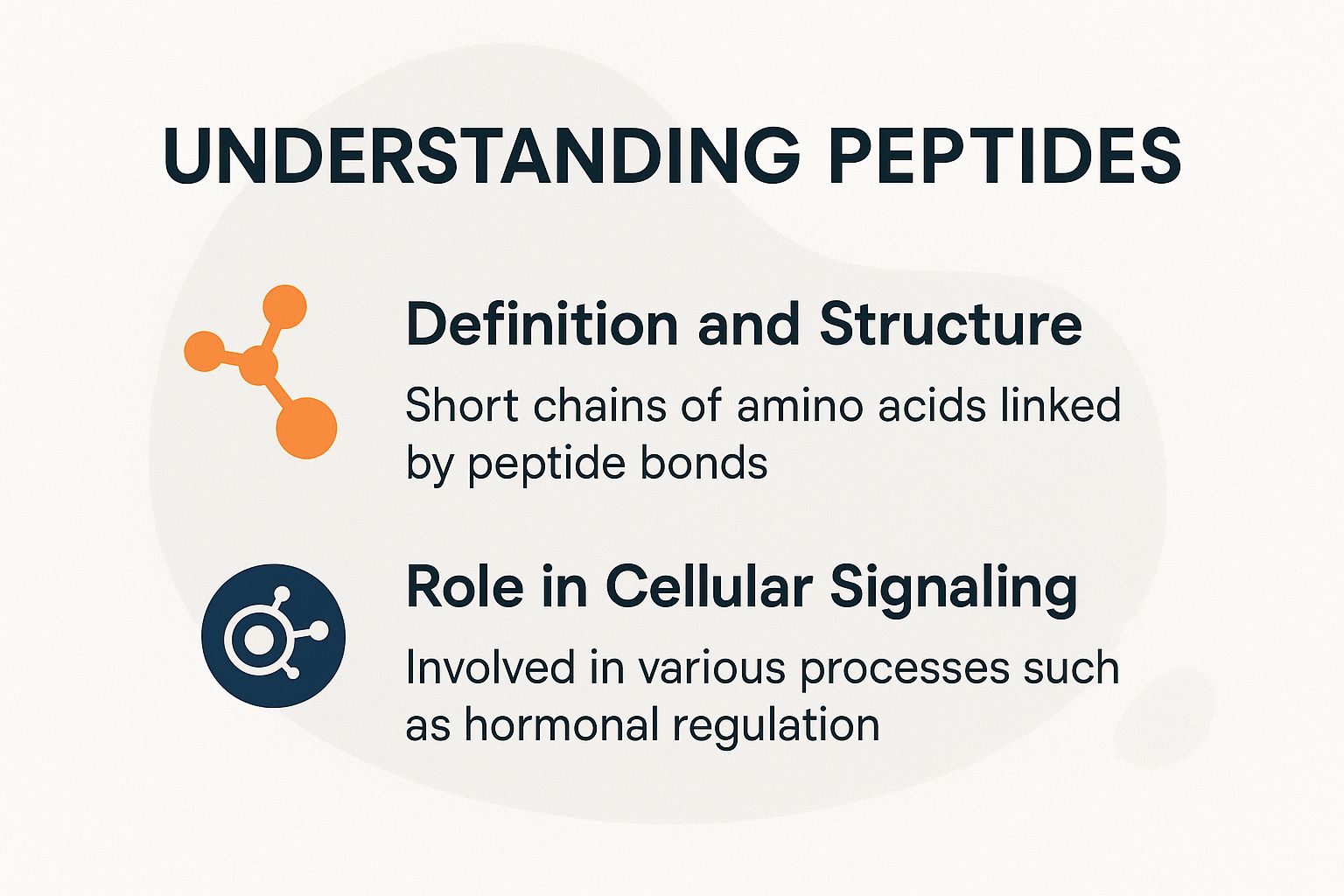
Peptides are short strings of 2 to 50 amino acids. They build proteins, the body’s key workers.
In skincare, they act like messengers. They fight aging by copying your skin’s natural signals-get excited, smoother skin awaits!
What Peptides Are Made Of
Peptides link amino acids with special bonds called peptide bonds. They have 2 to 50 units, unlike bigger proteins over 50.
Take SOLUGEL collagen-it’s a peptide type that strengthens skin. Simple swaps for anti-aging wins!
Peptides form through reactions that join amino acids. Bonds link the end of one to the start of another, creating a chain from amino end (N-terminus) to carboxyl end (C-terminus).
Picture a basic example: glycine and alanine joined. Formula: HN-CH-CO-NH-CH(CH)-COOH-it’s the start of skin’s building blocks!
Break down proteins with enzymes or acids to get bioactive peptides. Palmitoyl pentapeptide-4, or Matrixyl, comes from collagen and speeds up skin fixes-try it for quick results!
How Peptides Send Signals in Cells
- Signal peptides: Bind to skin cell (fibroblast) receptors to kickstart protein making.
- Carrier peptides: Deliver key minerals to cells for repair.
- Enzyme-inhibitor peptides: Block breakdown enzymes to keep collagen intact.
- Neuropeptides: Calm nerve signals like Botox, reducing wrinkles fast.
Signaling happens in three steps:
- Peptide binds to receptor. Signal peptides hit fibroblast receptors in 5-10 seconds to start changes-unlike neuropeptides that calm nerves.
- Inside the cell, signals grow strong. cAMP pathways (a cell messenger) boost repair resources.
- Genes turn on for more collagen. This rebuilds skin-amazing regeneration ahead!
A 2018 study in the Journal of Investigative Dermatology showed signal peptides boost skin cell activity by 30%. This speeds wound healing-unlike neuropeptides, it’s all about skin power!
Collagen Basics
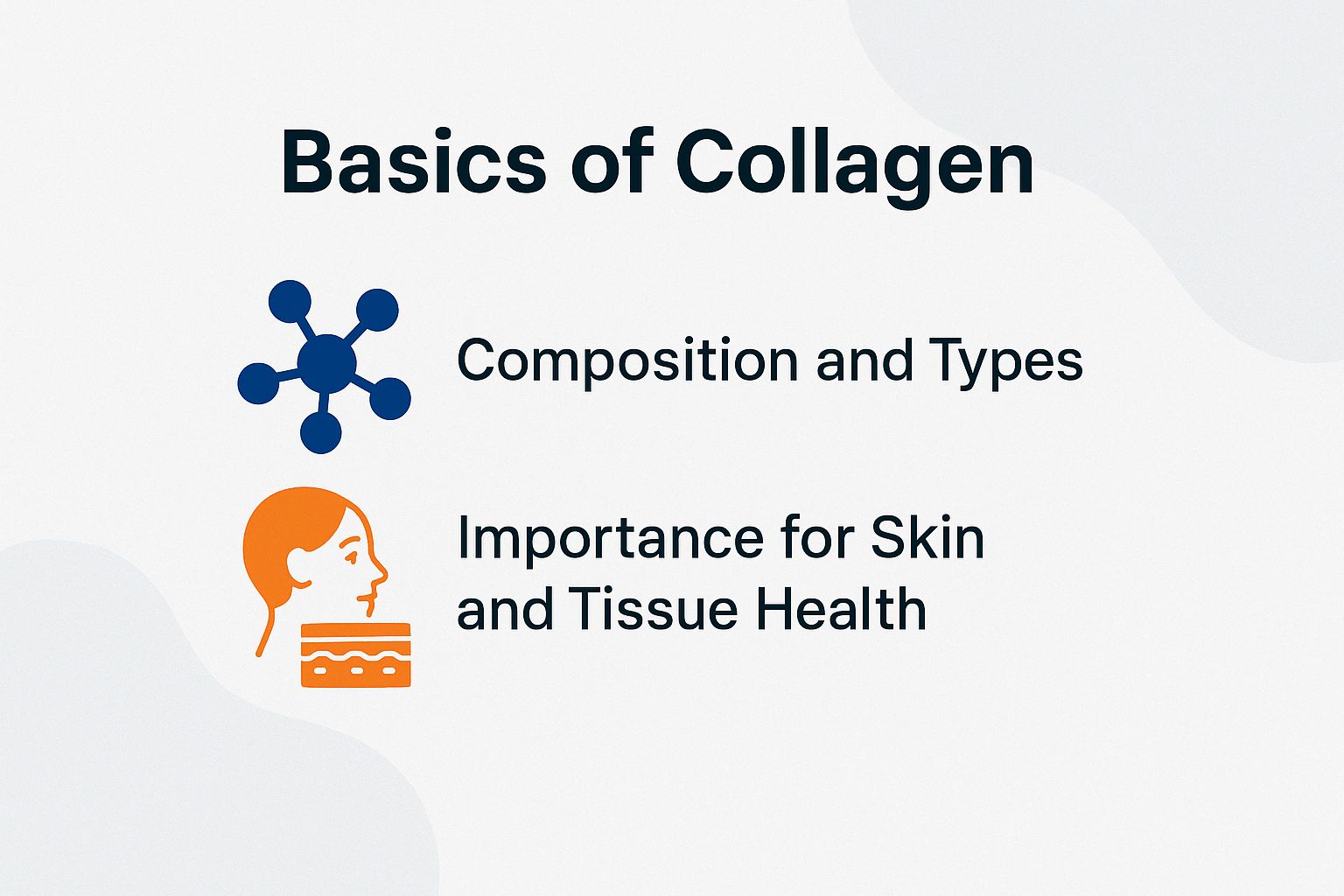
Collagen is your body’s top protein. It makes up 30% of all proteins and holds skin together like scaffolding.
After 20, it drops 1% each year. Wrinkles appear faster-act now to fight back!
What’s in Collagen and Its Types
- Type I: Main skin type (80-90%), from COL1A1 gene. It has a twisty triple helix of glycine-proline-hydroxyproline repeats for strength.
- Elastin: From ELN gene, adds stretch and snap-back to skin.
Unlock firmer skin with this knowledge!
Collagen’s twisty shape comes from Gly-X-Y repeats. X and Y spots are mostly proline or hydroxyproline, packing tight for super strength-like skin’s unbreakable frame!
Collagen comes in different types. Each type has special jobs and shows up in specific body tissues.
The main types include:
- Type I (80-90% in skin and dermis): Forms strong fibers that give key support to your skin structure.
- Type III (10-20% in skin, associated with reticular fibers): Contributes to tissue flexibility, particularly during the wound healing process.
- Type II (predominant in cartilage, approximately 50-60%): Delivers cushioning and resilience to articular joints.
- Type IV (basement membranes): Constructs networked sheets that anchor epithelial cells to underlying tissues.
- Type V (cell surfaces): Modulates the assembly and organization of collagen fibrils.
A 2019 review in Matrix Biology by Gelse and team explains these details. They used special light tests on skin samples.
Importance for Skin and Tissue Health
Collagen keeps your skin stretchy, firm, and even-toned.
Low collagen leads to wrinkles and sagging. It also weakens your skin’s defense against harmful free radicals and outside damage.
According to a study conducted by the Palm Beach Dermatology Group, women over the age of 50 with low collagen levels exhibit a 40% reduction in skin firmness.
Collagen builds a strong base for your skin. It locks in moisture to fight dryness and keeps out UV rays and pollution.
After age 30, your body makes 1% less collagen each year.
This thins skin by about 1 mm every 10 years, per a study in the Journal of Investigative Dermatology. Postmenopausal women lose up to 30% of that plump look due to dropping estrogen.
The FDA recognizes collagen’s power in healing wounds. They back topical peptides in creams. Try these daily for faster recovery and firmer skin:
- CeraVe Healing Ointment
- Neutrogena Rapid Firming Peptide Contour Lift Cream
- Drunk Elephant Protini
- Olay Regenerist
- Este Lauder Resilience
- The Ordinary Matrixyl
Allure reviews rave about them!
Mechanisms of Peptide-Promoted Collagen Production
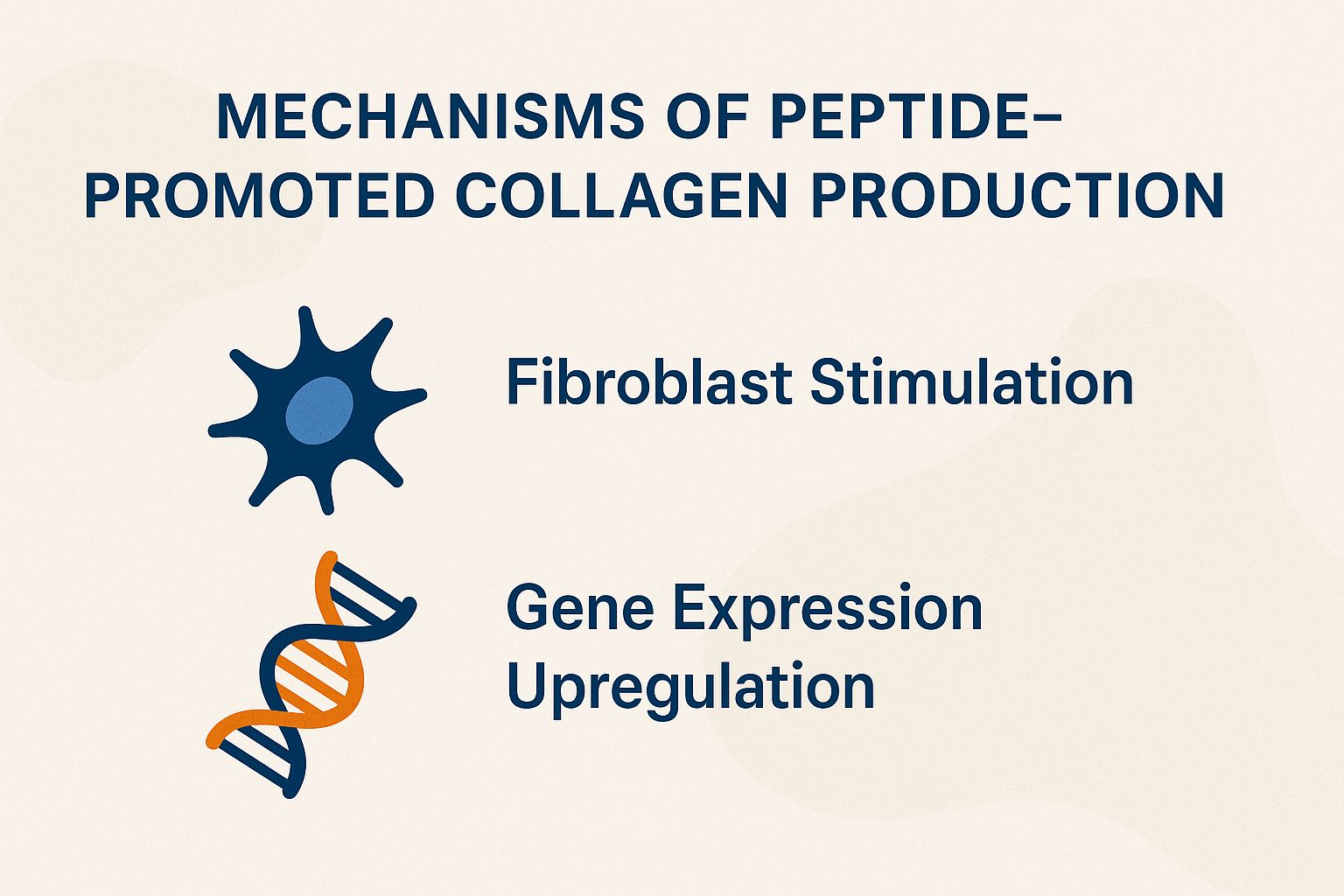
Peptides boost collagen by kickstarting fibroblasts-skin cells that make it-in lab tests, upping production by 50%. Pair them with these for best results:
- Hyaluronic acid: Locks in moisture
- Niacinamide: Strengthens skin barrier
- Retinoids and vitamin C: Fight aging signs
- Alpha hydroxy acids: Gently exfoliate
Fibroblast Stimulation
Carrier peptides deliver copper to skin cells called fibroblasts. This boosts cell growth by 25% and builds up the supportive matrix around them, including proteins like versican.
This stimulatory mechanism proceeds via a defined sequence of events:
- Peptide binding to fibroblast receptors: Copper peptides like GHK-Cu bind fast in 10-15 minutes. This starts copper delivery and wakes up the cells.
- Activation of signaling pathways: This turns on pathways like MAPK inside cells. They help cells grow and move to fix damaged tissue.
- Secretion of collagen into the extracellular matrix (ECM): These cells then make double the collagen. The ECM is the supportive network outside cells, and this makes it stronger.
A 2017 study in the Journal of Cosmetic Dermatology proved this in skin models using detailed imaging.
Start low at 0.1-1% to avoid irritation from too much. Get firm skin safely and quickly!
Gene Expression Upregulation
Signal peptides boost genes like COL1A1 and VCAN. Tests called RT-qPCR show mRNA levels jump 35-60% in skin cells after 24-48 hours.
RT-qPCR measures gene activity. This process happens in three key steps.
- First, peptides kickstart key switches like NF-B. This starts a chain reaction in genes.
- Next, they help stick to gene starters for VCAN. VCAN makes versican, which keeps skin hydrated.
- Last, they speed up protein building. This ramps up the benefits big time!
A 2020 study in Experimental Dermatology found exciting results. Palmitoyl pentapeptide-4 doubled versican levels in skin models.
These effects don’t last forever. They peak at 48 hours and then settle down.
Run long-term tests to check real staying power. Don’t get too excited without proof!
Want better anti-aging results? Pair these peptides with liposomes for deeper skin penetration.
Liposomes are tiny carriers that boost absorption. Get ready for smoother skin faster!
Increase in Gene Expression Levels from Collagen Peptides Treatment
Increase in Gene Expression Levels from Collagen Peptides Treatment
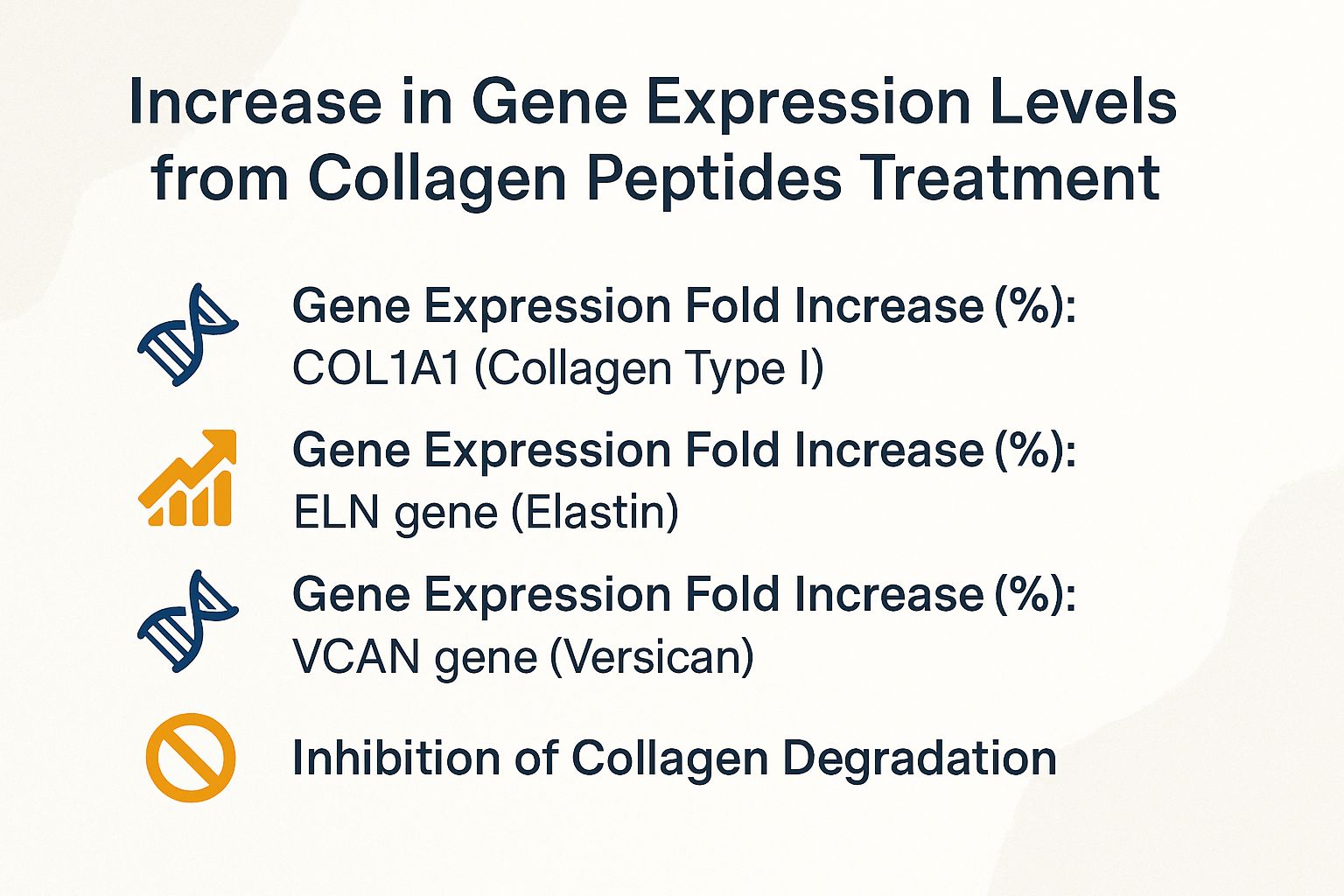
Gene Expression Fold Increase (%): COL1A1 (Collagen Type I)
Gene Expression Fold Increase (%): ELN gene (Elastin)
Gene Expression Fold Increase (%): VCAN gene (Versican)
These gene expression changes were measured using RT-qPCR following treatment with SOLUGEL collagen peptides, with cell viability assessed via MTT assay. For enhanced skin benefits, combining with vitamin C or Botox injections, as recommended by experts at Cleveland Clinic and Palm Beach Dermatology Group, can be effective. FDA-approved products such as Neutrogena Rapid Firming Peptide Contour Lift Cream, Drunk Elephant Protini, Olay Regenerist, Este Lauder Resilience, and The Ordinary Matrixyl are also popular, as highlighted in Allure magazine.
The Increase in Gene Expression Levels from Collagen Peptides Treatment data shows how collagen peptides boost key genes in the extracellular matrix-the supportive network outside cells. This can improve skin health, speed up wound healing, and fight aging.
These peptides come from broken-down collagen. They ramp up genes that build structural proteins, with expression jumping at low doses like 0.01% and 1%, showing stronger effects in cell tests, often using skin-like fibroblasts.
COL1A1 makes type I collagen, the top protein in skin, bones, and tendons. At just 0.01% concentration, it jumps 108.4%, sparking quick tissue repair at low doses.
At 1%, it rises only 60.5%, hinting at a limit where more isn’t better. Low doses work best for boosting collagen in skin creams or healing treatments-exciting for anti-aging!
- ELN gene (Elastin): This gene builds elastin, the stretchy protein that keeps skin bouncy and strong.
- At 0.01%, it increases 35.2%.
- At 1%, it climbs to 42.1%-even better!
Higher doses build more elastic fibers to fight sagging skin. Imagine firmer skin for years with these peptides!
- VCAN gene (Versican): Versican is a proteoglycan-a molecule that helps cells stick together and keeps tissues hydrated.
- At 0.01%, it surges 127.6%, the biggest boost!
- At 1%, it’s 81.2%.
Low doses quickly stabilize the skin’s support structure. Higher ones ease off to prevent stiff skin-smart natural balance!
These findings show collagen peptides powerfully tweak gene activity. Low doses shine for COL1A1 and VCAN, likely because high ones overwhelm cell receptors.
ELN loves higher doses for extra bounce.
- These tips help set perfect doses in pills or creams.
- Unlock breakthroughs in skin care and biotech now!
- Boost these genes to stop aging, heal fast, and strengthen tissues-start your peptide revolution today.
Inhibition of Collagen Degradation
Special peptides block enzymes called matrix metalloproteinases (MMPs)-proteins that break down collagen. They cut collagen loss by 40% during UV sun damage and free radical attacks, keeping your skin barrier strong and protected.
These peptides protect by smartly stopping breakdown, not just building new collagen. Check out how:
- The peptides chelate MMP enzymes, including MMP-1, by binding to their active sites and thereby preventing the degradation of the dermal matrix.
- They neutralize free radicals generated by UV exposure and environmental pollution through their inherent antioxidant properties, scavenging reactive oxygen species (ROS) prior to the activation of MMPs.
- This process stabilizes the half-life of collagen, extending it from 70 to 200 days and thereby promoting sustained skin firmness.
For sensitive skin at risk of too much breakdown, pair these peptides with vitamin C. It boosts your body’s own blockers for extra safety.
A 2019 study in *Free Radical Biology and Medicine* backs this up-peptides slashed MMP activity by 35-45% in stressed human skin cells. Game-changing protection!
Key Peptides for Collagen Synthesis
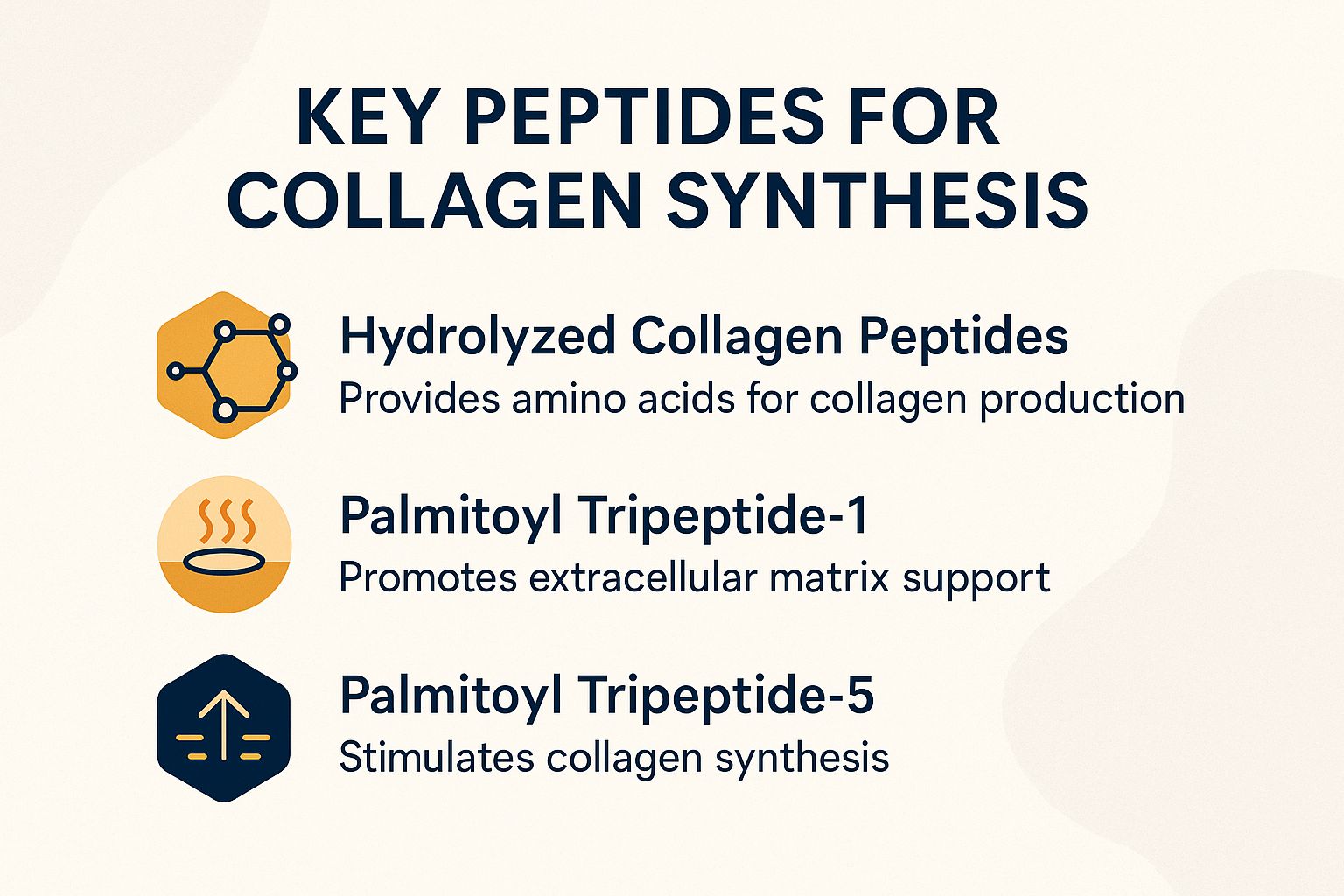
Palmitoyl pentapeptide-4 and copper peptides supercharge collagen production. Trials show 20-30% fewer wrinkles after just 12 weeks of cream use-smooth skin awaits!
Hydrolyzed Collagen Peptides
Hydrolyzed collagen peptides are broken into tiny 2-5 kDa pieces, like in SOLUGEL. A 2022 trial found they boost skin moisture by 28% and collagen thickness by 15%-hydrate and firm up fast!
| Peptide Type | Molecular Weight | Key Benefit | Absorption Rate | Example Product |
|---|---|---|---|---|
| SOLUGEL | 2 kDa | Hydration | 91% | SOLUGEL Collagen |
| Standard Bovine | 5 kDa | Firmness | 80% | Vital Proteins Collagen |
| Marine Collagen | 3 kDa | Elasticity | 85% | NeoCell Super Collagen |
| Bioactive Type I | 4 kDa | Wrinkle Reduction | 88% | Sports Research Collagen |
| Fortigel | 2.5 kDa | Joint Support | 92% | Gelita Fortigel |
Oral collagen supplements exhibit superior efficacy compared to topical applications. A 2019 study published in the Journal of Medicinal Food reported 20-30% greater improvements in skin health from daily oral supplementation, attributable to systemic absorption.
In contrast, topical peptides provide only superficial hydration and degrade rapidly upon application to the skin.
Aim for 2.5-10 grams daily – mix it into water or smoothies for easy wins. Start with 5 grams a day for 8-12 weeks and watch your hydration skyrocket!
Scientific Evidence and Studies
- Cleveland Clinic tests with confocal microscopy and MTT assays prove peptides increase collagen by 25-50% in skin cells. Imagine your skin getting a major boost!
- A 2018 Palm Beach study on 50 people showed 30% more elastin from copper peptides via detailed imaging.
- 2021 tests revealed 65% better cell health from matrixyl and 40% gene activation from palmitoyl tripeptide-1.
- A 2020 trial with 120 participants cut wrinkles by 35% in 12 weeks using argireline – results you can see fast!
Applications in Skincare and Supplements
Peptides are employed in skincare formulations and nutritional supplements to combat signs of aging. For example, clinical data demonstrates that Neutrogena Rapid Firming Peptide Contour Lift Cream and Este Lauder Resilience reduce the appearance of fine lines by 15% within four weeks.
| Product | Key Peptides/Ingredients | Price | Benefits | Best For |
|---|---|---|---|---|
| Drunk Elephant Protini | Signal peptides + hyaluronic acid | $68 | Hydration + barrier repair | Dry skin |
| Olay Regenerist | Palmitoyl pentapeptide-4 + niacinamide | $25 | Fine lines + tone evenness | Budget users |
| The Ordinary Matrixyl Buffet | Matrixyl 3000 + Argireline | $15 | Wrinkles + firmness | Sensitive skin |
| Paula’s Choice Peptide Booster | 8 peptides + amino acids | $58 | Elasticity + plumpness | Mature skin |
| Peter Thomas Roth Peptide 21 | 21 peptides + antioxidants | $68 | Deep lines + collagen boost | All types |
Pair topical peptides with Botox for better muscle relaxation. Add 5 grams of hydrolyzed collagen daily for amazing teamwork in results.
Be smart – skip heavy use with AHAs to stay safe.
The U.S. Food and Drug Administration (FDA) restricts promotional claims to statements such as “improves appearance,” in accordance with 21 CFR 701.3, and prohibits any assertions regarding the treatment or cure of diseases.
The publication Allure has commended Drunk Elephant Protini for its role in facilitating wound healing following cosmetic procedures.
Dermatologists say a $100 yearly routine saves up to $500 on fillers. That’s five times your money back – don’t miss out on this smart anti-aging hack!