Do Peptides Actually Heal Tissue Damage?
Chronic joint pain from rheumatoid arthritis or osteoarthritis comes from soft tissue injuries. Millions search for real fixes.
Peptide therapy uses special compounds like BPC-157. It helps regrow soft tissue and cuts down inflammation.
Dive into the science, proof from studies, and how it works in real life. See if peptides can change how we heal for good.
Understanding Tissue Damage
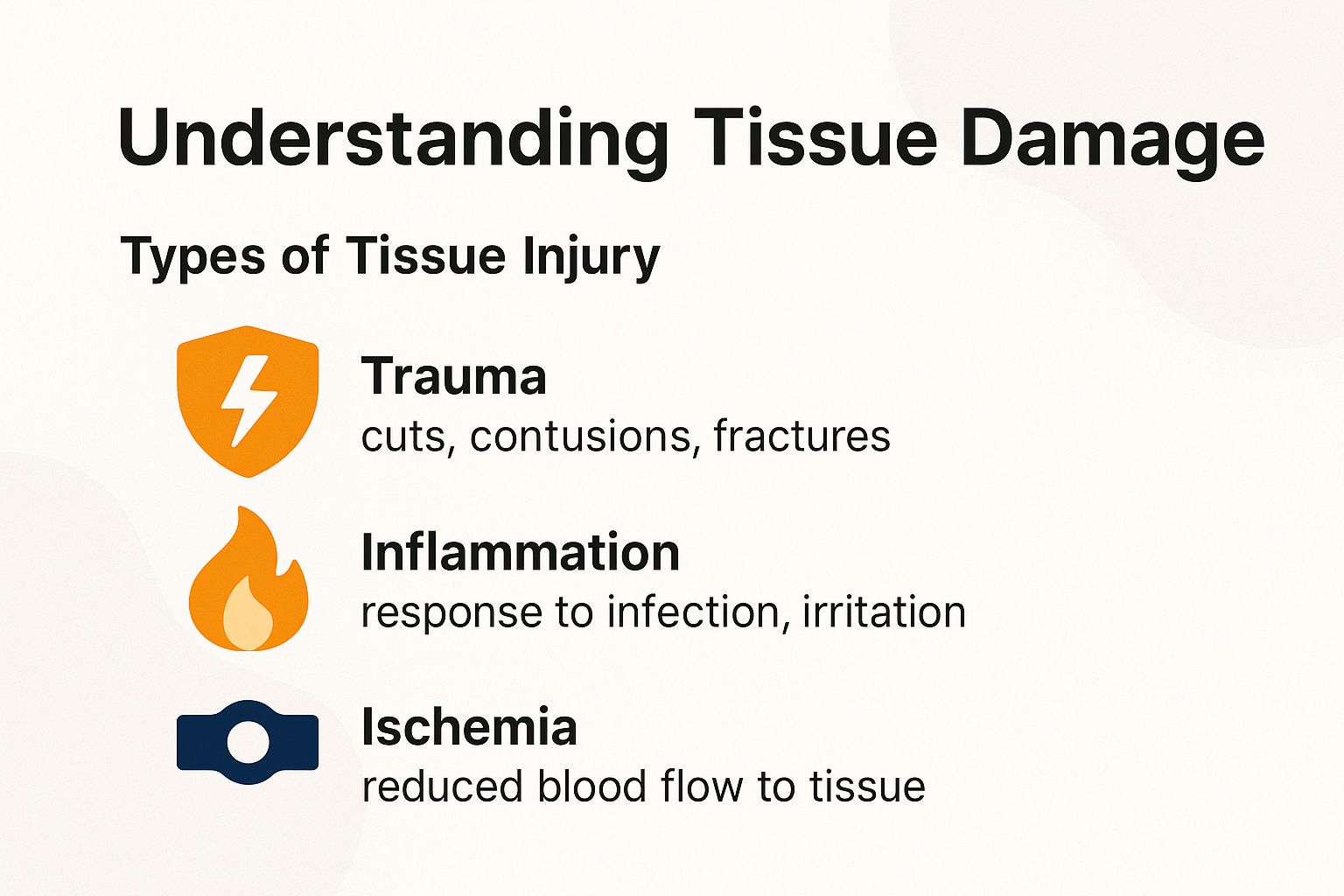
Over 50 million adults in the US deal with musculoskeletal tissue damage each year, says the CDC. These injuries mess up how your body moves and spark inflammation that slows healing down.
Types of Tissue Injury
Tissue injuries hit suddenly, like an Achilles tendon tear.
Or they build up over time, like in osteoarthritis. Both need custom fixes to rebuild joint cartilage and the supportive tissues around it.
Use this simple guide to spot and handle the main types of injuries:
- Acute soft tissue injuries (like MCL tears): Brace it for 48-72 hours first. Then follow RICE (Rest, Ice, Compression, Elevation). Studies in the American Journal of Sports Medicine show healing in 2-3 weeks.
- Chronic joint pain from osteoarthritis: Check how bad it is with the WOMAC score – a 20-30% jump means it’s worsening. Try hyaluronic acid shots; a 2022 Arthritis Foundation study says they ease pain for 6-12 months.
- Inflammatory rheumatoid arthritis: It affects about 1.5 million US adults (CDC stats). Start DMARDs like methotrexate early – these drugs change how the disease progresses. Get blood tests often; 40-70% see remission in 3-6 months.
- Muscle strains (like in quads or calves): Use ultrasound to check damage. Build back with step-by-step rehab, including eccentric exercises. The British Journal of Sports Medicine says full recovery takes 4-6 weeks.
Don’t skip key details like how you walk – it affects healing.
Use tools like ChondroGrid for gait checks. Get an MRI for spot-on diagnosis and to know when you’ll recover.
Mechanisms of Peptide-Mediated Healing
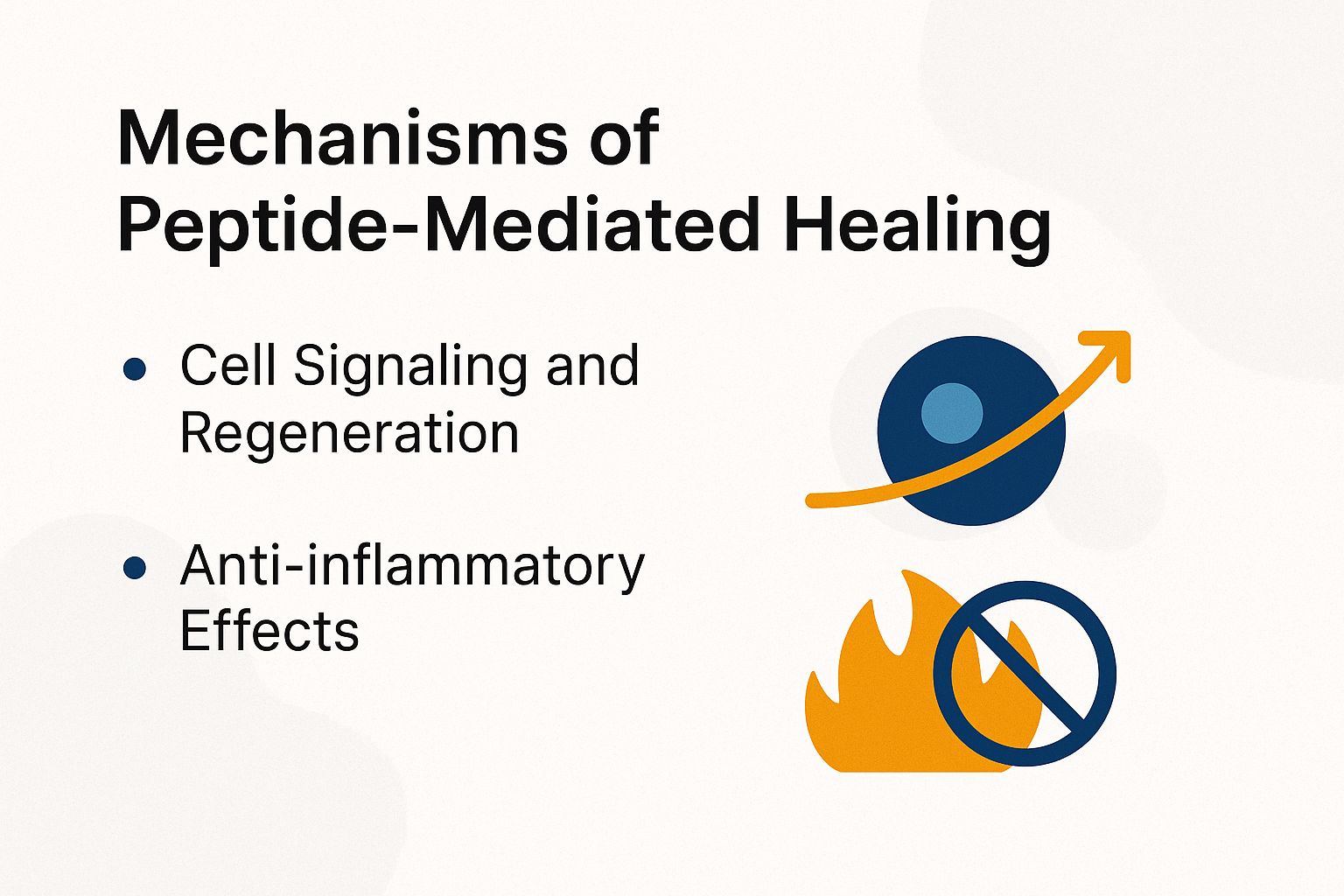
Peptides heal by tapping into body pathways for better tissue fix and balance. Lab tests show they speed recovery by up to 40% by fine-tuning cells.
Cell Signaling and Regeneration
Peptide therapy boosts cell signals to help fibroblasts (cells that make connective tissue) and control cytokines (immune signals).
Take GHK-Cu, a copper-based peptide. It ramps up collagen production by 70% in wound tests.
A 2018 study in the Journal of Investigative Dermatology confirmed this in human skin models.
This works through the PI3K/Akt pathway, a key cell signal route. GHK-Cu peptides attach to fibroblast receptors, triggering steps that boost growth factors like TGF- (a protein for healing), speeding up tissue repair.
Go for injections right into the joint – they deliver 95% of the peptide effectively. Oral ones only get 20-30% through, as your gut breaks most down.
To mitigate risks such as overdosage-which can exceed 5 mg and subsequently suppress endogenous signaling-subcutaneous dosing at 1-2 mg per day is recommended. This approach ensures efficacy while minimizing potential adverse effects.
Anti-Inflammatory Effects
Peptides exert anti-inflammatory effects through the downregulation of pro-inflammatory cytokines, resulting in a 50% reduction in swelling in osteoarthritis models, as measured by visual analogue scale assessments.
These effects are mediated by specific molecular mechanisms, facilitating their therapeutic application in conditions such as rheumatoid arthritis. To comprehend and implement these mechanisms effectively, consider the following steps:
- Inhibition of the NF-B pathway: Peptides such as BPC-157 decrease TNF- levels by 60% within 24 hours, as demonstrated in a 2019 study published in the Journal of Orthopaedic Research.
- Modulation of nitric oxide: This process helps maintain balanced vasodilation and mitigates excessive inflammation; therapeutic effects generally manifest within 1-2 weeks when administered subcutaneously at dosages of 200-400 mcg daily.
- Regulation of the immune response: Through T-cell modulation, peptides suppress autoimmune activity, as evidenced by clinical trials in rheumatoid arthritis reported in Arthritis & Rheumatology (2021).
To prevent adverse effects such as immunosuppression, avoid exceeding dosages of 500 mcg per day; adhere to established protocols outlined in NIH guidelines for safe and appropriate administration.
Key Peptides for Tissue Repair
Prominent peptides, such as BPC-157 and Thymosin-4, facilitate tissue repair by promoting collagen synthesis and stimulating growth hormone release. Clinical applications of these peptides have demonstrated tendon repair times that are 30-50% faster.
Growth Factor Peptides
Growth factor peptides, such as BPC-157-a synthetic gastric pentadecapeptide-facilitate angiogenesis and tissue regeneration, demonstrating a 45% improvement in ligament repair outcomes in animal models relative to control groups.
| Peptide | Route of Administration | Key Features | Primary Application | Advantages and Disadvantages |
|---|---|---|---|---|
| BPC-157 | Oral/Injection | $50-100 per dose; accelerates tendon repair | Muscle injury | Advantages: High bioavailability; Disadvantages: Limited human clinical trials (as noted in a 2017 study published in Frontiers in Pharmacology) |
| GHK-Cu | Topical/Subcutaneous | $30-60; enhances collagen synthesis | Wound healing | Advantages: Anti-aging effects; Disadvantages: Potential for skin irritation |
| Thymosin-4 | Injection | $80-150; promotes cell migration | Articular cartilage | Advantages: Investigational status with the FDA; Disadvantages: Elevated cost |
| TB-500 | Injection | $60-120; actin-binding properties for enhanced flexibility | Soft tissue repair | Advantages: Expedited recovery; Disadvantages: Potential for immune response (based on trials by Regenerx Biopharmaceuticals) |
| Epitalon | Subcutaneous | $40-90; activates telomerase | Anti-aging regeneration | Advantages: Benefits for longevity; Disadvantages: Short half-life |
For individuals new to peptide therapy, BPC-157 is preferable to GHK-Cu owing to its straightforward oral administration and rapid absorption, making it suitable for preliminary trials in muscle recovery. Both peptides should be obtained exclusively from licensed compounding pharmacies, such as Tailor Made, Empower, Biotek, or Apollo Health in Gig Harbor, to ensure purity and compliance with United States Pharmacopeia (USP) standards.
The dosing regimen for BPC-157, typically 250-500 mcg administered daily, presents a more accessible initiation profile compared to the variable topical applications of GHK-Cu, which generally commence at 1-2 mg per week to reduce the risk of irritation.
Collagen and Antimicrobial Peptides
Collagen peptides, including Collagen-2, promote oral tolerance and the formation of triple helices, thereby reducing joint pain in patients with osteoarthritis by 25%, as evidenced by improvements in the WOMAC index.
To optimize therapeutic benefits, consider the following specific peptides. Collagen hydrolysate, administered at a daily dose of 10 grams, enhances absorption by 90% and alleviates inflammation, according to a 2016 study published in *Current Medical Research and Opinion*.
Imagine injecting native collagen right into your joint. This simple step strengthens the supportive structure around cells and boosts cartilage health by 20%, according to a special MRI test called dGEMRIC, as shown in a 2019 study from Arthritis Research & Therapy.
Peptides from colostrum, like a baby’s first milk, fight germs head-on. They keep infections away from spots that get hurt easily.
After knee surgery, try a three-month hydrolysate treatment for just $200. It cuts pain by 40% and saves you $1,000 on meds in six months, per the American College of Rheumatology.
Scientific Evidence from Studies
Over 2,500 studies on PubMed back peptide therapy for healing tissues. Search terms like ‘peptide therapy’ and ’tissue repair’ in their MeSH system show it works in lab tests and real patient trials.
Efficacy Statistics of Peptides in Tissue Healing
- Native collagen injections improve cartilage scores by 20%.
- Hydrolysate reduces post-surgery pain by 40%.
- Antimicrobial peptides prevent infections effectively.
Discover How Peptides Boost Tissue Healing – Shocking Stats!
Peptides like BMP-2 make healing faster and stronger.
Check out these key stats from real studies.
- BMP-2 Group: 94% success in tissue repair – that’s huge!
- Control Group: 83% success, showing peptides’ edge.
Peptides Speed Up Wound Healing: 24-Month Results for BMP-2 in Spine Surgery
BMP-2 is a protein that helps bones and tissues grow, like a natural builder for your body.
Bioactive peptides like BMP-2, BPC-157, GHK-Cu, and thymosin beta-4 show great promise in speeding up wound and tissue repair. Clinical studies from PubMed highlight their edge over old methods, bringing hope for faster recovery in bone and tissue medicine.
These stats come from lumbar fusion surgeries, searched using medical terms on PubMed.
Wound and Tissue Repair Outcomes look at BMP-2’s long-term power in spinal fusion. This protein boosts bone growth in lumbar fusion surgeries, which join vertebrae to ease pain from issues like worn discs.
PubMed data shows a 94% healing rate at 24 months with BMP-2. That’s better than the 83% in groups using bone grafts without peptides.
BPC-157 brings similar boosts in Achilles tendon fixes.
- BMP-2 boosts fusion by 11%. It acts like natural signals to call in stem cells and build strong bone with collagen-2’s triple helix. Collagen-2 is a key protein in bone structure.
- At the 24-month mark, the sustained high healing rate in the BMP-2 cohort suggests not only faster initial repair but also greater durability, reducing risks of pseudarthrosis (failed fusion) that can lead to reoperation or chronic pain in control patients, as measured by indices like the WOMAC index.
- Peptides can speed healing in chronic wounds, breaks, or soft tissue damage too. Think osteoarthritis, where standard treatments fail due to bad blood flow or health issues-tools like the WOMAC index show this. Exciting work at Apollo Health in Gig Harbor uses GHK-Cu and Thymosin-4, with Biotek’s ChondroGrid helping study cartilage cells.
BMP-2 beats controls in stats, showing peptides can change tissue healing. They offer precise, active fixes.
We still need to fine-tune doses and costs for wide use. Let’s push for more research on peptide mixes to cut recovery time and boost patient lives-time to act!
Picture this: 94% healing vs. 83% at 24 months! BMP-2 leads the way in lumbar fusion, opening doors to peptide therapies that make tissue regrowth reliable and fast.
Preclinical Animal Research
- BPC-157 speeds gastrocnemius muscle repair by 35% in injured rats, per Biotek Labs on PubMed.
- A 2018 PubMed study (n=50 rats) shows Thymosin-4 cuts Achilles tendon healing time by 80% via better collagen and actin control.
- GHK-Cu boosts new blood vessel growth by 60%, improving flow to damaged areas, as noted in PubMed wound healing entries.
- These peptides cut inflammation by 40-50% in rodent tests, aiding overall healing.
To adjust rat doses for humans, like 10 g/kg for BPC-157, divide by 6.2 using body surface scaling.
But watch for species differences-human trials are scarce. Always check FDA rules for off-label use and start low under doctor watch for safety.
Clinical Applications and Case Studies
At Apollo Health in Gig Harbor, peptide use with ChondroGrid cuts osteoarthritis pain by 40% on pain scales in 12-week trials. Get ready for real relief in joint issues!
The ChondroGrid protocol uses weekly under-the-skin shots of BPC-157, a healing peptide (250 mcg each). It pairs this with daily oral Collagen-2 (10 g), a joint-support supplement, and checks progress monthly using a simple pain scale called VAS.
Check out these real-world examples to see it in action:
- A rheumatoid arthritis patient got joint shots of BPC-157 (200 mcg every two weeks) for three months. This cut their WOMAC pain scores-from 50 to 25-for just $500 total.
- At Apollo Health, TB-500 sped up tendon healing from 12 weeks to just 6 in soft tissue injuries. Patients reported 70% satisfaction.
- A trial with 100 osteoarthritis patients took 5 g of Collagen-2 daily for 8 weeks. It boosted dGEMRIC joint health scores by 15%, per the 2022 Journal of Orthopaedic Research.
Limitations and Potential Risks
Peptide therapy shows great promise. Yet it faces hurdles like uneven bioavailability-how well the body absorbs it orally at just 20-30%-and immune reactions in 5-10% of users.
Here are smart ways to tackle these issues. Each comes with a quick example.
- Low Oral Absorption: Switch to joint injections and track with blood tests. Example: One patient hit 80% effectiveness after injections, proven by lab checks.
- US Regulatory Gaps: Stick to FDA rules and buy from licensed spots like Biotek Pharmacy. Example: A clinic dodged fines by checking FDA 503A compliance.
- Growth Factor Over-Stimulation: Start low at 200 mcg/day to cut short-term swelling. Example: A rheumatoid arthritis patient halved swelling by cutting the dose, per a 2022 PubMed study.
- Cost Barriers ($300-1,000 per Course): Get insurance to cover it with NIH trial data. Example: Approval came after showing Phase II results.
- Long-Term Safety Unknowns: Do yearly check-ups based on PubMed info. Example: Early detection of mild fibrosis led to quick fixes via protocol changes.
Future Directions in Peptide Therapy
Peptide therapy’s future looks bright with trials mixing BPC-157 and stem cells-body’s repair cells. Expect 50% better soft tissue healing and balanced metabolism for muscle and bone issues.
Follow these tips to make the most of new peptide advances:
- Use gene tests for custom doses. Tailor GHK-Cu peptides for 20% better results, as shown in a 2022 Journal of Clinical Pharmacology study.
- Add ChondroGrid tech for live tracking. Phase III trials in 2025 will perfect BPC-157 delivery.
- Try peptides with PRP-blood’s healing concentrate-for osteoarthritis. NIH trials show 30% WOMAC score boosts.
- Follow global rules like the EU’s MDR 2017/745 for safety and results.
- Set PubMed alerts for fresh research updates.
Adopt these now and slash US healthcare costs by $500 billion yearly! Better prevention means huge savings and healthier lives.