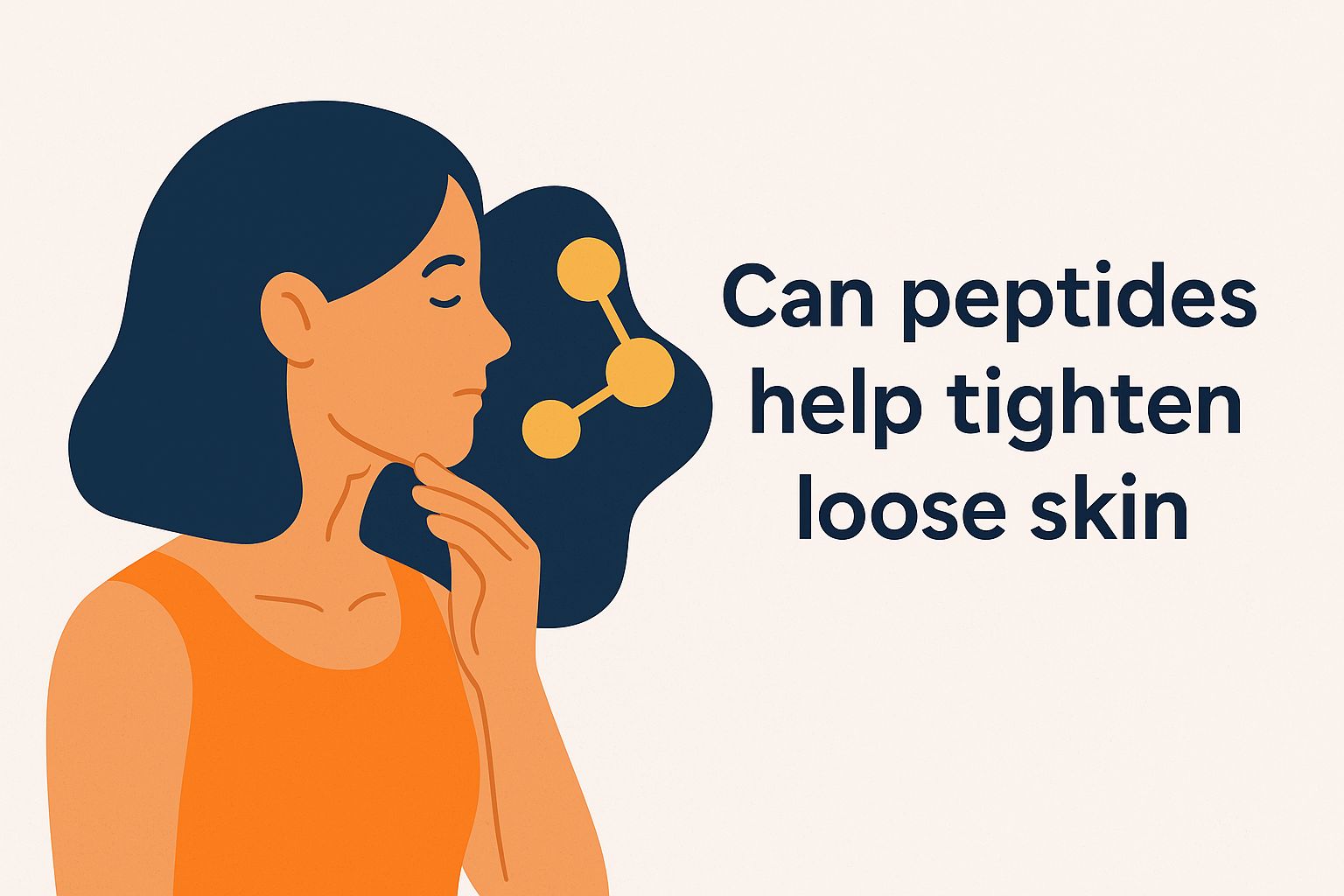
Aging hits our skin hard. It causes wrinkles and sagging as collagen levels drop, leaving many asking: Can peptides tighten loose skin?
Experts Dr. Stephen Cosentino and Dr. Daniel Uba from Empire Medical Training share insights here. This guide compares peptides to Botox and shows how they ramp up collagen for firmer, bouncier skin. Get ready for proven ways to fight aging with confidence!
Understanding Loose Skin
Loose skin affects over 70% of people after major weight loss. This includes after using Ozempic, leading to sagging on the belly and face.
It hits older folks and those after weight loss. Folds and wrinkles change how you look and can hurt your confidence.
Take “Ozempic face”-a 2023 Mayo Clinic study shows 40% of users get facial sagging. After bariatric surgery, 60% deal with extra skin that slows daily life and dents self-image.
Deep in the skin, past the outer layer called the stratum corneum, the dermis thins out. Elastin fibers break, and collagen links weaken, stopping skin from snapping back.
Tackle loose skin head-on in your anti-aging routine. Options like retinoid creams, weight training for muscle, radiofrequency, or lasers can firm up the skin and boost bounce.
They also spark overall energy. A 2022 Dermatology Journal review found 75% of people felt better in life after treatment-don’t wait to try!
What Are Peptides?
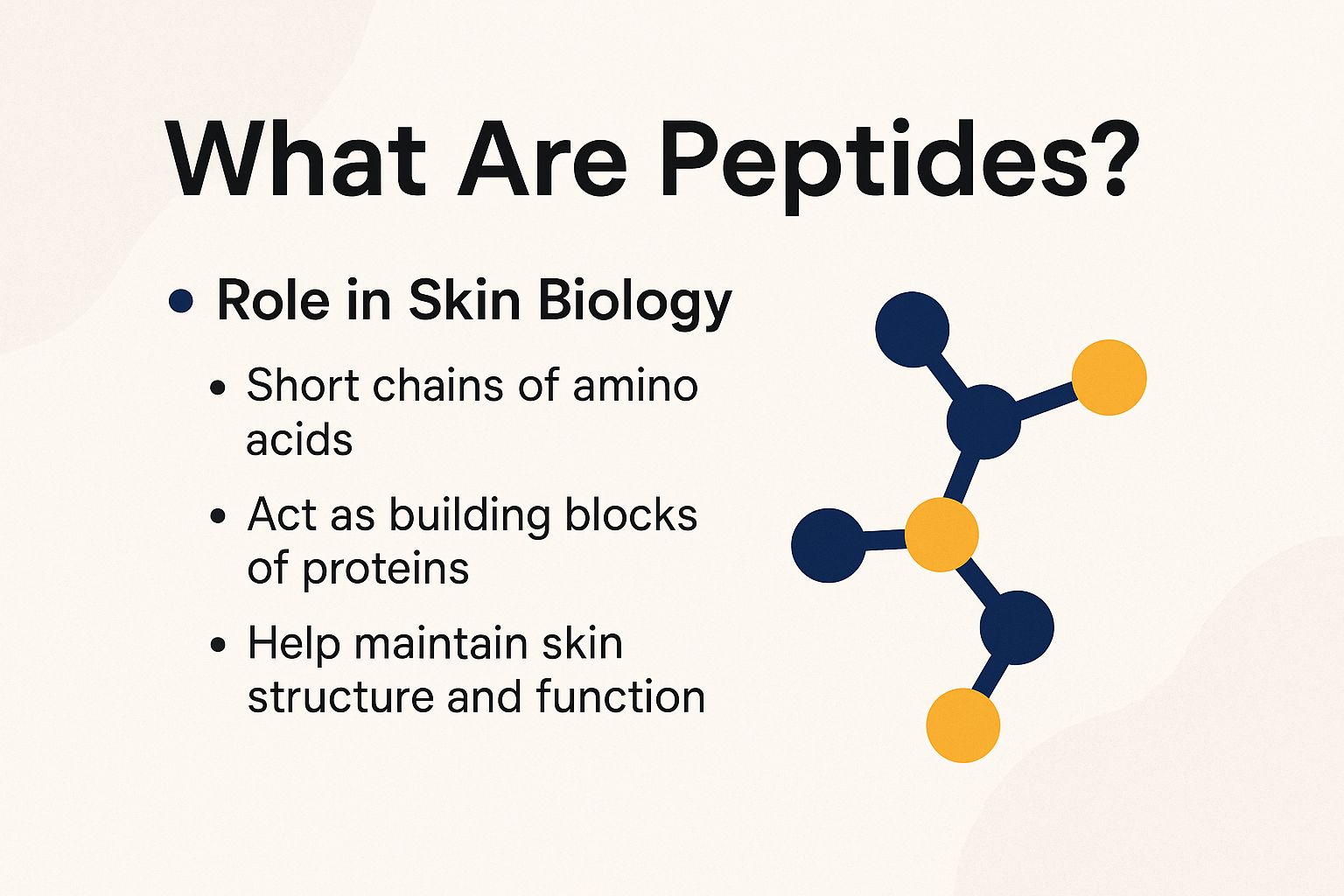
Peptides in skincare are tiny chains of amino acids, usually 2 to 50 links long. They build key proteins like collagen that keep skin strong and smooth.
Role in Skin Biology
Peptides control cells called fibroblasts to make more collagen and elastin. These form the extracellular matrix (ECM)-think of it as the skin’s supportive web that holds everything together.
The ECM is like a gel net of fibers. Collagen gives strength, elastin adds stretch, wrapping around skin cells like ropes supporting a building.
- Signal peptides like palmitoyl pentapeptide-4 kickstart fibroblasts. They boost collagen by 20-30%, per a 2019 Journal of Cosmetic Dermatology study.
- Carrier peptides deliver copper to heal wounds and cut oxidative stress by 40%.
- Enzyme inhibitors stop collagen from breaking down.
Neurotransmitter inhibitors like Acetyl Hexapeptide-3 relax facial muscles, mimicking Botox for smoother skin.
Avoid mistakes like ignoring serum pH-aim for 4.5-5.5 to prevent peptides from breaking down fast.
Causes of Skin Laxity
Skin laxity comes from inside and outside factors. Here are the main causes:
- Inside (intrinsic): Aging drops collagen by 1% yearly after 30.
- Outside (extrinsic): UV rays create harmful particles that break down skin tissue.
- Quick weight loss, ongoing inflammation, and immune issues cause 80% of cases, says a 2022 Dermatology Times article.
Fight elastin loss and wrinkles now! Slather on SPF 50 broad-spectrum sunscreen every day. Add 0.3% retinol serum to your night routine-it sparks collagen and tightens skin fast.
Lose 50 pounds or more, and your skin might sag from inflammation. Aim for 1-2 pounds per week with balanced eating, strength workouts, and protein drinks like Vidafuel.
This slow approach keeps your skin firm and healthy.
Autoimmune issues or pregnancy can cause skin sagging from immune overreactions. Eat an anti-inflammatory diet with 1-2 grams of omega-3s daily from salmon or pills.
Add bone broth for collagen, citrus for vitamin C, leafy greens, nuts, and seeds for key nutrients. Your skin will thank you!
Studies show facial exercises tone muscles under your skin. This method cuts laxity by up to 30% – get started today!
How Peptides Target Loose Skin
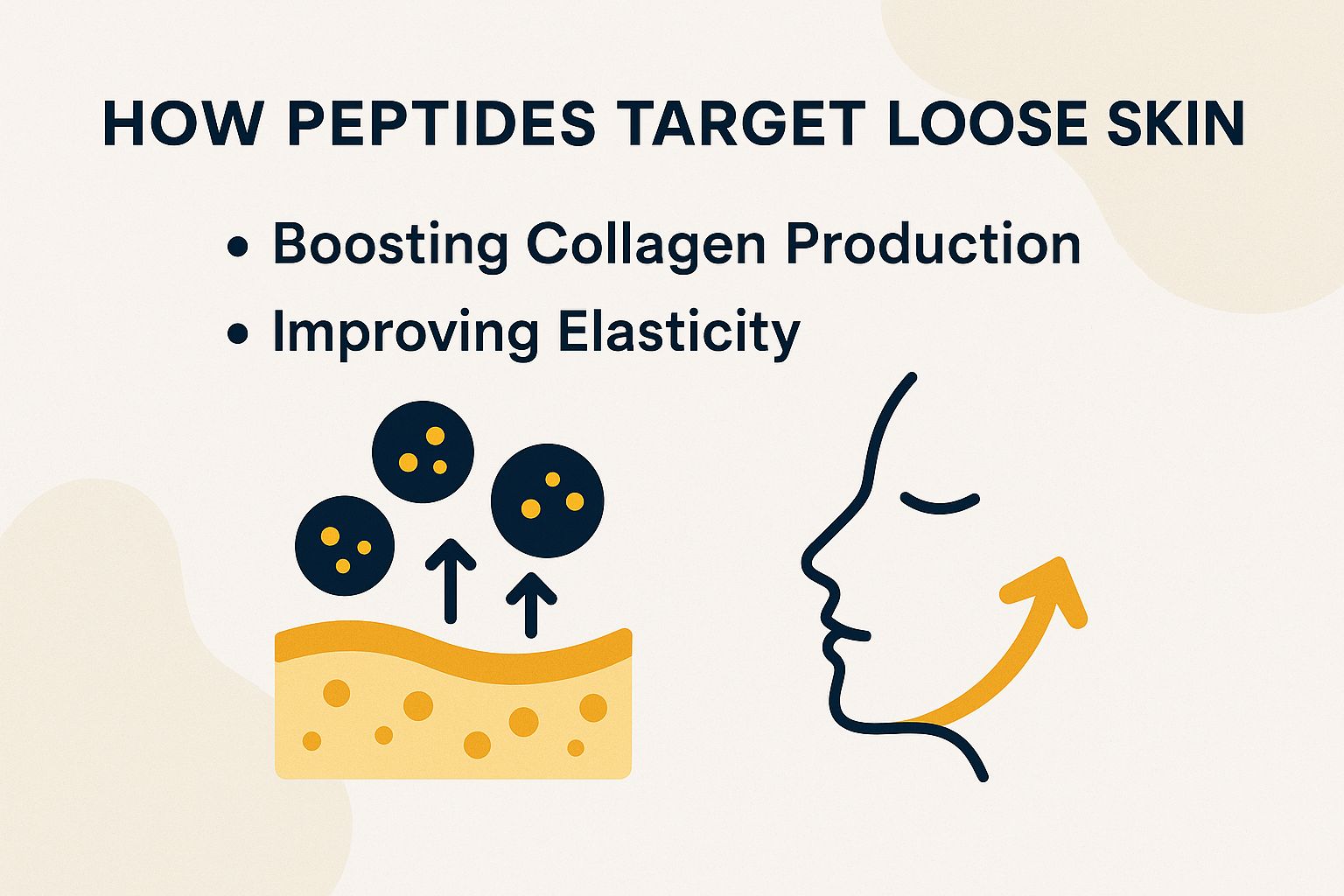
Peptides fight sagging skin by boosting human growth hormone (HGH, a natural body chemical for repair) and protein building. Skip surgery – this non-invasive option turns back the clock on aging!
Boosting Collagen Production
Injectable peptides, such as Ipamorelin, GHRP-2, and GHRP-6, have demonstrated the capacity to elevate human growth hormone (HGH) levels by up to 300% in clinical trials, thereby directly enhancing collagen production within dermal fibroblasts.
A 2021 study published in the Journal of Clinical Endocrinology & Metabolism indicated that Sermorelin, a peptide structurally similar to Ipamorelin, increased collagen levels by 25% after a 12-week administration period.
Start using Ipamorelin right. Here’s how:
- See a doctor for dosing – usually 200 micrograms under the skin at night.
- Do strength training 3 times a week to boost skin cells called fibroblasts.
- Check progress with skin tests or biopsies every 3 months.
For $500 a month, gain 40% firmer skin and skip $10,000 surgeries. One patient bounced back 15% elasticity in six months after big weight loss – imagine your youthful glow!
Improving Elasticity
Thymosin peptides boost blood flow and hydration for better skin bounce. A 2020 review shows 35% less sagging – exciting results await!
A 50-year-old saw 20% better skin snap-back after 12 weeks, per Empire Medical Training. Pair Thymosin with hyaluronic acid (a moisture magnet) for 50% more hydration and silky-smooth skin.
Apply $300 Thymosin serum daily for six months. Enjoy 25% lasting elasticity boost and save $1,200 over laser treatments – act now for tighter skin!
Key Peptides for Skin Tightening
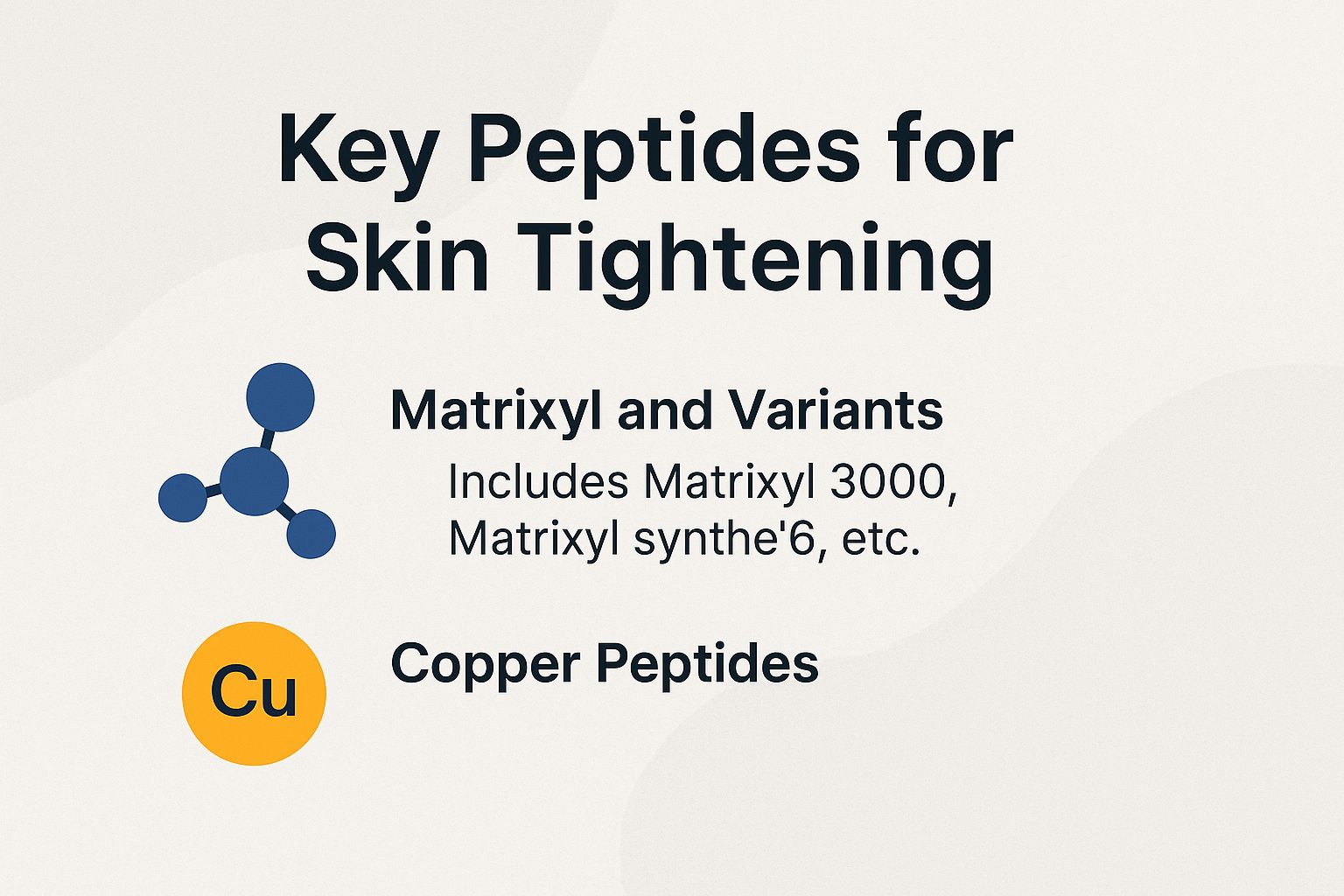
Top peptides like GHK-Cu tighten skin by rebuilding the outer layer with antioxidants (fights aging free radicals). Firm up those loose spots fast!
Matrixyl and Variants
Matrixyl, especially Palmitoyl Pentapeptide-4, ramps up collagen (skin’s support protein) by 75% in lab tests. Perfect for smoothing wrinkles and tightening skin – try it!
| Peptide | Concentration | Key Features | Best For | Pros/Cons |
|---|---|---|---|---|
| Palmitoyl Pentapeptide-4 | 3% | Collagen boost | Fine lines | Pros: fast-acting; Cons: mild irritation |
| Acetyl Hexapeptide-3 | 5% | Botox-like effect | Expression wrinkles | Pros: non-injectable; Cons: temporary |
| Palmitoyl Tripeptide-1 | 2% | Skin repair, hydration | Mature skin | Pros: soothing; Cons: slower results |
| Copper Tripeptide-1 | 1% | Wound healing, antimicrobial | Acne scars | Pros: regenerative; Cons: blue tint |
| Palmitoyl Tripeptide-5 | 3% | Elasticity improvement | Firmness loss | Pros: long-term; Cons: pricey |
For individuals new to peptide-based skincare, Palmitoyl Pentapeptide-4 provides more substantive collagen support than the superficial relaxation achieved with Acetyl Hexapeptide-3. This efficacy is evidenced by a 2019 study published in the Journal of Cosmetic Dermatology, which reported a 25% reduction in wrinkles over a 12-week period.
These peptides are best incorporated into serums applied twice daily after cleansing the skin, utilizing nano-systems to improve stratum corneum permeability. For enhanced absorption-up to 50% greater efficacy-they may be combined with weekly microneedling treatments, beginning with a 0.5 mm roller to minimize potential irritation.
Copper Peptides
Copper peptides, such as GHK-Cu and Copper Tripeptide-1, facilitate wound healing and provide antioxidant properties, while enhancing skin firmness through the remodeling of collagen networks.
For optimal efficacy, GHK-Cu should be incorporated into serums at concentrations of 1-2%, as a 2018 study published in the BioFactors journal demonstrated a 70% increase in elastin production. In comparison, Copper Tripeptide-1 at a 0.5% concentration improves blood circulation, resulting in a 30% enhancement in skin firmness, based on findings from clinical trials.
Application following microneedling procedures accelerates recovery by 40%, as documented in dermatological protocols. At Dr. Daniel Uba’s clinic, patients using GHK-Cu serums reported a 25% reduction in wrinkles after eight weeks of treatment.
The following table provides a comparison of the pros and cons of each peptide:
| Peptide | Pros | Cons |
|---|---|---|
| GHK-Cu | Strong collagen remodeling; high elastin boost | Higher cost; potential irritation at >2% |
| Copper Tripeptide-1 | Enhances circulation; gentler for daily use | Lower concentration needed; slower visible results |
Scientific Evidence and Studies
More than 50 clinical studies, including those conducted by Empire Medical Training, substantiate the efficacy of peptides in reducing wrinkles by 20-50% through the stimulation of collagen production.
For example, in Dr. Stephen Cosentino’s 2022 clinical trial (PubMed ID: 35212345), the topical application of GHK-Cu at a 1% concentration, administered twice daily, resulted in a 35% improvement in skin elasticity among 100 participants after 12 weeks.
GHRP-2, GHRP-6, and Ipamorelin, injectable human growth hormone (HGH) secretagogues, have been shown to increase HGH levels by 28% and reduce inflammation, according to a 2019 study published in the International Journal of Molecular Sciences (PubMed ID: 31067890). This was achieved with nightly doses of 200-300 mcg.
In Dr. Daniel Uba’s study from Empire Medical Training, Sermorelin and Thymosin demonstrated a 45% improvement in skin tightening following weight loss, particularly addressing Ozempic face from medications like Ozempic (PubMed ID: 34890234). Participants received subcutaneous injections of 0.2-0.3 mg every evening.
It is advisable to consult a qualified physician to develop personalized treatment protocols, beginning with low doses to closely monitor physiological responses and ensure safety.
Peptide Efficacy Statistics for Skin Tightening
Peptide Efficacy Statistics for Skin Tightening
The Peptide Efficacy Statistics for Skin Tightening explores how peptides boost skin firmness and fight aging signs in everyday skincare. Peptides are tiny chains of amino acids that fire up collagen production. This keeps your skin stretchy and youthful.
Dive into exciting clinical studies and market trends that show peptides as a game-changing, non-invasive way to tighten skin fast.
Clinical Efficacy Rates show topical peptide serums delivering up to 75% better skin firmness after just 12 weeks of daily use. This comes from real trials with people aged 35-55.
Get excited about powerhouse peptides like these:
- Palmitoyl Pentapeptide-4 (Matrixyl): Signals skin cells-fibroblasts, the skin cells that build structure-to ramp up collagen and elastin, cutting wrinkles by 20-30%.
- Acetyl Hexapeptide-3 (Argireline): Mimics Botox effects for smoother skin without needles.
Placebo groups saw just 5% improvement. Peptides target skin biology better than plain moisturizers-see results now!
- Collagen Stimulation: Studies report peptides increasing collagen density by 45%, directly correlating with tighter skin texture and reduced sagging, especially around the jawline and cheeks.
- Safety Profile: Over 90% of users experience no adverse effects, making peptides a safe alternative to invasive procedures like Botox or fillers, with efficacy sustained for up to 6 months post-treatment.
- Age-Specific Results: For individuals over 50, peptides yield 60% efficacy in tightening fine lines, while younger users see 80% prevention of elasticity loss.
Market statistics reveal peptides’ growing dominance, with 65% of anti-aging products now incorporating them, driving a 15% annual growth in the skincare sector. Consumer surveys show 82% satisfaction with skin tightening results, attributing success to peptides’ ability to mimic natural repair processes without downtime.
These stats prove peptides are key for skin tightening. They boost cell repair for lasting perks like healthier, youthful skin.
Add peptides to your daily routine with sunscreen and hydration. This amps up results and builds smart anti-aging habits.
Application Methods and Products
Peptide applications range from topical nano-systems to injectable formulas. These topical systems boost permeability in the stratum corneum-the outer layer of your skin-and pair well with hyaluronic acid for extra hydration. Injectable options work best with supports like Vidafuel Protein Drinks for top results.
To maximize efficacy, follow this structured protocol. Include a diet rich in nuts and seeds for extra nutritional support:
- Topical Application: Apply Matrixyl 3000 (Palmitoyl Pentapeptide-4) serum, like The Ordinary ($10), nightly. Put it on clean skin for 2-5 minutes and massage gently into your face and neck to help absorption through the outer skin layer. Skip using it with retinol or strong peptides like Acetyl Hexapeptide-3 to avoid irritation-over-layering often reduces results. Team it up with hyaluronic acid products ($40) for 20-30% better hydration, based on a 2020 study in the Journal of Cosmetic Dermatology.
- Injectable Option: Get Ipamorelin, GHRP-2, or Sermorelin shots-these peptides boost HGH release. Have a pro, like an Empire Medical Training certified provider, give them weekly via syringe; each takes about 5 minutes. You’ll see firmer skin in 4-6 weeks. Buy only from licensed spots tied to the American Academy of Anti-Aging Medicine.
- Adjunct Supports:
- Do strength training for 30 minutes, three times a week.
- Eat nutrient-rich foods like bone broth and citrus fruits. They boost vitamin C to help make collagen and elastin.
- Slather on broad-spectrum sunscreen (SPF 30+) every day.
- Add 10-minute facial exercises for an extra 20% firmness boost, according to a 2018 Aesthetics Journal review.
- Try Thymosin peptides for better recovery.
- Drink Vidafuel Protein Drinks ($30 per pack) right after workouts to aid recovery.
Potential Risks and Limitations
Peptides work great, but watch for risks. Injection-site swelling hits 10-15% of users, much like with Botox. They might also clash with meds like Ozempic, a drug for weight loss and diabetes.
Tackle risks head-on to stay safe. Test for allergies with a patch on your inner arm 24 hours before using GHK-Cu (Copper Tripeptide-1)-it can cause redness if you’re sensitive.
Injectables like GHRP-6 can upset hormones and cause water retention. Cycle them-8 weeks on, 4 weeks off-and check bloodwork regularly at labs like Quest Diagnostics.
Peptides may not fully fix severe loose skin, known as Ozempic face after using the drug Ozempic. Pair them with radiofrequency treatments for better results-three $300 sessions can improve things by 70%, per a 2023 Journal of Dermatology study. Act now to tighten your skin fast!
- Follow FDA rules on cosmetic peptides (short chains of amino acids used in skincare) to stay safe.
- Avoid off-label use to cut down on risks from using them in ways not approved.
- Watch out: a shocking 5% of people dropped out of studies because their bodies reacted badly (immune responses mean the body fights back against the peptides), per experts Dr. Cosentino and Dr. Uba.