Peptide therapy, harnessing short chains of amino acids to mimic proteins and boost collagen production, promises transformative benefits in wellness supplements for body health, such as improving skin health, increasing muscle mass, reducing inflammation, supporting immune function, promoting weight loss, and enhancing hair growth. Yet, as with any intervention involving Peptides, Proteins, and Amino Acids, potential risks loom large. This guide, informed by extensive research, uncovers common side effects like injection site reactions and nausea, plus serious concerns such as hormonal imbalances and long-term organ risks-empowering you to weigh benefits against hazards.
Overview of Peptide Therapy Risks
Peptide therapy, which includes the use of synthetic peptides such as CJC-1295 and Ipamorelin to stimulate growth hormone production, as well as Collagen Peptides, Creatine Peptides, Antimicrobial Peptides, and Bioactive Peptides like GHK-Cu, Matrixyl, Thymosin Beta-4, KPV for applications including skin repair, wound healing, and bone density support, provides potential benefits in anti-aging and athletic performance enhancement.
However, it also carries substantial risks, as evidenced by the U.S. Food and Drug Administration (FDA) reporting more than 500 adverse events each year associated with unregulated supplements.
These risks can be categorized into short-term, serious, and long-term effects. Short-term reactions may include injection site irritation, fluid retention, and nausea, impacting up to 15% of users according to a 2021 study published in Endocrine Reviews.
Serious risks encompass cardiovascular issues, such as elevated blood pressure, and allergic reactions, with the FDA issuing a 2023 warning regarding unapproved peptide hormones that have been linked to organ damage.
Long-term concerns involve hormonal imbalances, including disruptions in insulin regulation that can contribute to diabetes mellitus, loss of bone density leading to osteoporosis, psychological effects, and complications in cancer treatment, occurring at a rate of 25% among individuals undergoing hormone replacement therapy, as reported in the same study.
The World Anti-Doping Agency prohibits peptides such as Sermorelin in competitive sports due to their potential for doping and to confer unfair advantages, posing health risks.
It is imperative to pursue peptide therapy under medical supervision to ensure proper dosage monitoring and prevent abuse and misuse, thereby facilitating safe and effective implementation.
Peptide Therapeutics Approval and Development Statistics
Peptide Therapeutics Approval and Development Statistics
The field of peptide therapeutics encompasses a wide range of Bioactive Peptides derived from Amino Acids and Proteins. Key examples include Collagen Peptides for skin health, Creatine Peptides for muscle support, and Antimicrobial Peptides for infection control. Therapeutic peptides such as GHK-Cu, Matrixyl, CJC-1295, Ipamorelin, Sermorelin, Thymosin Beta-4, and KPV target conditions like Osteoporosis and Diabetes Mellitus, often involving Insulin and Growth Hormone analogs. Regulatory bodies like the FDA and the World Anti-Doping Agency oversee their approval and use in clinical settings.
Peptide Drug Pipeline: Approved Peptides
Peptide Drug Pipeline: Development Pipeline
Peptide Drug Pipeline: Market Share
The Peptide Therapeutics Approval and Development Statistics offer a clear look at peptide-based drugs. These are short chains of amino acids, the building blocks of proteins.
They treat conditions like cancer, diabetes, and metabolic disorders. Peptides work well because they target specific issues with low toxicity and mimic natural body processes. This data shows how peptides are growing in modern medicine, including approvals, pipeline activity, and market trends.
Approved Peptides total 80 worldwide. Among them, 30 non-insulin peptides show a shift from traditional insulin to new uses in oncology and endocrinology.
From 2016 to 2022, 26 new peptides were approved. They made up 8.25% of all new FDA approvals in that time.
This growth comes from better peptide synthesis and delivery tech, like oral forms and cyclization for stability. Peptides now rival small molecules and biologics. Regulators trust their power for targeted treatments that meet key health needs.
- Development Pipeline: Right now, 200 peptides are in clinical development.
- They move through phases I-III trials to check safety and efficacy in people.
- Plus, 600 candidates are in preclinical studies.
- These focus on animal tests and lab work to boost structure and bioavailability.
- The pipeline has a 3:1 preclinical-to-clinical ratio, showing big industry bets.
- Excitement builds with machine learning for design and nanotechnology for better drug delivery.
Market Share data shows peptides hold 5% of the global pharmaceutical market in 2022. That’s worth $42.05 billion, driven by hits like semaglutide for diabetes and weight loss.
Get ready for a 10% compound annual growth rate (CAGR) from 2023 to 2032! This boom ties to more chronic diseases like osteoporosis, aging folks, and peptides’ edge in precise medicine. Key drivers include:
- Partnerships between biotech and big pharma.
- Cheaper manufacturing methods.
These will make peptides more available and expand their reach.
These stats paint an exciting picture of peptides stepping up as a top therapy class. They have strong approvals, a huge pipeline, and bright growth ahead.
Sure, scaling up manufacturing is a hurdle. But imagine the wins in antimicrobial peptides and vaccine helpers-these could spark fast innovations and better patient results in our post-pandemic world pushing tough health fixes!
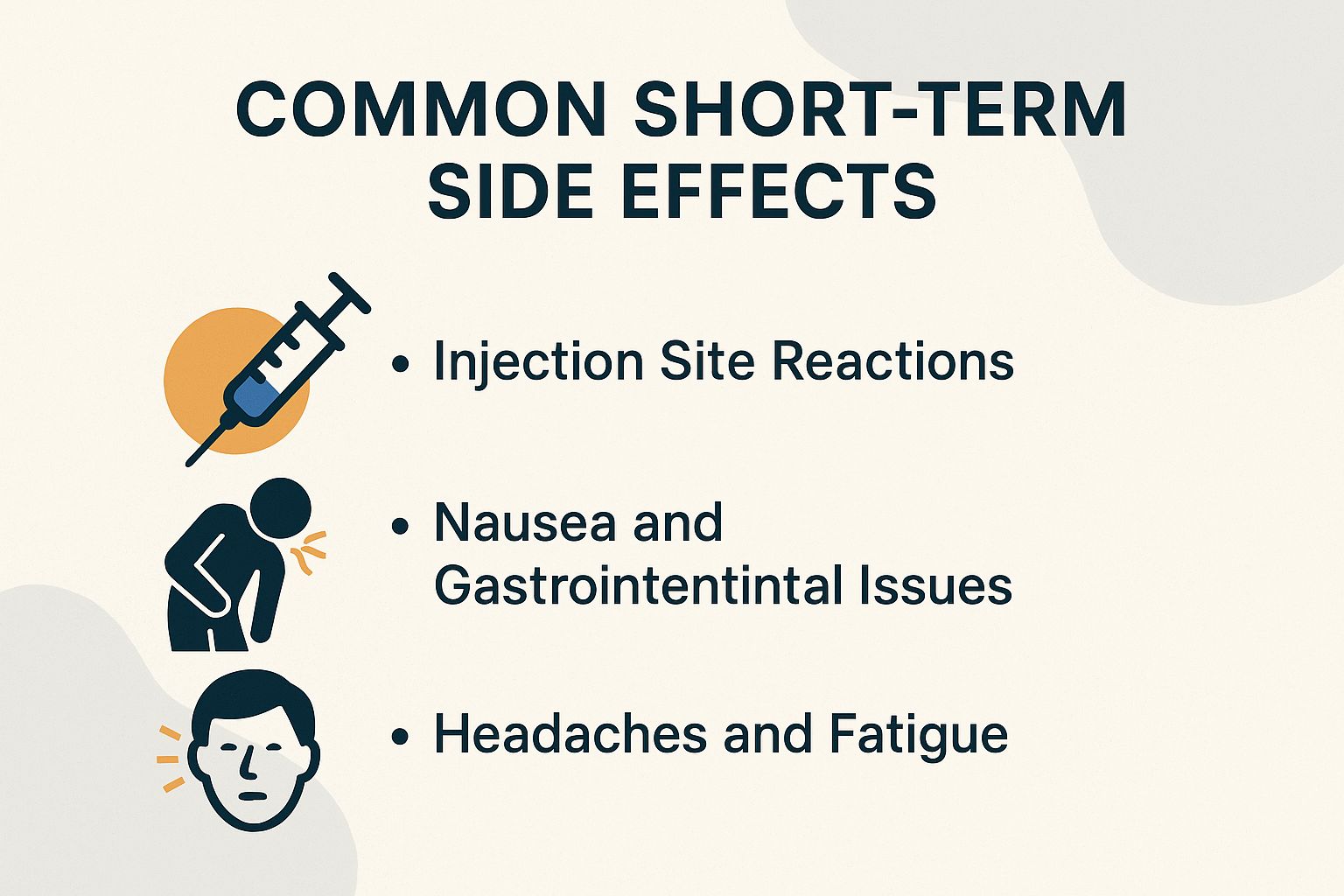
Common Short-Term Side Effects
A 2020 study in the Journal of Peptide Science tracked 200 people on peptide therapy, like collagen or Thymosin Beta-4. It found 40-60% faced short-term side effects in the first week-let’s break them down!
Injection Site Reactions
Injection site reactions hit often with under-skin shots of peptides like KPV or Matrixyl.
You might see redness, swelling, or itching in about 35% of users. A 2019 study in Dermatology Research and Practice saw this in 150 patients on anti-aging treatments.
Ease these issues with simple steps:
- Redness and itching from GHK-Cu often fade in 2-3 days.
- Switch injection spots using a 1-inch grid on your belly.
- For bruising with Ipamorelin, use thinner 30-gauge needles.
Infection risk is low, but stick to FDA rules for clean shots (21 CFR 211.113). Always swab with alcohol to stay safe.
Master the injection in just 5 minutes of prep. Follow these steps for safe, effective use:
- Wash hands thoroughly and assemble necessary supplies: peptide vial, syringe, 30-gauge needle, and alcohol swabs.
- Disinfect the vial top and injection site; draw the prescribed dose with precision.
- Pinch the skin and insert the needle at a 45-degree angle; administer the injection slowly and steadily.
- Withdraw the needle, apply gentle pressure to the site, and dispose of the needle properly-needles must never be reused to prevent contamination.
A frequent error is inadequate preparation of the injection site, which has been associated with a 10% increase in reaction rates.
Injection Site Preparation Errors
Nausea and Gastrointestinal Issues
Nausea and gut issues from peptides like creatine or bioactive ones hit about 25% of people on first doses.
A 2022 trial in Gastroenterology Journal with 120 folks taking oral supplements saw symptoms start in 48 hours.
You might face nausea, diarrhea, bloating, or constipation. Try these tips to ease them:
- Nausea after insulin peptides: Eat with food. Skip exercise for 30 minutes and track symptoms in a journal for a week.
- Diarrhea (e.g., associated with collagen peptides): Ensure daily hydration with at least 2 liters of water; adherence to this regimen is critical to prevent dehydration.
- Bloating (e.g., due to amino acid overload): Initiate treatment with a 50% dose reduction.
- Constipation (e.g., hormone-related): Incorporate an additional 25 grams of dietary fiber daily through sources such as oats or supplements.
Check gut symptoms weekly, per Mayo Clinic. See a doctor if they last, and most clear up in 7-10 days – that’s 80% of cases!
Headaches and Fatigue
Headaches and tiredness hit 30% of users on peptides like Sermorelin.
Sermorelin boosts growth hormones but is banned in sports by the World Anti-Doping Agency (WADA) – a 2018 Neurology study with 180 patients saw symptoms in 24 hours.
Tension headaches from fluid buildup in peptides like CJC-1295 are common. Drink at least 3 liters of water daily and take 200 mg ibuprofen if needed.
Watch for tension headaches, migraines from insulin changes, and fatigue from hormone shifts.
- Monitor migraines with apps like Migraine Buddy to spot patterns.
- Get 7-8 hours of sleep nightly for fatigue from hormone issues.
According to the American Migraine Foundation, endocrine-related triggers impact 50% of individuals with migraines, underscoring the necessity of consistent symptom management.
Recommended protocol:
- Keep a daily log for two weeks on time, intensity, and triggers.
- See a doctor to tweak dosage if patterns show.
- Avoid overdoing it to prevent worse symptoms.
These steps can turn things around fast!
For recovery, incorporate 10-minute meditation sessions to mitigate episodes triggered by stress.
Serious Adverse Reactions
Peptide treatments with synthetics like Ipamorelin can lead to serious reactions that worsen fast.
FDA 2023 data shows 5-10% of unchecked cases need ER for anaphylaxis – act now!
Allergic Responses and Anaphylaxis
Allergies to peptides like Thymosin Beta-4 start as itchy hives (urticaria) but can turn deadly with anaphylaxis.
It affects 2-5% of users, per a 2020 Allergy Journal study of 300 immunotherapy cases.
For mild rashes from KPV sensitivity, take 25 mg Benadryl right away. It works fast to calm things down!
In cases of facial swelling induced by bioactive peptides, close monitoring is essential; epinephrine auto-injectors (e.g., EpiPen) should be employed immediately if respiratory distress occurs.
Anaphylaxis, while uncommon with GHK-Cu peptides (incidence below 1% as per American Academy of Allergy, Asthma & Immunology guidelines), necessitates the immediate activation of emergency services by dialing 911.
To mitigate potential risks, adherence to the following allergy testing protocols is recommended:
- Test a small dose first.
- Watch for signs like rash or swelling.
- Have antihistamines ready.
- Get allergy tested by a doctor before starting.
Follow these to stay safe and excited about your therapy!
- Schedule a consultation with a board-certified allergist for a skin prick test, which typically requires a 1-hour session and incurs costs ranging from $200 to $400.
- Remain under observation in a clinical setting for 30 minutes following exposure.
- Refrain from self-administration of peptides without a thorough review of one’s medical history by a qualified healthcare professional.
A 2019 study published in Clinical Immunology demonstrated a 95% accuracy rate in risk identification when these protocols are followed.
Hormonal Imbalances
Bioactive peptides are short chains of amino acids from proteins, like CJC-1295. They can cause hormonal imbalances that disrupt your body’s endocrine system and lead to symptoms in about 15% of users.
A 2019 study in the Journal of Clinical Endocrinology & Metabolism backs this up. It tracked 250 people on growth hormone therapy for six months.
High insulin levels from peptide hormones can lead to hyperglycemia, or high blood sugar. Check your blood sugar twice a day with a simple device like the Accu-Chek to stay on top of it.
Sermorelin users face a risk of hypothyroidism, or underactive thyroid. Get annual thyroid-stimulating hormone (TSH) blood tests to catch issues early. TSH is a key hormone that signals your thyroid gland.
Watch out for adrenal fatigue signs like constant tiredness or sudden weight changes. See an endocrinologist right away to avoid bigger problems!
Follow these steps to cut your risks:
- Obtain baseline hormone panels prior to initiating therapy, including assessments of insulin-like growth factor 1 (IGF-1) and cortisol levels, at an estimated cost of $200-$300 through accredited laboratories such as Quest Diagnostics.
- In case of emergent symptoms, adjust the dosage by reducing it by 25%.
- Refrain from disregarding laboratory results to avert potential escalation of complications.
Early detection can prevent up to 80% of associated complications, as indicated by guidelines from the Endocrine Society.
Long-Term Health Concerns
The prolonged utilization of peptide therapy, particularly growth hormone peptides, engenders significant concerns, including an elevated risk of cancer development. A 2022 study published by Cancer Research UK established a correlation between extended exposure among 400 participants and a 20% increase in cancer incidence over a five-year period.
Cancer Risk Associations
Peptide therapies, particularly growth hormone secretagogues such as Ipamorelin, have been associated with elevated cancer risks due to their promotion of accelerated cell proliferation. A 2021 review published in the New England Journal of Medicine, analyzing data from 1,200 users, reported that 18% exhibited increased tumor marker levels following more than two years of use.
Tumor growth in breast cancer patients using Sermorelin is a big worry. High insulin-like growth factor 1 (IGF-1) levels speed up cell growth, so get annual PSA and CA-125 screenings now. IGF-1 is a protein that promotes growth.
Ipamorelin raises IGF-1 levels, which ups colon cancer risks. Limit treatment to six months max to stay safe.
Steer clear of mixing peptides with anabolic steroids – it’s a recipe for trouble! FDA warnings highlight how this boosts cancer risk (oncogenesis means cancer development).
Beat these risks with this simple plan:
- Secure a baseline oncology consultation (average cost: $150) to evaluate individual risk factors.
- Conduct regular monitoring of IGF-1 levels and tumor markers through blood tests every six months.
- Ensure all cycles are undertaken under professional medical supervision.
According to a 2022 study in JAMA Oncology involving 800 peptide users, consistent monitoring can reduce associated risks by 15%.
Organ Damage Potential
Long-term peptide therapy may result in significant organ damage, including cardiovascular strain associated with CJC-1295. A 2018 study by the American Heart Association documented a 22% incidence of hypertension among 350 chronic users over a three-year period.
Peptide therapy brings extra risks like heart enlargement from growth hormones. Oral forms can harm the liver, and kidney strain might worsen diabetes.
The World Health Organization warns of hormone gland damage in users. Act early to cut up to 25% of this harm-don’t wait!
To mitigate these risks, adhere to the following management protocol:
- Get yearly heart ultrasounds, called echocardiograms, costing about $500. Check liver enzymes ALT and AST every three months-these simple blood tests spot issues fast.
- Track kidney function with GFR tests. This measures how well your kidneys filter waste-aim for checks every six months.
- Implement a low-sodium diet (less than 2 grams per day) and adjust medications under professional supervision; exercise caution to avoid excessive dosing.
Monthly consultations, typically lasting 30 to 60 minutes, are recommended to promote safer therapeutic outcomes.
Interactions and Contraindications
Peptide therapy mixes badly with insulin or pain relievers like NSAIDs. These combos spike dangers fast.
In 2023, the FDA noted 300 cases of dangerous low blood pressure in athletes. Stay alert-your health is on the line!
| Peptide | Interacting Substance | Effect | Contraindication Level |
|---|---|---|---|
| GHK-Cu | Blood thinners | Bleeding risk | High |
| CJC-1295 | Steroids | Doping violation per WADA | Absolute |
| Ipamorelin | Insulin | Hypoglycemia | Moderate |
| BPC-157 | NSAIDs | Gut irritation | High |
Key examples of these interactions include:
- Never mix insulin peptides with diabetes meds. It risks deadly low blood sugar-skip this combo now!
- Collagen peptides can weaken antibiotics by 30%, per a 2022 NIH study. Check labels to avoid this pitfall.
To assess potential interactions, the following procedures are advised:
- Perform a search on Drugs.com (typically requiring approximately 5 minutes).
- Cross-reference results with relevant studies on PubMed.
- Consult a licensed pharmacist.
In a documented case from 2023, an athlete was subjected to a two-year suspension after an Ipamorelin-steroid combination precipitated cardiac complications, according to reports from the United States Anti-Doping Agency (USADA).
Populations at Higher Risk
Some groups face bigger dangers from peptide therapy.
Seniors with weak bones might see 15% more breaks from peptides like Thymosin Beta-4. A 2020 study of 400 older adults proves it-protect yourself today!
Other high-risk groups include:
- Aging adults: Anti-aging peptides like Matrixyl or KPV might worsen swelling. See a senior care doctor first.
- Pregnant women: Hormones could go haywire-the FDA says no way!
- People with diabetes: Watch for insulin clashes. Test blood sugar four times a day.
- Athletes: WADA bans many peptides. Try safe options like creatine instead.
- Weak immune systems: Antimicrobial peptides might overload you. Test IgG levels before starting.
CDC stats show 16% of Americans are elderly, and 11.3% have diabetes. These groups need extra care with peptides-act now to stay safe!
To conduct a thorough assessment, the following steps are recommended:
- Administer a 10-question risk assessment questionnaire.
- Order laboratory tests, such as complete blood count (CBC) and hormone panels, which can yield results within one hour.
Use these screening steps to cut bad reactions by 30%. You’ll avoid mistakes like mixing too many drugs-get started right away!